
Hear from Our Customers
When siding fails on a home near the Sassafras River, it rarely happens all at once. It starts subtle — a seam that’s no longer tight, a bottom course that’s warping, a patch of algae that keeps coming back no matter how many times you pressure wash it. These are signs that moisture is winning, and once it gets behind the cladding, the damage compounds fast.
Most homes in Sassafras were built in the early 1980s and are now well past the 40-year mark — at or beyond the rated lifespan for the original vinyl siding installed on them. That material was thinner back then, less UV-stabilized, and not designed for the persistent humidity that comes with living between the Sassafras River and the Chesapeake Bay corridor. A full replacement isn’t just about appearance. It’s about stopping moisture intrusion before it reaches the sheathing and framing underneath.
New siding, properly installed with a moisture barrier and weatherproof seams, changes what your home has to deal with every season. It handles the freeze-thaw cycling in January and February. It resists the mold and mildew pressure that builds through the humid summer months. And for homes along the river in areas like Kentmore Park, it stands up to the wind exposure that open water and agricultural terrain create. The difference is immediate and it lasts.
Most siding contractors serving Sassafras are based in Columbia, Reisterstown, or Laurel — none of them familiar with Kent County’s permit process, the Sassafras River’s humidity profile, or what the Upper Eastern Shore actually does to exterior cladding over 40 years. We’re based in Smyrna, DE, a short drive north on US 301 — the same road that runs right through this area. That’s not a coincidence. This is the same Delmarva Peninsula climate zone, and we’ve been working in it for over 22 years.
Every project is handled by our own trained, insured crew. No subcontracting, no day-labor teams showing up unannounced. The same people you talk to at the consultation are the people doing the work. For a rural community like Sassafras, where homeowners are rightly cautious about who shows up at their property, that matters. Our BBB accreditation, A+ rating, and 63-plus verified five-star reviews back it up — but the real proof is in how the work holds up after the crew leaves.
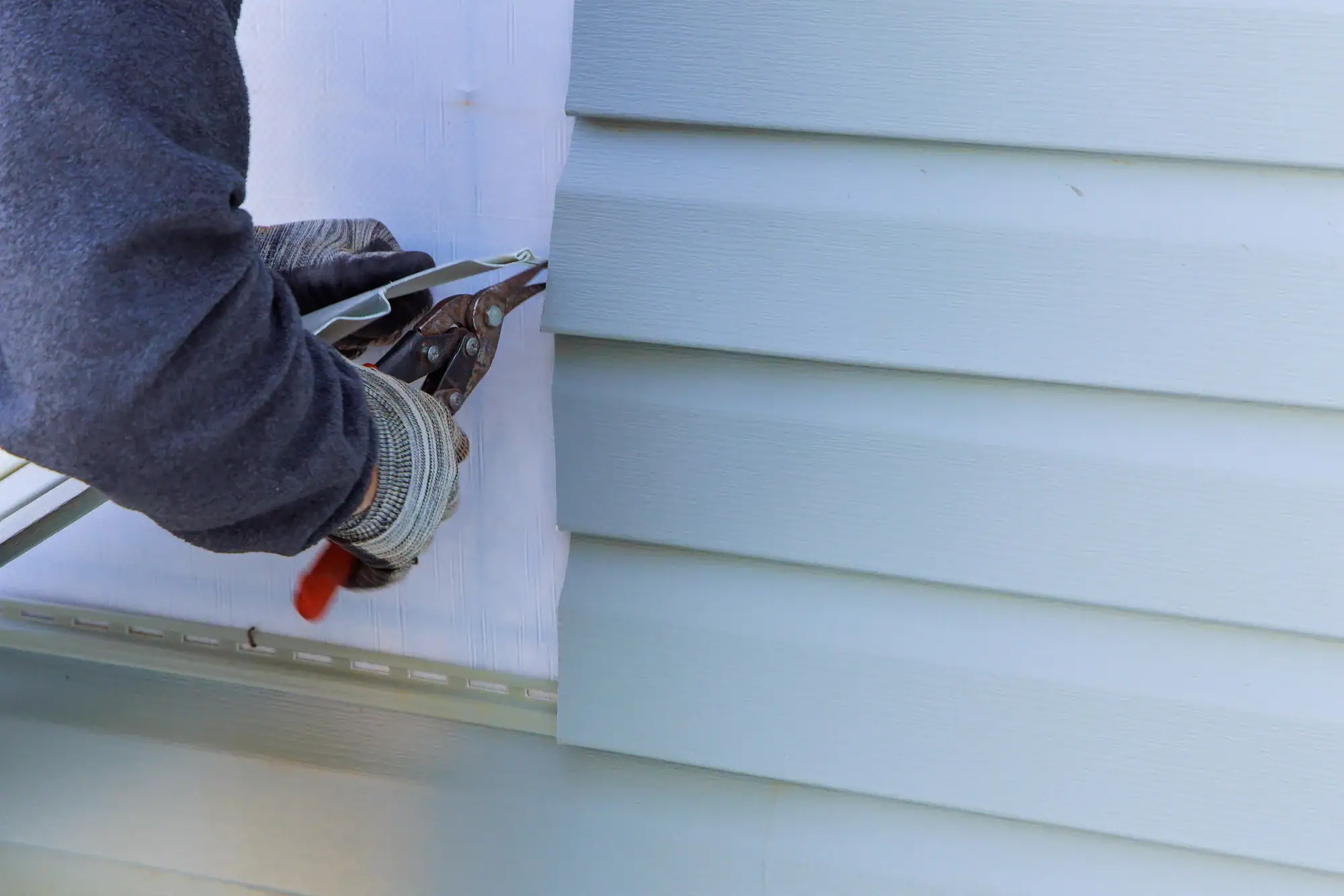
It starts with a free consultation and a full inspection — not a salesperson walking around your house with a clipboard, but a real assessment of what’s happening with your current siding. For homes in Sassafras, that inspection often reveals things that have been quietly developing for years: moisture behind bottom courses, failed caulking at window and door trim, or original 1980s vinyl that’s become brittle from decades of Eastern Shore freeze-thaw cycling. You’ll know exactly what you’re dealing with before any commitment is made.
From there, the scope is written out clearly — materials, process, timeline, and cost. We handle all permitting through Kent County’s Planning and Zoning Department in Chestertown, which is the permitting authority for unincorporated areas like Sassafras. You don’t have to figure out what forms to file or what plans to submit. That’s managed as part of the job.
Installation typically runs two to five days depending on home size and material. Old siding comes off first — full removal, not an overlay — so the wall assembly underneath can be inspected and any hidden damage addressed before new cladding goes on. A moisture barrier goes in, panels are secured to the correct wind load spec for this area, seams are weatherproofed, and trim work is finished cleanly. When the crew leaves, the site is clean. No debris, no leftover material stacked in the yard.
Ready to get started?
We install both vinyl and fiber cement siding, and the choice between them isn’t arbitrary. For most homes in Sassafras, modern vinyl — properly installed with insulated backing and tight weatherproof seams — performs well and holds up against the humidity and seasonal temperature swings that define this part of Kent County. It’s the most popular material in the region for a reason. When it’s installed correctly with a quality moisture barrier, it handles what this climate throws at it.
For homes with direct water exposure — riverfront and near-water properties like those in Kentmore Park along the Sassafras River — fiber cement is worth the conversation. It’s more dimensionally stable in high-humidity environments, resists mold and moisture absorption more aggressively, and carries a longer rated lifespan. It’s a higher upfront investment, but for a property sitting on the river, it’s often the right call for long-term protection.
Both options include full removal of existing siding, moisture barrier installation, trim work, and proper sealing throughout. If storm damage is part of what brought you here, we also provide insurance claims assistance — a real advantage in a region that takes a direct hit from nor’easters and severe weather every year. Financing is available for homeowners who want to move forward without waiting. A free consultation is the starting point for all of it.

Yes, exterior siding work in Sassafras typically requires a building permit. Because Sassafras is an unincorporated community, there’s no local municipal permit office — permitting authority falls under Kent County’s Planning and Zoning Department, located in Chestertown. The application process requires construction plans and a site plan drawn to scale, and the county reviews the project before work begins.
This is one of the things homeowners in Sassafras often don’t realize until they’re already mid-project, or worse, until they’re trying to sell the home and a permit issue surfaces during the transaction. We handle all permitting as part of the project. You don’t have to navigate the county office, figure out what documentation is required, or track down the right forms. It’s managed from start to finish so the job is done cleanly and on record.
The persistent humidity along the Sassafras River and Chesapeake Bay corridor is genuinely harder on siding than what inland homes deal with. Morning fog off the water, high summer humidity, and the ambient moisture that comes with living near a tidal river create conditions where material choice and installation quality both matter more than they would in a drier climate.
Modern vinyl siding, when installed with proper insulated backing and a quality moisture barrier, performs well in this environment and is the most widely used material in the Sassafras area. For homes with direct water exposure — particularly riverfront properties along the Sassafras — fiber cement is worth considering. It resists moisture absorption more effectively, doesn’t expand and contract as dramatically through seasonal temperature swings, and is less prone to the mold and algae colonization that high-humidity environments accelerate. The right answer depends on your home’s specific exposure, age, and condition, which is exactly what the free consultation and inspection are designed to determine.
The honest answer is that it depends on what’s driving the problem. Isolated damage — a few cracked panels, a section that took a hit from a falling branch — can often be repaired without replacing the whole house. But for homes in Sassafras built in the early 1980s, the more common situation is that the siding has simply reached the end of its useful life. Fading and chalking are cosmetic, but warping, failed seams, persistent mold growth, and panels that have become brittle are signs that the material itself is compromised.
The inspection that kicks off every project is specifically designed to answer this question before any money is committed. We look at the full picture — not just the visible surface but what’s happening at the seams, around penetrations, and at the bottom courses where moisture tends to collect first. If repair makes sense, that’s what gets recommended. If the underlying condition of the siding and the wall assembly behind it points toward replacement, you’ll know why, with specifics, not a vague recommendation to spend more.
This is one of the most common concerns homeowners have before a siding project, and it’s a legitimate one — especially for homes in Sassafras that have been holding moisture for decades without anyone knowing. When old siding comes off a home that was built in the 1980s and has never been replaced, finding some degree of rot, mold, or moisture damage in the sheathing underneath is not unusual. The Sassafras River corridor’s humidity and the freeze-thaw cycling of Upper Eastern Shore winters create conditions where water intrusion, if it’s been happening, leaves a mark.
The way we handle this is straightforward: the inspection before the project begins is designed to flag likely problem areas, and the scope of work is written to reflect what’s actually expected. If something is discovered during removal that wasn’t visible during the inspection, you’re told immediately — what was found, what it means, and what it costs to address — before work continues. Nothing proceeds without your approval. There are no surprise charges added to the invoice at the end.
Most siding replacement projects run two to five days from start to finish, depending on the size of the home, the material being installed, and what’s found during removal. A straightforward single-story home with no hidden damage and a clean wall assembly underneath will typically come in at the shorter end of that range. A larger two-story home, or one where moisture damage in the sheathing needs to be addressed before new siding goes on, will take longer.
Weather is also a real factor in this part of Kent County. Siding installation requires dry conditions — not just for the work itself but for the moisture barrier and sealing to perform correctly. We schedule projects with the Eastern Shore’s weather patterns in mind, and the timeline accounts for the kind of spring and fall weather variability that’s common in Sassafras. You’ll have a realistic schedule before work begins, not an optimistic estimate that falls apart the first time it rains.
In many cases, yes — homeowners insurance does cover siding damage caused by storms, including wind, hail, and falling debris. The Upper Eastern Shore takes a regular hit from nor’easters, and severe weather events produce hurricane-force wind gusts that cause widespread exterior damage across Kent County and the surrounding region. Damage from events like that is exactly what homeowners insurance is designed to cover, though the specifics depend on your policy, your deductible, and how the damage is documented.
The part that trips people up is the claims process itself. Insurance companies require documentation — photographs, a contractor’s assessment, and in many cases a written scope of repairs — before they’ll approve a claim. We provide insurance claims assistance as part of the process for storm-damaged homes. That means helping document the damage correctly, working with your adjuster, and making sure the scope of the approved claim actually reflects what needs to be done. For Sassafras homeowners who haven’t been through this before, having a contractor who knows how to navigate that process is the difference between a smooth claim and a frustrating one.
Other Services we provide in Sassafras