
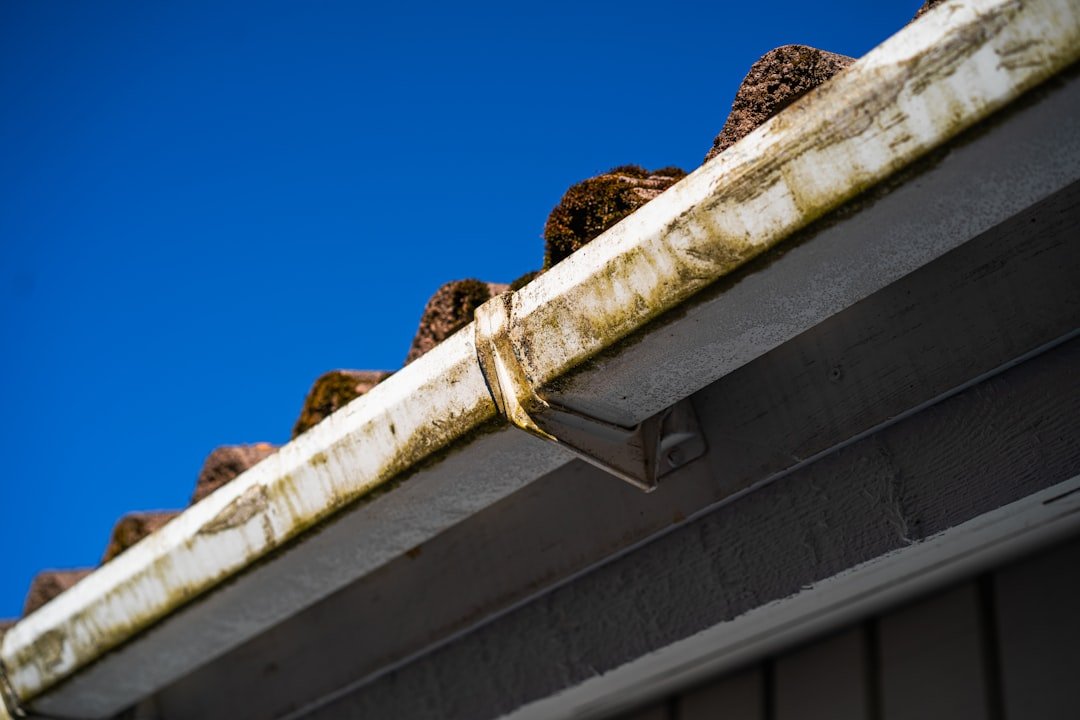
If you’re researching gutters, you’ve probably already noticed that seamless systems cost more. And if you’re like most homeowners, your first instinct is to wonder whether the extra money is actually justified — or whether it’s just a contractor upsell dressed up in nicer packaging.
That’s a fair question. The honest answer is: it depends on a few things, but for most homes in Kent County, the math tips pretty clearly toward seamless. Not because seamless gutters are perfect, but because sectional gutters have a specific weakness that our climate has a way of finding — and finding fast. Here’s what you need to know before you decide.
What’s the Difference Between Seamless and Sectional Gutters?
Sectional gutters are exactly what they sound like — pre-cut lengths of gutter material, usually sold in 10- or 12-foot sections, that get pieced together and joined with sealant at each connection point. They’re available at hardware stores, they can be installed as a DIY project, and they cost less upfront. The trade-off is that a typical home ends up with 15 to 20 joints running along the roofline, and every one of those joints is a potential failure point.
Seamless gutters are fabricated on-site using a portable roll-forming machine. A technician feeds a flat coil of aluminum into the machine at your property, and it produces a single, continuous run of gutter custom-cut to the exact length of each section of your roofline. The only seams in the system are at the corners and downspouts — usually four to eight total on a standard home. Fewer joints means fewer places for water to find its way through.
Why Seamless Gutters Hold Up Better in Kent County’s Climate
The structural advantage of seamless gutters isn’t complicated. Sealant at a sectional joint doesn’t last forever. UV exposure breaks it down, temperature swings cause the metal to expand and contract, and over time the bond weakens. When it goes, water starts working its way behind the joint — and from there it can reach your fascia board, your soffit, and eventually your foundation.
In Kent County, that process happens faster than most homeowners expect. The county averages 45 inches of rain per year, which is roughly 18 to 25 percent more than the national average of 38 inches. That extra rainfall volume means every joint in a sectional system is under more cumulative stress than it would be in a drier climate.
Add in Delaware’s winter freeze-thaw cycles — January temperatures hover around 36°F on average — and you have a pattern that’s particularly hard on sealant. Water that pools in a clogged or improperly pitched gutter freezes, expands, and pushes against the joint from the inside. Do that enough times and something gives.
Seamless gutters don’t eliminate this risk entirely — they still have seams at corners and downspouts, and those can fail if the installation isn’t done right. But cutting the number of seams from 15 or 20 down to four to eight is a meaningful structural improvement. Fewer failure points means fewer leaks, and fewer leaks means less damage to the wood, siding, and foundation behind and below your gutters.
The lifespan difference reflects this reality. Aluminum seamless gutters typically last 20 to 30 years with proper maintenance. Sectional systems in the same material tend to run 15 to 20 years — and that’s under normal conditions. In Kent County’s rainfall environment, sectional gutters often show joint failures well before the 15-year mark.
The Long-Term Cost Math Most Homeowners Don’t Run
The upfront cost of seamless gutter installation is higher than sectional — there’s no getting around that. Seamless systems typically run $8 to $28 per linear foot installed, while sectional systems average $3 to $20 per linear foot. On a standard home, that difference can feel significant when you’re looking at an estimate.
But the comparison that actually matters isn’t upfront cost — it’s total cost over 20 or 25 years. A sectional system that lasts 10 to 15 years before needing full replacement means you’re potentially facing that purchase twice over the same period a seamless system would still be performing. Factor in the joint repairs, re-sealing, and gutter cleaning costs that come with maintaining a sectional system in a high-rainfall market, and the “cheaper” option starts looking considerably more expensive.
There’s also the damage side of the equation. When a sectional gutter joint fails and goes unnoticed — which is common, because these leaks often happen behind the gutter where you can’t see them — the water that gets into your fascia board can cause rot that spreads to the soffit and the structural wood behind it. Replacing rotted fascia adds cost to any future gutter project, because a new gutter system hung on compromised fascia will fail prematurely regardless of how good the gutters are.
This is exactly why we inspect the fascia and soffit before hanging any new system. If there’s rot behind the old gutters, it needs to be addressed first, not covered up. For homeowners in Dover, Smyrna, Milford, and the surrounding Kent County communities who plan to stay in their homes for more than a few years, the long-term math on seamless gutters is hard to argue with. The upfront premium is real, but so is the compounding cost of maintaining and eventually replacing a system that wasn’t built to handle this climate.
Gutter Guards: Why Your Gutter Choice Affects Your Maintenance Burden
Gutter guards are one of those upgrades that get dismissed as a gimmick until a homeowner actually has them — and then they wonder why they waited. A November 2025 survey of 1,000 homeowners found that 94 percent were satisfied with the quality of their gutter guard installation, 93 percent were satisfied with the overall value, and 71 percent reported cleaning their gutters less frequently after installation. Those numbers are hard to ignore.
What most people don’t realize is that gutter guards perform significantly better on seamless systems than on sectional ones. Guards are designed to seat flush against a continuous gutter surface. On a sectional system, the joints and slight variations in alignment between sections create gaps in that seal — which means debris can work its way in at exactly the points where the guard is supposed to be doing its job. It’s not that guards don’t work on sectional gutters; it’s that they work considerably better when the surface beneath them is consistent and uninterrupted.
Gutter Protection in Kent County: What Leaf Season Actually Does to Your System
Kent County’s tree canopy — the oaks, maples, sweetgums, and tulip poplars that line residential streets in Dover, Smyrna, Harrington, and Felton — creates a serious leaf-load problem every October and November. When gutters fill with leaves and debris, water backs up behind the blockage. In a market that gets 45 inches of rain annually, that standing water has nowhere to go except over the edge of the gutter, behind the fascia, or down the side of the house. None of those outcomes are good.
Gutter cleaning costs $160 to $400 per visit, and most homes in tree-heavy areas of Kent County need it two to four times a year. Over ten years, that’s a meaningful recurring expense — on top of whatever repair costs come from the damage that happens when cleanings get skipped or delayed. Gutter guards don’t eliminate cleaning entirely, but they reduce the frequency significantly. Fine debris and shingle grit can still accumulate over time, so plan on one cleaning annually rather than four.
The combination of seamless gutters and properly fitted guards is the closest thing to a low-maintenance gutter system that currently exists. Seamless gutters give you a structurally sound base with minimal joint exposure. Guards reduce the debris load that causes backups and overflow. Together, they address the two most common failure modes in a high-rainfall, high-leaf-load environment like Kent County. For homeowners who are tired of climbing ladders every fall or paying for cleaning visits they can’t always schedule on time, this combination is worth a serious look. Guard installation costs $1.50 to $10 per linear foot depending on the type, and the reduction in ongoing maintenance costs typically offsets that within a few years.
What the Gutter Installation Process Actually Looks Like
One of the things that separates a quality gutter installation from a mediocre one isn’t the gutters themselves — it’s what happens before the first piece of material goes up. We start every project with a thorough inspection of the roofline, fascia, and soffits. If the fascia board behind your existing gutters has started to rot, that has to be addressed before anything else. A new seamless system hung on compromised wood will sag, pull away from the house, and fail — sometimes within a season or two. Skipping that inspection is one of the most common ways gutter installations go wrong.
Once the inspection is done and any underlying issues are handled, we fabricate the gutters on-site. The roll-forming machine comes to your property, and we produce continuous runs of heavy-gauge aluminum custom-cut to the exact measurements of your roofline — not pre-cut sections adjusted to approximate fit, but a precise match to each run. Hangers go in at proper spacing using hidden hanger systems rather than the older spike-and-ferrule method, which has a tendency to pull out of the fascia over time. End caps and miters get sealed properly, downspouts get positioned at the right intervals, and then we run a water-flow simulation before we leave — testing pitch and drainage under actual pressure to confirm the system performs the way it should.
That last step matters more than most people realize. A gutter installed with even a slight pitch error will pool water rather than channel it toward the downspout. Pooling water in a Kent County winter is a problem — it freezes, it stresses the hangers, and it creates exactly the kind of ice-related damage that seamless gutters are supposed to prevent. Testing the flow before the job is considered done isn’t an extra step; it’s just how a gutter installation should be finished.
If you’re having a seamless system installed, this is the process you should expect. If a contractor isn’t inspecting the fascia first, fabricating on-site, and testing the flow after — those are gaps worth asking about before you sign anything.
Which Gutter System Is Right for Your Kent County Home?
For most homeowners in Kent County, seamless gutters are the better long-term investment — not because sectional gutters don’t work, but because the conditions here put consistent pressure on every joint in the system. More rainfall than the national average, real freeze-thaw winters, and a heavy leaf season every fall add up to an environment where fewer seams genuinely matters.
If you’re planning to stay in your home for more than a few years, the long-term cost math on seamless almost always wins. If you’re adding gutter guards — and for most homes in this area, that’s worth considering — seamless gutters give those guards the continuous surface they need to perform properly.
When you’re ready to get a clear picture of what your home actually needs, First State Roofing & Exteriors Co. offers free estimates with no obligation. We’ve been working in Kent County for over 20+ years, and we’re happy to walk you through what we find before you make any decisions.