
Hear from Our Customers

Living on Dover’s eastern fringe, a few miles from the Little Creek Wildlife Area’s 4,700-acre tidal marsh system, means your roof is working in a persistently humid environment. That moisture doesn’t just sit in the air — it feeds algae growth, softens shingle granules, and accelerates the kind of deterioration that sneaks up on you between inspections.
A roof that might hold up for 25 years in a drier, more inland location can show significant wear in 15 to 18 years here in Pleasanton Acres, and most homeowners don’t find out until there’s a stain on the ceiling. When we get a roof properly assessed, correctly specified for this climate, and installed by a crew that doesn’t hand the job off to someone else, the difference is tangible.
No more watching a dark streak spread across your shingles and wondering if it’s cosmetic or structural. No more dreading the next nor’easter because you’re not sure what the wind will find loose up there. Pleasanton Acres also sits on the eastern side of Dover — the side that faces toward the bay and catches storm energy before it reaches the city’s more sheltered neighborhoods. When a storm pushes in from the northeast, your roof is in its path first. Getting ahead of that with the right materials, proper flashing, and a contractor who actually knows this area isn’t overcautious. It’s just smart.
We’ve been working throughout Kent County for over 22 years, and that means we’ve seen what the climate does to roofs in communities like Pleasanton Acres. We know the algae that takes hold faster near the marsh corridor, the flashing that separates after a hard nor’easter, and the gutters that can’t keep up when the mature tree canopy drops debris all fall. This isn’t general Delaware knowledge. It’s specific, earned, and it shows up in how we do the work.
We’re licensed through the Delaware Division of Professional Regulation, carry full General Liability and Workers’ Compensation insurance, and hold a 5.0 out of 5 rating across more than 63 verified reviews on Google and Facebook. Richard McCain, our owner and president, is a named, reachable person — not an anonymous LLC. When something needs attention after the job is done, there’s a real person to call, and we’re still in business.
Every project is handled in-house. No subcontracting, no strangers on your property that weren’t part of the original conversation. The crew you meet during the estimate is the crew accountable for the work.
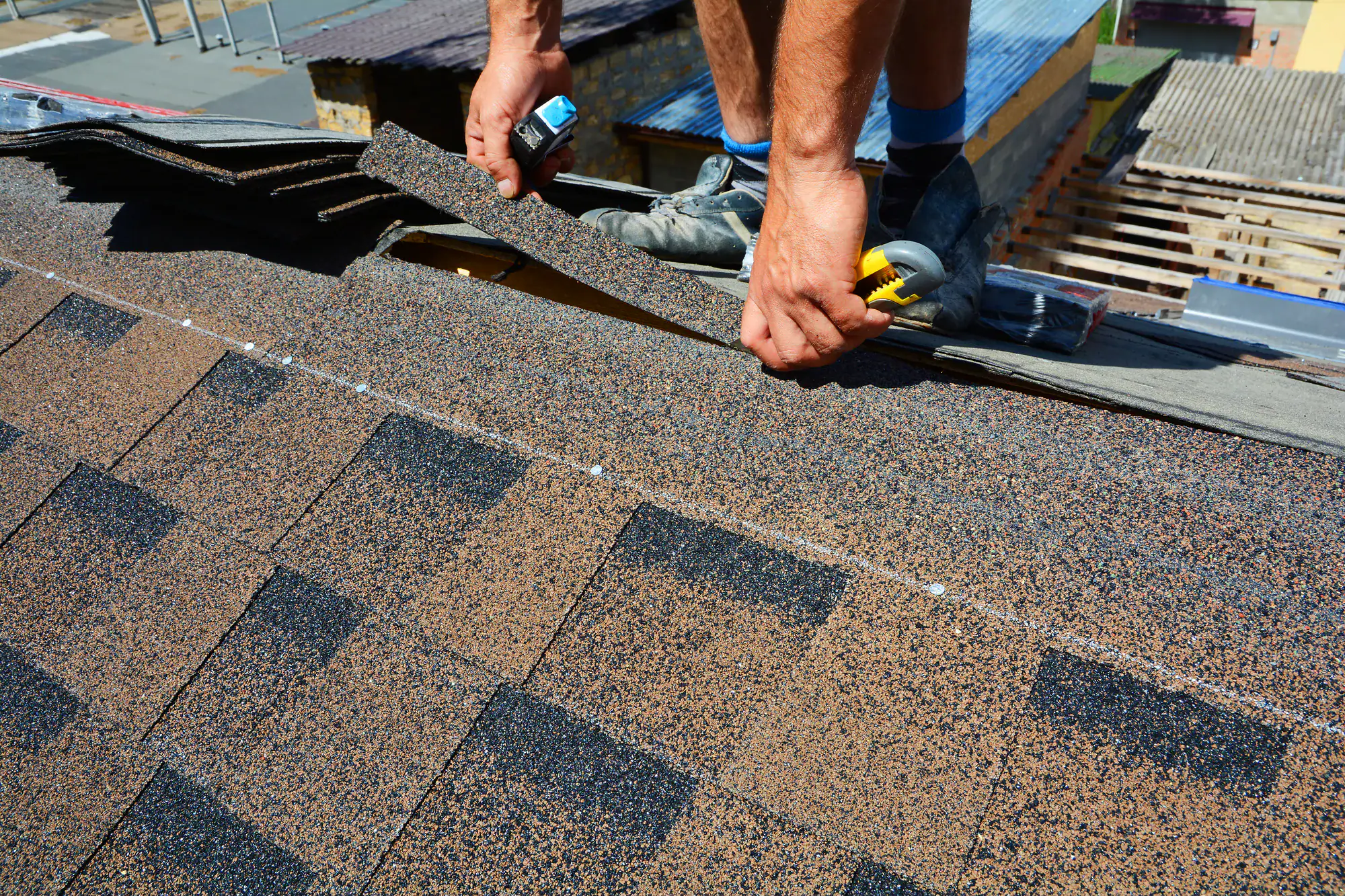
It starts with a free roof inspection. One of our team members comes out to your Pleasanton Acres home, gets on the roof, and gives you a documented, honest picture of what’s actually going on up there — with photos. You’re not getting a verbal summary and a sales pitch. You’re getting something you can use, whether that’s for an insurance claim, a pre-sale disclosure, or just your own peace of mind.
From there, if work is needed, you get a written estimate that spells out the scope, the materials, and what the job will cost. For homes in the 19901 zip code that fall under Kent County’s unincorporated jurisdiction, roofing permits for full replacements are processed through the Kent County Department of Planning Services — we handle that coordination so you don’t have to figure out the paperwork yourself. If your home sits within Dover city limits, the permit process runs through the City of Dover Building Inspection Department instead, and we know the difference.
Once the work is scheduled, our crew shows up, does the job, and cleans up completely before they leave. That last part isn’t an afterthought — it comes up in reviews consistently, and in a quiet residential area like Pleasanton Acres, it matters. After the job is done, you have a workmanship warranty and a manufacturer-backed product warranty, and a contractor who is still operating in Kent County when Year 3 rolls around.

Ready to get started?
The moisture environment around Pleasanton Acres doesn’t just affect your roof. It works on your gutters, your siding, and your trim at the same time. Organic debris from tree canopy accumulates in gutters and holds moisture against the fascia. Humidity finds its way behind siding panels that were installed without proper attention to the bay-side exposure. We handle all of it — roofing, siding, gutters, windows, and skylights — under one contractor relationship, which means one estimate, one crew, and one point of accountability instead of three separate contractors with three separate schedules.
On the roofing side specifically, we work with asphalt shingles, metal roofing, EPDM, TPO, slate, rubber, clay tile, and more. For Pleasanton Acres homes, algae-resistant shingles are worth a serious conversation — Gloeocapsa magma, the organism behind those dark streaks you see on roofs throughout the Dover area, thrives in humid conditions, and the bay-moisture corridor here accelerates its growth compared to drier inland locations. The right material choice upfront is significantly cheaper than cleaning and replacing prematurely.
If storm damage is involved, we work directly with your homeowner’s insurance provider to help document the damage and navigate the claims process. And if the cost of a full replacement is the sticking point, financing is available — because a deteriorating roof doesn’t wait for the budget to line up, and the cost of delaying almost always exceeds the cost of acting.

It’s a real factor, not a sales angle. The Little Creek Wildlife Area covers more than 4,700 acres of tidal marsh sitting between Delaware Bay and the Dover area, and Pleasanton Acres is roughly 3 miles from it. That proximity means elevated ambient humidity year-round — which is the primary driver of algae growth (the dark streaking you see on roofs throughout this part of Kent County), moss accumulation, and accelerated granule loss on asphalt shingles.
A roof in a drier, more inland location might comfortably reach 25 years before showing significant wear. In a bay-adjacent, high-humidity environment like Pleasanton Acres, that same roof can show meaningful biological degradation and shingle deterioration in 15 to 18 years. The fix isn’t necessarily replacing sooner — it’s choosing materials that are rated for high-humidity conditions, making sure ventilation is correct so moisture doesn’t build up from the inside out, and having the roof inspected regularly so small issues don’t compound. Algae-resistant shingles, in particular, are a straightforward upgrade that pays for itself in this specific environment.
The honest answer is that you often can’t tell from the ground, and neither can a contractor who hasn’t actually gotten on the roof. The visible signs — missing shingles, dark streaking, sagging gutters — tell part of the story, but the more important indicators are things like the condition of the flashing around chimneys and penetrations, whether the underlayment has been compromised, and how much granule loss has occurred across the field of the roof.
A free inspection from us gives you a documented answer with photos, not a guess. Generally speaking, if a roof is under 15 years old and the damage is localized, repairs often make sense. If it’s pushing 20 years or more — which is common in established Pleasanton Acres neighborhoods — and multiple areas are showing wear, replacement typically costs less over the next decade than repeated repairs that keep buying time. The inspection tells you which situation you’re actually in, and there’s no cost to find out.
It depends on your policy, but storm damage — wind, hail, falling debris — is covered under most standard homeowner’s insurance policies in Delaware. What trips people up is the documentation and claims process. Adjusters work for the insurance company, not for you, and the way damage is described and documented in the initial claim has a direct impact on what gets approved.
We work directly with homeowners’ insurance providers to help document storm damage and navigate the claims process. In Kent County, where nor’easters and tropical storm remnants are a recurring reality — Delaware sees tropical storm remnants every two to three years, with wind gusts documented over 70 mph — this isn’t an edge case service. It’s something that comes up regularly. If you’ve had wind or storm damage and aren’t sure whether to file a claim, start with a free inspection. Having documented, photo-supported evidence of the damage puts you in a much stronger position before you ever talk to an adjuster.
For most residential homes in Pleasanton Acres, architectural asphalt shingles with algae resistance are the practical baseline — they’re durable, widely available, and specifically rated to resist the Gloeocapsa magma growth that’s common in Delaware’s humid, bay-adjacent communities. The algae-resistant treatment is embedded in the shingle granules and makes a measurable difference in how long the roof stays clean and functional in a high-humidity environment like this one.
Metal roofing is worth considering if you’re planning to stay in the home long-term. Metal roofs can last up to 50 years, hold up well against wind-driven rain from nor’easters, and don’t support algae or moss growth the way asphalt does. The upfront cost is higher, but for a home on Dover’s eastern fringe — where the roof takes more weather stress than a sheltered inland property — the longevity math often works in your favor. The right choice depends on your roof’s current condition, your budget, and how long you’re planning to own the home. We can walk you through the options during a free estimate without any pressure to go one direction or another.
For a standard single-family home in Pleasanton Acres, the physical installation of a new roof is typically completed in one day. That’s the actual on-roof work — tear-off, underlayment, new shingles, flashing, ridge cap, and cleanup. Larger or more complex rooflines, or jobs involving additional exterior work like gutters or siding, may run into a second day, but single-story residential roofs in this area are generally a one-day job.
The part that takes longer is everything before the crew shows up. Scheduling the inspection, reviewing the estimate, selecting materials, and — if insurance is involved — working through the claims process can add days or weeks to the overall timeline depending on how quickly the insurance side moves. If you’re not going through insurance, the timeline from free estimate to scheduled installation is typically much shorter. We manage the permit coordination for Kent County unincorporated properties as part of the process, so that’s not something you need to track separately. The clearest thing you can do right now to shorten the timeline is schedule the free inspection — that’s what starts the clock.
After a significant storm moves through the Kent County area, out-of-state and out-of-region contractors follow the damage. They show up door to door, offer fast quotes, and often ask for a large deposit upfront. Some do decent work and move on. Others do poor work, take the money, and are unreachable six months later when a leak shows up. The difference between a storm chaser and a legitimate local contractor isn’t always obvious in the first conversation, but there are a few things you can verify before signing anything.
Ask for the contractor’s Delaware license number and verify it through the Delaware Division of Professional Regulation. Ask for a certificate of insurance showing both General Liability and Workers’ Compensation coverage — without Workers’ Comp, you can be held liable if a worker is injured on your property. Ask for a written contract with specific materials listed, not just a dollar amount. And check how long the company has actually been operating in Delaware. A contractor with 22+ years of history in Kent County has a permanent address, a verifiable track record, and a real reason to stand behind the work. We check all of those boxes — and you can verify every one of them before the first nail goes in.
Other Services we provide in Pleasanton Acres