
Hear from Our Customers
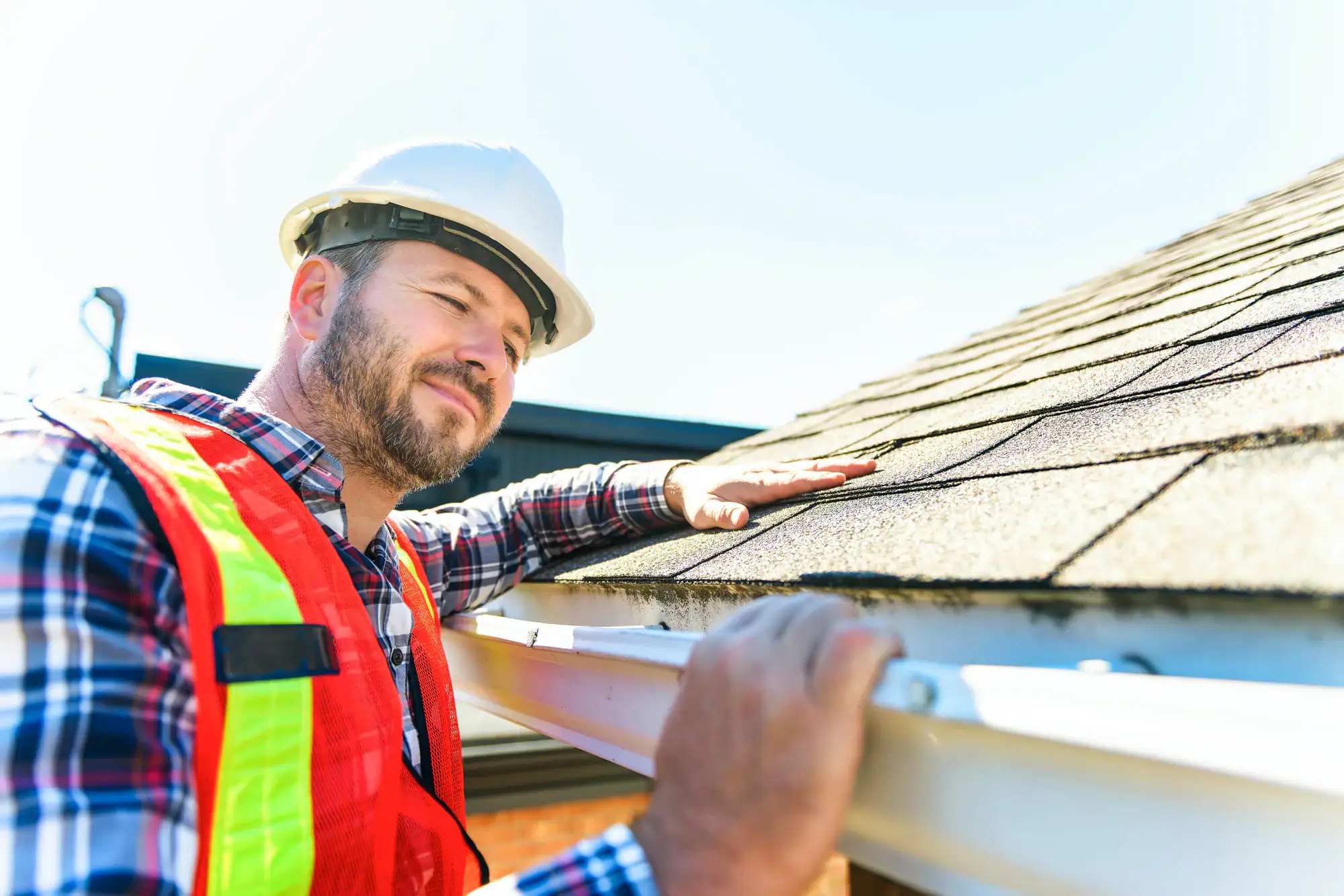
There’s a specific kind of stress that comes with not knowing. You notice a dark streak on the shingles, or a soft spot near the eave, and you tell yourself it’s probably fine — but you’re not sure. That uncertainty is exactly what a proper roof inspection clears up. You get a documented, professional assessment of what’s actually happening up there, not a sales pitch designed to push you toward a replacement you may not need.
For Capitol Park homeowners, this matters more than it does in newer neighborhoods. The housing stock here was built predominantly between 1970 and 1999. That means a significant share of roofs in this neighborhood are at or past the rated lifespan of the shingles they were installed with.
Add Delaware’s 45 inches of annual rainfall, winter freeze-thaw cycles that crack older shingles from the inside out, and the high humidity that drives algae growth on aging asphalt — and what might look fine from the street can be quietly failing at the flashing, the underlayment, or the seal around every penetration on the roof.
When you get clarity on what’s actually wrong — and what isn’t — you can make a real decision. Not a panic decision after a leak shows up in your ceiling, and not a deferred decision that turns a $1,500 repair into a $15,000 problem. Just a clear picture of where your roof stands, from a contractor who’s been working in Kent County for over 22 years.
First State Roofing & Exteriors Co. is a family-owned roofing and exteriors contractor based in Delaware, with deep roots across Kent County. Capitol Park isn’t a stretch of our service map — Dover is the county seat, and this is home territory.
Richard McCain, our owner and president, has been doing this work in Delaware for over 22 years. He knows what freeze-thaw cycles do to 1980s-era shingles. He knows how humidity off the Chesapeake corridor accelerates algae growth on older asphalt. And he knows that Capitol Park homeowners — many of whom work in or around the state capital or have ties to Dover Air Force Base — don’t have time for contractors who show up vague and leave you with more questions than answers.
Every job is handled in-house. No subcontracting, no strangers on your property who weren’t part of the original conversation. We’re licensed through the Delaware Division of Professional Regulation, fully insured, and BBB accredited. Our 5.0-star rating across 63-plus verified reviews isn’t a lucky streak — it’s what happens when a contractor actually follows through.
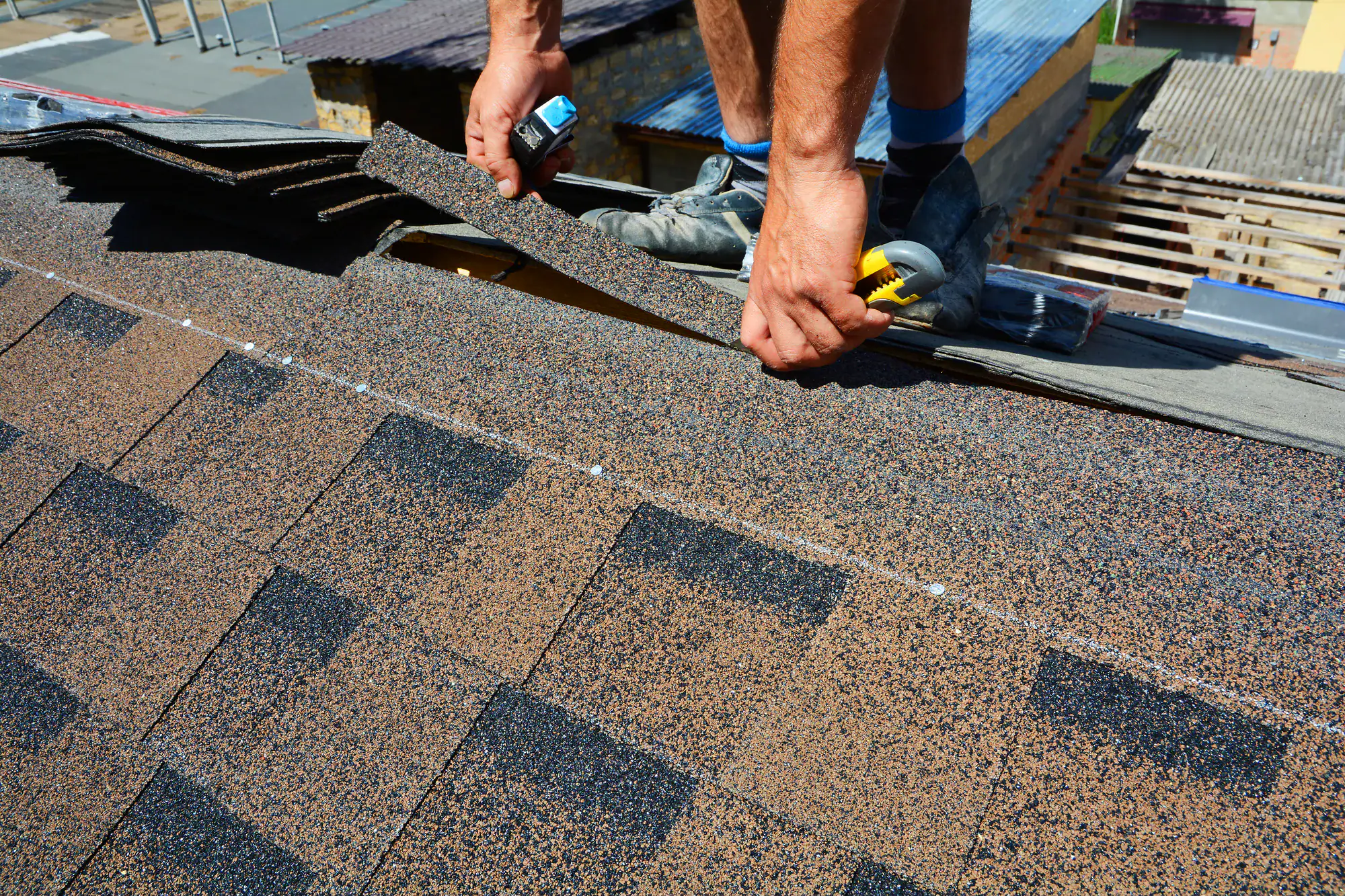
It starts with a free inspection. Someone from our team comes out, gets on the roof, and gives you a real assessment — documented, specific, and honest about what needs attention now versus what can wait. For Capitol Park homes in the 1970–1999 build range, that inspection often turns up issues that weren’t visible from the ground: cracked flashing, deteriorated underlayment, or shingles that have lost their granules and are no longer doing their job against Delaware’s rainfall.
From there, you get a written estimate with a clear scope of work. No vague line items, no verbal-only agreements. If storm damage is involved, we work directly with your insurance provider to help navigate the claims process — which is genuinely complicated for most homeowners and doesn’t have to be something you figure out alone.
Once the work is scheduled, our crew shows up, completes the job, and leaves the property clean. That last part isn’t a footnote — it shows up in review after review from Capitol Park customers who specifically mention how clean the site was when we left. Because Capitol Park is a neighborhood where people know their neighbors and take pride in how their homes look, that attention to detail matters.
After the job, you have a documented warranty — both on the workmanship and on the materials — so if something comes up in year two or year three, there’s someone to call.
Ready to get started?
We handle the full exterior — roofing, siding, gutters, windows, and skylights. For a Capitol Park homeowner who discovers a roof issue and also has aging gutters or siding that’s seen better days, that means one point of contact, one mobilization, and one warranty conversation instead of coordinating three separate crews over three separate weeks.
On the roofing side specifically, we work with asphalt shingles, metal roofing, slate, rubber, clay tile, and flat roof systems including TPO and EPDM for commercial applications. Material recommendations for Capitol Park homes take Delaware’s specific climate into account — and that means algae-resistant shingles are a standard recommendation, not an upsell. Homes built before the mid-1990s were installed with shingles that predate algae-resistant granule technology as a standard feature. In a state with Delaware’s humidity levels, that’s a real gap that a replacement should close.
We offer emergency roof repair around the clock. When a nor’easter or late-season storm hits the Dover area — and Delaware sees tropical storm remnants every two to three years, with wind gusts that can push past 70 mph — waiting until Monday morning isn’t always an option. Financing is also available for homeowners who need to move forward on a larger project without draining savings to do it.
Free estimates and free inspections are the starting point, with no financial commitment required to find out where your roof actually stands.

The honest answer is that you often can’t tell from the ground, and even a close look from a ladder won’t show you what’s happening at the underlayment or flashing level. The most reliable way to know is a professional inspection — and for Capitol Park specifically, the age of the housing stock makes this more urgent than it might be in a newer development. If your home was built between 1970 and 1999, your roof is anywhere from 25 to 50-plus years old. Standard 3-tab asphalt shingles have a rated lifespan of 15 to 20 years. Architectural shingles run 25 to 30. Either way, a roof from that era is at or past its design life.
Our inspection will look at shingle condition, granule loss, flashing integrity, underlayment, ventilation, and any signs of water intrusion in the attic. Some roofs in that age range genuinely only need targeted repairs. Others have deteriorated to the point where repair costs more in the long run than replacement. The inspection gives you the documented picture to make that call — not a guess, and not pressure from a contractor who profits either way.
It depends on the cause of the damage and the terms of your specific policy, but storm damage — wind, hail, falling debris — is generally covered under standard homeowners insurance policies. The complication is that the claims process itself can be confusing, especially when it comes to the adjuster’s assessment of what’s covered versus what’s considered pre-existing wear. Delaware sees enough storm activity — nor’easters in spring and fall, and tropical storm remnants every two to three years — that this is a real and recurring situation for Capitol Park homeowners, not a rare edge case.
We work directly with your insurance provider to help navigate storm damage claims. That means helping document the damage, communicating with the adjuster, and making sure the scope of covered repairs is accurately represented. You don’t have to figure out the insurance side alone, and you shouldn’t have to. If you’re unsure whether your damage qualifies, the free inspection is the right first step — it gives you the documentation you’d need to support a claim.
Those dark streaks are algae — specifically a strain called Gloeocapsa magma — and they’re extremely common on asphalt shingles in Delaware’s climate. The combination of high humidity and the mid-Atlantic’s warm summers creates ideal conditions for algae to take hold, and once it does, it feeds on the limestone filler in asphalt shingles and gradually degrades the material. So it’s not just cosmetic. Left alone, algae accelerates shingle deterioration and shortens the effective life of the roof.
Homes in Capitol Park built before the mid-1990s were typically installed with shingles that don’t have algae-resistant granules — that technology became more standard in newer products. If your roof is showing dark streaking and it’s already in the 25-to-40-year age range, that’s a meaningful data point in the repair-versus-replace conversation. When we replace a roof in this area, algae-resistant shingles are the standard recommendation — not because it adds to the ticket, but because it’s the right specification for Delaware’s actual climate and the only way a new roof investment holds up for its full rated lifespan.
Yes, roofing work in Delaware generally requires proper permits, and because Capitol Park falls within the City of Dover’s limits, the permitting process runs through the City of Dover’s building inspections office rather than Kent County’s system. The two operate separately, so it’s worth knowing which jurisdiction applies to your address. State-level contractor licensing for larger jobs is handled through the Delaware Division of Revenue, and we’re verified through the Delaware Division of Professional Regulation at the state level.
As the homeowner, you shouldn’t have to navigate any of that yourself. A reputable roofing contractor pulls the necessary permits as part of the job — that’s standard practice for licensed contractors and a basic signal that the work is being done above board. If a contractor ever asks you to pull your own permit or suggests skipping it to save time, that’s a red flag worth taking seriously. Permitted work is inspected, documented, and protects you if you ever sell the home or file an insurance claim down the road.
For most Capitol Park homes — which tend to run between roughly 900 and 1,900 square feet — a full roof replacement is typically a one-day job under normal conditions. That’s the scope most residential replacements in this size range fall into when the crew is experienced, the materials are staged in advance, and the weather cooperates. Our customers have specifically noted in reviews that their Capitol Park projects were completed in a single day, which matters in a neighborhood where people are home, working, or simply don’t want their street looking like a construction site for a week.
Factors that can extend the timeline include significant decking damage discovered once the old shingles are removed, multi-layer tear-offs on older homes, or weather delays — which are a real consideration in Delaware, where spring and fall storms can move through quickly. We’ll communicate clearly if anything changes the original scope or timeline. The goal is always to get your home back to normal as fast as the job can be done correctly — not just fast.
After a storm rolls through the Dover area, out-of-town contractors show up fast. They knock on doors, offer quick quotes, and create urgency — and some of them do decent work. But many don’t, and the ones who don’t are gone before you find out. There’s no local office to call, no named owner who lives in the same state, and no warranty that’s worth the paper it’s printed on if the company doesn’t exist in three years.
A contractor with 22-plus years of history in Kent County has something those operations can’t manufacture: a track record in this specific market, with homeowners in neighborhoods like Capitol Park, Pennwood, and the surrounding Dover communities. We’ve built our reputation here over more than two decades. The owner’s name is on the business. Our reviews are specific and verifiable. And when a Capitol Park homeowner calls two years after a job because they have a question about their warranty, there’s someone here to answer it. That kind of accountability is exactly what a neighborhood of invested, long-term homeowners should expect from the contractor they hire.
Other Services we provide in Capitol Park