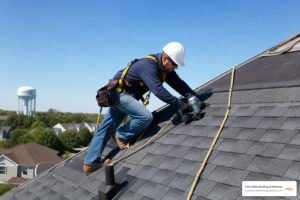
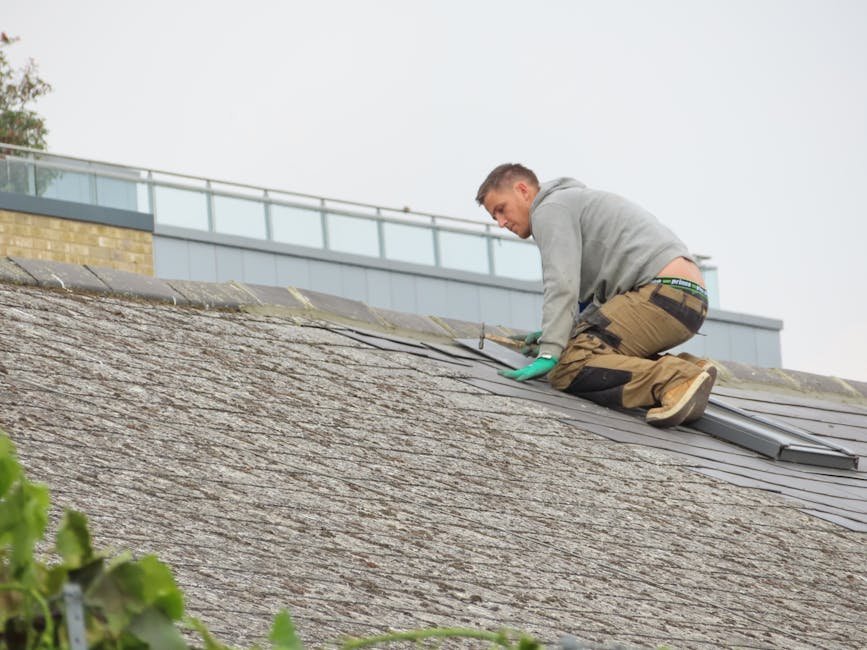
Why Residential Roof Repairs Deserve Your Immediate Attention
Residential roof repairs are one of the most important — and most overlooked — aspects of home maintenance. A damaged roof doesn’t just look bad. It puts your entire home at risk: your insulation, your walls, your foundation, and everything inside.
Here’s a quick overview of what you need to know:
| Topic | Key Facts |
|---|---|
| Repair cost range | $379 – $1,758 depending on damage and materials |
| Replacement cost range | $5,727 – $12,418 for full replacement |
| Asphalt shingle lifespan | 15 – 20 years before replacement is needed |
| Inspection cost | $120 – $321 (physical); up to $600 for infrared |
| Common warning signs | Missing shingles, water stains, curling edges, granule loss |
| When to call a pro | Sagging roof, multiple damage areas, active interior leaks |
| Emergency first step | Contain water inside, document damage, call a roofer |
Even minor damage — like a few missing shingles — can let moisture into your home’s structure, leading to mold, rot, and expensive interior repairs. The longer you wait, the worse it gets.
Roofs don’t fail overnight. They wear down gradually through sun exposure, freeze-thaw cycles, windstorms, and age. By the time you notice a ceiling stain, the damage has often been spreading for weeks or months.
I’m Richard McCain, Owner and President of First State Roofing & Exteriors, with over 20 years of hands-on experience handling residential roof repairs across Kent and Sussex County, DE. Throughout this guide, I’ll walk you through everything — from spotting early warning signs to deciding between repair and full replacement — so you can protect your home with confidence.
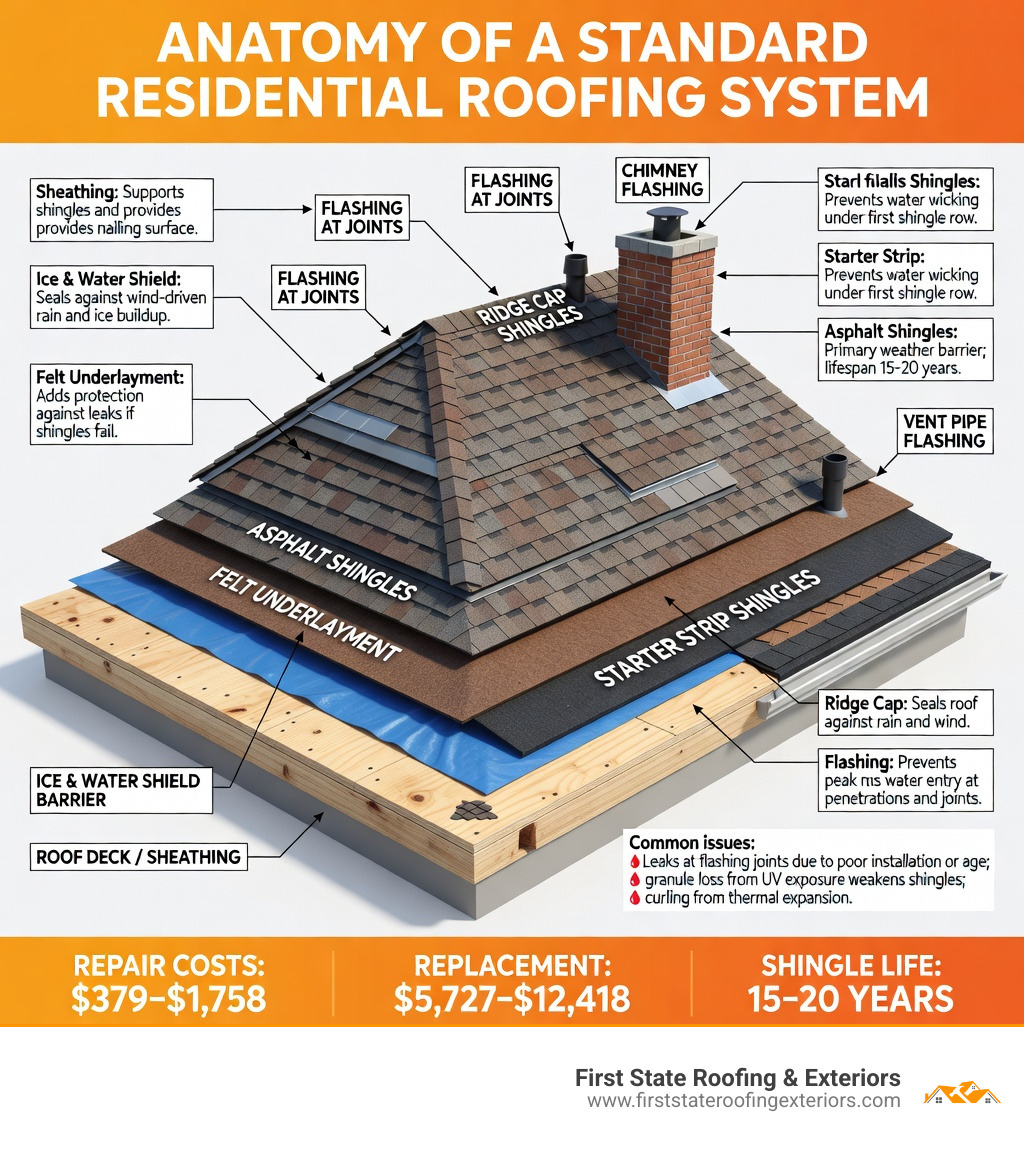
Quick look at residential roof repairs:
Identifying Common Signs of Roof Damage
Spotting roof damage early is the difference between a $400 patch job and a $10,000 headache. Most homeowners only look at their roof when it’s raining, but a proactive approach—using a pair of binoculars from the safety of the ground—can reveal issues before the first drop hits your living room floor.
According to How to Identify Roof Damage and What to Look For, damage often presents itself in subtle ways. You should look for debris on the lawn after a storm, but also check for structural changes like a sagging ridgeline.
Interior Warning Signs
Your attic is the “early warning system” for your roof. We recommend checking your attic at least twice a year, especially after the heavy Kent and Sussex County, DE coastal storms. Look for:
- Attic Leaks: Wet spots on the insulation or rafters.
- Ceiling Stains: Brown, yellow, or grey rings on your upstairs ceilings.
- Mold Growth: A musty smell or visible black/green spots in the attic often indicate poor ventilation or a slow leak.
- Sagging Sheathing: If the plywood between the rafters looks warped or “wavy,” moisture has compromised the wood.
- Light Infiltration: If you can see “stars” (daylight) peeking through the roof boards, water is definitely getting in.
Exterior Visual Indicators
From the street or a ladder, keep an eye out for these red flags:
- Cracked or Curling Shingles: As shingles age, they lose their natural oils, causing them to brittle, crack, or turn upward at the edges.
- Granule Loss: If your gutters look like they are filled with black sand, your shingles are losing their protective UV coating.
- Rusted or Damaged Flashing: Flashing is the metal used around chimneys and vents. If it’s rusted or peeling away, it’s a primary leak site.
- Ice Dams: In the winter, ridges of ice at the roof edge block drainage, forcing water under the shingles.
- Clogged Vents: Debris or bird nests in your vents can cause heat buildup, “cooking” your shingles from the inside out. For more details on keeping these systems clear, see More info about roof maintenance.
DIY vs. Professional Residential Roof Repairs
We often get asked: “Can I just fix this myself?” The answer depends on your comfort level with heights and the complexity of the damage. For a single missing shingle on a low-slope roof, a handy homeowner can often manage. However, for anything involving structural sagging, multiple leaks, or steep pitches, calling a professional is the only safe choice.
Essential Tools for Homeowners
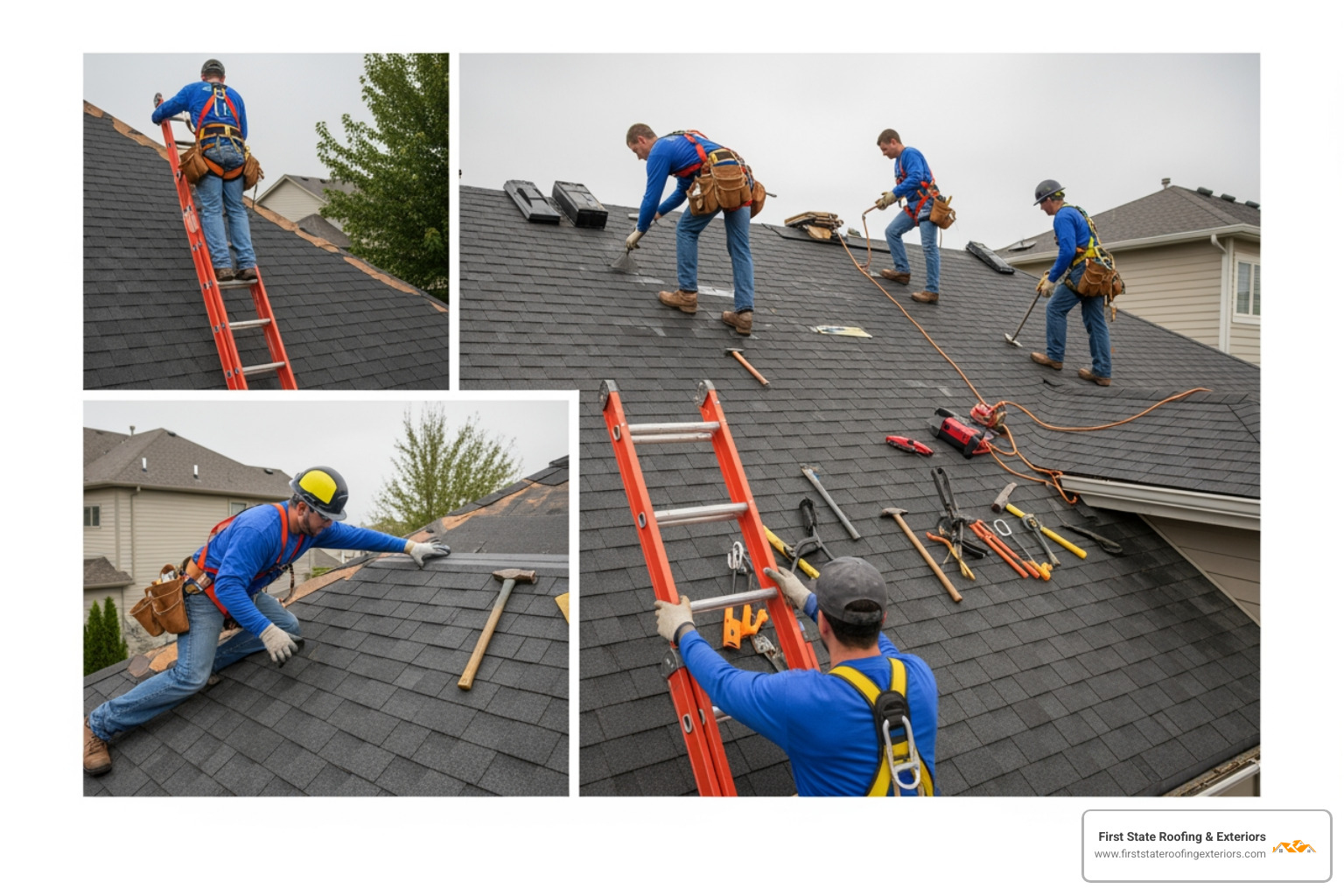
If you decide to tackle a minor fix, you need the right gear. Safety isn’t just a suggestion; it’s a requirement.
- Safety Gear: A Personal Fall Arrest System (PFAS) or harness is vital.
- Ladder: A sturdy extension ladder secured at the base and top.
- Soft-soled Boots: These provide better grip and prevent you from scuffing the shingles.
- Pry Bar & Hammer: To remove old nails and shingles.
- Roofing Cement & Caulking Gun: For sealing small cracks and nail heads.
- Utility Knife: For trimming new shingles to fit.
Step-by-Step Guide for Minor Residential Roof Repairs
For those attempting to replace a damaged shingle, follow these steps based on How To Repair and Replace Roof Shingles for Your Home:
- Loosen the Shingle: Use a pry bar to gently lift the tabs of the shingles in the row above the damaged one to expose the nails.
- Remove Nails: Carefully slide the pry bar under the damaged shingle and pop the nails out. You’ll usually find four nails per shingle.
- Slide Out & Replace: Remove the old shingle and slide a new one into its place.
- Secure: Nail the new shingle down using galvanized roofing nails, ensuring the heads are covered by the overlapping row.
- Seal: Apply a small dab of roofing cement under the tabs to prevent wind uplift.
- Monitor: Only perform these repairs on warm, dry days so the shingles are pliable and the sealant bonds correctly.
For more complex issues, we invite you to read More info about professional roof repair services.
Deciding Between Roof Repair and Full Replacement
The “Repair vs. Replace” debate usually comes down to three factors: age, extent of damage, and budget. Asphalt shingles typically have a lifespan of 15 to 20 years. If your roof is 18 years old and leaking in three places, a repair is just a “band-aid” on a problem that requires a permanent solution.
As noted in Solved! How to Choose Between Roof Repair or Replacement, a roof over 10 years old that begins to show widespread granule loss or curling is often a candidate for replacement rather than localized patching.
When Repair is Sufficient
We generally recommend residential roof repairs when:
- The damage is localized to one small area (e.g., a tree limb fell in one spot).
- The roof is less than 10-12 years old and generally in good health.
- The issue is a minor leak caused by localized flashing failure around a chimney.
- You are on a strict budget and need a temporary fix to last another 1-2 years.
When Replacement is Necessary
Replacement is the smarter long-term investment when:
- The roof has reached the end of its 20-year manufacturer warranty.
- There is widespread rot in the roof deck or structural sagging.
- You are experiencing recurring leaks in multiple rooms.
- A major storm has stripped more than 20-30% of the shingles.
Handling Emergency Situations and Insurance Claims
When a storm hits Dover or Milford, things happen fast. An “emergency” is any situation where water is actively entering the home or the structural integrity is compromised. In these moments, your goal is “mitigation”—preventing further damage so your insurance company doesn’t deny your claim later.
Immediate Steps for Roof Emergencies
- Safety First: Never go on a roof during a storm or high winds. Stay inside until the weather clears.
- Contain the Water: Use buckets to catch drips and move furniture or electronics away from the leak.
- Document Everything: Take photos and videos of the damage before you fix anything. This is crucial for insurance.
- Temporary Tarping: If it’s safe, a properly secured tarp can save your interior. Extend the tarp over the ridge to prevent water from running under it.
- Professional Contact: Call a local roofer for an emergency assessment.
Navigating Insurance for Residential Roof Repairs
Many homeowners don’t realize that insurance typically covers “sudden and accidental” damage (like hail or a fallen tree) but not “wear and tear” (like an old roof simply wearing out).
When filing a claim:
- Act Fast: Most policies have a time limit for filing storm claims.
- Meet the Adjuster: We often meet with the insurance adjuster on-site to ensure they see the full extent of the damage.
- Understand Exclusions: Check if your policy pays “Replacement Cost Value” (RCV) or “Actual Cash Value” (ACV). ACV pays less as it subtracts for the age of the roof. For a deeper dive into this process, see More info about storm damage repair.
Preventative Maintenance and Choosing a Contractor
Regular maintenance can extend the life of your roof by 5 to 10 years. In Kent and Sussex County, DE, our proximity to the coast means we deal with high humidity and salt air, which can accelerate the breakdown of certain materials.
Seasonal Maintenance Checklist
- Spring Inspection: Check for winter damage, loose shingles, and ensure gutters are clear for spring rains.
- Fall Debris Removal: Remove leaves and pine needles. These trap moisture against the shingles, leading to rot.
- Flashing Checks: Inspect the sealant around your chimney and vents. Heat can cause these to crack.
- Vent Clearing: Ensure your ridge and soffit vents aren’t blocked, which is vital for preventing ice dams.
How to Hire a Reliable Roofer
Don’t just hire the first person who knocks on your door after a storm. A reliable roofer should provide:
- Licensing and Insurance: They must be licensed to work in Kent and Sussex County, DE and carry workers’ comp and liability insurance.
- Local Reputation: Look for a company with deep roots in Dover or Milford. For local insights, check More info about roofers in Dover.
- Manufacturer Certifications: Status as a GAF Master Elite or similar certification shows they’ve been vetted by the people who make the materials.
- Written Estimates: Never accept a verbal quote. Get a detailed breakdown of labor, materials, and disposal fees.
Frequently Asked Questions about Roof Repair
How much do residential roof repairs typically cost?
Residential roof repairs generally range from $379 to $1,758, depending on the extent of the damage and materials required. Minor shingle replacements are on the lower end, while repairing structural damage or valley leaks can be more expensive.
Can I repair my own roof leak?
Homeowners can perform minor repairs like replacing a single shingle or sealing a small crack. However, structural issues, widespread leaks, or leaks that are difficult to find require professional intervention. Working on a roof is dangerous, and improper repairs can void your manufacturer’s warranty.
How long does a typical roof repair take?
Most minor residential repairs can be completed in 1 to 6 hours. If the crew needs to replace sections of the roof deck (the wood underneath) or handle extensive storm restoration, it may take a full day or more.
Conclusion
At First State Roofing & Exteriors, we know that your home is your most valuable asset. Whether you are in Dover, Milford, or anywhere else in Kent and Sussex County, DE, we are committed to providing residential roof repairs that stand the test of time. As a family-owned business, we prioritize integrity, transparency, and being there for our neighbors when they need us most.
Don’t let a small leak turn into a major disaster. Addressing issues early saves money and protects your family. We are proud to offer comprehensive Residential Roof Repair Services backed by our 24/7 emergency availability and local expertise.
For a sound home and peace of mind, homeowners should prioritize early intervention. First State Roofing & Exteriors gives free estimates and professional assessments to ensure your property remains protected.
Call (302) 222-4065 for a free inspection today!