
Hear from Our Customers
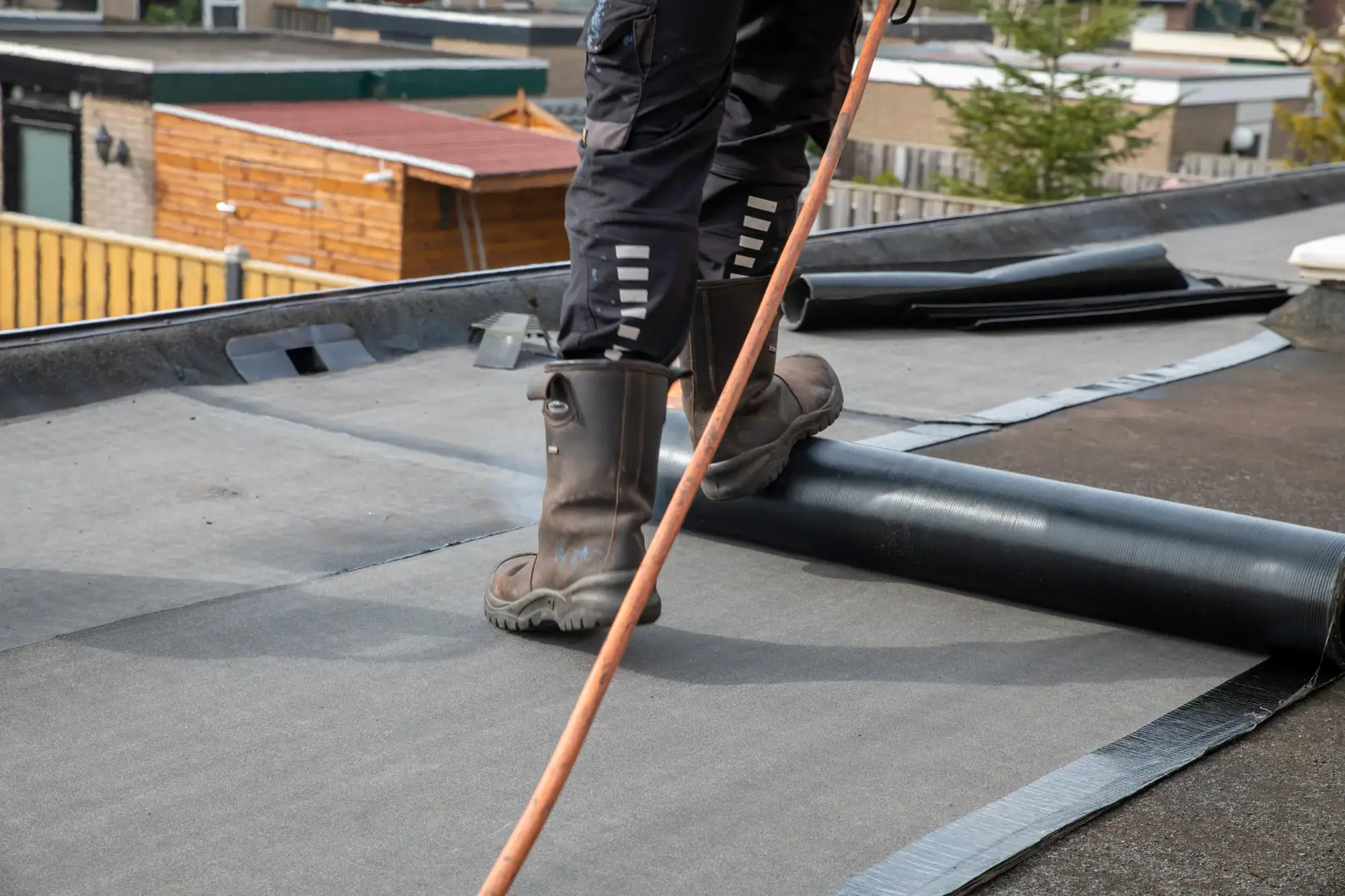
A flat roof that’s doing its job is invisible. You stop thinking about it. No water stains spreading across the ceiling, no emergency calls during a nor’easter, no guessing whether that pooling water is going to become a bigger problem by morning. That’s the outcome — not a new roof for the sake of it, but a building that’s protected and a problem that’s actually behind you.
For Wyoming property owners, that peace of mind carries real weight. A lot of the commercial and mixed-use buildings along the Camden Wyoming Avenue corridor are older structures — some dating back to the late 1800s — and the flat or low-slope roofing on those buildings has often seen multiple generations of repairs layered on top of each other. When one of those systems finally gives out, you need someone who understands what they’re looking at, not someone who defaults to the same approach they’d use on a brand-new warehouse in a suburb.
The climate here doesn’t help matters either. Kent County’s humid summers accelerate membrane degradation when drainage isn’t working right, and the freeze-thaw cycling through winter puts real stress on aging seams and flashings. Getting the right membrane matched to your specific building — and installed correctly the first time — is what separates a roof that lasts 20-plus years from one that needs attention again in three.
We’re based in Smyrna — about 20 miles north of Wyoming on US Route 13 — and have been doing roofing work throughout Kent County for over 22 years. That’s not a number pulled from a marketing template. It means our team has worked through Delaware’s weather cycles, dealt with the kinds of aging building stock you find in communities like Wyoming, and built a reputation that holds up because the work holds up.
Every project is managed start to finish by our own certified crew. No subcontracting. The people you talk to before the job are the people on your roof during it. In a town where 32 businesses are locally owned and community reputation actually travels, that kind of accountability matters.
We hold BBB accreditation and carry a 5.0 out of 5 rating across 63-plus verified reviews. Customers consistently mention professionalism, clean worksites, and clear communication — which, if you’ve dealt with contractors before, you know isn’t something you take for granted.
It starts with a free estimate. Someone from our team comes out, looks at the roof, and gives you a clear written scope of what needs to happen and why. No vague verbal quotes, no pressure to sign on the spot. If you’ve already gotten other bids, a written estimate gives you something real to compare.
From there, the actual work begins with a full assessment of the existing system. On older Wyoming buildings — especially anything in or near the Historic District — that means checking the deck condition carefully before any new membrane goes down. Multiple layers of old roofing can hide deck damage that a less thorough contractor would miss, and skipping that step is how you end up with a new membrane failing prematurely over a compromised substrate. If the deck needs repair, that gets addressed first.
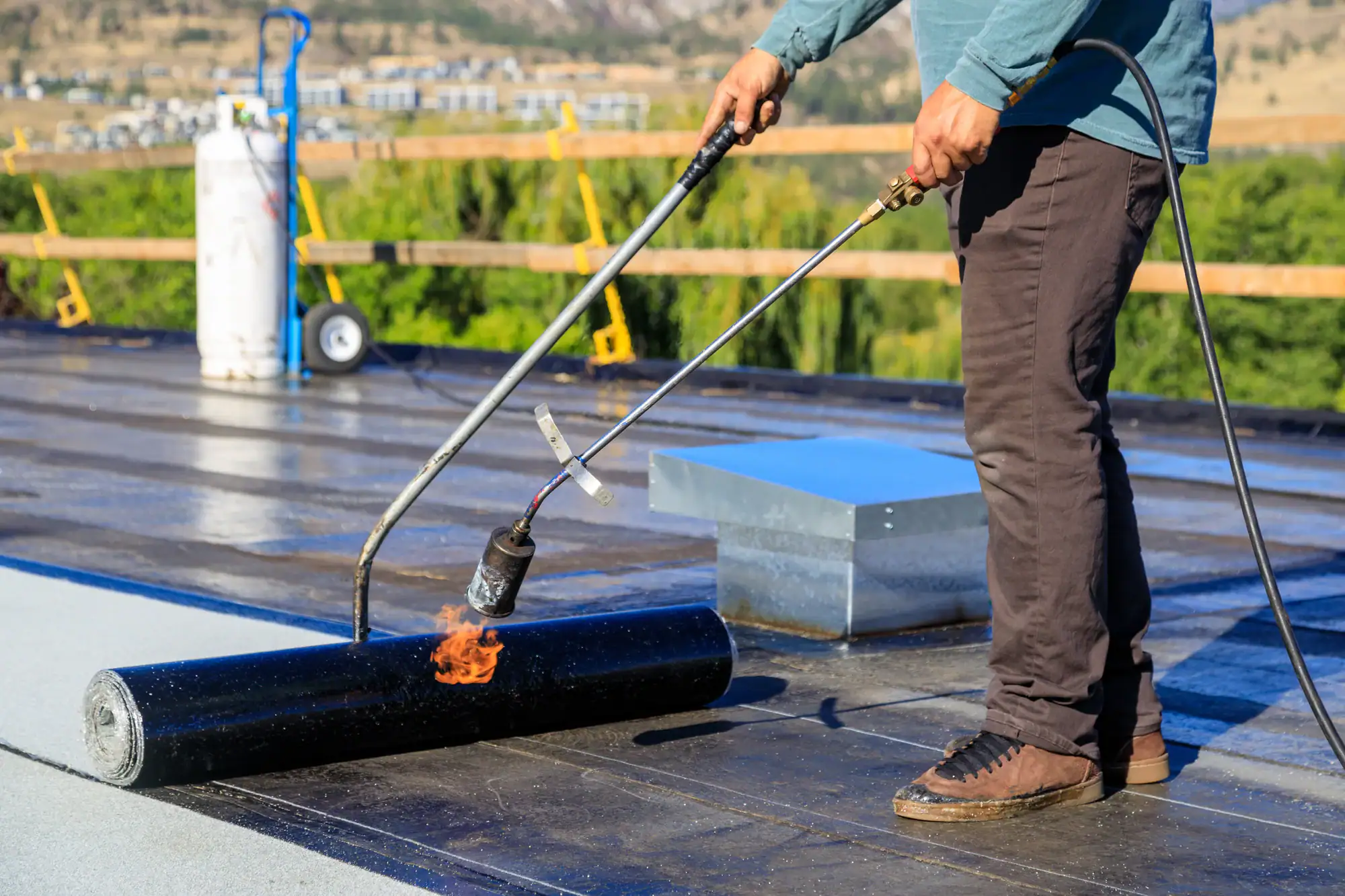
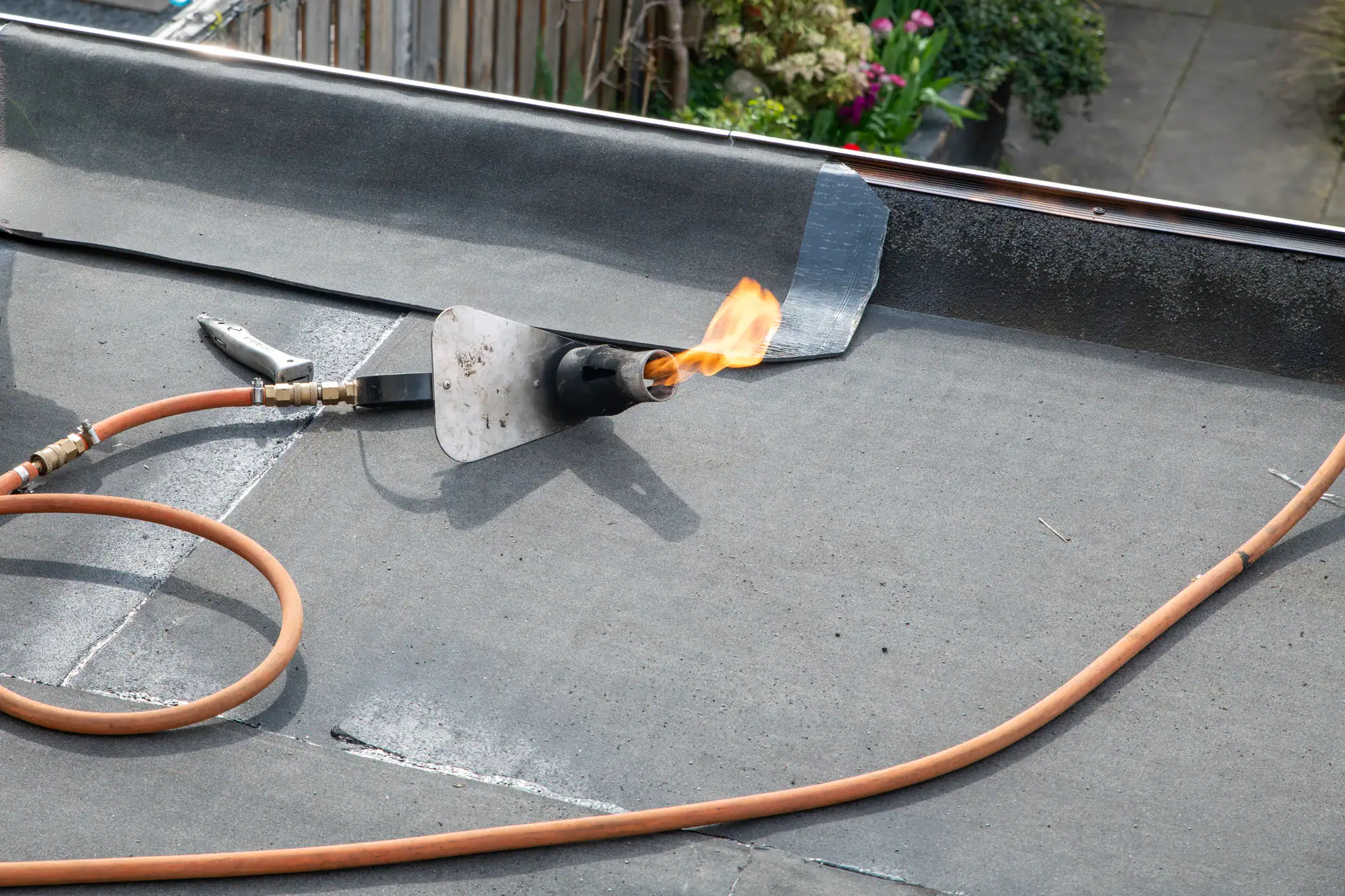
Once the deck is confirmed solid, the right membrane system goes in — whether that’s TPO, EPDM, modified bitumen, or another option based on your building’s specific needs and budget. Proper flashing at every penetration and perimeter edge is part of the installation, not an afterthought. Drainage is checked and confirmed functional before the job is called done. And when our crew leaves, the worksite is clean — no debris left behind, no nails in the driveway.

Ready to get started?
Not every flat roof material is right for every building. TPO membrane is a strong choice for commercial properties where energy efficiency matters — it reflects up to 84% of solar load, which adds up in Delaware’s humid summers when HVAC systems are working hard. The heat-welded seams on a properly installed TPO system are also more resistant to the kind of moisture intrusion that Kent County’s rainfall levels put flat roofs through year after year.
EPDM rubber roofing has been around long enough to prove itself — more than 20 billion square feet installed worldwide — and its flexibility makes it well-suited for buildings that experience real temperature swings. For Wyoming’s older structures, particularly anything in the Historic District with an aging modified bitumen or torch-down system, EPDM is often a reliable and cost-effective upgrade path. Modified bitumen itself remains a solid option for certain applications, especially where a two-ply system makes sense for added durability.
We also handle roof waterproofing, emergency flat roof repair, and insurance claims assistance for storm damage — which is relevant for anyone who’s dealt with a nor’easter or a heavy summer storm coming up the Delmarva Peninsula. If your insurer is involved, we can help document the damage and work through the claims process so you’re not navigating that alone. Financing is available for projects where budget timing is a factor.

The answer depends on the condition of the existing deck and what system is currently on the building. For older commercial and mixed-use structures — the kind you find throughout Wyoming’s Historic District, some dating back to the 1870s — modified bitumen and EPDM rubber roofing are often the most practical options. Modified bitumen works well as a direct replacement for aging torch-down systems, and EPDM’s flexibility makes it a good fit for structures that have experienced some settling or movement over the decades.
What matters most before any material decision is a thorough deck inspection. Older Wyoming buildings frequently have multiple generations of roofing layered on top of each other, and that added weight — combined with any hidden deck deterioration — has to be evaluated before a new system goes down. A contractor who skips that step and just installs a new membrane over a compromised deck is setting you up for problems within a few years. The material conversation comes after you know what you’re actually working with.
The honest answer is that you usually can’t tell from the ground, and even a ceiling water stain doesn’t always tell the full story. Flat roof leaks are notoriously difficult to trace — water enters the system at one point and travels along the deck before it shows up inside the building. What looks like a small leak could be a localized seam failure that’s easily repaired, or it could be the symptom of a membrane that’s well past its useful life.
A few things that typically push a roof toward replacement rather than repair: membrane blistering or cracking across a large area, standing water that persists more than 48 hours after rain, visible deck deterioration when you probe around penetrations, or a system that’s already been patched multiple times and keeps failing in new spots. In Kent County’s climate — with the combination of humid summers and freeze-thaw winters — membranes that are already compromised tend to deteriorate faster than they would in a milder climate. A proper inspection gives you a clear answer rather than a guess.
Some water sitting on a flat roof immediately after heavy rain is normal — roofs aren’t perfectly level, and drainage takes time. The line that matters is 48 hours. If water is still standing on the membrane two days after a storm, that’s the industry-defined threshold for concern, and it’s worth taking seriously.
Ponding water does real damage over time. It accelerates membrane degradation, adds structural load the building wasn’t designed to carry indefinitely, and promotes mold and algae growth. In Wyoming and the surrounding Kent County area, the combination of heavy agricultural debris — chaff and organic matter that blows in from surrounding farmland — and the region’s roughly 45 inches of annual rainfall means drains and scuppers can clog more easily than in a purely urban environment. If your roof is ponding regularly, the first thing to check is whether drainage outlets are clear. If they are and water is still sitting, the issue is likely a slope or drainage design problem that needs professional evaluation.
The biggest thing to watch for in the Wyoming area specifically is the number of national lead-generation websites that show up in local search results. These sites are built to look like local roofing contractors, but when you look closely — the phone numbers have out-of-state area codes, there’s no verifiable local address, and the company name doesn’t appear in any Delaware business records. What they’re actually doing is collecting your information and selling it to whoever bids for the lead, which means you have no idea who’s actually going to show up.
Before you hire anyone, verify that the contractor has a real Delaware address, carries current liability insurance, and can show proof of licensing compliance for the scope of work. Check their Google reviews — not just the rating, but the volume and the detail in individual reviews. A contractor with 60-plus reviews and consistent 5-star feedback has a track record that’s hard to fake. And get everything in writing before any work starts: scope of work, materials being used, warranty terms, and total cost. A contractor who resists putting things in writing is a contractor worth walking away from.
Lifespan varies by material, but here are the general ranges you can plan around: EPDM rubber roofing typically lasts 20 to 30 years with proper maintenance. TPO membrane runs 15 to 25 years. Modified bitumen systems generally fall in the 15 to 20 year range, though a high-quality two-ply APP system can push toward 25 years under good conditions. All of those numbers assume correct installation, functioning drainage, and regular inspections — skip any of those and you’ll see the lower end of the range.
Delaware’s climate applies some specific pressure to flat roof systems. The roughly 45 inches of annual rainfall, combined with humid summers and freeze-thaw cycling in winter, means membranes that aren’t properly sealed and drained tend to fail faster than the national averages suggest. For Wyoming specifically, agricultural debris from surrounding farmland adds to the drainage maintenance challenge. A roof that’s inspected once a year and has its drains cleared each fall will consistently outlast one that’s ignored until something fails.
It depends on the cause of the damage. Most standard property insurance policies cover sudden, storm-related damage — wind, hail, a falling tree limb — but they typically exclude damage that results from deferred maintenance or gradual deterioration. So if a nor’easter tears up a section of your membrane, you likely have a claim. If the roof has been slowly failing for years and finally started leaking, the insurer will usually deny coverage on the grounds that it’s a maintenance issue.
The documentation you bring to the claims process matters a lot. Adjusters work from what they can see and verify, and a lowballed patch estimate from an adjuster who hasn’t fully assessed the membrane failure can leave you significantly undercompensated. We help Wyoming property owners through this process — documenting the damage properly, working with adjusters, and making sure the scope of the claim reflects the actual extent of what needs to be repaired or replaced. If you’re not sure whether your situation qualifies as a claim, a free estimate and inspection is a reasonable first step before you call your insurer.
Other Services we provide in Wyoming