
Hear from Our Customers
The problem with flat roofs isn’t that they fail loudly. It’s that they fail quietly — water gets in at a seam or a flashing gap, travels sideways across the deck, and shows up as a ceiling stain weeks later. By then, the deck underneath has often already started to deteriorate. That’s the part that turns a manageable repair into a much bigger project.
Dover receives around 45 to 48 inches of rainfall per year, spread across every season with no real dry stretch. Add in the summer humidity — relative humidity around 78% at peak — and the freeze-thaw cycling that hits every winter when temperatures drop to the upper 20s, and you have a climate that puts flat roof membranes under constant stress. A system that was installed in 1985 or 1992 has been absorbing all of that for a long time.
What changes after a proper inspection and repair or replacement is simple: you stop wondering. You know the membrane is sealed, the drainage is working, and the deck is sound. For a homeowner in Voshell Cove who’s invested in their property and plans to stay, that peace of mind is worth more than most people realize until something goes wrong.
We’re based in Smyrna — about 15 to 18 miles north of Dover on US Route 13. That proximity matters. When we’re working in Voshell Cove, we’re not an out-of-county crew learning your neighborhood’s weather patterns on the job. We’ve been working through Kent County’s nor’easters, summer thunderstorm seasons, and freeze-thaw winters for over two decades.
Every project is handled by our own certified crew — no subcontracting, no hand-offs to a team you’ve never met. The people you talk to when you schedule your estimate are the people who show up and do the work. In a close-knit, owner-occupied neighborhood like Voshell Cove, where residents pay attention and word travels, that kind of accountability matters.
We’re BBB accredited, fully licensed and insured, and carry a 5.0 rating across 63+ verified reviews. Customers consistently describe the same experience: clear communication, clean worksites, and work that runs on schedule. That track record didn’t happen by accident.
It starts with a free inspection. We get on the roof, look at the membrane condition, check the flashings and drainage points, and assess the deck underneath. You get a straight answer — whether it needs a patch, a full membrane replacement, or something in between. No pressure to commit, no vague verbal estimate.
If a replacement is the right call, the process begins with a full tear-off of the existing membrane so the deck can be properly inspected and any damaged sections repaired before anything new goes down. This step matters more than most homeowners realize — skipping it or rushing it is how problems get buried rather than fixed.
Because Voshell Cove sits within Dover city limits, roofing work requires a permit through the City of Dover’s building department, not Kent County. We handle that process correctly, which protects your home’s value and keeps the work warranty-valid.
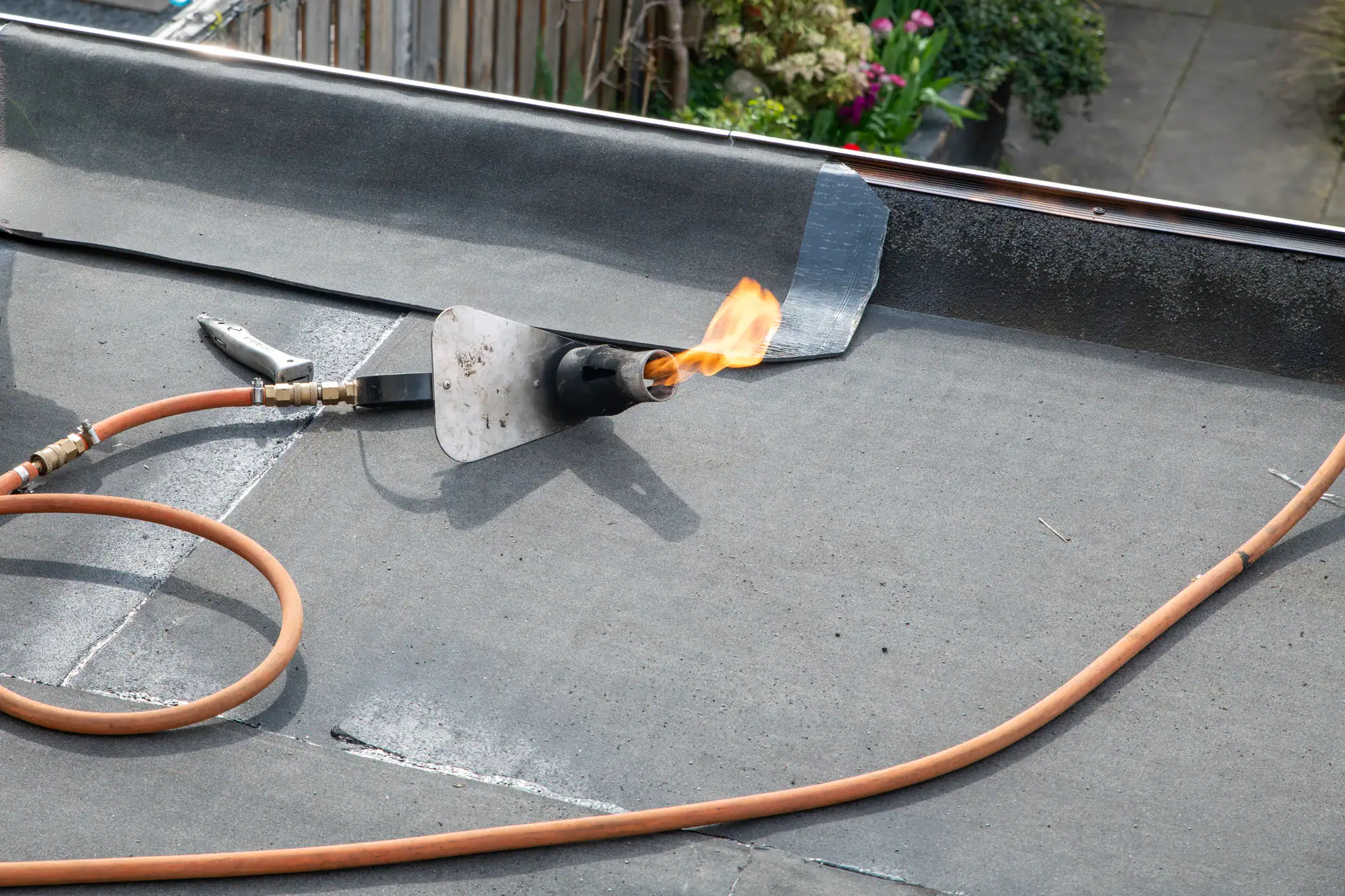
From there, the right membrane system goes in — whether that’s TPO, EPDM rubber roofing, or modified bitumen — with properly heat-welded or adhered seams and flashing at every penetration and perimeter edge. We clean up completely before we leave. You’re not left sorting through debris or finding nails in the driveway.

Ready to get started?
Not every flat roof material performs the same way in Kent County’s conditions, and the choice actually matters. TPO roofing membrane reflects up to 84% of solar load, which makes a real difference during Dover’s hot, humid summers when a dark-surface roof turns into a heat sink that drives up your cooling costs. It’s also installed with heat-welded seams — one of the most durable seam options available — and it’s currently the fastest-growing flat roofing membrane in the commercial market for good reason.
EPDM rubber roofing takes a different approach. It’s been the proven standard for decades, with more than 20 billion square feet installed worldwide. Its flexibility in cold temperatures makes it particularly well-suited for Delaware winters — it expands and contracts through freeze-thaw cycles without cracking or losing its seal the way more rigid materials can. For Voshell Cove homeowners with garages, low-slope additions, or covered breezeways that have been running on an original 1980s or 1990s system, EPDM replacement is often the right conversation to have.
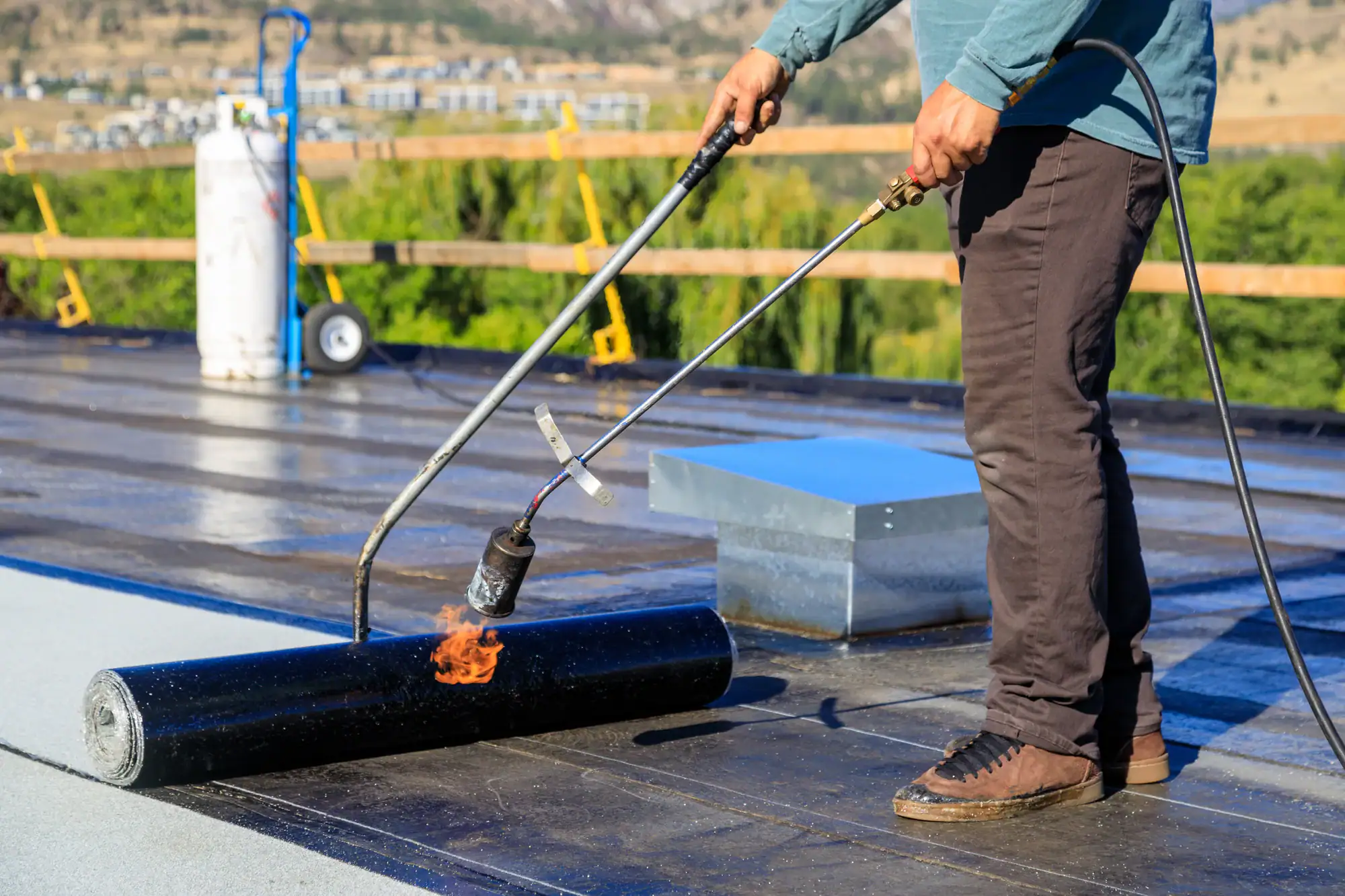
Modified bitumen — sometimes called torch-down roofing — is still a solid option for certain applications, especially on older structures where it’s been the existing system. We work with all three, and we’ll tell you which one fits your specific roof, your building, and your budget — not just whatever’s easiest to install.

Yes — and this is a detail that trips up a lot of homeowners. Because Voshell Cove is located within Dover city limits, roofing permits are issued by the City of Dover’s building department, not Kent County. These are two separate permitting systems, and contractors who aren’t familiar with the distinction sometimes pull the wrong permit or skip the process entirely.
Working without a permit creates real problems. It can complicate or kill a home sale if the unpermitted work surfaces during a title search or buyer inspection. It can also void the manufacturer’s warranty on the membrane system, which means if something fails, you’re absorbing that cost out of pocket. We operate as a licensed, insured contractor and handle the City of Dover permitting process correctly from the start — so your roof is done right and documented right.
The honest answer is that you usually can’t tell from the inside, and the visible signs on the surface don’t always reflect what’s happening underneath. A membrane that looks weathered but intact on top can be hiding deck damage that’s been accumulating for years from slow water infiltration. That’s especially common in Voshell Cove homes built in the 1970s through 1990s — the era most of your neighborhood falls into — where the original membrane system has been in place for decades.
A professional inspection looks at the full picture: membrane condition, seam integrity, flashing at penetrations and edges, drainage function, and the deck itself. Minor membrane damage with a sound deck underneath is often a repair situation. But if the deck has softened sections, if the membrane is cracked or blistered across a wide area, or if the system is simply past its service life, a full replacement is the more cost-effective long-term decision. We offer free estimates that give you a clear answer without any pressure to commit.
For freeze-thaw performance specifically, EPDM rubber roofing is consistently one of the strongest performers. Dover temperatures drop to the upper 20s°F in winter, and the repeated cycling above and below freezing puts real stress on roofing membranes — particularly at seams and around penetrations. EPDM’s inherent flexibility means it moves with those temperature swings rather than becoming brittle and cracking, which is how a lot of older modified bitumen systems eventually fail.
That said, the right material also depends on your roof’s slope, drainage design, and what’s currently installed. TPO is an excellent choice for energy efficiency and seam strength, and it handles Kent County winters well when properly installed. Modified bitumen is still a viable option for certain structures. The material conversation is one worth having with someone who knows the local conditions — not just picking whatever’s cheapest on paper. We’ve been working through Delaware winters for over 22 years and can walk you through the tradeoffs for your specific situation.
Ponding water — water that’s still sitting on the roof surface more than 48 hours after a rain event — is the industry-defined threshold for concern, and yes, it’s worth taking seriously. Standing water adds weight to the roof structure, accelerates membrane degradation, promotes mold and algae growth, and during Dover’s winters, it freezes and expands inside any small membrane breach, turning a minor seam issue into a significant one.
The underlying cause matters too. Ponding usually points to a drainage problem — clogged drains or scuppers, a sagging deck section, or inadequate slope designed into the original installation. In Voshell Cove’s older housing stock, drainage systems that were functional when installed in the 1980s may now be partially blocked or may have shifted as the structure settled over the decades. Dover’s 45 to 48 inches of annual rainfall means those drainage systems are working hard year-round. Getting the drainage issue diagnosed and corrected is just as important as addressing the membrane itself.
Repair is absolutely an option in many cases — it depends on how localized the damage is and what condition the deck and surrounding membrane are in. A small area of membrane damage around a penetration, a compromised seam in one section, or a flashing failure at a parapet wall can often be addressed without replacing the entire system. The key is catching it early, before water infiltration has time to spread and compromise the deck below.
Where repair becomes the wrong call is when the damage is widespread, when the membrane is simply old and brittle across most of its surface, or when the deck itself has been compromised by long-term moisture exposure. In those situations, patching is a short-term fix that delays an inevitable replacement while adding cost. For Voshell Cove homeowners with flat sections on garages, additions, or low-slope areas of the main structure, a straightforward inspection will tell you which category you’re in. We provide free estimates and will give you a straight answer on repair versus replacement without steering you toward the more expensive option if it’s not warranted.
Yes — and this is an area where having the right contractor makes a significant difference. After a nor’easter or a heavy summer thunderstorm, the damage to a flat roof membrane isn’t always obvious from the ground. Flashings can lift, seams can separate, and drainage outlets can be compromised in ways that don’t show up until the next heavy rain. If you file a claim without a thorough damage assessment, there’s a real risk that the scope gets underestimated and you end up with a payout that doesn’t cover the actual work needed.
We provide insurance claims assistance — helping homeowners document the damage properly, working alongside adjusters, and making sure the scope of the repair or replacement is accurately represented. Kent County sees regular storm activity throughout the year, from spring nor’easters to summer thunderstorms, and navigating a claim on top of dealing with a damaged roof is genuinely stressful. Having a contractor who understands the process and advocates for a complete, correct assessment takes a significant burden off your plate. Reach out for a free estimate and we can walk you through what the process looks like from the start.
Other Services we provide in Voshell Cove