
Hear from Our Customers
Most homeowners in Twin Eagle Farms don’t realize there’s a problem until they see a water stain on the ceiling. By then, the membrane has usually been failing quietly for months — and what looked like a minor repair has turned into a deck replacement conversation. Getting ahead of that is the whole point.
The homes in this community were built primarily in the mid-to-late 1980s, which puts them squarely in the replacement window for original flat roof systems. Modified bitumen membranes from that era were designed to last 15 to 20 years. If yours hasn’t been replaced, it has almost certainly been patched — and there’s a real ceiling on how many times that works before the underlying deck starts paying the price.
Twin Eagle Farms properties also sit on open, five-acre lots with limited wind shelter from neighboring structures. That exposure matters. Delaware pulls in around 45 inches of rain per year, and flat roof sections on detached garages, covered porches, and additions take that weather directly. A properly installed membrane with correct drainage design handles that without drama. A tired, patched-up system doesn’t — and the open rural character of this area means there’s nothing buffering it when a nor’easter or summer storm rolls through.
We’re based in Smyrna — just a few miles east of Twin Eagle Farms along the Smyrna-Clayton Boulevard corridor. That proximity isn’t coincidental. When a contractor works out of the same area they serve, they know the conditions, they know the building stock, and they’re accountable to the community in a way that an out-of-town crew simply isn’t.
Over 22 years of working on Delaware roofs means we’ve seen every flat roof failure mode common to Twin Eagle Farms and Kent County properties — aging modified bitumen on 1980s garages, EPDM membranes pushing past their useful life on additions and outbuildings, ponding water issues that develop when drainage wasn’t properly designed in the first place. That experience translates into honest assessments, not upsells.
Every project is managed by our own certified crew — no subcontracting, no handoffs to unfamiliar faces. The team you meet for the estimate is the team that shows up to do the work. For homeowners on rural lots who aren’t used to having contractors on their property, that consistency matters.
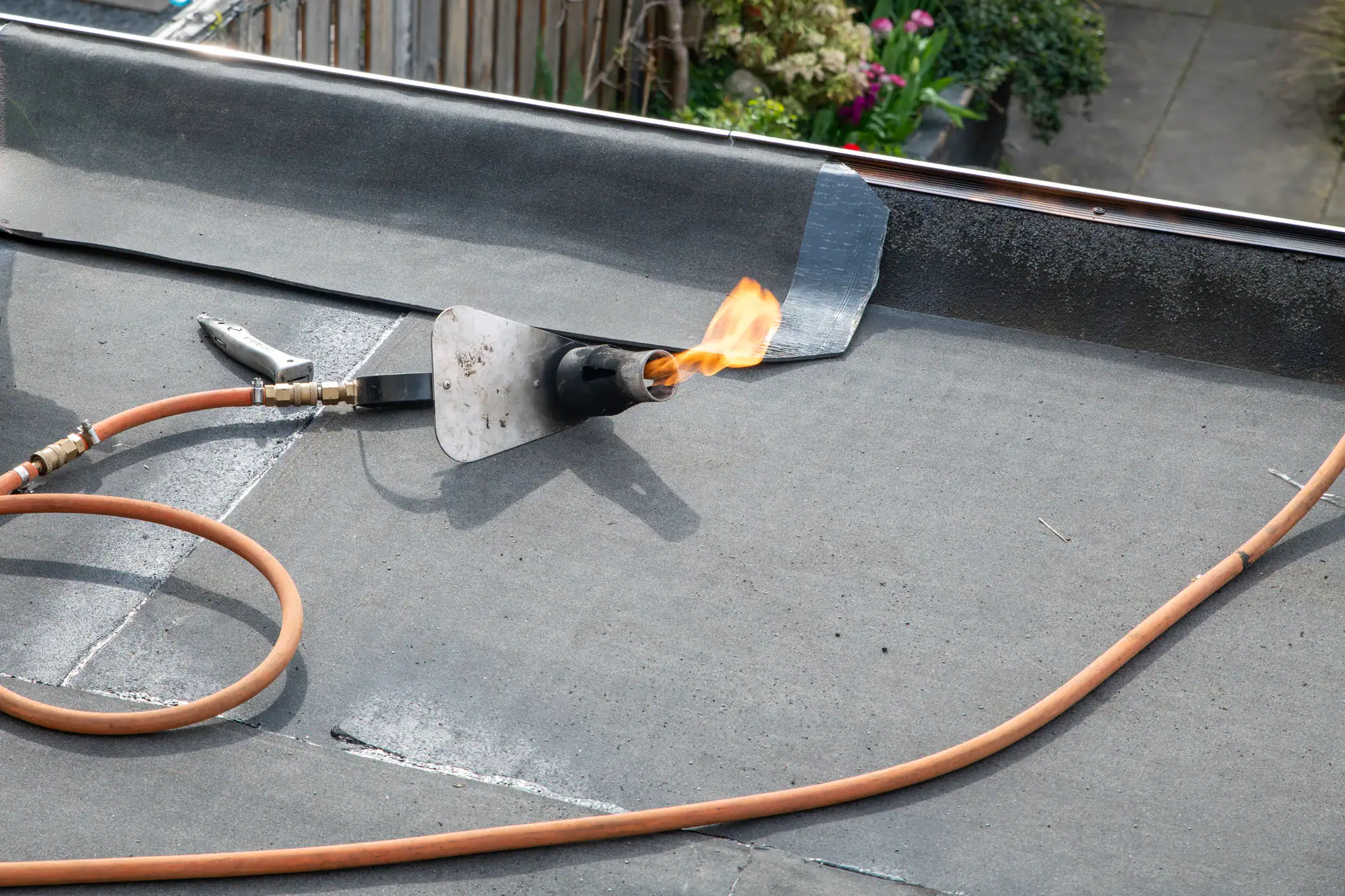
It starts with a free estimate. Someone from our team comes out to your Twin Eagle Farms property, looks at the flat roof section in question — whether that’s a detached garage, a sunroom addition, or a low-slope porch roof — and gives you a clear picture of what’s actually going on. Not a sales pitch. A real assessment of whether you’re looking at a repair, a full membrane replacement, or something in between.
If replacement is the right call, the process begins with a full tear-off of the existing membrane. This matters because installing over a failing system just delays the same conversation by a few years. The deck gets inspected for water damage or structural softening — which is especially important on older 1980s-era homes where a compromised membrane may have been allowing moisture infiltration for longer than anyone realized. Any damaged decking gets addressed before the new membrane goes down.
From there, the right membrane system gets installed for your specific structure. In Kent County’s climate — with its wet springs, humid summers, and freeze-thaw winters — material selection isn’t generic. TPO works well for energy efficiency on larger flat sections; EPDM holds up well on outbuildings and additions where flexibility through temperature swings matters. Flashing gets done correctly at every penetration and perimeter edge, drainage is verified, and the worksite gets cleaned up before the crew leaves.
Depending on the scope and permit requirements for your specific parcel — whether it falls within Clayton town limits or unincorporated Kent County — we can walk you through what’s needed before work begins.

Ready to get started?
Flat roofs aren’t one-size-fits-all, and the variety of structures common to Twin Eagle Farms properties makes that especially true. A five-acre lot with a main house, a detached garage, a covered breezeway, and a sunroom addition might have three or four different flat roof sections — each with its own exposure, drainage situation, and ideal membrane solution.
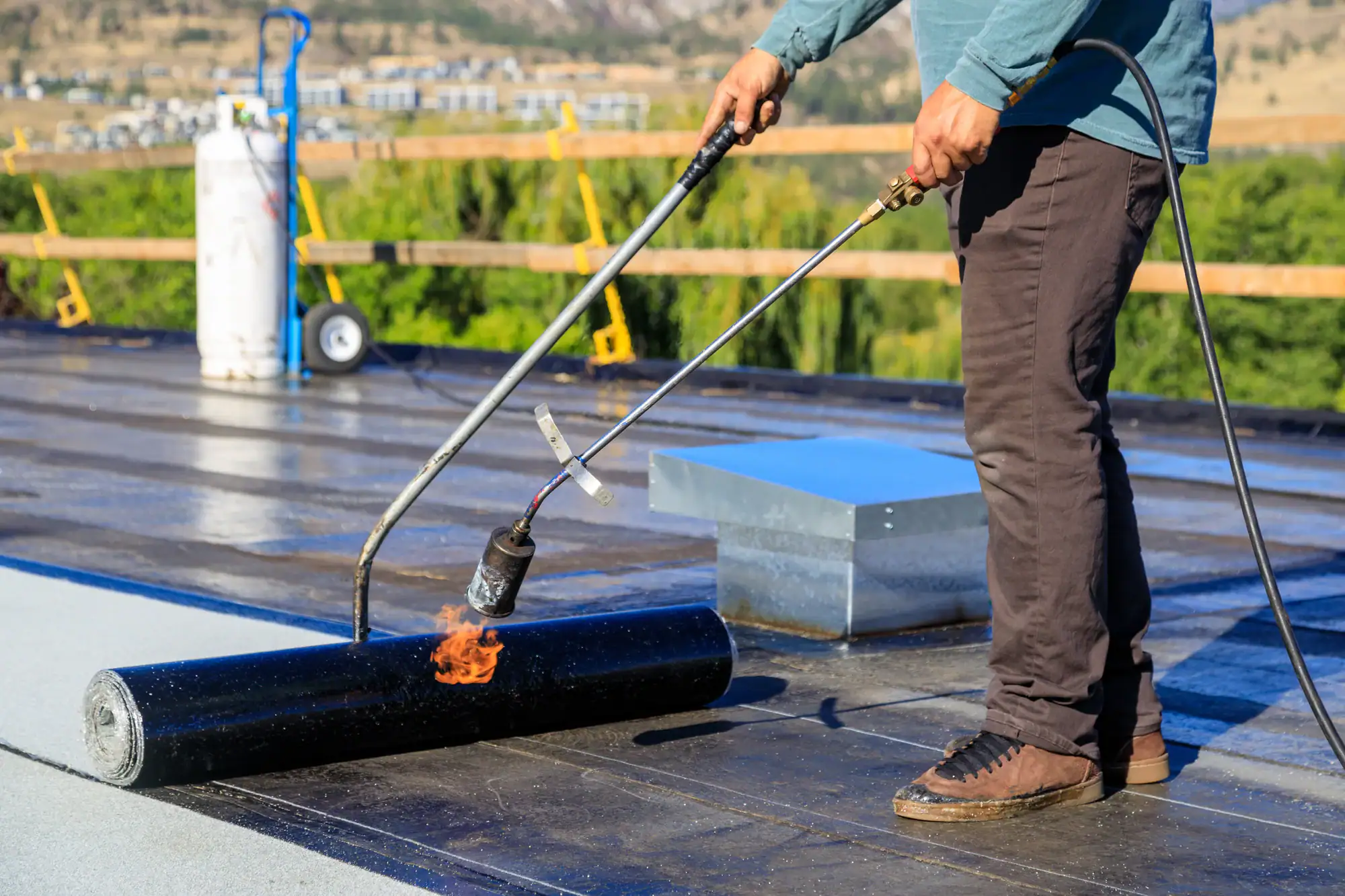
We work with TPO roofing membrane, EPDM rubber roofing, modified bitumen (torch-down), and PVC roofing membrane. TPO is the most energy-efficient option and reflects a significant portion of solar heat load — worth considering for larger commercial-style flat sections. EPDM rubber roofing material has a proven track record of 20 to 30 years and performs well in the freeze-thaw cycling that Kent County winters bring. Modified bitumen, the torch-down system that many 1980s-era flat roofs were originally built with, remains a solid option for certain applications when installed correctly with a proper two-ply system. PVC membrane is another durable option for specific conditions.
Beyond material selection, we handle roof waterproofing, flashing details, drainage assessment, and emergency roof repair when a storm event creates an immediate problem that can’t wait. Insurance claims assistance is also available — if a storm has damaged your flat roof section and you’re trying to navigate the claims process, we can help you document the damage and work through the scope correctly so you get a fair outcome. Financing is available for homeowners who want to move forward with a full replacement without draining savings all at once. Every project starts with a free estimate, so you know exactly what you’re looking at before any commitment is made.

The honest answer depends on a few things: how old the membrane is, how many times it’s been patched, and whether the deck beneath it has taken on any moisture damage. For most Twin Eagle Farms homes built in the mid-to-late 1980s, the original flat roof sections — on garages, additions, or low-slope porch roofs — are well past the expected lifespan of modified bitumen or early EPDM systems. Those materials were designed to last 15 to 20 years under reasonable conditions. If yours is pushing 35 years, the question isn’t really whether it will fail — it’s whether it already has.
A proper inspection will tell you whether the membrane is still structurally sound or whether it’s reached the point where patching just moves the problem around. If the deck underneath shows signs of moisture infiltration — soft spots, discoloration, or delamination — that changes the scope of the job significantly and needs to be addressed before any new membrane goes down. We provide free estimates that give you a clear picture without any pressure to commit.
Delaware’s climate puts real demands on flat roof membranes. You’re dealing with around 45 inches of annual rainfall, humid summers, and winter freeze-thaw cycles that stress seams and mineral surfaces on aging systems. No single material is universally best — it depends on the structure, the budget, and the specific exposure.
TPO roofing membrane is a strong choice for larger flat sections where energy efficiency matters. It reflects a high percentage of solar heat load, which helps manage building temperature during Delaware’s humid summers. EPDM rubber roofing holds up well through temperature swings and is a proven long-term performer — the material has an established track record of 20 to 30 years when properly installed and maintained. Modified bitumen (torch-down) remains a viable option for certain applications, particularly on smaller structures, when installed as a quality two-ply system. For Twin Eagle Farms properties with multiple flat roof sections across outbuildings and additions, the right answer might be different for each structure. That’s exactly the kind of assessment we walk through during the estimate.
Ponding water — meaning water that’s still sitting on your flat roof more than 48 hours after rain — is the industry’s defined threshold for concern, and it’s not something to wait on. Standing water accelerates membrane degradation, promotes mold and algae growth, adds structural load to the deck, and can void manufacturer warranties. In Delaware’s wet climate, where rainfall events are frequent and the landscape is relatively flat, drainage issues on flat roofs compound quickly.
For Twin Eagle Farms properties specifically, the open lot character and relatively flat terrain mean there’s no natural slope advantage helping water move off the roof. If drainage wasn’t designed correctly during the original installation — which is common on 1980s-era construction — ponding can become a chronic issue rather than a one-time event. The fix might be as straightforward as clearing a clogged drain outlet, or it might require re-sloping the roof deck with tapered insulation to create proper drainage. Either way, letting it sit is the one option that guarantees a more expensive conversation down the road.
In most cases, yes — roof replacement work in Delaware requires a building permit, and flat roof replacement is no exception. The specific permit authority for your Twin Eagle Farms property depends on whether your parcel falls within Clayton town limits or in unincorporated Kent County. That boundary isn’t always obvious for properties in this subdivision, so it’s worth confirming before work begins.
Delaware doesn’t have a statewide roofing-specific license requirement, but contractors working on projects of significant value must be registered with the Delaware Division of Revenue and carry a business license. We are fully licensed and insured, and we can help you understand what permit requirements apply to your specific property before any work starts. Getting the permit pulled correctly isn’t just a legal formality — it protects you as the homeowner and ensures the work is inspected and documented properly, which matters if you ever sell the property or file an insurance claim.
For a residential flat roof section — a detached garage, a sunroom addition, or a covered porch — the physical installation work typically takes one to two days once materials are on site and the job is scheduled. Larger or more complex sections may take longer, particularly if deck damage is discovered during tear-off and needs to be addressed before the new membrane goes down.
The full timeline from first contact to completed job depends on scheduling, material lead times, and permit processing. Fall is historically the busiest window for roofing work in Delaware — homeowners trying to get ahead of winter before the freeze-thaw season creates additional stress on aging membranes. If you’re in Twin Eagle Farms and thinking about a replacement, earlier in the season is generally better for availability. We provide a clear project timeline as part of the estimate process, so you know what to expect before the crew arrives.
It depends on the cause and the condition of the roof at the time of the storm. Most standard homeowner’s insurance policies cover sudden, storm-related damage — wind, hail, falling debris — but they typically don’t cover damage that results from a roof that was already in poor condition or well past its useful life. For a Twin Eagle Farms home with a 35-year-old flat roof section, that distinction matters a lot when it comes to how an adjuster scopes the claim.
The documentation process is where many homeowners run into trouble. Adjusters work quickly, and a vague or incomplete damage assessment can result in a settlement that covers a patch job when what’s actually needed is a full membrane replacement. We help homeowners navigate this — from documenting the damage correctly to working through the scope with the adjuster so the repair reflects what the roof actually needs, not just the minimum the insurer is willing to approve. If a storm has recently hit your property and you’re not sure what you’re dealing with, a free inspection is the right first step before you file anything.
Other Services we provide in Twin Eagle Farms