
Hear from Our Customers
When a flat roof is leaking or failing, it’s rarely just a roof problem. It’s a ceiling stain you keep ignoring, a business day interrupted by a bucket on the floor, or a property value quietly slipping. Getting it fixed — properly, not just patched — changes all of that.
Many homes in Spruance City have a main pitched roof that’s fine, but a flat section over a back addition, a garage, or a porch that’s been there for decades and hasn’t been touched. That older modified bitumen or built-up section wasn’t installed with today’s materials, and it wasn’t designed for the roughly 45 inches of rain central Kent County gets every year. When that section starts to go, it tends to go quietly — slow seeps, pooling water, soft spots you don’t notice until water’s already inside.
A properly installed membrane roof changes that equation completely. TPO reflects a significant portion of solar heat, which matters during Spruance City’s humid summers. EPDM handles Delaware’s freeze-thaw winters without cracking at the seams. And when the drainage is designed correctly from the start, you stop seeing water pool on the surface after every storm. The roof does its job, and you stop thinking about it — which is exactly how it should be.
We’re headquartered in Smyrna — the same community that contains Spruance City. That’s not a marketing detail. It means when something comes up after the job, our team is minutes away, not hours. It means we’ve worked on roofs in Spruance City for over two decades and understand what Delaware’s climate actually does to flat membrane systems over time.
Every project is handled by our own certified crew — no subcontracting, no unknown third parties showing up at your door. The people who walk your property for the estimate are the same people doing the installation. That kind of accountability is hard to find in a market that’s seen a lot of growth and a lot of new contractors competing for the same jobs.
We carry BBB Accreditation, hold a consistent 5-star rating across 63+ verified reviews, and serve both residential and commercial clients throughout Kent County. If your flat roof was damaged in a storm, we also help navigate the insurance claims process — documentation, adjuster communication, and scoping the job correctly so you’re not left with a lowball patch when you needed a real repair.
It starts with a free estimate and a real look at what you have. For a lot of Spruance City properties, that means identifying what type of membrane system is already on the flat section — modified bitumen, built-up, or an older EPDM — and assessing whether you’re dealing with a repair situation or something that needs a full replacement. That distinction matters, and a contractor who jumps straight to replacement without explaining why isn’t doing you any favors.
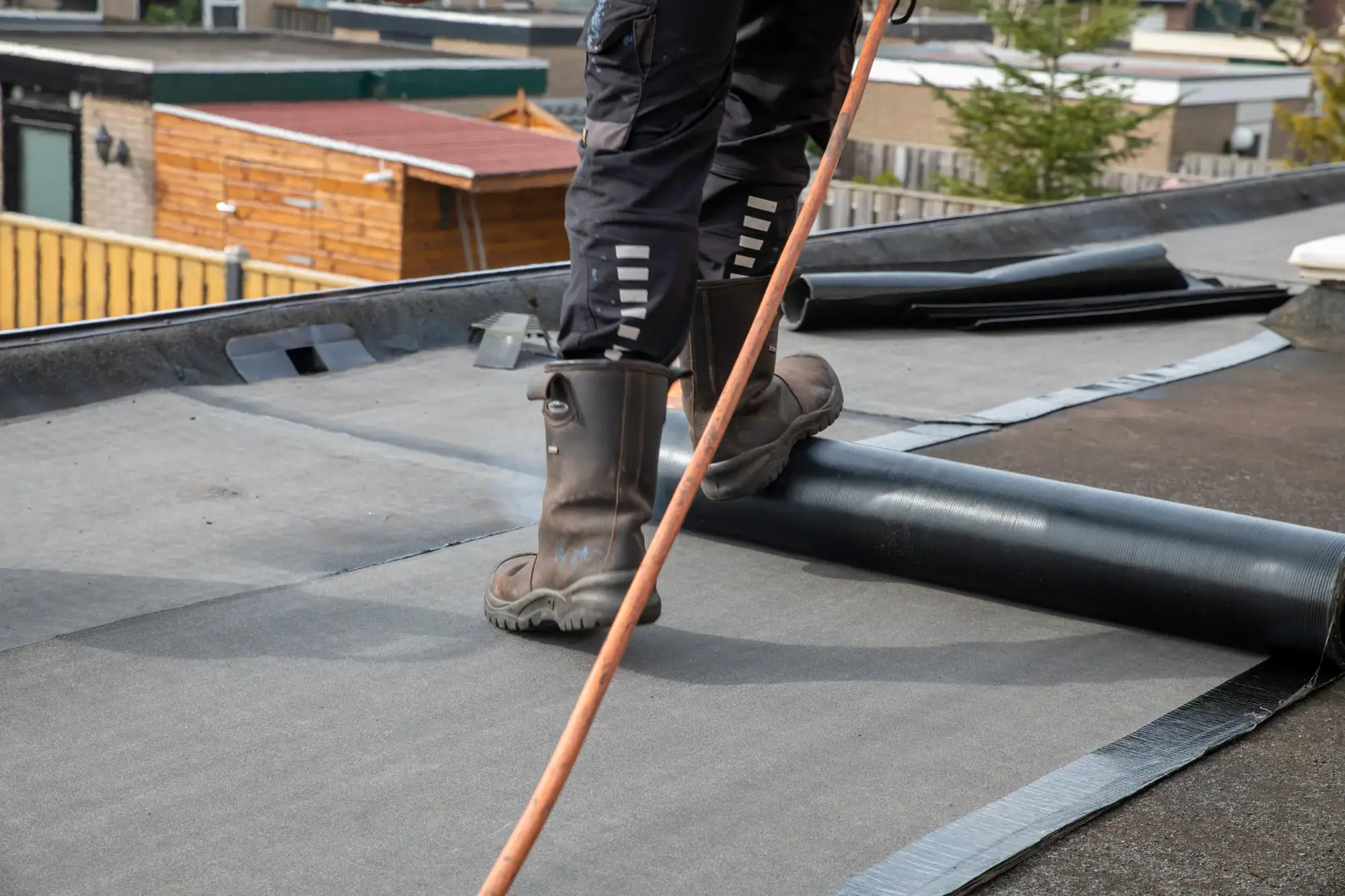
Once the scope is clear, the work begins with a proper tear-off of the existing membrane. The deck underneath gets inspected for soft spots, rot, or structural issues before anything new goes down. This step is where a lot of budget contractors cut corners — they layer new material over old problems, and you end up back at square one within a few years.
The insulation layer goes in next, followed by the membrane itself, whether that’s TPO, EPDM, PVC, or modified bitumen, depending on what’s right for your building and budget. Flashing at every penetration and along the perimeter is done carefully — this is where most flat roof leaks originate when the work isn’t done right.
Because this work falls within the Town of Smyrna’s jurisdiction, any permits required through the town’s building department are handled as part of the process. When the job wraps, the site gets cleaned up completely. No debris left behind, no nails in the driveway.

Ready to get started?
Not every flat roof is the same, and not every membrane system is the right fit for every building. We work across all major flat roofing systems — TPO, EPDM, modified bitumen (torch-down), and PVC — which means the recommendation you get is based on what actually makes sense for your property, not whatever material we happen to stock.
For commercial properties along the DuPont Boulevard corridor through Spruance City and Smyrna, TPO is often the right call. It reflects a significant portion of solar load, which translates to real HVAC savings during Delaware’s hot, humid summers, and its heat-welded seams hold up well under the kind of temperature swings this area sees between seasons.
EPDM rubber roofing is a strong choice for residential flat sections — it’s flexible enough to handle freeze-thaw cycling without cracking, and with proper installation and maintenance, it has a documented lifespan of 20 to 30 years. Modified bitumen (torch-down) remains a reliable option for residential additions and low-slope garage roofs, particularly where budget is a factor. PVC membranes are available for applications where chemical resistance or specific drainage conditions make them the better fit.
Beyond material selection, our service includes emergency repair availability when a storm doesn’t wait for business hours, insurance claims assistance for storm-damaged roofs, financing options for larger replacement projects, and free written estimates so you know exactly what you’re agreeing to before any work begins.

The honest answer is that you often can’t tell from the ground, and even a ceiling stain inside doesn’t tell you the full story. Flat roof leaks are tricky — water enters at one point in the membrane and travels along the deck before it shows up inside, which means the visible damage and the actual source of the problem are frequently in different places entirely.
A proper inspection looks at the membrane surface for blistering, cracking, or granule loss (on modified bitumen systems), checks the seams and flashing at every penetration and perimeter edge, and assesses the deck underneath for soft spots or structural deflection. If the membrane is still in reasonable shape and the damage is isolated, a repair is often the right call. If the membrane is at or past its expected lifespan, if there are multiple failure points, or if the deck has sustained water damage, replacement is the more cost-effective path over the long run. We offer free estimates and will walk you through exactly what we find — no pressure to replace when a repair will do the job.
These are the three most common flat roofing systems you’ll encounter in Spruance City and the surrounding area, and they perform differently enough that the distinction matters for your specific building.
TPO (thermoplastic polyolefin) is a single-ply membrane that’s become the dominant choice for commercial flat roofs. Its seams are heat-welded, which creates a strong, watertight bond, and its light-colored surface reflects a significant portion of solar heat — a real advantage for commercial buildings trying to manage HVAC costs through Delaware’s humid summers. EPDM is a rubber membrane that’s been used for decades on both residential and commercial flat roofs. It’s highly flexible, which helps it handle the freeze-thaw cycling that central Kent County sees in winter, and it has one of the longest documented lifespans of any flat roofing material — 20 to 30 years with proper maintenance.
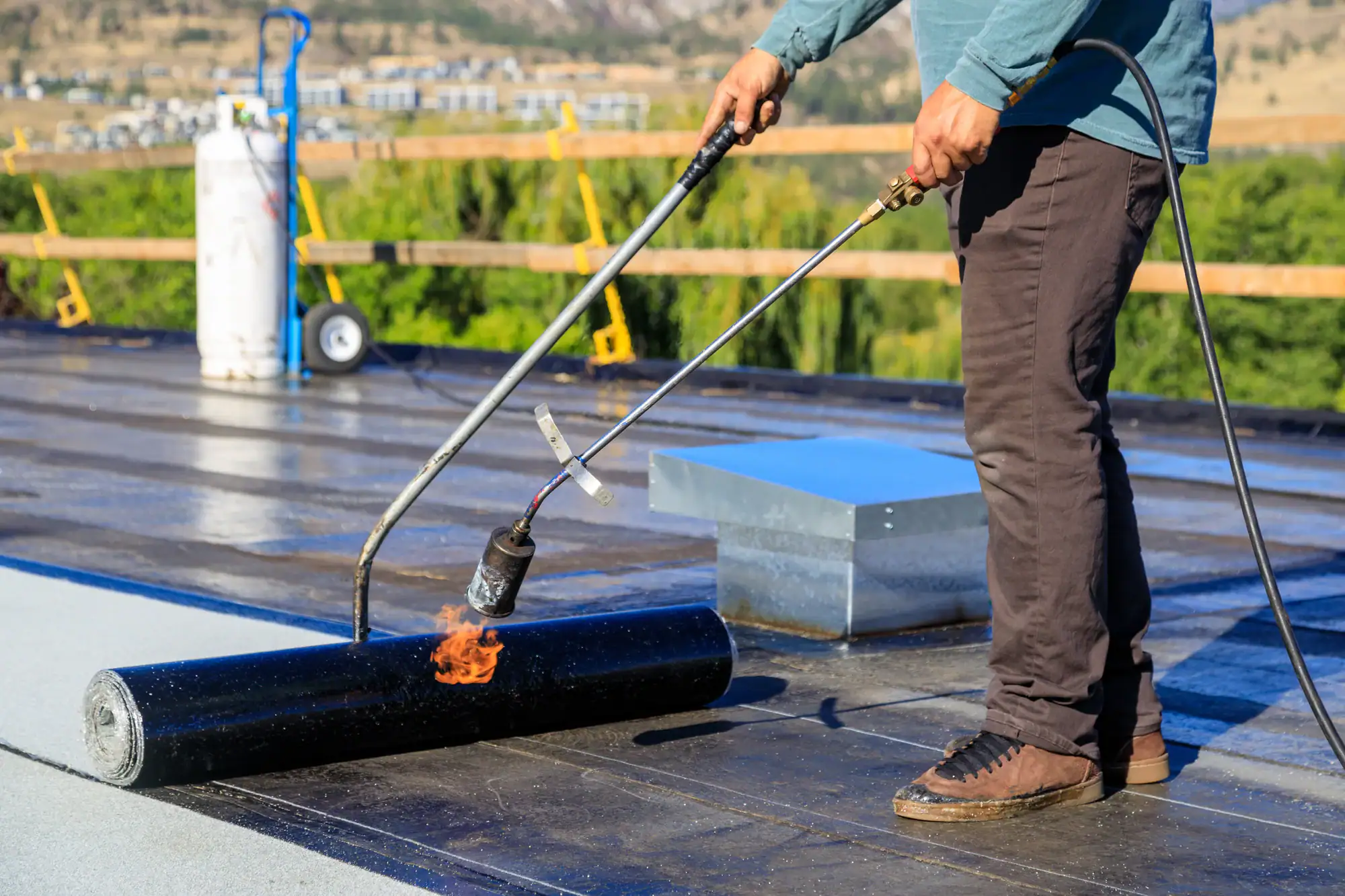
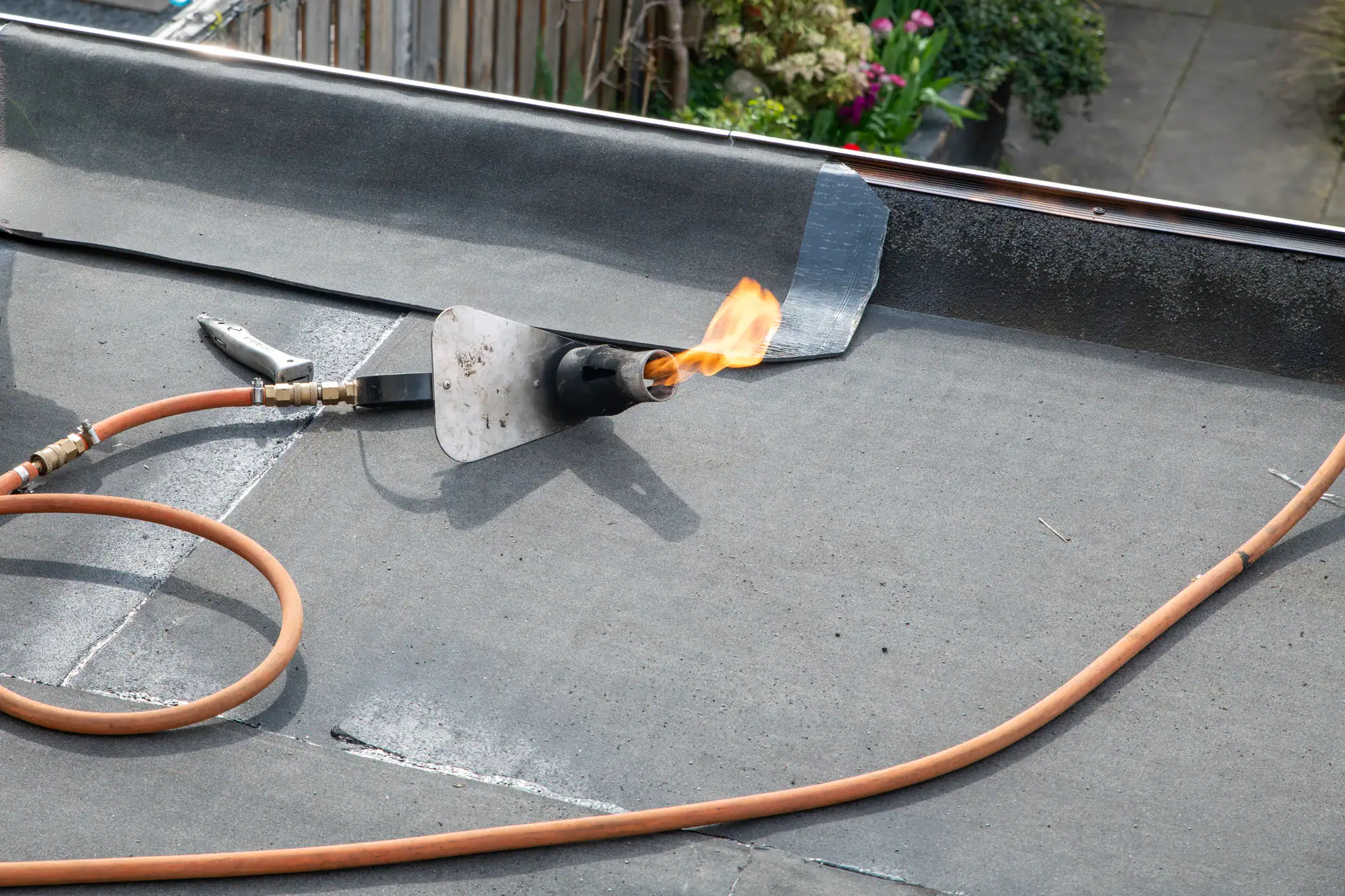
Modified bitumen (torch-down) is an asphalt-based system applied in layers, typically used on residential flat sections and low-slope garage roofs. It’s a proven, durable option at a generally lower installed cost than TPO or EPDM, though its mineral surface can erode over time in climates with significant rainfall like Delaware’s.
Yes — and the threshold the industry uses is 48 hours. If water is still standing on your flat roof more than 48 hours after a rain event, that’s ponding water, and it’s a problem worth addressing. Central Kent County gets around 45 inches of rainfall per year, which means a flat roof with drainage issues gets tested regularly.
Ponding water accelerates membrane degradation regardless of what system you have. It adds structural load to the deck over time, promotes mold and algae growth, and during winter it creates freeze-thaw cycles that stress seams and can cause membrane cracking. On modified bitumen roofs, standing water erodes the mineral surface that protects the asphalt layer underneath. On EPDM, it can work into seams that weren’t fully adhered. The root cause is almost always a drainage design issue — clogged drains, insufficient slope, or a sagging deck section — and it’s fixable. But leaving it alone shortens the life of any membrane system significantly and can void manufacturer warranties. If you’re seeing water sitting on your roof after storms, it’s worth having someone take a look before it becomes a bigger repair.
It depends on the cause. Delaware homeowner’s insurance policies generally cover sudden storm damage — wind, hail, falling debris — but they typically exclude damage attributed to wear and tear, deferred maintenance, or age-related deterioration. The distinction matters because insurance adjusters will look for evidence of pre-existing conditions, and a roof that was already in poor shape before a storm hit may receive a reduced payout or a denial.
Where a lot of homeowners run into trouble is the documentation and scoping process. An adjuster’s initial estimate doesn’t always capture the full scope of damage, particularly on flat roofs where water intrusion can affect the deck and insulation layers below the membrane surface. We provide insurance claims assistance as a core part of our service — we help document the damage correctly, communicate with the adjuster, and make sure the scope of work reflects what actually needs to be done. If you’ve had a storm event in Spruance City or the surrounding area and you’re not sure whether you have a claim worth pursuing, a free estimate and inspection is the right starting point.
Lifespan varies by material and installation quality, but here are the realistic ranges for the systems most commonly used in this area. EPDM rubber roofing typically lasts 20 to 30 years with proper maintenance. TPO membranes generally run 15 to 25 years. Modified bitumen (torch-down) systems typically last 15 to 20 years, though well-installed two-ply APP systems can push closer to 25 years under the right conditions.
Delaware’s climate puts consistent pressure on all of these systems. The roughly 45 inches of annual rainfall, high summer humidity, and winter freeze-thaw cycling in central Kent County means that maintenance and drainage design are as important as material selection when it comes to getting the most out of a flat roof’s expected lifespan. A membrane that was installed correctly and has functioning drainage will routinely reach the upper end of its lifespan range. One that was installed over a compromised deck, with inadequate drainage, or by a crew that skipped the flashing details may fail well before the midpoint. Annual inspections — especially after storm season — are the most effective way to catch small issues before they shorten the roof’s useful life.
This is a fair question in a market where roofing scams spike after storms and national franchises compete for the same jobs as local contractors who’ve been here for decades. The signals worth checking are straightforward: look for a verifiable local address, not just an 800 number. Check their Google reviews — not just the star rating, but the volume and the consistency of what people say. A contractor with 60+ reviews all saying roughly the same things about professionalism, responsiveness, and clean worksites is telling you something real. BBB Accreditation is another third-party signal worth checking because it’s verifiable, not self-reported.
Ask directly whether they subcontract. A contractor who manages every project with their own certified crew is accountable in a way that a general contractor farming work out to whoever’s available is not. Ask for a written estimate that specifies the membrane system, the scope of deck preparation, and the warranty terms — both the workmanship warranty and the manufacturer’s material warranty. If a quote is vague on any of those details, that’s a reason to ask more questions before signing. We’re headquartered in Smyrna and have been working in Spruance City and the surrounding area for over 22 years — we’re not a franchise that arrived last season, and our public review record reflects that.
Other Services we provide in Spruance City