
Hear from Our Customers
Slaughter Beach is openly described by the town itself as mostly a second-home community. That means a lot of properties along Bay Avenue sit vacant for months at a time — and a flat roof membrane that starts failing in November might not get noticed until May. By that point, what could have been a straightforward repair has turned into saturated insulation, rotted deck sheathing, and interior damage that multiplies the original cost several times over. Getting ahead of that cycle is the whole point.
Beyond the seasonal vacancy issue, properties here face something most Delaware homes don’t — constant salt air off the Delaware Bay, sustained coastal winds that put real uplift pressure on membrane seams, and humidity levels that run higher than anywhere inland. Those conditions shorten the effective life of a flat roof that wasn’t installed with that environment in mind. The right membrane system, installed correctly with proper seam adhesion and drainage design, holds up. A generic install that works fine in Smyrna or Dover may show serious wear in a fraction of the expected time on a bay-front property.
When the work is done right, you’re not just fixing today’s problem. You’re protecting the investment you’ve made in a property that means something to you — and you’re not spending your summer visits dealing with the fallout from a roof that failed while you were away.
We’ve been working in Delaware for over 22 years. That’s not a number pulled from a marketing template — it means our team has been through the nor’easters that roll up the Delaware Bay coast, the humid summers that age roofing membranes faster than the spec sheets suggest, and the freeze-thaw cycles that stress seams on flat roofs throughout the region. Sussex County and Slaughter Beach fall squarely within our service area.
Every project is handled by our own licensed and insured crew. No subcontracting, no unknown third parties showing up at your property. For a second-home owner who can’t always be there in person, that accountability matters more than almost anything else. You know who did the work, and you know who to call if anything needs to be addressed.
We’re BBB Accredited with a consistent 5-star rating across 63-plus verified reviews. Customers consistently mention professionalism, clean worksites, and clear communication — exactly what you need when you’re managing a coastal property from a distance.
It starts with a free estimate. Someone from our team comes out, takes a real look at the roof — not a drive-by assessment — and gives you a clear, written scope of what needs to happen and what it will cost. No verbal quotes that shift later, no pressure to sign anything on the spot.
Before any work begins on a property in Slaughter Beach, we handle permitting properly. That means a Town of Slaughter Beach building permit, DNREC coastal construction approval, and a Sussex County building permit — and depending on the scope and location on the property, FEMA flood zone compliance may apply as well. This is a layered process that out-of-state contractors and inexperienced operators frequently skip, creating real legal and financial liability for the property owner. We navigate Delaware’s permitting requirements correctly because we’ve been doing it for over two decades.
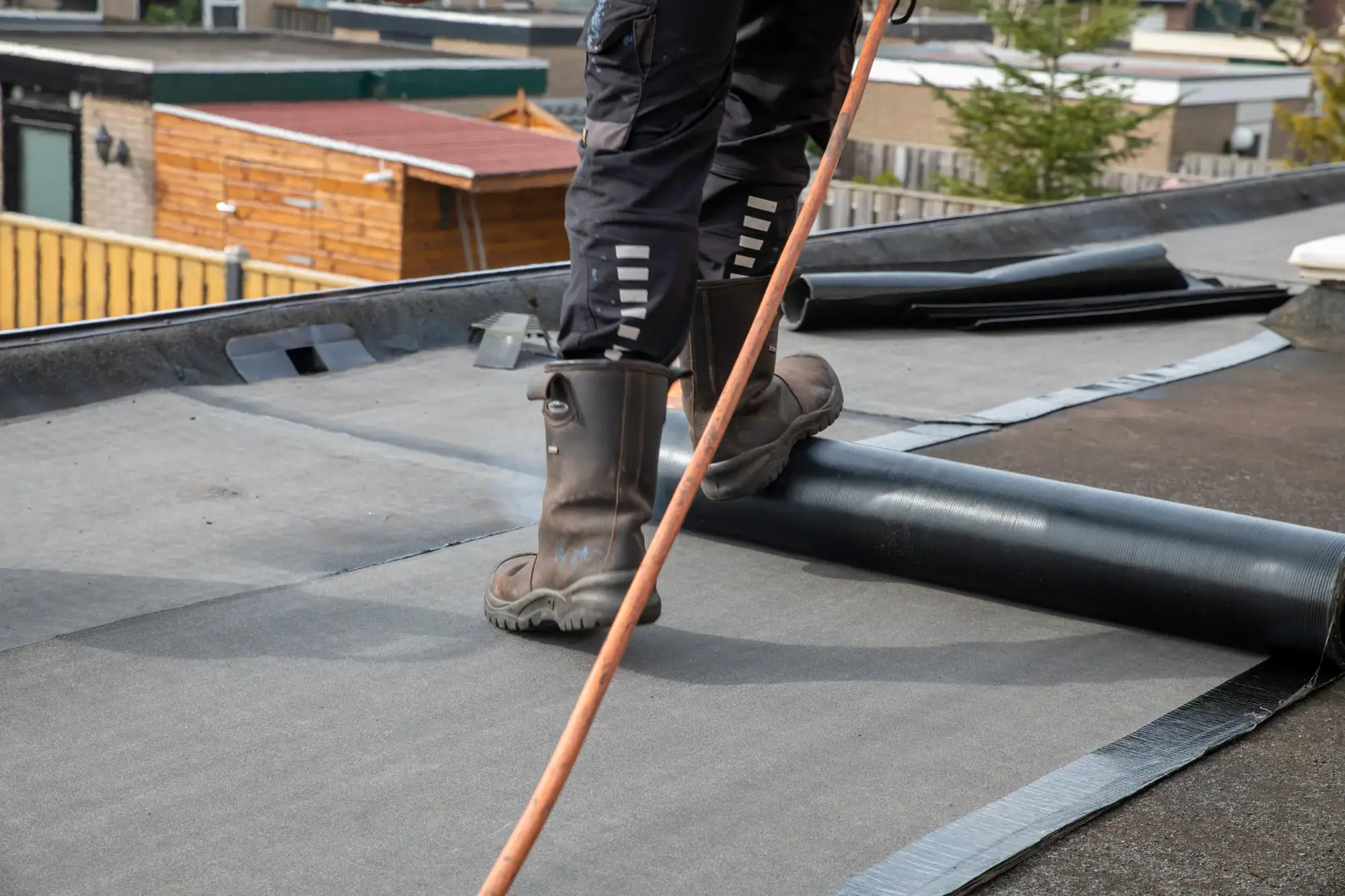
Once permits are in order, our crew gets to work. The existing membrane is assessed, and if a full replacement is warranted, the old material comes off so the deck can be properly inspected and any damage addressed before the new system goes down. Flashing details, drainage design, and seam integrity get the attention they need — not rushed through. When the job is done, the site is cleaned up and you get documentation of what was installed, which matters for warranty claims and insurance purposes down the road.

Ready to get started?
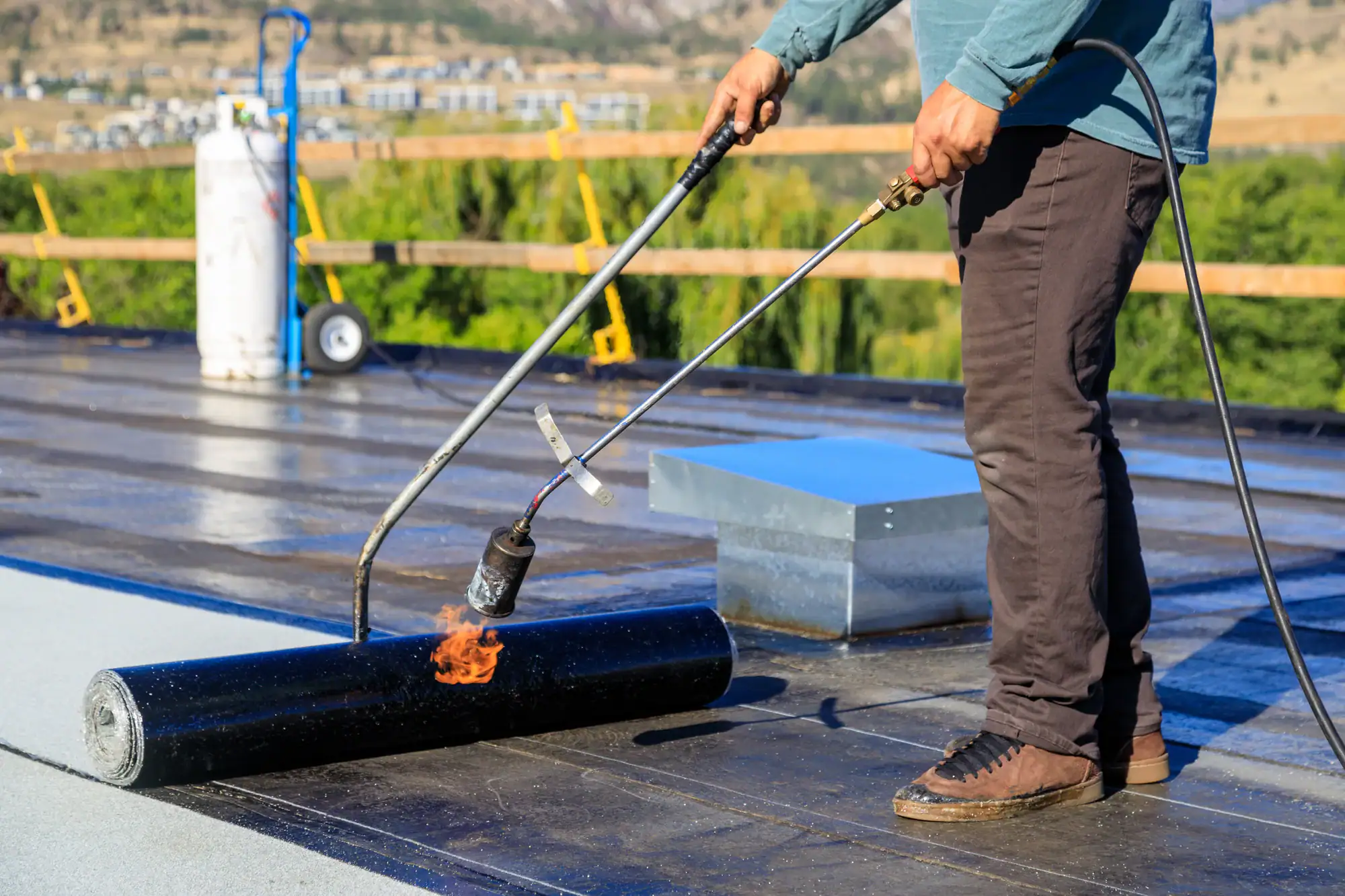
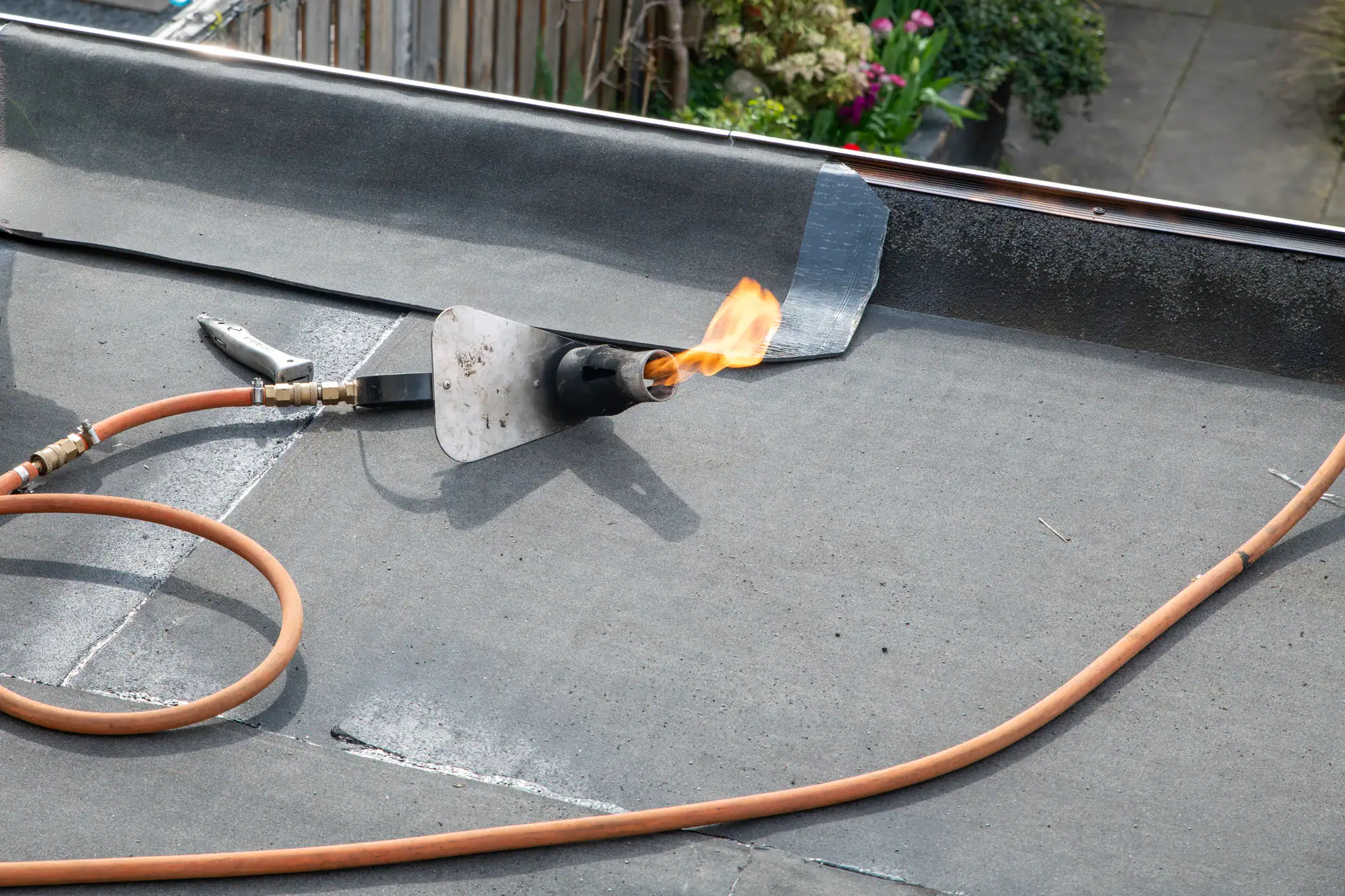
Not every flat roof system is the right fit for a bay-front property in Sussex County. TPO roofing membrane is a strong option for many Slaughter Beach properties — its heat-welded seams resist wind-driven water intrusion better than adhesive-bonded systems, and its reflective surface handles Delaware’s humid summers well. For properties with older low-slope additions or original cottage-era construction, modified bitumen roof systems (torch down roofing) are sometimes the appropriate choice depending on the deck condition and slope. EPDM rubber roofing material is another solid option, particularly valued for its flexibility under temperature cycling and its long track record in coastal applications.
PVC roofing membrane is also available for situations where chemical resistance or premium longevity is the priority. The point is that you’re not getting steered toward whatever one product we happen to stock — the recommendation is based on your specific building, your roof’s condition, and the exposure your property faces sitting on the Delaware Bay.
Beyond material selection, our service covers roof waterproofing integrity at every penetration and perimeter, proper drainage design to prevent ponding water from becoming a structural issue, and insurance claims assistance if storm damage is part of what you’re dealing with. We offer emergency roof repair when something can’t wait. Financing options are also available if timing and budget need to work together. A free estimate is how every conversation starts — no obligation, just a clear picture of what you’re working with.

Yes, and skipping it is one of the more costly mistakes a property owner in Slaughter Beach can make. DNREC — the Delaware Department of Natural Resources and Environmental Control — requires approval for construction work in the coastal zone, which includes Slaughter Beach. That approval typically needs to be in place before the Town of Slaughter Beach will issue its own building permit. On top of those two, a Sussex County building permit is also required for most roofing projects.
If a contractor starts work without going through this process, you as the property owner can end up facing stop-work orders, fines, or requirements to remove and redo unpermitted work at your own expense. There are also potential implications for your NFIP flood insurance coverage if construction in a flood zone isn’t properly documented and compliant. We handle this permitting process as part of the job — it’s not something you need to figure out on your own.
Salt air is a real factor for properties on or near the Delaware Bay, and it affects different roofing materials in different ways. On modified bitumen systems, salt-driven granule erosion can accelerate surface degradation, particularly on exposed mineral surfaces. On any flat roof system, salt deposits can work their way into seam edges and flashing details over time, compromising the waterproofing integrity at the points where the roof is most vulnerable.
TPO and EPDM membranes both hold up well in salt air environments when properly installed, but the installation details matter more in a coastal setting than they do inland. Fully adhered systems are generally preferable to ballasted systems in bay-front locations because they eliminate the risk of wind uplift dislodging the membrane. Perimeter fastening patterns and flashing quality at penetrations are also more critical here than on a property in a sheltered inland location. A contractor who treats a Slaughter Beach roof the same as a Dover subdivision roof is not giving you the right assessment.
For a property that spends significant time unoccupied — which describes most of Slaughter Beach — the priority is a membrane system that can handle deferred inspection cycles without failing quietly. EPDM rubber roofing has one of the strongest longevity track records in the industry, with a lifespan in the 20 to 30-year range when properly installed and maintained. Its flexibility under temperature cycling makes it well-suited to a coastal Delaware environment where conditions shift significantly between seasons.
TPO is the other strong contender, with a lifespan of 15 to 25 years and the advantage of heat-welded seams that are highly resistant to water intrusion — important for a property where a small seam failure could go undetected for months. The right choice depends on your specific roof’s slope, deck condition, and existing system. That’s exactly what the free estimate conversation is designed to figure out before any commitment is made.
Coastal properties along the Delaware Bay see more storm activity than most of inland Delaware — nor’easters, tropical remnants, and severe spring storms all create real roof damage risk. If your property takes a hit, the insurance claims process can feel overwhelming, especially if you’re managing it remotely and weren’t there when the damage happened.
We provide insurance claims assistance as part of what we do. That means helping you document the damage properly, communicating with your adjuster, and making sure the scope of work reflects what actually needs to happen — not a lowballed patch that leaves the underlying problem in place. If you’re dealing with both homeowners’ insurance and NFIP flood insurance simultaneously, having a contractor who understands how to navigate that process is genuinely useful. The goal is to make sure you receive fair compensation for the actual damage, not just whatever the first estimate happens to offer.
Yes — and this is one of those things that’s easy to dismiss until it becomes a serious problem. The industry standard definition of ponding water is water that’s still standing on a flat roof more than 48 hours after rain. At that point, it’s no longer just an aesthetic issue. Standing water accelerates membrane degradation, adds structural load to the roof deck, and promotes algae and mold growth.
For a property in Slaughter Beach that may sit vacant for weeks or months at a time, ponding water is a particular concern because it can develop and worsen without anyone noticing. A drainage blockage from debris — which is common near the bay — can turn a functioning roof into a standing water problem after a single storm. Regular inspections, especially before and after the off-season, are the most reliable way to catch this early. If you’re seeing signs of ponding when you open the property for the season, that’s worth getting looked at before it compounds further.
This comes up often with Slaughter Beach properties specifically, given how many owners aren’t there year-round. The short answer is yes — it’s something we’re set up to handle. Clear written estimates mean you know exactly what’s being done and what it costs before anyone shows up. The crew that shows up is our own licensed and insured team — not subcontractors you’ve never met — so there’s a consistent point of accountability throughout the job.
Communication during the project is straightforward: you’re kept informed of progress and any findings that affect the scope, so there are no surprises when the invoice comes. If access needs to be coordinated through a neighbor or property manager, that’s workable. And because we’re based in Delaware and familiar with the Sussex County permitting process, the paperwork side of things doesn’t fall on you to figure out from a distance. When the job is done, you get documentation of what was installed — useful for warranty records, insurance purposes, and your own peace of mind the next time you head down Bay Avenue for the season.
Other Services we provide in Slaughter