
Hear from Our Customers
A flat roof that’s doing its job is invisible. You don’t think about it, you don’t worry about it, and you’re not pulling up ceiling tiles to check for water stains. That’s exactly where you want to be — and it’s entirely achievable with the right membrane system installed correctly the first time.
Schoolview sits within the Dover area, and a meaningful share of the homes and residential buildings here were constructed between 1970 and 1999. That puts a lot of flat roofs in the 25-to-55-year range. Modified bitumen systems installed during that era were built to last 15 to 20 years. EPDM rubber roofs from the same period top out at around 20 to 30 years. Many of those roofs have never been replaced. The ones that haven’t failed yet are living on borrowed time — and the ones that have failed usually did it quietly, long before anyone noticed water inside.
Dover’s inland location also means more pronounced freeze-thaw cycling than you’d see closer to the coast. Water that pools in low spots on a flat roof — even a small amount — freezes, expands, and pries open seams that were originally sound. Do that for a few winters in a row and what was a minor seam separation becomes a genuine leak. A properly installed flat roof handles this. A neglected one doesn’t.
We’re based in Smyrna — about 10 to 12 miles up US Route 13 from Schoolview — and have been working across Kent County for over 22 years. That’s not a marketing number. It means we’ve installed and repaired flat roofs through the same spring storm seasons, the same humid Delaware summers, and the same freeze-thaw winters that affect every property in Schoolview. We know what holds up here and what doesn’t.
Every project is handled by our own certified crew. No subcontractors, no unfamiliar faces showing up on your roof. The team you talk to is the team that does the work, and we carry full licensing and insurance so you’re never exposed if something goes wrong on-site.
We’re BBB Accredited with a 5.0 out of 5 rating across 63-plus verified reviews. Customers consistently mention professionalism, clean worksites, and honest communication — which, if you’ve ever dealt with a contractor who disappeared after the deposit, you know matters more than it sounds.
It starts with a free estimate. Someone comes out, gets on the roof, and gives you an honest assessment of what you’re working with — not a vague ballpark, but a written breakdown of the condition, what’s needed, and what it will involve. If your flat roof is repairable, we’ll tell you. If it’s past the point where a repair makes financial sense, we’ll tell you that too.
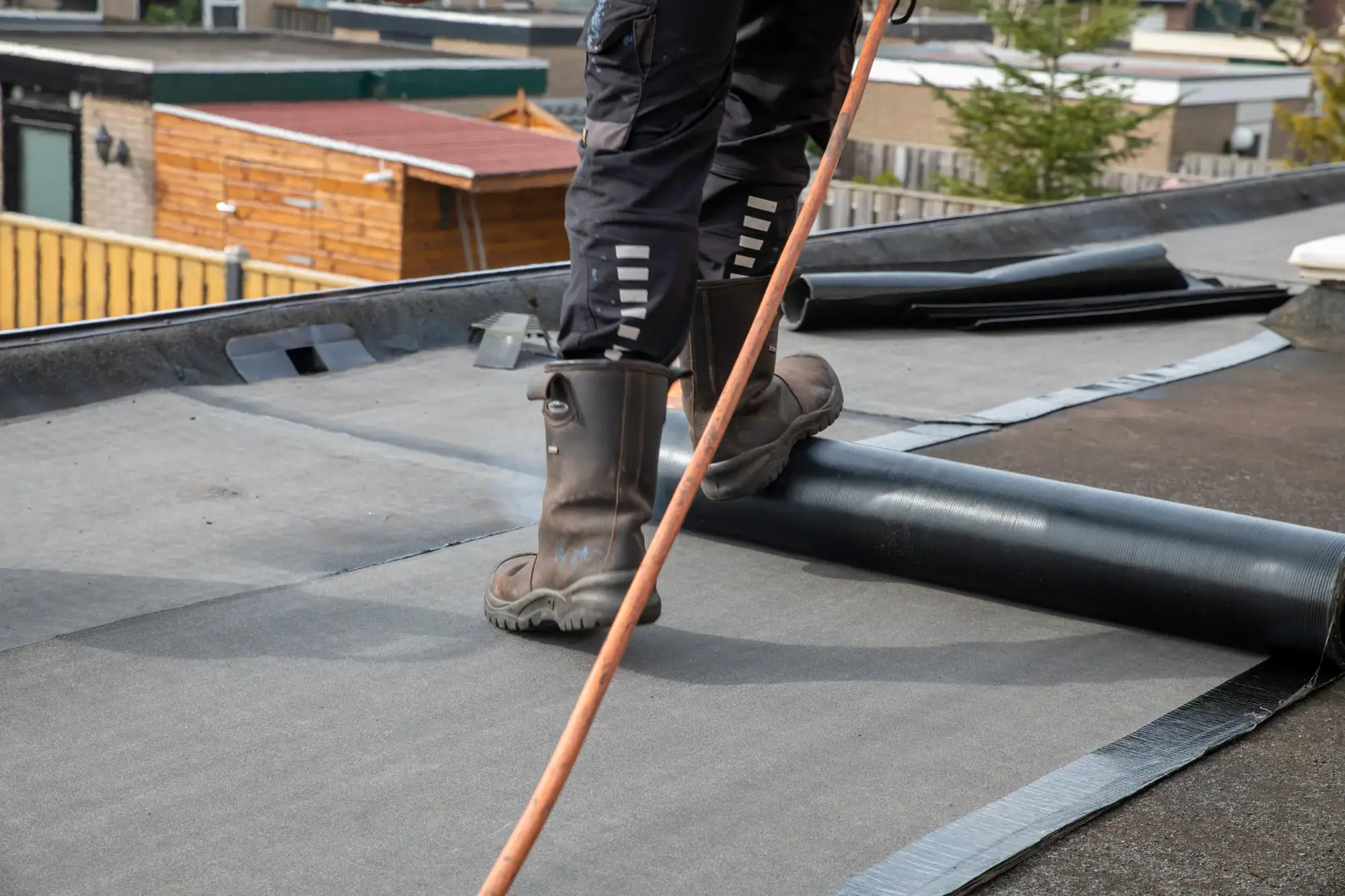
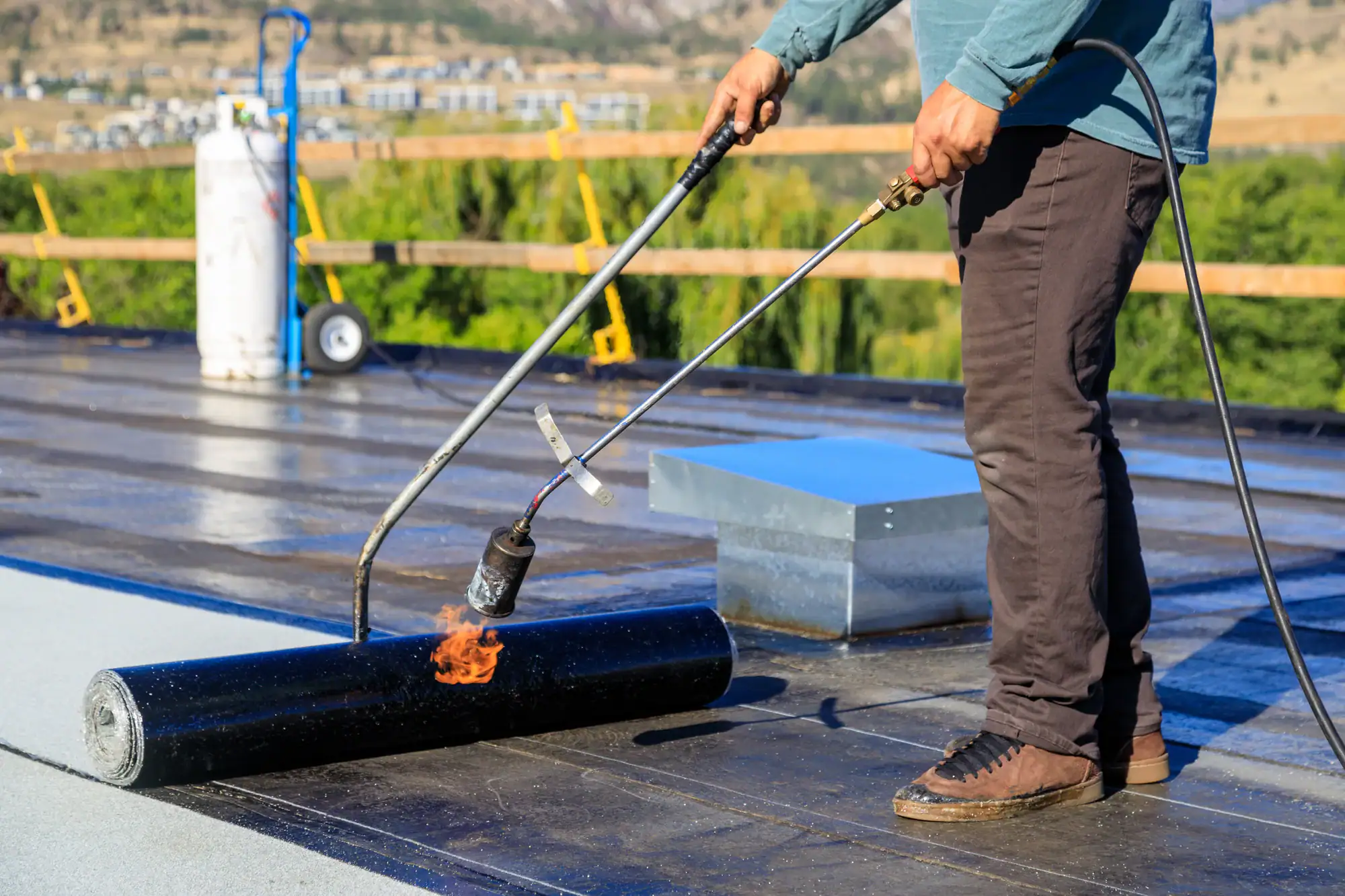
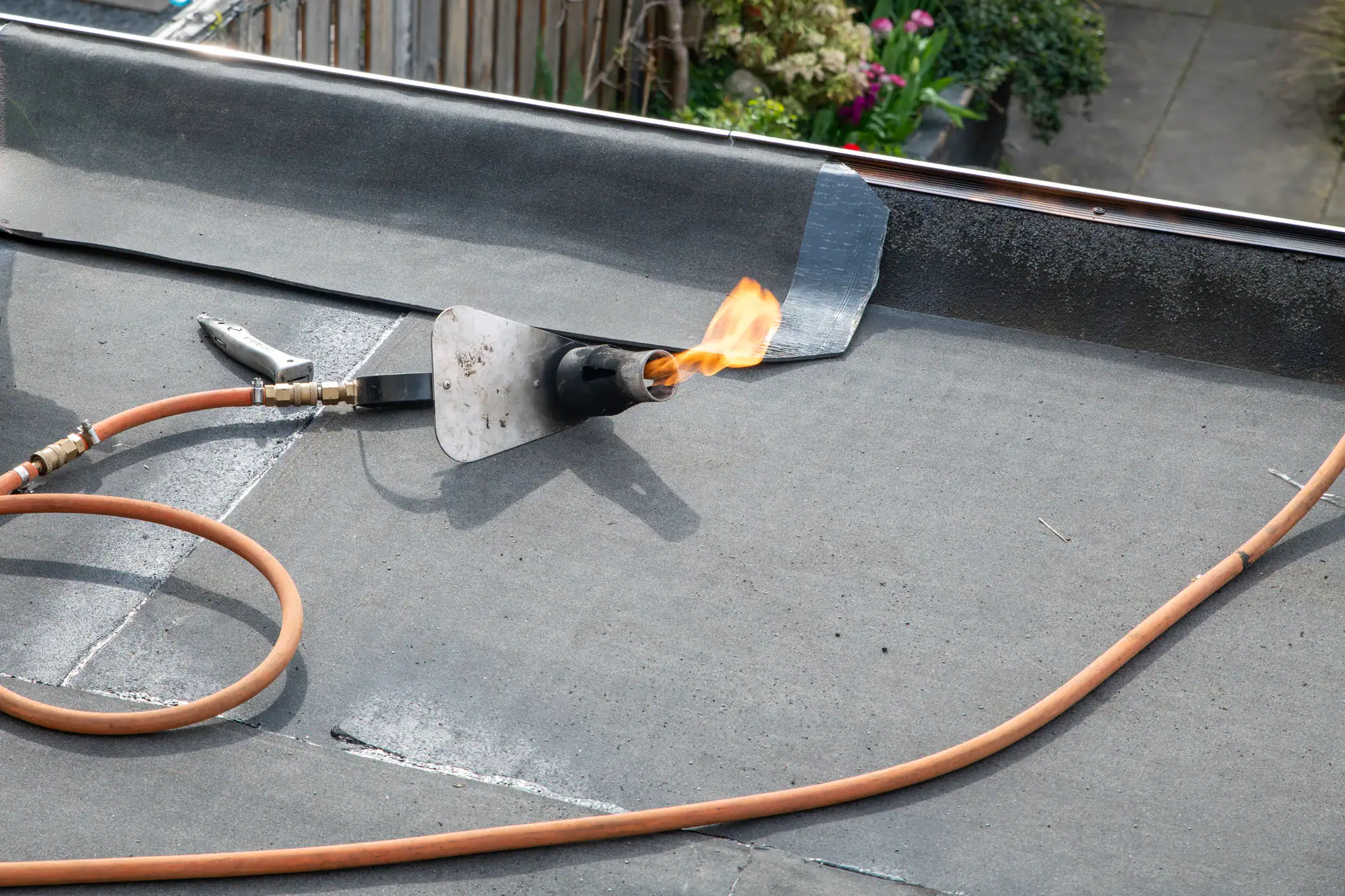
If the project moves forward, the process begins with a full tear-off of the existing membrane. This matters more than most people realize. Roofing over a failing system traps moisture, hides deck damage, and shortens the life of the new membrane significantly. The deck gets inspected and any damaged sections are repaired before anything else goes on top. Insulation is addressed, then the new membrane — whether that’s TPO, EPDM rubber roofing, modified bitumen, or PVC — is installed with properly heat-welded or adhered seams and flashed correctly at every penetration and perimeter edge.
Because Schoolview is an unincorporated community within Kent County, roofing permits are pulled through Kent County rather than a municipal building department. We handle that process, and the required inspection actually works in your favor — it confirms the deck condition, insulation, and membrane installation all meet code before the job is closed out. When the work is done, the site is cleaned up completely. No nails in the driveway, no debris left behind.

Ready to get started?
Not every flat roof in Schoolview is the same, and not every flat roof needs the same solution. We install and repair all major flat roof membrane systems, and the recommendation you get will be based on your specific building, your budget, and what actually makes sense for Kent County’s climate — not whatever happens to be in stock.
TPO roofing membrane is the most widely used flat roof system in commercial construction right now, and for good reason. It reflects up to 84% of solar load, which translates to real HVAC savings during Delaware’s humid summers. It’s installed with heat-welded seams that bond stronger than the membrane itself when done correctly, and it performs well across the freeze-thaw cycling that Dover-area properties deal with every winter. For property owners in Schoolview replacing an aging system on a commercial-style building or a flat-roofed residential addition, TPO is often the most cost-effective long-term choice.
EPDM rubber roofing material is the other major option, and it has a track record to back it up — more than 20 billion square feet installed worldwide. It’s flexible enough to handle temperature swings, resistant to UV degradation, and when properly maintained, it routinely reaches 20 to 30 years of service life. For residential flat roofs and low-slope applications, it remains one of the most reliable systems available. Modified bitumen, or torch-down roofing, is still a strong choice for certain applications, particularly on two-ply systems where durability and weather resistance are the priority. We also handle PVC roofing membrane and assist with insurance claims for storm-related damage — a service that matters a lot after Kent County’s spring storm seasons roll through.

The honest answer is that you usually can’t tell from the ground, and even a ceiling stain isn’t always a reliable indicator of where the actual problem is. Flat roof leaks are tricky — water enters at one point and travels along the deck before it shows up inside, so the stain you see may be several feet away from the source.
The factors that typically push a flat roof toward full replacement rather than repair are age, membrane condition, and deck integrity. If you’re dealing with a modified bitumen roof that’s 20 or more years old, or an EPDM system that’s approaching 30, a repair might buy you a season or two but it won’t change the underlying reality that the membrane is at the end of its lifespan. For Schoolview properties with housing stock from the 1970s through the 1990s, that scenario is genuinely common right now. A free estimate from us includes a straight assessment of where your roof stands — not a sales pitch, just an honest read on whether repair makes financial sense or whether replacement is the better call.
Delaware’s climate puts flat roofs through a specific set of stresses that not all membrane systems handle equally well. You’ve got roughly 45 inches of rainfall per year, humid summers that promote algae and mold growth on aging membranes, and winter freeze-thaw cycles that are more pronounced in inland areas like Dover and Schoolview than they are closer to the coast.
TPO roofing membrane performs well in this environment because of its heat-welded seams — when installed correctly, those seams are actually stronger than the surrounding membrane, which matters when you’re dealing with repeated thermal expansion and contraction. Its high solar reflectance also helps during summer. EPDM rubber roofing material is the other strong option, particularly for its flexibility in cold temperatures and its long track record of durability. Modified bitumen is a viable choice for certain applications, but the mineral surface can erode under repeated freeze-thaw cycling over time, so it’s worth discussing the specifics of your building before committing. The right answer depends on your roof’s slope, the building type, and your budget — which is exactly what a free estimate is designed to sort out.
Yes, and sooner rather than later. The industry threshold is 48 hours — if water is still sitting on your flat roof more than two days after it rained, that’s ponding water, and it’s a problem worth taking seriously. It’s not just about the water itself. Standing water adds weight, promotes mold and algae growth, and accelerates membrane degradation in ways that aren’t visible until the damage is already done.
In the Dover area, the freeze-thaw cycling that runs through winter months makes ponding water significantly more destructive. Water that sits in a low spot freezes, expands, and mechanically stresses the membrane from below. Over several winters, that process works open seams that were originally sound. The most common causes are clogged drains, low spots from deck deflection, and inadequate drainage design — all of which are addressable, but only if you deal with them before the membrane fails. If you’re seeing consistent ponding on a flat roof in Schoolview, it’s worth getting someone out to assess the drainage situation before the next winter season.
Yes. Because Schoolview is an unincorporated community within Kent County, building permits for roofing work are issued through Kent County rather than a municipal building department. A flat roof replacement typically requires a permit, and that permit triggers an inspection of the deck condition, insulation, and membrane installation before the job is officially closed out.
This is actually a consumer protection mechanism more than a bureaucratic hurdle. The inspection confirms that the work meets the International Residential Code standards Delaware has adopted — including slope requirements, drainage specifications, and membrane installation standards. It also creates a paper trail that’s useful if you ever sell the property or file an insurance claim. We handle the permitting process as part of the project, so you’re not navigating the Kent County system on your own. It’s worth noting that Delaware doesn’t have a statewide roofing-specific license requirement, which means unlicensed operators can and do work in the area — another reason to verify credentials before hiring anyone.
Yes, and this is one of the more valuable services we offer, especially after Kent County’s spring storm seasons. Severe thunderstorms and hail can damage flat roof membranes in ways that aren’t obvious from the ground — seam separation, membrane punctures, flashing displacement — and insurance adjusters don’t always catch everything on a first visit.
We help property owners document the damage accurately, work through the claims process, and scope the repair or replacement correctly so the estimate reflects the actual scope of work rather than a minimized patch job. This matters because an underpaid claim often results in a repair that addresses the visible damage but leaves underlying issues unresolved. If you’ve had storm damage to a flat roof in the Schoolview area and you’re not sure whether your claim covers what it should, getting a contractor involved who understands the documentation process is worth doing before you agree to anything with the adjuster. Emergency roof repair is also available if you need to stop damage from spreading while the claim is being processed.
The cost varies based on the size of the roof, the membrane system you choose, the condition of the existing deck, and whether a full tear-off is required — which it almost always should be for a legitimate replacement. General industry ranges for materials run from around $3 to $7 per square foot for EPDM, $5 to $9 for TPO, $4 to $8 for modified bitumen, and $7 to $12 for PVC. Those are material costs and don’t include labor, deck repairs, or disposal of the old membrane.
What that means practically is that quotes can vary significantly between contractors, and a low bid almost always reflects something being skipped — thinner membrane, no deck inspection, inadequate flashing at penetrations, or no meaningful warranty. For Schoolview property owners replacing a roof on a home from the 1980s or 1990s, deck damage is common and needs to be priced into the job honestly rather than discovered mid-project. We provide free written estimates that break down what’s included, so you can compare quotes accurately. If upfront cost is a concern, financing options are available — because delaying a necessary flat roof replacement typically leads to a larger bill once interior water damage enters the picture.
Other Services we provide in Schoolview