
Hear from Our Customers
Milford gets hit from both sides — coastal storms rolling up from the Delaware Bay and the Mispillion River flooding low-lying streets when the rain stacks up. For a flat or low-slope roof, that combination isn’t just inconvenient. It’s a stress test that exposes every weak seam, every clogged drain, every shortcut the last contractor took.
When the membrane holds and the drainage works, you stop worrying about what’s happening up there during a storm. The older building stock along Walnut Street and Front Street in Milford’s historic downtown tells the same story: flat-roofed commercial buildings that have been through multiple roofing cycles are now hitting the point where a patch job isn’t going to cut it anymore. Getting the right membrane system installed correctly means you’re not back on the phone with us two winters from now.
For homeowners in Milford’s growing residential areas near Route 1, the issue is often a flat-roofed garage or addition that came with the house and hasn’t been looked at in years. A proper inspection and, when needed, a clean replacement gives you a clear answer instead of a slow-building problem.
First State Roofing & Exteriors Co. is BBB-accredited and based right here in Milford, DE — not a regional franchise routing calls through a dispatch center. We’ve been working Delaware roofs for over 22 years, which means our team has seen what coastal storm seasons, Mispillion flooding events, and Delaware’s freeze-thaw winters actually do to flat roof membranes over time. That experience shapes every material recommendation and every installation decision.
Every project is handled by our own certified crew. No subcontracting, no unknown third parties on your roof. The person who walks your property for the estimate is connected to the team doing the work — and that accountability doesn’t disappear once the contract is signed.
With a 5.0 out of 5 rating across 63-plus verified reviews, our track record speaks plainly. Customers consistently mention professionalism, clean worksites, and honest communication — the things that matter when you’re trusting someone with your building.
It starts with a free estimate and a real look at what’s going on. We assess the existing membrane, check for ponding areas — water that’s sitting more than 48 hours after rain is a problem, not a quirk — inspect the deck underneath, and evaluate the drainage layout. In Milford, drainage design gets extra attention. The city’s proximity to the Mispillion and its documented flood history mean that scupper sizing and drain placement aren’t afterthoughts.
If the work qualifies as a replacement, we pull a permit through Milford’s Building Inspections and Permitting Division via the city’s Civic Access portal. Milford requires permits for roof replacements, and we handle that process as part of the job — you don’t have to figure out the city’s system on your own.
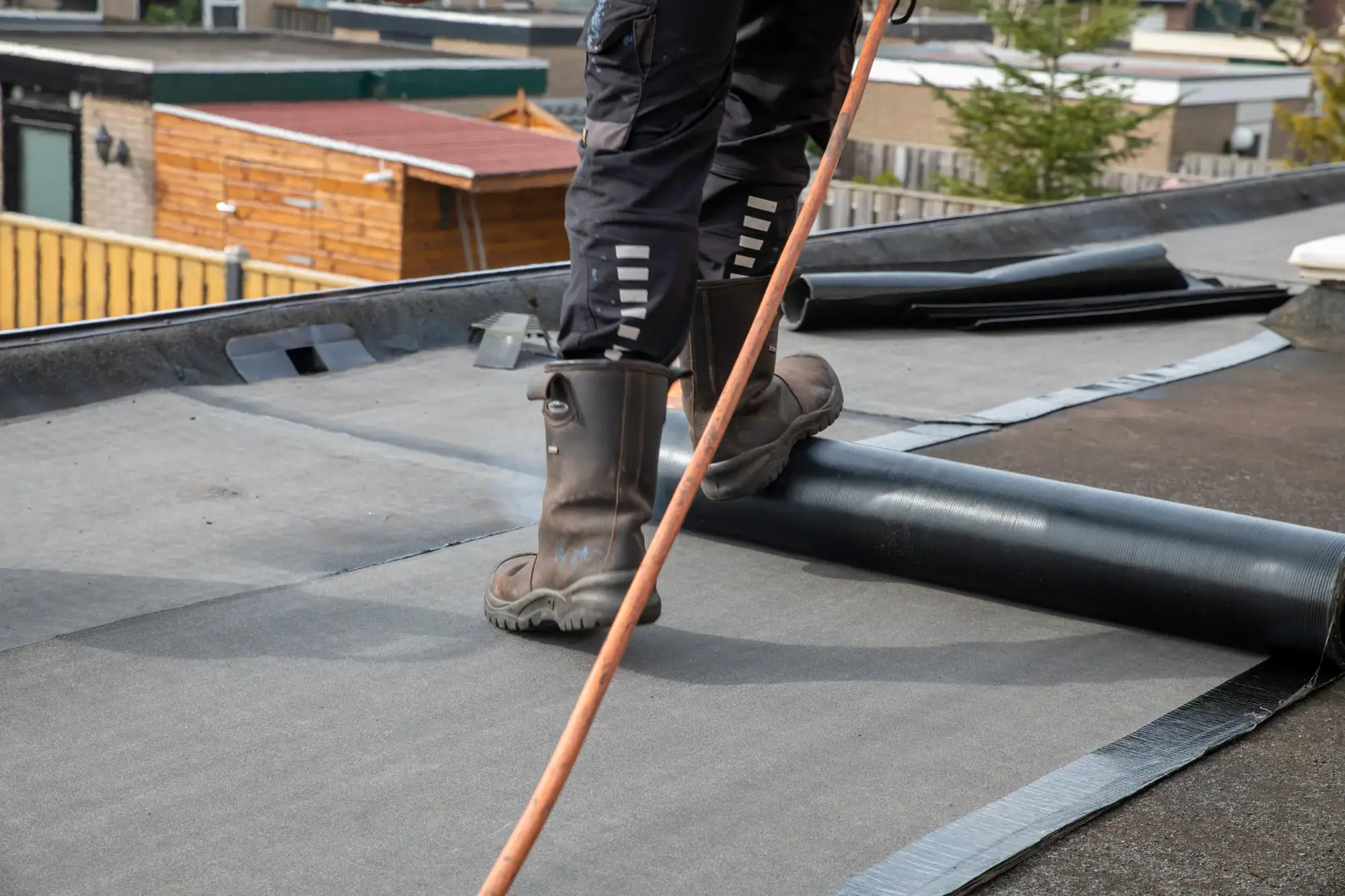
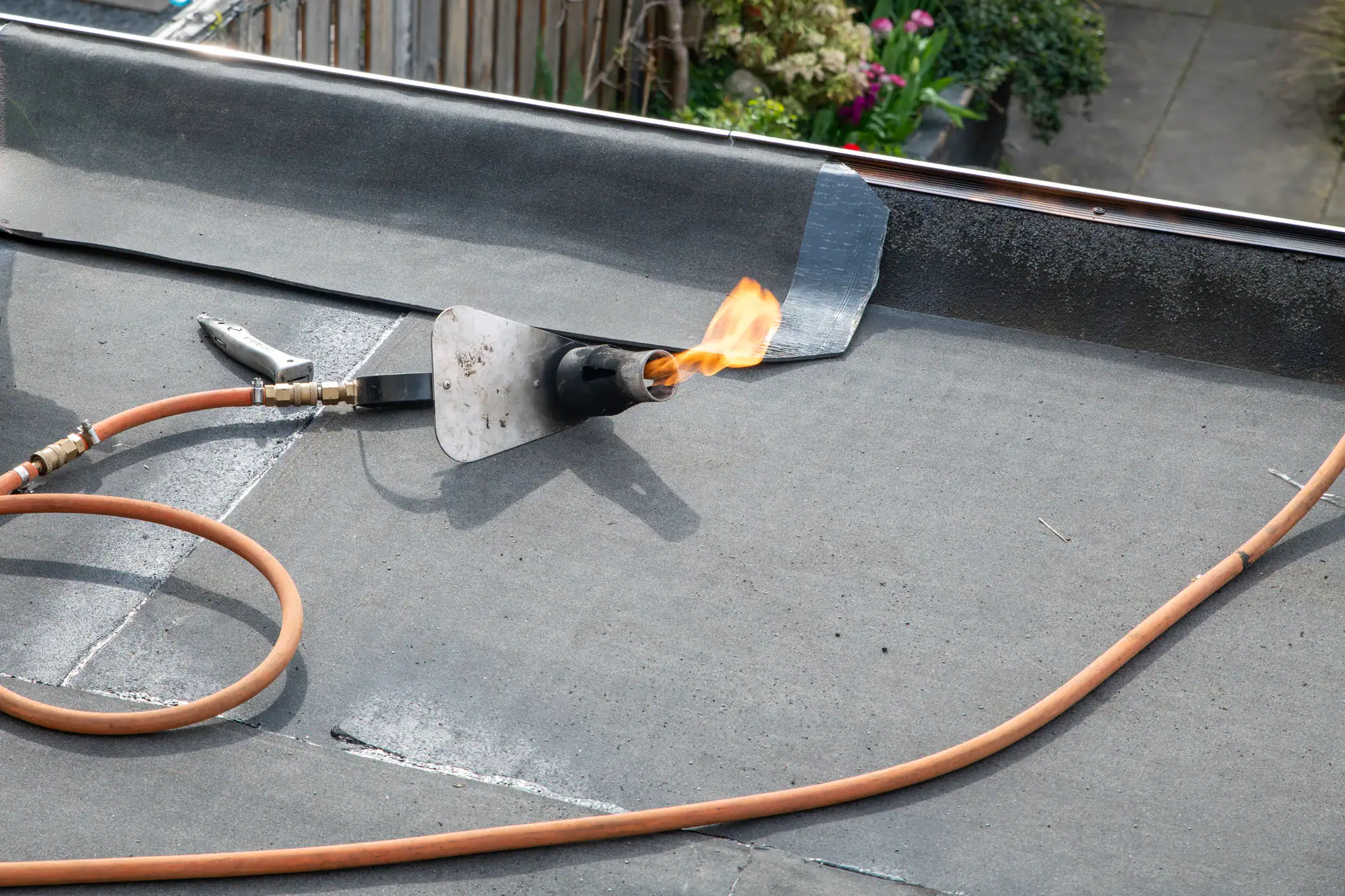
From there, the existing membrane comes off, the deck gets inspected and repaired where needed, insulation is addressed, and the new membrane goes down with properly heat-welded or adhered seams and correctly detailed flashing at every penetration and edge. The job doesn’t wrap until the site is clean and the work is inspected. If you’ve got a storm damage situation and need emergency repair first, we handle that before the full replacement scope is scheduled.

Ready to get started?
Not every flat roof is the same, and we know every system. We install TPO, EPDM, modified bitumen, and PVC membranes — and the recommendation depends on your building, not on what happens to be easiest to stock.
TPO is the most common choice for commercial properties along Dupont Boulevard and the Route 1 corridor near the Bayhealth campus. Its high solar reflectance cuts HVAC load during Delaware’s humid summers, and heat-welded seams hold up well against the moisture cycling this area sees. EPDM rubber roofing is a strong fit for residential flat-roofed additions and older structures — it’s flexible enough to handle freeze-thaw movement and has a proven lifespan of 20 to 30 years when installed and maintained correctly.
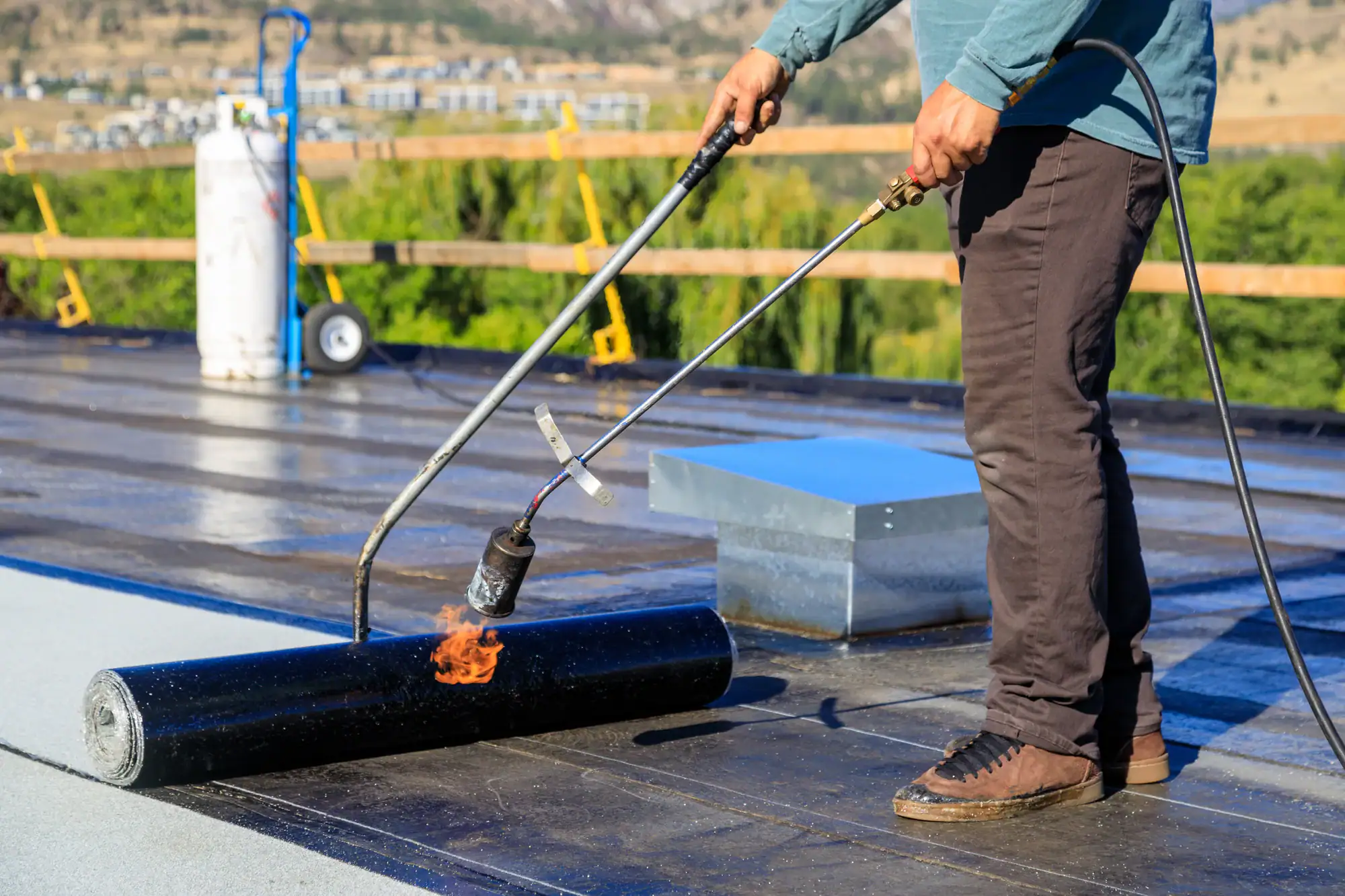
Modified bitumen, also called torch-down roofing, is often the right call on buildings in Milford’s historic downtown that already have an existing system and need a like-for-like replacement without a full tear-off of the underlying assembly. PVC membranes are available for applications where chemical resistance is a priority.
Beyond material selection, we handle insurance claims assistance for storm-damaged roofs in Milford — helping property owners document damage, work with adjusters, and make sure the scope reflects the actual condition of the roof. Financing is also available for homeowners and commercial property owners who need to move forward without waiting for the budget to align perfectly.

Yes — Milford has its own Building Inspections and Permitting Division, and the city explicitly requires permits for roof replacements. This is separate from Kent County and Sussex County permitting systems. Because Milford is an incorporated city, it operates its own permitting authority regardless of which side of the Mispillion River your property sits on. Permits are pulled through the city’s Civic Access online portal.
Working with a contractor who pulls the permit correctly matters more than it might seem. Unpermitted roofing work can create complications when you sell the property, void manufacturer warranties, and leave you personally liable if something goes wrong down the line. We handle the permitting process as part of the job — it’s not an add-on or an afterthought.
The honest answer is that it depends on the building — but in Milford’s specific environment, a few factors narrow the field. The city sits within the coastal Delaware storm track, receives around 45 inches of rain annually, and goes through freeze-thaw cycling every winter. That combination puts real stress on membrane seams and drainage systems.
TPO performs well on commercial properties because its heat-welded seams create a continuous bond that handles moisture cycling better than older adhesive systems. EPDM is a strong choice for residential flat roofs and additions because its flexibility accommodates the thermal movement that comes with Delaware’s temperature swings. Modified bitumen is often appropriate for existing systems in older Milford buildings where the underlying assembly is sound and a full tear-off isn’t necessary. The right call starts with an honest look at the structure — which is exactly what the free estimate process covers.
The age of the membrane is the starting point. EPDM systems typically last 20 to 30 years, TPO runs 15 to 25 years, and modified bitumen generally falls in the 15 to 20 year range. If your membrane is approaching or past those windows, a repair might buy you a season but it’s not a long-term answer.
Beyond age, the signs that point toward replacement rather than repair include widespread membrane cracking or shrinkage, seams that are consistently lifting, evidence of deck damage underneath, and recurring leaks that keep coming back in different spots. A single isolated puncture or a flashing failure at one penetration is usually a repair. Systemic membrane degradation is a replacement. The inspection during the free estimate process is designed to give you a straight answer on which category you’re in — not a sales pitch for the more expensive option.
If water is sitting on your roof for more than 48 hours after rain stops, that’s the industry threshold for concern — and yes, it needs to be addressed. Ponding water accelerates membrane degradation, promotes mold and algae growth, adds structural load to the deck, and can void manufacturer warranties if left unresolved.
In Milford, this issue comes up more than in drier inland areas. The city’s high annual rainfall, its position near the Mispillion River, and the moisture that stays in the environment after flooding events all mean that flat roofs here are tested more frequently than most. Clogged drains and scuppers are a common culprit — debris from nearby trees backs up the drainage and water has nowhere to go. Sometimes the fix is a drain cleaning and minor slope correction. Other times, it points to a drainage design problem that needs to be corrected as part of a larger repair or replacement scope. Either way, ignoring it makes the underlying problem worse and more expensive to fix.
The claims process catches a lot of property owners off guard because the scope of damage isn’t always obvious from the inside. A flat roof leak that shows up as a water stain on your ceiling might represent a small membrane puncture — or it might mean the deck underneath has been compromised. Adjusters work from what’s documented, and if the damage isn’t captured correctly, the settlement can fall short of what the actual repair or replacement costs.
We provide insurance claims assistance for storm-damaged roofs in Milford. That means helping you document the damage accurately before the adjuster visit, explaining what’s involved in the repair or replacement scope, and making sure the claim reflects the real condition of the roof — not just the most visible symptom. Delaware’s coastal storm season generates legitimate claim volume every year, and having a contractor in your corner who knows how to communicate with adjusters makes a real difference in the outcome.
For most residential flat roof replacements — a garage, an addition, or a low-slope section of a home — the work typically runs one to three days depending on the size, the condition of the deck underneath, and the membrane system being installed. Commercial jobs on larger buildings along Milford’s Route 1 or Dupont Boulevard corridor take longer, and the timeline gets planned around minimizing disruption to tenants and operations.
The tear-off phase is the noisiest and most disruptive part. Once the old membrane is off and the deck is prepped, the installation itself moves relatively quickly. We manage projects from start to finish with our own crew — no subcontractors cycling in and out on unpredictable schedules. That means the timeline you’re given at the estimate stage reflects how the job actually runs, not an optimistic projection that falls apart once work starts. If you have specific timing constraints — a business that can’t have the roof open during operating hours, or a tenant situation that limits access — that gets worked into the plan upfront.
Other Services we provide in Milford