
Hear from Our Customers
A flat roof that’s doing its job is one you stop thinking about. No water stains spreading across your ceiling after a nor’easter. No soft spots forming in the deck because moisture has been sitting under a failing membrane for two seasons. No emergency calls at midnight when a storm rolls up the Delaware Bay corridor and Route 9 floods.
For property owners in Leipsic, that peace of mind isn’t just a comfort — it’s a real financial consideration. Median home values here have climbed from $76,700 in 2000 to nearly $239,000 today. A roof that fails quietly and slowly is one of the fastest ways to erode that equity, because by the time the damage shows up inside, it’s already been working on your deck and structure for a while.
The environment here is genuinely more demanding than what most inland Kent County towns deal with. The Leipsic River runs right through town, the surrounding wetlands are predominantly saltwater, and Delaware Bay air moves inland year-round. That combination — persistent moisture below, salt air from the east, freeze-thaw cycling in winter — is harder on roofing membranes than people realize. Getting the right material installed correctly the first time isn’t a luxury. It’s the difference between a roof that lasts 20-plus years and one that starts failing in year seven.
We’re based in Smyrna, roughly 10 to 12 miles north of Leipsic along Delaware Route 9, the same scenic byway that runs straight through the center of town. That proximity matters. We’re not dispatching from Wilmington or Philadelphia with no real feel for what a waterfront Kent County property goes through over a winter. We’re a local team that has worked this corridor for over two decades, through the same coastal storms that have put Route 9 underwater and sent emergency responders out to Leipsic.
We’re licensed, insured, and BBB accredited. Every project is handled by our own certified crew — no subcontracting, no unknown third parties on your property. Customers consistently mention the same things in their reviews: we show up when we say we will, explain what we’re doing and why, and leave the site clean. In a small town where word travels fast, that track record is the most honest thing we can offer.
It starts with a free estimate. Someone from our crew comes out, looks at the existing roof, and gives you a clear written scope of what’s needed and what it will cost. No vague verbal quotes, no pressure to sign on the spot. If you’ve already had water intrusion or storm damage, this inspection also documents what’s there — which matters if you’re filing an insurance claim, something that’s a realistic scenario for properties in the Delaware Bay watershed.
Once you’re ready to move forward, we handle the full tear-off of the existing membrane, inspect the deck underneath for soft spots or structural issues, and address anything that needs attention before the new system goes down. This step is where a lot of low-bid contractors cut corners — skipping the deck inspection or leaving problem areas under a fresh membrane. In a high-humidity environment like Leipsic, that shortcut will show up within a few years.
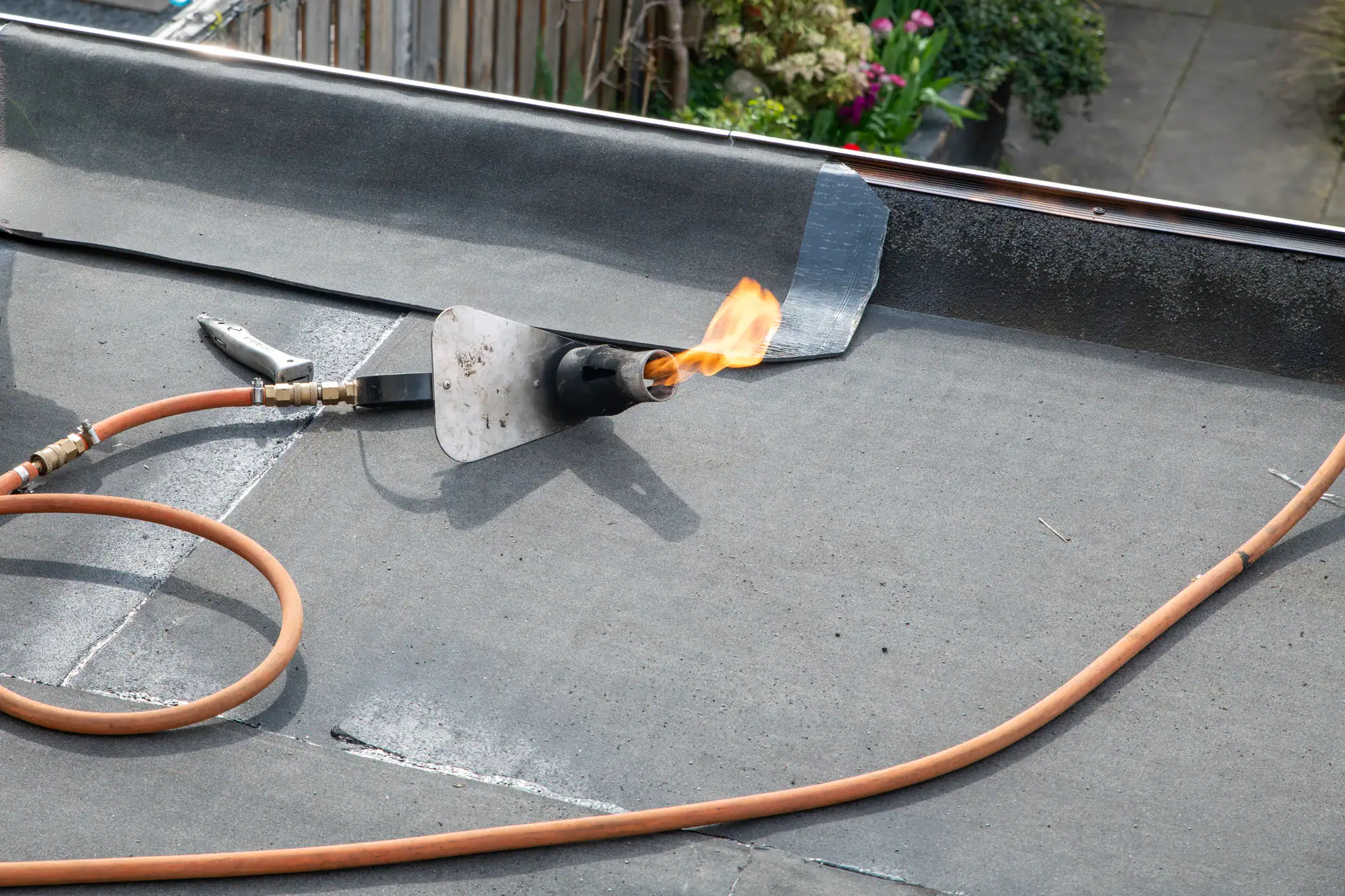
The new membrane — whether that’s TPO, EPDM rubber roofing, modified bitumen, or PVC — goes in with properly heat-welded or adhered seams, correct flashing at every penetration and perimeter edge, and a drainage design that accounts for the flat terrain. Leipsic’s low-lying landscape means water doesn’t have topography working in its favor, so engineered drainage isn’t optional. After the job is done, the site is cleaned up and you’ll know exactly what warranty coverage applies to both the material and our workmanship.

Ready to get started?
Not every flat roof material performs the same way in every environment, and Leipsic’s location makes that distinction meaningful. TPO membrane reflects a significant portion of solar load, which helps with cooling costs during Delaware’s humid summers — a real benefit for any structure that absorbs heat from a flat or low-slope surface. Its heat-welded seams also create a watertight bond that holds up well under the kind of repeated heavy rainfall Kent County sees across the year.
EPDM rubber roofing brings a different set of strengths. It’s flexible enough to handle the freeze-thaw cycling that Mid-Atlantic winters put roofing membranes through, and it has strong resistance to the chemical exposure that comes with salt air. With a lifespan of 20 to 30 years when properly installed and maintained, it’s one of the most proven flat roofing materials available — and for older Leipsic homes with low-slope additions or outbuildings that have been sitting in this waterfront environment for decades, it’s often the right call.
Modified bitumen, sometimes called torch-down roofing, is another option for residential flat sections and smaller commercial structures. It’s a durable, multi-layer system that performs well in the Mid-Atlantic climate when installed correctly. We also install PVC roofing membrane for commercial applications. The recommendation always comes down to your specific building, its exposure, and your budget — and that conversation starts with the free estimate, not after you’ve already signed something.

It’s a fair question, and the honest answer is that it does matter. The Leipsic River and the surrounding tidal wetlands — nearly three-quarters of which are saltwater, according to DNREC — create a persistently high-humidity environment that most inland properties don’t experience. Salt air accelerates the degradation of roofing membranes, corrodes metal flashings, and can compromise adhesive seams faster than a drier inland location would.
That doesn’t mean a flat roof in Leipsic can’t last 20 or 25 years — it absolutely can. But it does mean the material selection and installation quality matter more here than they would in Hartly or Kenton. EPDM’s chemical resistance and flexibility make it a strong candidate for this environment. TPO’s heat-welded seams and reflective surface are another solid option. What you want to avoid is a membrane that was installed with shortcuts — inadequate flashing, poor drainage design, or a deck that wasn’t properly inspected before the new material went down. In a coastal waterfront environment, those shortcuts show up faster.
These are the three most common flat roofing membrane systems for residential and small commercial properties, and they each have a distinct profile. TPO is a single-ply membrane known for its high solar reflectance and heat-welded seams. It’s the fastest-growing flat roofing material in the market right now, and its energy efficiency benefits are real — especially for structures that absorb a lot of summer heat through a flat surface.
EPDM is a rubber roofing membrane that has been in widespread use for decades. It’s flexible, handles temperature swings well, and resists the kind of chemical exposure that comes with salt air — which makes it particularly relevant for properties near the Delaware Bay corridor. Its lifespan runs from 20 to 30 years with proper maintenance. Modified bitumen, sometimes called torch-down roofing, is a multi-layer asphalt-based system that’s applied in sheets and typically used on residential flat sections and smaller commercial roofs. It performs reliably in the Mid-Atlantic climate when installed correctly. The right choice depends on your building’s size, slope, use, and exposure — which is exactly what the free estimate conversation is designed to sort out.
The short answer is that a proper inspection will tell you, and it’s worth getting one before you assume either direction. Some flat roofs that look rough from the ground are actually in reasonable shape and can be repaired at specific failure points — around flashings, at seams, or near drainage outlets. Others that look okay on the surface have deck damage or widespread membrane deterioration underneath that makes a patch a temporary fix at best.
A few things that point toward replacement rather than repair: if the membrane is brittle or cracking across a large area, if there’s evidence of ponding water that’s been sitting for extended periods, or if the deck underneath has soft spots that indicate moisture has been working on the structure. In Leipsic’s environment, where humidity and coastal moisture are constant factors, deferred maintenance tends to accelerate the timeline from “needs repair” to “needs replacement.” Getting an honest assessment early — before the damage compounds — is almost always the less expensive path.
It depends on your policy and the cause of the damage, but storm damage from events like nor’easters and coastal flooding — the kind that Kent County Emergency Management specifically identifies as recurring threats for Leipsic and the surrounding area — is typically covered under standard homeowner’s insurance policies. What insurers look at closely is whether the damage was caused by a sudden event versus gradual deterioration. A membrane that failed because of deferred maintenance is usually not covered; one that was damaged by wind, hail, or a storm surge event generally is.
Where it gets complicated is the documentation and scoping process. Adjusters work from their own estimates, and those estimates don’t always reflect the full scope of what a damaged flat roof actually needs — particularly when deck damage is involved. We help property owners through this process: documenting the damage, communicating with adjusters, and making sure the scope of work reflects what actually needs to happen rather than the minimum patch the insurer might initially propose. Given Leipsic’s documented history of coastal storm events affecting Route 9 and the surrounding area, this is a service that’s relevant here, not hypothetical.
For a standard residential flat roof replacement, most jobs run one to three days once our crew is on-site. That includes the tear-off of the existing membrane, deck inspection and any necessary repairs, installation of the new system, and cleanup. Larger commercial roofs or jobs with significant deck damage will take longer, and that timeline gets communicated clearly upfront so you’re not left wondering.
Weather is always a factor in roofing work, and in Leipsic that’s worth acknowledging specifically. The spring and fall seasons bring the most unpredictable weather along the Delaware Bay corridor — coastal storms can develop quickly, and scheduling has to account for that. Fall is generally the best window for proactive replacement work before winter freeze-thaw cycles begin stressing whatever membrane is currently on your roof. If you’re dealing with an active leak or storm damage, we offer emergency repair services to stop the damage from spreading while a full replacement is scheduled. The goal is always to get the job done right without leaving your property exposed longer than necessary.
Price variance in flat roofing estimates usually comes down to a few things: membrane thickness and quality, whether the existing membrane gets fully torn off or just overlaid, how thoroughly the deck gets inspected and repaired, and the quality of the flashing work at edges and penetrations. A contractor who skips the full tear-off, uses thinner membrane, and cuts corners on flashing can quote significantly less — and the roof will show it within a few years.
In a place like Leipsic, where the environment is consistently hard on roofing materials, those shortcuts have a way of surfacing faster than they would in a drier inland location. A membrane installed over a compromised deck, or with inadequate flashing at the perimeter, won’t last anywhere near its rated lifespan when it’s dealing with persistent coastal humidity and seasonal storm exposure. The free estimate from us gives you a written breakdown of exactly what’s included — so when you’re comparing quotes, you’re comparing the actual scope of work, not just the bottom-line number. That’s the only fair comparison to make.
Other Services we provide in Leipsic