
Hear from Our Customers
The most immediate thing that changes is the stress. No more watching the ceiling after a rainstorm. No more wondering whether that water stain is getting bigger. When your flat roof membrane is properly installed and draining the way it should, you stop managing a problem and start just living in your house.
For Hilldale homeowners, this matters in a specific way. A lot of the homes in this neighborhood were built in the postwar decades — solid construction, but the flat sections on rear additions, garages, and covered carports are now 50 to 70 years old. Even if a previous owner replaced the membrane once, that replacement could be 20 or 25 years old itself.
The issue isn’t always visible from the ground, which is exactly why it tends to go unaddressed until water shows up inside. Dover’s climate doesn’t do flat roofs any favors either. The freeze-thaw cycles through winter stress membrane seams and flashing. Spring snowmelt hits right when any winter damage is at its worst. Summer heat pushes surface temperatures well above air temperature on older, darker membranes.
Getting the right material installed correctly — whether that’s TPO, EPDM, or modified bitumen — means your roof is actually built for what Delaware weather throws at it. We make sure every seam, flashing point, and drainage detail is done right the first time.
We’re based in Smyrna — a short drive up US Route 13 from Hilldale — and have been working across Kent County for over 22 years. That’s not a number thrown in to sound impressive. It means we’ve worked through Delaware’s storm seasons, seen what happens to flat roof membranes that weren’t installed right, and built a reputation in this area that’s verifiable before you ever pick up the phone.
We’re BBB accredited, carry a 5.0 out of 5 rating across 63-plus verified reviews, and every project is handled by our own crew — no subcontracting to people you’ve never met. When you call First State Roofing & Exteriors Co., the team that shows up is the team accountable for the work.
We serve both residential and commercial clients, which matters in the Dover area where the US Route 13 corridor has plenty of flat-roofed commercial buildings alongside established neighborhoods like Hilldale. Whether it’s a garage roof on Hilldale Road or a low-slope addition on a home near Dover Air Force Base, our approach is the same: assess it honestly, explain what it needs, and do the job right.
It starts with a free estimate. You reach out, and we come out and take a real look at the roof — not a drive-by assessment, but an actual inspection of the membrane, the flashing, the drainage, and the deck condition underneath. For a lot of Hilldale homeowners, this is the first time anyone has given them a straight answer about what’s actually going on up there.
From there, you get a clear scope of work. If it’s a repair, we’ll tell you that. If the membrane has reached the end of its life and a full replacement makes more sense, we’ll explain why — and what material fits your specific situation. In Dover, the permit process for a full roof replacement goes through the City of Dover’s Building Department, and we handle that side of things so it doesn’t fall on you to navigate.
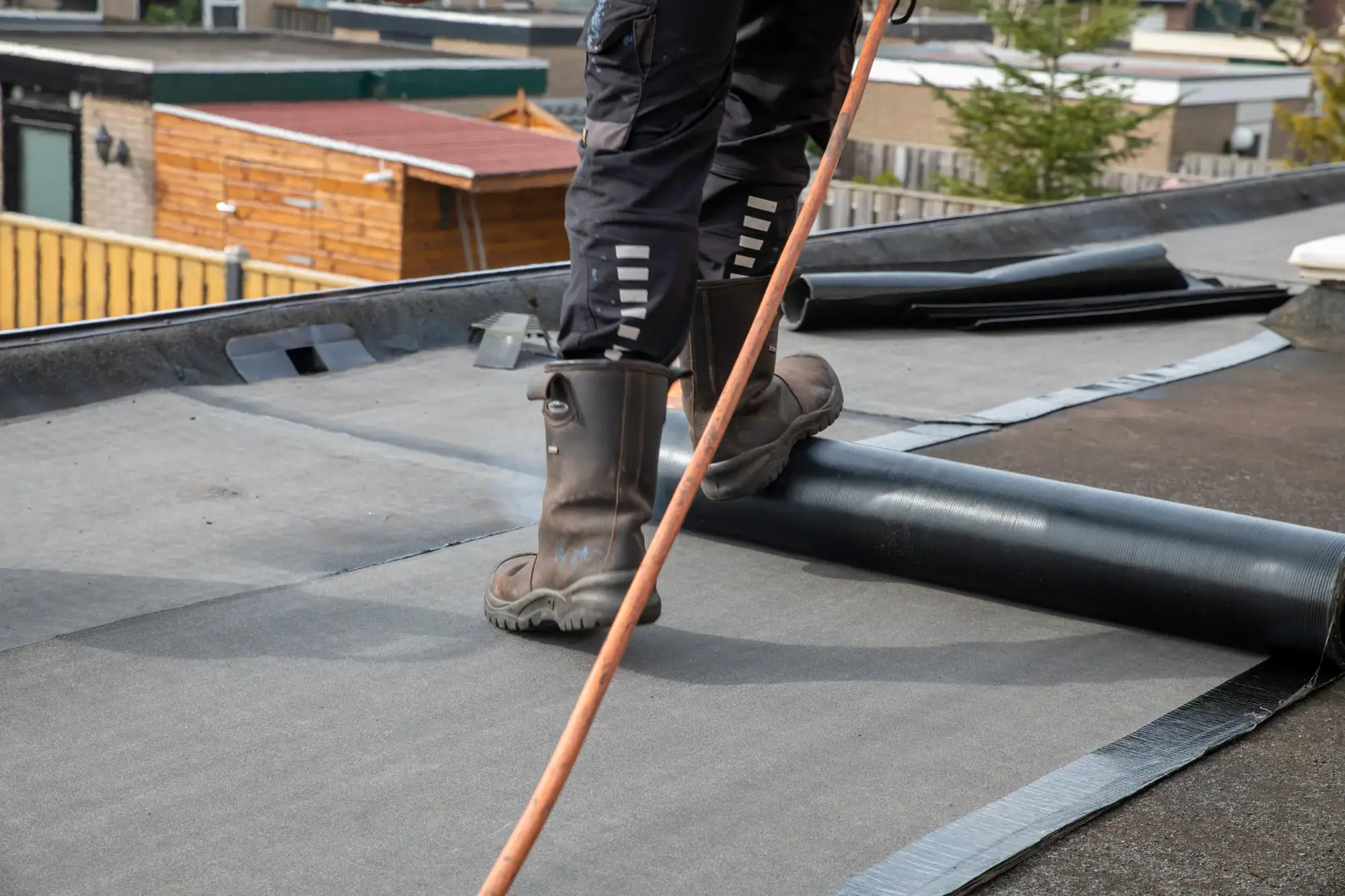
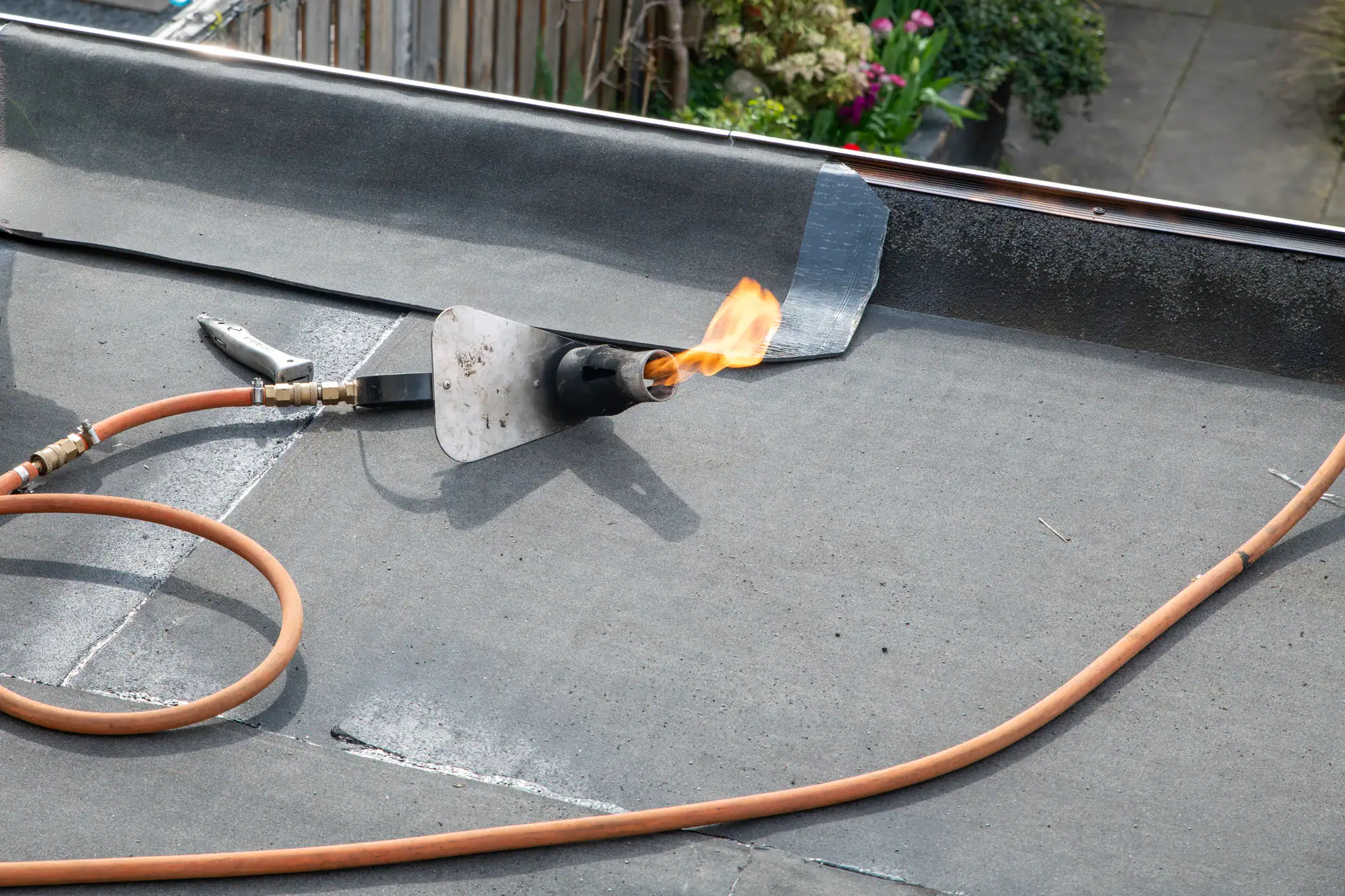
When the work begins, the process typically involves removing the existing membrane down to the deck, inspecting and repairing the substrate where needed, installing proper insulation, laying the new membrane, and detailing every flashing point at walls, curbs, and penetrations. That last part — the flashing — is where a lot of flat roofs fail, especially on older Hilldale additions where the junction between a flat section and a vertical wall has been patched and re-patched over the years. Getting it done correctly the first time is what separates a roof that lasts 20-plus years from one that’s leaking again in three.

Ready to get started?
Not every flat roof membrane is the same, and not every contractor knows all of them well. We install TPO roofing membrane, EPDM rubber roofing, and modified bitumen — and the recommendation depends on your building, your budget, and what’s going to perform best given Dover’s specific weather patterns.
TPO is the most popular choice for commercial applications and energy-conscious homeowners right now, and for good reason. It reflects up to 84 percent of solar load, which translates to real HVAC savings during Dover’s humid summers. The seams are heat-welded, which makes them stronger and more watertight than adhesive-bonded alternatives. For flat-roofed additions on Hilldale homes where summer heat gain through the ceiling has been an ongoing annoyance, TPO is often the right call.
EPDM — rubber roofing material — has been around long enough to have a proven track record. There’s more than 20 billion square feet of it installed worldwide, and it holds up well through the freeze-thaw cycling that Kent County winters bring. It’s flexible, durable, and well-suited to residential flat sections where budget is a factor and longevity is the priority.
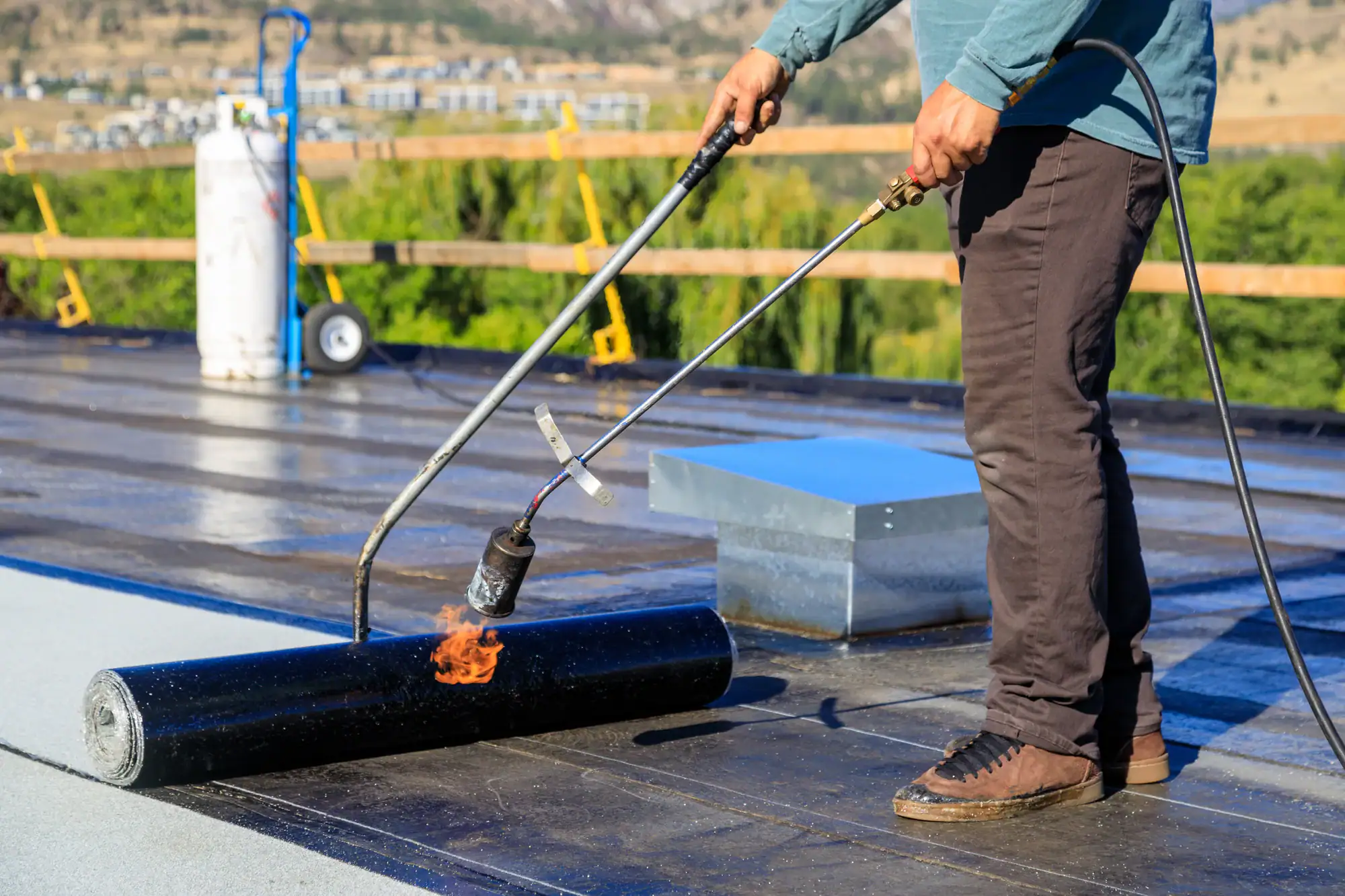
Modified bitumen, sometimes called torch down roofing, is a layered system that works well on lower-slope applications and is a common fit for garages and covered additions. Beyond the membrane itself, we also provide roof waterproofing, insurance claims assistance for storm-damaged roofs, emergency repair availability, and financing options for homeowners who need the work done now but want flexibility on the payment side.

The honest answer is that you probably can’t tell from the ground, and that’s exactly why a proper inspection matters before anyone gives you a recommendation. A contractor who quotes a replacement without getting on the roof and checking the deck condition, the flashing, and the membrane thickness isn’t giving you a real assessment — they’re guessing.
For Hilldale homes specifically, the flat sections most likely to need attention are the ones on rear additions, garages, and carports that were built in the 1950s through 1970s. These sections are often decades past their original membrane lifespan, and even a previous replacement could be 20-plus years old at this point.
If you’re seeing water stains on interior ceilings, bubbling or cracking on the membrane surface, or standing water that doesn’t drain within 48 hours of a rainstorm, those are all signs that something needs to happen. Our free estimate exists precisely to answer this question without any obligation on your end.
Delaware’s climate creates a specific set of demands on flat roof membranes. You have hot, humid summers that push surface temperatures well above air temperature, freeze-thaw cycling through winter that stresses seams and flashing, and roughly 45 inches of annual rainfall distributed throughout the year.
TPO roofing membrane is the strongest choice for energy efficiency — it reflects a significant portion of solar heat, which matters for Dover homeowners dealing with uncomfortable upper floors or high cooling bills in summer. EPDM rubber roofing handles freeze-thaw cycling well due to its flexibility, and it has a long track record of durability in Mid-Atlantic climates. Modified bitumen is a layered system that works well on lower-slope applications like garages and additions where budget is a factor.
None of these is universally “best” — the right call depends on the slope, the substrate condition, the drainage setup, and what the roof is covering. A proper inspection is the only way to get a recommendation that’s actually based on your situation.
It depends on how long the water is sitting there. The industry standard threshold is 48 hours — if water is still standing on your flat roof more than two days after a rainstorm, that’s ponding water, and it’s a problem worth taking seriously. Some pooling immediately after heavy rain is normal and will drain off.
Water that stays puts sustained pressure on the membrane, accelerates degradation, promotes mold and algae growth, and can eventually add enough weight to cause structural deflection in the deck. For older homes in Hilldale, the risk is compounded by the fact that drainage systems on mid-century flat roof sections may not be functioning the way they were originally designed to.
Drain covers can get blocked by decades of debris accumulation. The deck itself may have developed low spots from years of moisture cycling and minor structural movement. In Dover’s winters, any water that’s sitting when temperatures drop is going to freeze, expand, and force its way further into whatever small cracks or seam separations already exist. If you’ve noticed standing water and aren’t sure how serious it is, getting it looked at costs nothing.
It depends on the cause of the damage. Insurance typically covers sudden, storm-related damage — wind, hail, falling debris from a severe thunderstorm or nor’easter. It generally does not cover damage that results from deferred maintenance, gradual deterioration, or a roof that was already failing before the storm hit.
That distinction matters a lot in practice, because adjusters will look at the overall condition of the roof when evaluating a claim. Dover and Kent County sit in a Mid-Atlantic storm corridor that sees nor’easters, severe thunderstorms, and occasional tropical storm remnants moving through. After a significant weather event, the claims process can be confusing — especially if you’re not sure what the damage actually looks like or whether it qualifies.
We provide insurance claims assistance, which means we can help you document the damage, understand what your policy likely covers, and make sure the scope of work submitted to the adjuster reflects the actual condition of the roof — not a lowballed patch estimate that leaves you covering the real cost out of pocket.
For a standard residential flat roof section — a rear addition, a garage, or a low-slope area on a home — the installation itself usually takes one to three days depending on the size of the area, the membrane system being installed, and the condition of the deck once the old material is removed. If there’s significant deck damage that needs to be addressed before the new membrane goes down, that can add time, but it’s better to find that out during the job than to cover it up and deal with it again in a few years.
In Dover, a full roof replacement requires a building permit through the City of Dover’s Building Department, which is something we handle as part of the project. Permit processing time can vary, so if you’re working against a deadline — a home sale, a tenant move-in, or a seasonal window before winter — it’s worth getting the estimate and permit process started sooner rather than later. Fall is typically the busiest season for roofing contractors across Kent County, so scheduling in advance gives you more flexibility on timing.
We do offer financing, and for Hilldale homeowners it’s worth knowing that option exists before you decide anything about the scope of work. A flat roof replacement on a residential addition or garage is a meaningful expense relative to the home values in this neighborhood, and the temptation when facing that number is sometimes to approve a patch repair that buys a year or two rather than addressing the underlying issue properly.
Financing means you can make the decision based on what the roof actually needs — not on what’s available in your checking account right now. The specifics of the financing terms are something you’d discuss directly with us during the estimate process, and there’s no obligation to use it.
Knowing it’s available tends to change the conversation from “what can I afford to fix today” to “what’s the right fix for the long term.” For a homeowner in Hilldale who may be thinking about the eventual resale value of the property — particularly given how many Dover-area residents are connected to Dover Air Force Base and may be on a rotation timeline — making the right call now rather than a cheaper call that needs to be redone before a sale is often the smarter financial move overall.
Other Services we provide in Hilldale