
Hear from Our Customers
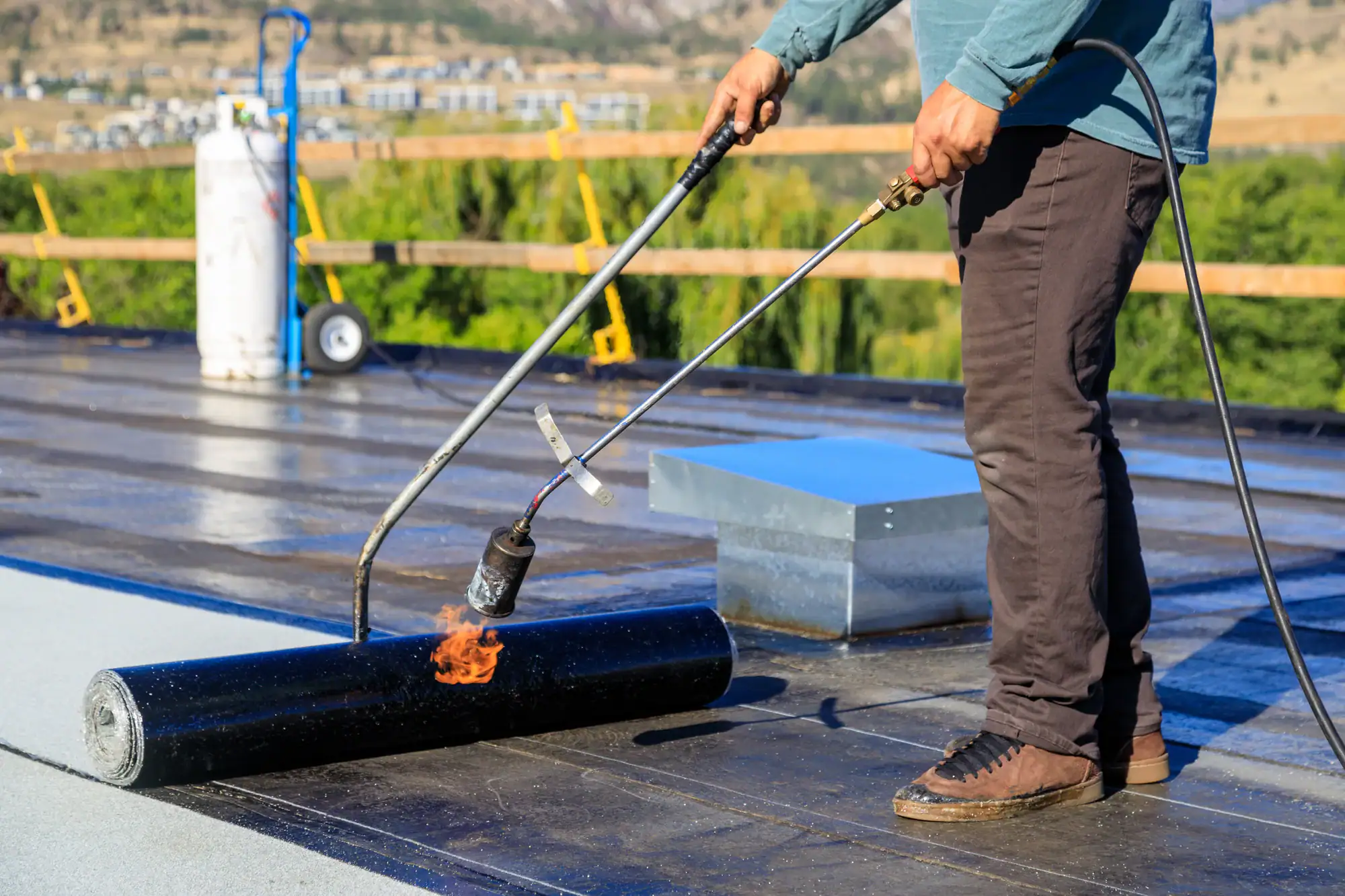
A flat roof that’s properly installed and maintained doesn’t just stop leaks — it stops the chain reaction that follows one. Water gets in, works its way along the deck, shows up as a stain on your ceiling three rooms away, and by the time you notice it, the damage is already done. Getting ahead of that is the whole point.
For property owners in Greenwood, the stakes are a little higher than average. This area sits inland, which means no ocean-breeze buffer during summer heat and more pronounced freeze-thaw cycling through winter. Every time temperatures drop below freezing and climb back up, any water that’s worked its way into a seam or around a flashing point expands and contracts — widening the gap a little more each time. A membrane that looked fine in October can be actively failing by February.
Then there’s the building stock along Market Street and the surrounding area — older commercial structures, agricultural buildings, storage facilities — many of which are carrying roofing systems well past their designed lifespan. When those roofs fail, they don’t just need patching. They need a contractor who understands how to work on older structures, inspect the deck properly, and match the right membrane to what’s actually there. That’s the kind of work we do across Kent and Sussex counties.
We’ve been doing roofing work in Delaware for over 22 years. That’s not a number pulled from a brochure — it means our team has worked through Delaware’s weather cycles, its building quirks, and the specific demands of properties across Kent and Sussex counties, including the agricultural and commercial building stock that defines the Greenwood area.
Every project is managed and completed by our own certified crew. No subcontracting to someone you’ve never met, no handoffs, no accountability gaps. The people who show up to assess your roof are the same people who do the work. That matters in a community like Greenwood, where a contractor’s reputation is built on the last job they finished.
We’re BBB Accredited with a 5.0 out of 5 rating across 63-plus verified reviews. Customers consistently mention responsiveness, clean worksites, and straight communication — which is exactly what you need when you’re dealing with a roofing problem and don’t have time for the runaround.
It starts with a free estimate. Someone comes out, gets on the roof, and gives you an honest read on what’s going on — whether that’s a repair that buys you several more years or a full membrane replacement that makes more sense long-term. You get a clear, written estimate so you know exactly what’s being proposed and why, with no pressure to sign anything on the spot.
If you move forward, the work begins with a proper tear-off of the existing membrane and a thorough deck inspection. This step matters more than most contractors let on. On older buildings — and there are plenty of them in and around Greenwood’s historic commercial corridor — the deck can have soft spots, deteriorated substrate, or drainage issues that a new membrane alone won’t fix. Finding those problems before the new roof goes down is the difference between a job that lasts and one that fails in three years.
From there, the right membrane system goes in — TPO, EPDM rubber roofing, modified bitumen, or PVC depending on your building type, budget, and how the roof is used. Flashing gets installed correctly at every penetration and perimeter edge, because that’s where most flat roofs fail. Sussex County building permits are handled as required, and the site is left clean when our crew leaves. If you’re navigating a storm damage insurance claim, we can help you document the damage and work through the process with your adjuster.

Ready to get started?
Not every flat roof material performs the same way in every environment, and Greenwood’s inland location creates conditions worth thinking about carefully. TPO roofing membrane is the most popular choice for commercial and low-slope residential applications right now — and for good reason. It reflects up to 84% of solar load, which translates to real HVAC savings during the hotter inland summers that Greenwood experiences without the coastal temperature buffer. Heat-welded seams make it highly resistant to water infiltration, and it holds up well under the UV exposure that comes with a south-facing flat surface.
EPDM rubber roofing is the other major option, and it has a strong case in this climate. It’s exceptionally flexible, which means it handles freeze-thaw cycling better than most materials — a real advantage here given Greenwood’s inland winter conditions. EPDM has more than 20 billion square feet installed worldwide, and its track record for longevity (20 to 30 years with proper maintenance) makes it a solid choice for property owners who want to install and not think about it again for a long time.
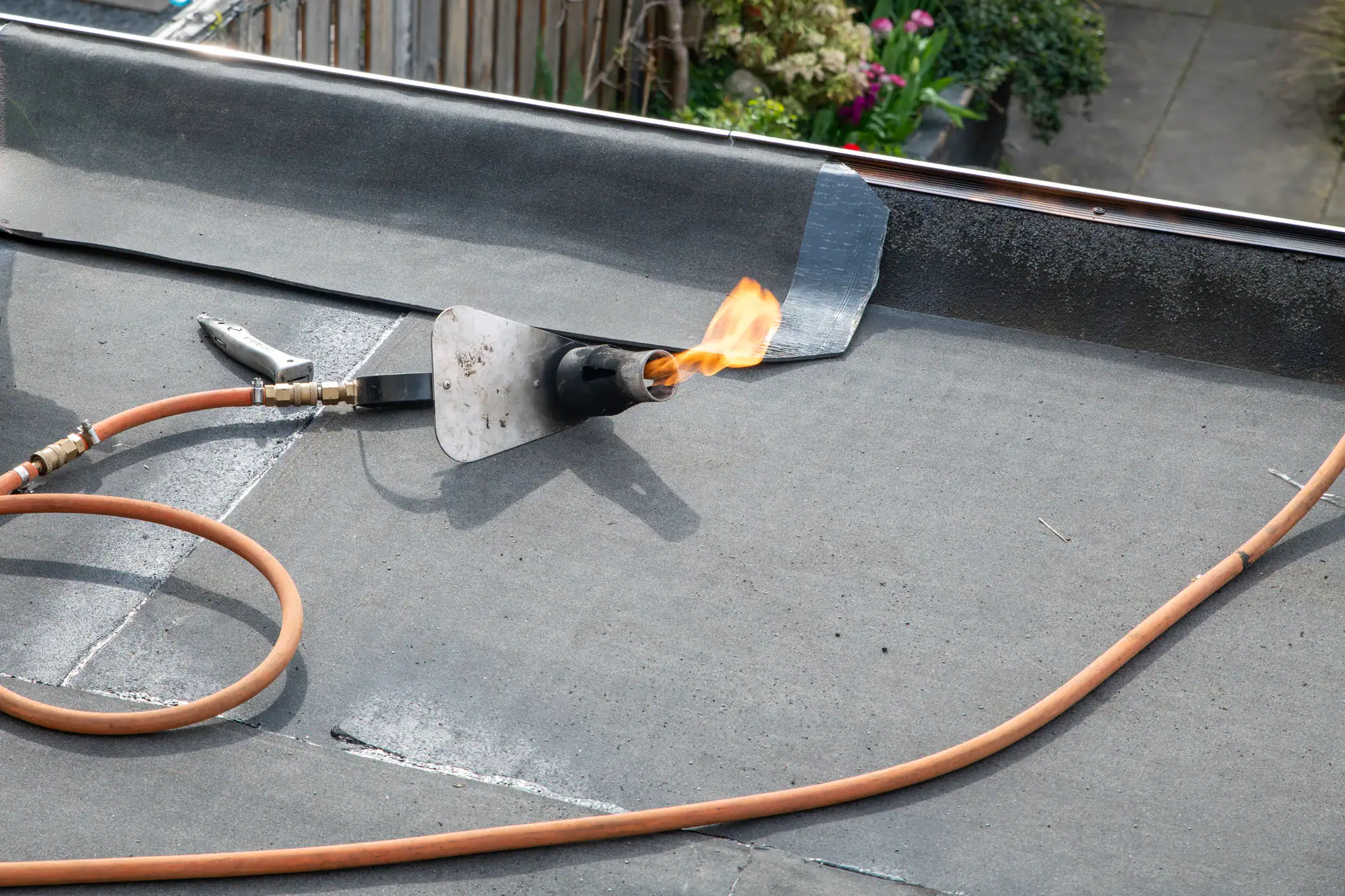
Modified bitumen, also called torch-down roofing, is still widely used on older commercial structures and is a common material on the kinds of buildings you find along Greenwood’s historic Market Street corridor. It performs well on low-slope applications and is a practical choice for repair or replacement on structures where the existing system is already modified bitumen. PVC roofing membrane rounds out the options for property owners who want a premium, long-lifespan system with strong chemical resistance. We work with all of these systems and will tell you which one actually fits your building — not just which one has the best margin.

This is a legitimate question for Greenwood property owners, given that a measurement station near this town recorded 28 inches of snow in February 2010 — the official Delaware state snow depth record. Most residential flat roofs are engineered to handle somewhere between 20 and 40 pounds per square foot of load, and fresh snow typically weighs around 20 pounds per cubic foot. Wet, dense snow weighs considerably more. A foot of heavy wet snow can push 60 pounds per square foot — well beyond what many older flat roof decks were designed to carry.
The real concern isn’t just the membrane — it’s the deck underneath. If the deck has soft spots, deteriorated joists, or drainage that isn’t functioning properly, snow load accelerates the problem. If your flat roof hasn’t been professionally inspected in a few years, before winter is the right time to find out where things stand. A proper inspection will tell you whether the deck is structurally sound, whether your drainage can handle a heavy melt event, and whether the membrane has any existing vulnerabilities that snow and ice will exploit.
These are the three most common flat roof membrane systems, and they each have a different performance profile. TPO is a white or light-colored single-ply membrane that reflects solar heat effectively — it’s the fastest-growing flat roofing material on the market right now and works especially well on commercial buildings where energy costs are a concern. EPDM is a black rubber membrane that’s been around for decades, with a global installed base that speaks to its reliability. It’s highly flexible, handles temperature swings well, and typically lasts 20 to 30 years when properly maintained. Modified bitumen, sometimes called torch-down roofing, is an asphalt-based system applied in layers — it’s been the standard on older commercial and light industrial buildings for generations and is still a strong performer on low-slope applications.
The right choice depends on your building type, how the roof is used, your budget, and how long you plan to own the property. For older commercial buildings in Greenwood’s historic core, modified bitumen is often already in place, and replacement in kind can make sense. For newer construction or a full system upgrade, TPO or EPDM are typically the better long-term investment. A good contractor will walk you through the tradeoffs honestly rather than defaulting to whatever’s easiest to install.
Yes — and sooner than most people think. The industry standard is that water standing on a flat roof for more than 48 hours after rainfall is a problem that needs attention. Greenwood receives around 45 inches of rain annually, and the town’s relatively flat inland terrain means flat roofs here don’t have natural topography helping water move off the surface. If your drainage isn’t working correctly — clogged drains, low spots from deck deflection, or improperly sloped insulation — water will sit.
What happens next is a slow but consistent failure process. Standing water adds dead weight to the membrane and deck. It promotes algae and mold growth that degrades the membrane surface. In winter, water that hasn’t drained freezes, expands into any existing seam gaps, and widens them. Over time, the membrane lifespan shortens significantly. If you’ve noticed water pooling after rain and it’s still there two days later, that’s worth having someone look at — not because it’s necessarily an emergency, but because it won’t fix itself and it will get worse.
For most roofing replacement work in Greenwood, yes — a building permit is required. Greenwood is an incorporated town in Sussex County, and the Sussex County Building Code Office enforces building codes for roofing projects in this jurisdiction under Chapter 52 of the Sussex County Code. Permit applications can be submitted in person at the Sussex County Administrative Offices or online, and walk-in service is available during regular business hours.
For larger commercial projects — particularly those involving a significant tear-off footprint — there may also be sediment and erosion control requirements if the disturbed area meets the threshold under Delaware’s stormwater regulations. We handle the permitting process as part of the project, so you’re not left navigating the county’s requirements on your own. If you’re also working with an insurance claim for storm or snow damage, getting the permit pulled correctly and on time is part of making sure the work is documented properly for the adjuster.
The honest answer is that you usually can’t tell from the ground, and even a visual inspection from the roof surface only tells part of the story. The membrane condition you can see — cracking, bubbling, seam separation, granule loss on modified bitumen — is one piece of the picture. The deck underneath is the other, and that’s where the real cost surprises come from. A membrane that looks repairable on the surface can be sitting on a deck with widespread moisture damage or soft spots that make a patch a short-term fix at best.
As a general rule, if a flat roof is within five years of the end of its expected lifespan, has multiple areas of damage, or has been repaired repeatedly without lasting results, replacement is usually the more cost-effective decision over time. If the roof is relatively young and the damage is isolated — a single seam failure, a flashing issue at a penetration point — repair makes sense. A proper inspection will tell you which situation you’re actually in. We offer free estimates, which means you can get a professional read on your roof’s condition without committing to anything.
Yes, and this is an area where having the right contractor makes a real difference. After a significant weather event — a nor’easter, a heavy snow load, a summer storm — the insurance claim process can feel like a second problem layered on top of the first. Adjusters work quickly, and if the damage isn’t documented thoroughly before they arrive, you can end up with a settlement that covers a patch when what your roof actually needs is a full membrane replacement.
We help Greenwood property owners document damage properly, provide detailed written assessments that support the claim, and communicate directly with your adjuster about the scope of work required. Given Greenwood’s weather history — including the kind of extreme snow loading that set Delaware’s state record near this town — storm and snow damage claims are not uncommon here. Having a contractor who understands how to scope the work correctly and present it to an insurance company is the difference between getting fair compensation and getting a lowball offer that leaves you covering the gap out of pocket.
Other Services we provide in Greenwood