
Hear from Our Customers
A flat roof doesn’t announce its problems the way a pitched roof does. By the time you notice a water stain on your ceiling, the membrane has usually been failing for a while — at a seam, around a flashing, or at a drain collar that’s been holding standing water through a few too many Delaware winters. What you get after a proper repair or replacement isn’t just a dry ceiling. It’s the confidence that the section over your garage or rear addition isn’t quietly working against you every time it rains.
Kent County averages 45 inches of rainfall per year — well above the national average — and Dover’s winters regularly swing from the mid-20s to the mid-80s over the course of a year. That freeze-thaw cycling is one of the most destructive forces on flat roof membranes. It stresses seams, erodes mineral surfaces on older torch-down systems, and creates ice dam conditions at low-slope drain points. For Fox Hall homeowners with a 1970s or 1980s-built home, that kind of cumulative wear adds up fast.
Getting the right membrane installed correctly means you’re not calling for emergency repairs every time a storm rolls through. It means your home’s value is protected. And it means the flat section that’s been in the back of your mind finally stops being something you’re managing around.
We’re based out of Smyrna — about 15 to 18 miles north of Fox Hall on Route 13 — and we’ve been working on Delaware roofs for over 22 years. That’s not a marketing number. It means we’ve seen what happens to flat roof sections on Fox Hall Plantation colonials after four or five decades of Kent County weather. We know what materials were common in that construction era, what typically fails first, and what the right modern replacement looks like.
Every project is handled by our own crew — no subcontractors, no handoffs to someone you’ve never met. The same people who assess your roof are the ones doing the work. We’re BBB Accredited and carry a 5.0 out of 5 rating across 63-plus verified reviews, with customers consistently calling out our communication, clean worksites, and straightforward approach. If you’re in Fox Hall and you’ve been putting off getting a flat section looked at, a free estimate is a low-risk way to find out exactly where things stand.
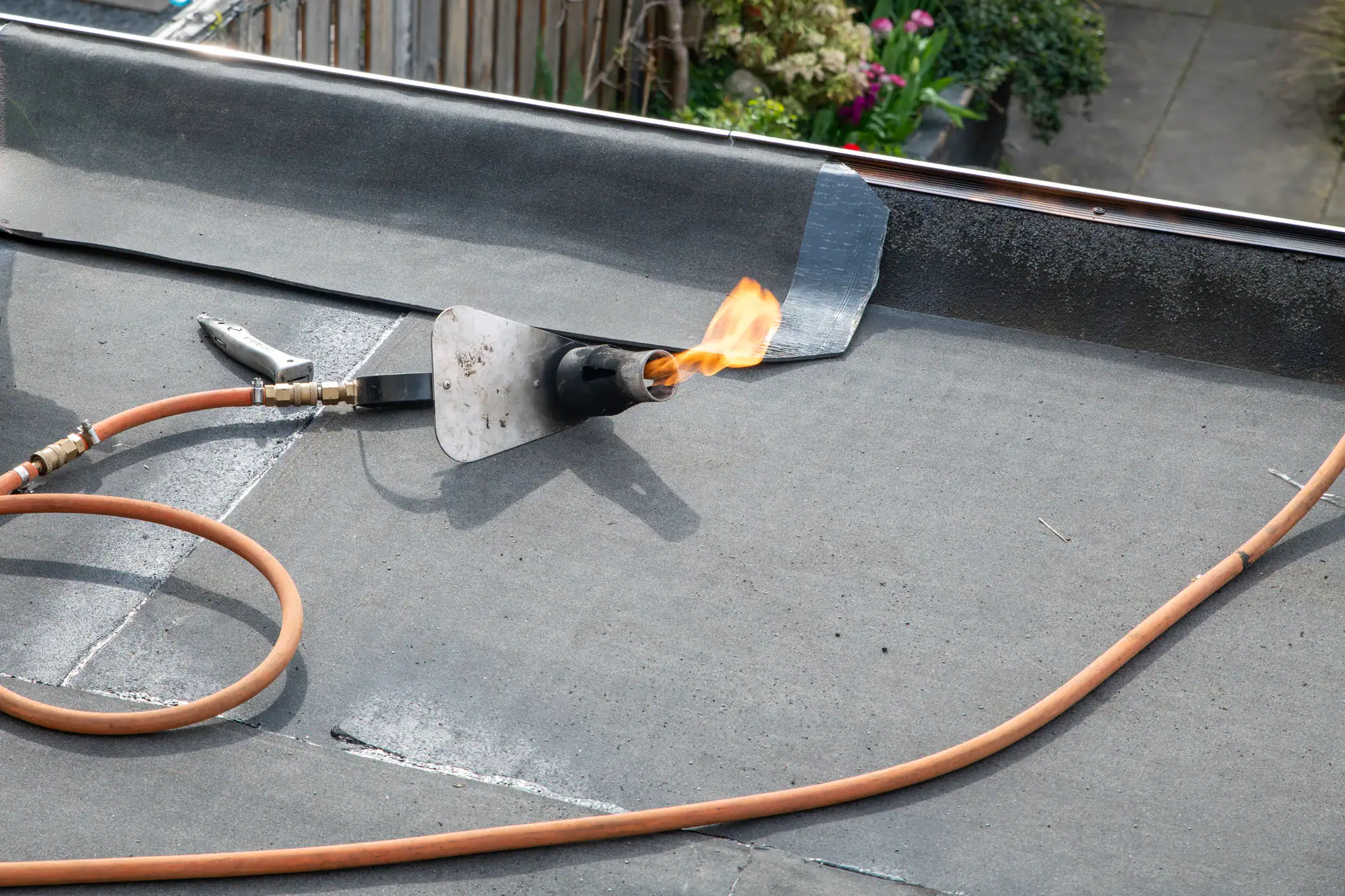
It starts with a free inspection. One of our crew members comes out to your Fox Hall home, gets on the roof, and does a real assessment — membrane condition, seam integrity, flashing at every penetration and edge, and drainage performance. You get a clear picture of what’s actually happening up there, not a vague estimate based on a glance from the driveway.
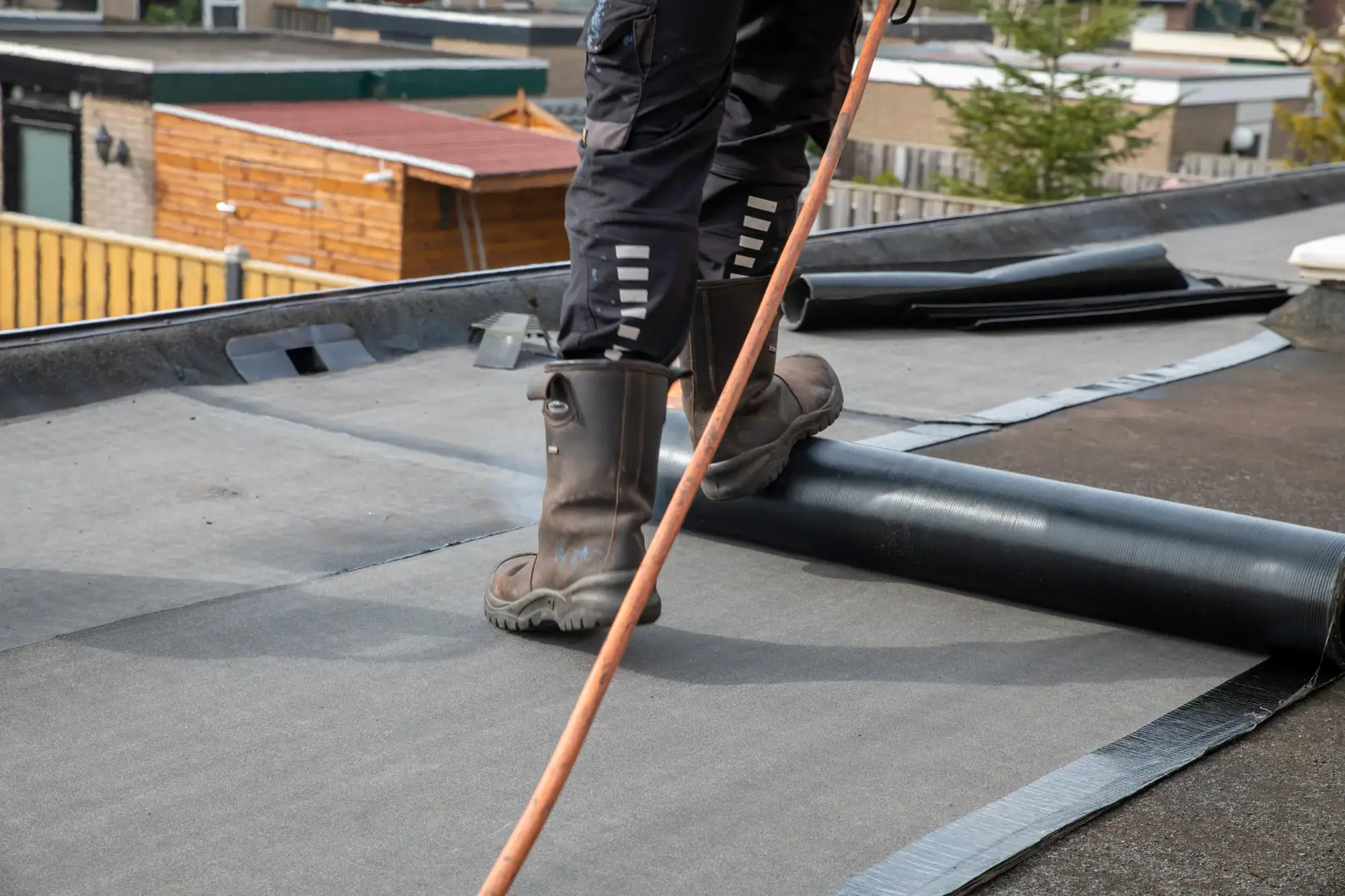
From there, if repair or replacement makes sense, you’ll get a written estimate that lays out the scope, the material recommendation, and what the work involves. For most flat roof replacements in the Dover area, that means a full tear-off of the existing membrane, a deck inspection to catch any rot or structural issues underneath, proper insulation, and installation of the new membrane system — whether that’s TPO, EPDM rubber roofing, or modified bitumen, depending on what fits your roof’s geometry, your budget, and how the section is exposed. Because Fox Hall sits within Dover city limits, roofing replacement work typically requires a building permit through the City of Dover, and we handle that process as part of the job.
Fall is typically the best window for membrane work in this area — temperatures are stable, and you want the new system in place before Delaware’s freeze-thaw season gets underway. If you’re dealing with an active leak, we offer emergency repair so damage doesn’t compound while you wait for a scheduled replacement.

Ready to get started?
Not every flat roof membrane is the right fit for every situation, and a contractor who only knows one system isn’t giving you a real recommendation. We work with the full range — TPO roofing membrane, EPDM rubber roofing, modified bitumen (torch-down roofing), and PVC roofing membrane — and the recommendation depends on your specific roof, not a default preference.
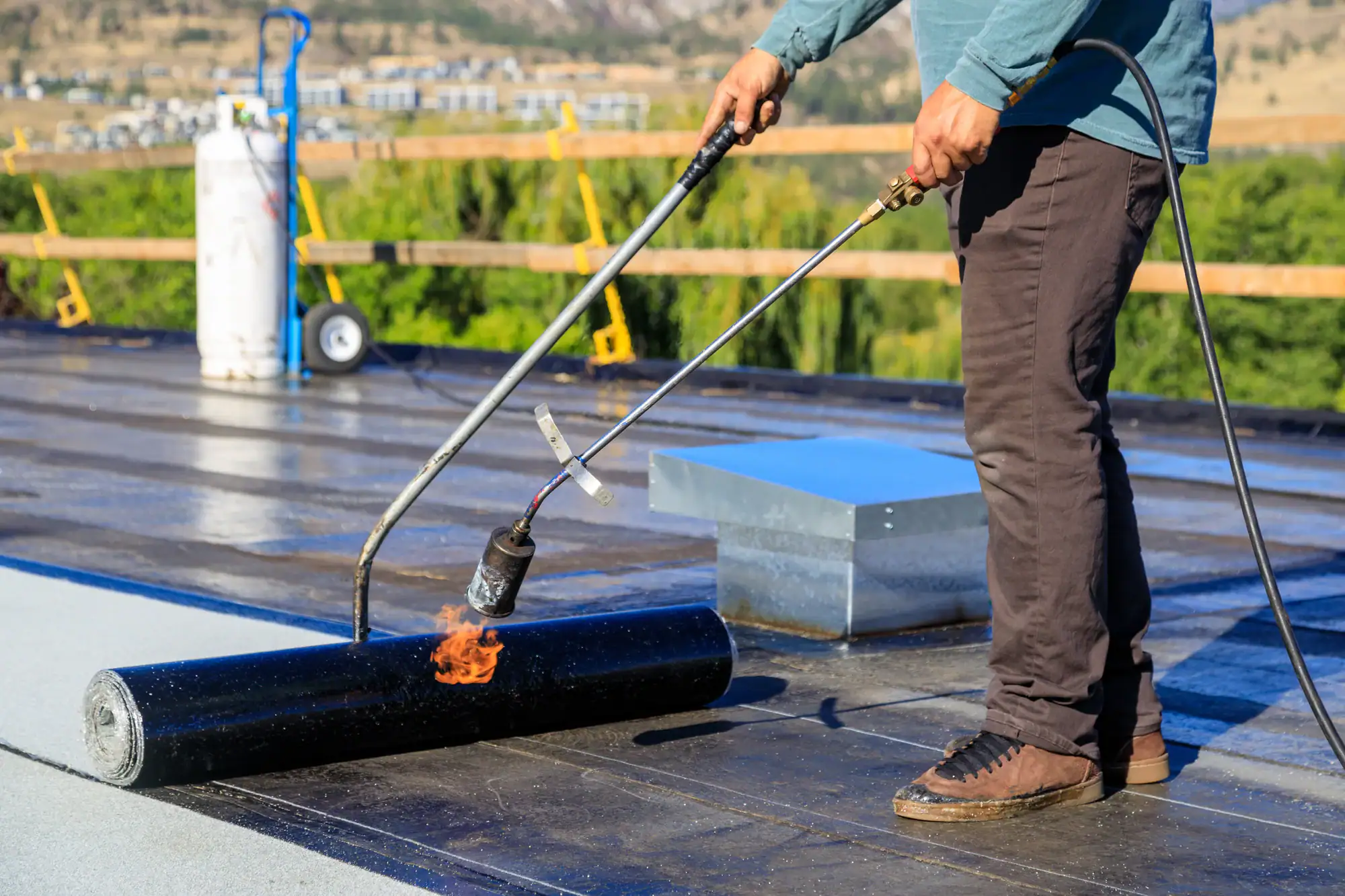
For residential flat sections common in Fox Hall Plantation — garage roofs, rear additions, covered entries — EPDM rubber membrane is often a strong choice. It’s flexible enough to handle Delaware’s freeze-thaw cycling, it has a proven track record of 20 to 30 years when properly installed, and it holds up well against the kind of moisture load Kent County delivers. TPO is a strong option when energy efficiency is a priority, particularly for larger low-slope sections — it reflects a significant portion of solar heat, which matters during Dover’s humid summers. Modified bitumen is still a viable system for certain applications, though many of the torch-down roofs installed on Fox Hall homes in the 1980s are now well past their service life and due for a full replacement rather than another round of patching.
Beyond material selection, we also assist with insurance claims for storm-damaged flat roofs — helping Fox Hall homeowners document the damage, work through the adjuster process, and make sure the scope of work reflects what actually needs to be done. Financing is available for homeowners who want to address an aging membrane system without waiting until the situation becomes an emergency.

The honest answer is that you usually can’t tell from the inside, and even a visual check from the ground doesn’t give you much. What actually matters is the condition of the membrane itself — whether the seams are still sealed, whether the flashing around penetrations and edges is intact, and whether there’s any evidence of water sitting on the surface after rain. Ponding water that stands for more than 48 hours after a storm is a real concern, not just an aesthetic issue. It accelerates membrane breakdown, adds structural load, and can void manufacturer warranties if left unaddressed.
For Fox Hall Plantation homes built in the 1970s and 1980s, the more relevant question is often how many times the flat section has been patched. At some point, patching an aging modified bitumen or built-up roof becomes more expensive than replacing it — and each patch that fails creates a new pathway for water to reach the deck. A free inspection from us will tell you where the membrane actually stands and whether repair still makes financial sense or whether a full replacement is the smarter move.
Delaware’s climate puts flat roofs through a real workout. You’ve got humid, storm-heavy summers — Kent County averages 45 inches of rain per year — and winters where temperatures regularly cross the freeze-thaw threshold, with Dover seeing an average of about 15 inches of snow annually. That combination rules out some materials and makes others a clear fit.
EPDM rubber roofing is one of the most durable options for this climate because of its flexibility. When temperatures drop and the membrane contracts, EPDM moves with it rather than cracking. TPO handles the summer side well — its high solar reflectance reduces heat absorption, which matters when you’re managing HVAC costs through a Delaware summer. Modified bitumen is still used and performs reasonably well, but the mineral surface on older torch-down systems erodes under repeated freeze-thaw cycling, which is why many Fox Hall homes with original 1980s mod-bit roofs are now seeing accelerated wear. The right call depends on your specific roof geometry, the size of the section, and your long-term goals — which is exactly what the free inspection is designed to figure out.
Yes — and it’s one of the most commonly underestimated flat roof issues homeowners face. The industry-standard threshold is 48 hours: if water is still sitting on your roof two days after a rain event, that’s considered ponding, and it needs to be addressed. It’s not just a drainage inconvenience.
Standing water adds weight to the roof structure, which over time can cause the deck to deflect slightly — making the ponding area larger with each rain event. It also accelerates membrane degradation at the waterline, promotes mold and algae growth, and in Delaware winters, that standing water freezes and expands in any existing membrane crack or seam gap, making a small problem significantly worse by spring. For Fox Hall homes where the flat section is over a garage or addition, the structural and interior damage risk from ignored ponding is real. The fix is usually a combination of drain maintenance and, depending on the membrane age, either targeted repair or full replacement with a properly designed drainage profile built in from the start.
Because Fox Hall sits within Dover city limits, roofing replacement work is subject to the City of Dover’s building permit requirements. Delaware operates under the International Building Code with state amendments, and flat roof replacements — particularly full membrane tear-offs and re-covers — typically require a permit and inspection through the city’s building department. This is different from some of the more rural Kent County communities where county-level permitting applies.
The permit process exists to make sure the work meets minimum code standards for low-slope roofing systems, including drainage design, insulation requirements, and membrane installation specs. When you hire us, permit coordination is part of the job — you don’t need to navigate the city’s building department on your own. What you do want to avoid is hiring a contractor who skips the permit process to save time, because unpermitted roofing work can create problems when you sell the home or file an insurance claim. It’s worth asking any contractor you’re evaluating whether they pull permits as a standard part of their process.
Lifespan depends heavily on the material and how well the system was installed and maintained. EPDM rubber roofing, when properly installed and maintained, typically lasts 20 to 30 years. TPO membranes generally run 15 to 25 years. Modified bitumen (torch-down) systems fall in the 15 to 20-year range, though well-installed two-ply APP systems can push toward 25 years. Built-up roofing, which was common in the construction era when many Fox Hall Plantation homes were built, has a similar range of 15 to 30 years depending on the number of plies and the condition of the drainage design.
The caveat is that all of those numbers assume correct installation, functioning drainage, and at minimum an annual inspection to catch small issues before they become large ones. A flat roof section on a Fox Hall home that was installed in the 1980s and has never been professionally inspected is almost certainly past its expected service life — regardless of whether it’s actively leaking yet. The absence of visible interior damage doesn’t mean the membrane is performing. It often just means it hasn’t failed catastrophically yet, and in Delaware’s climate, that can change quickly after a hard freeze or a significant storm event.
Yes — storm damage assistance is a core part of what we offer, not an add-on. Kent County sits in the path of regular severe thunderstorm systems, and Dover-area homeowners deal with storm damage more often than people in less weather-exposed parts of the state. When a flat roof section takes damage — whether from wind, debris, or a sudden heavy rain event that overwhelms a compromised membrane — the claims process can be just as stressful as the damage itself.
We help Fox Hall homeowners document the damage properly, work with the insurance adjuster, and make sure the scope of work reflects what actually needs to be done rather than the minimum the insurer might initially offer. This matters because flat roof damage is often underestimated in initial assessments — a membrane that looks intact from a distance may have compromised seams or flashing that only a hands-on inspection reveals. Emergency repair is also available when you need to stop damage from spreading before a full repair or replacement can be scheduled. If a storm has hit your Fox Hall home and you’re not sure what you’re dealing with, a free inspection is the right first step.
Other Services we provide in Fox Hall