
Hear from Our Customers
When a flat roof is working the way it should, you stop thinking about it. No water stains creeping across ceilings, no bubbling membrane after a hard rain, no call to a tenant about a leak in the middle of the night. That’s the outcome — and it’s more achievable than most people realize when the right system is installed correctly the first time.
East Lake Gardens sits between US-13 and Delaware Route 1, roughly five miles inland from Delaware Bay. That positioning puts every building in the neighborhood directly in the path of nor’easters and coastal storm systems that track up the Atlantic seaboard. A flat roof with compromised seams or a clogged drain doesn’t just leak during those events — it can fail fast, sending water into walls, ceilings, and structural framing before the storm even passes.
The Silver Lake adjacency adds another layer. Ambient humidity in this corridor stays elevated in a way that inland Kent County neighborhoods simply don’t experience. That persistent moisture accelerates seam degradation on EPDM and TPO membranes, promotes algae growth on rooftop surfaces, and turns a small flashing gap into an active leak pathway much faster than it would elsewhere. Getting the right membrane system installed with properly heat-welded seams and functioning drainage isn’t just good practice here — it’s the difference between a roof that lasts 20-plus years and one that’s back in trouble within five.
We’re headquartered in Smyrna — about 12 to 15 miles north of Dover via US-13 — and have been serving Kent County property owners for over 22 years. That’s not a marketing number. It means we’ve worked through Delaware’s weather cycles, navigated the City of Dover’s municipal permitting process, and built a local reputation that you can verify before you ever pick up the phone. Our 5.0-star Google rating from 63-plus verified reviews reflects what actual customers in East Lake Gardens and throughout this region experienced.
What sets us apart in a neighborhood like East Lake Gardens — where multi-family buildings, rental properties, and institutional structures are common — is our no-subcontracting policy. When we take a job, our own certified crew does the work, start to finish. No unknown third parties on your roof, no accountability gaps, no surprises. We’re BBB Accredited, licensed, insured, and genuinely local.
It starts with a free estimate — no commitment, no pressure. A member of our team comes out, looks at what you actually have, and gives you a clear written scope of work. For property owners and managers in East Lake Gardens, this is where the conversation about material selection happens: TPO, EPDM rubber roofing, modified bitumen torch-down, or PVC roofing membrane — the right choice depends on your building type, your budget, and how the roof is used. A commercial flat roof on a multi-story building near the Wesley College campus has different demands than a low-slope garage roof on a single-family home in the Silver Lake corridor.
Because this work falls within the City of Dover’s municipal jurisdiction, roofing replacement and significant repair work requires a building permit through the city’s Planning and Inspections department. We handle that process — we’re familiar with Dover’s requirements and build permit compliance into the job from the start, not as an afterthought.
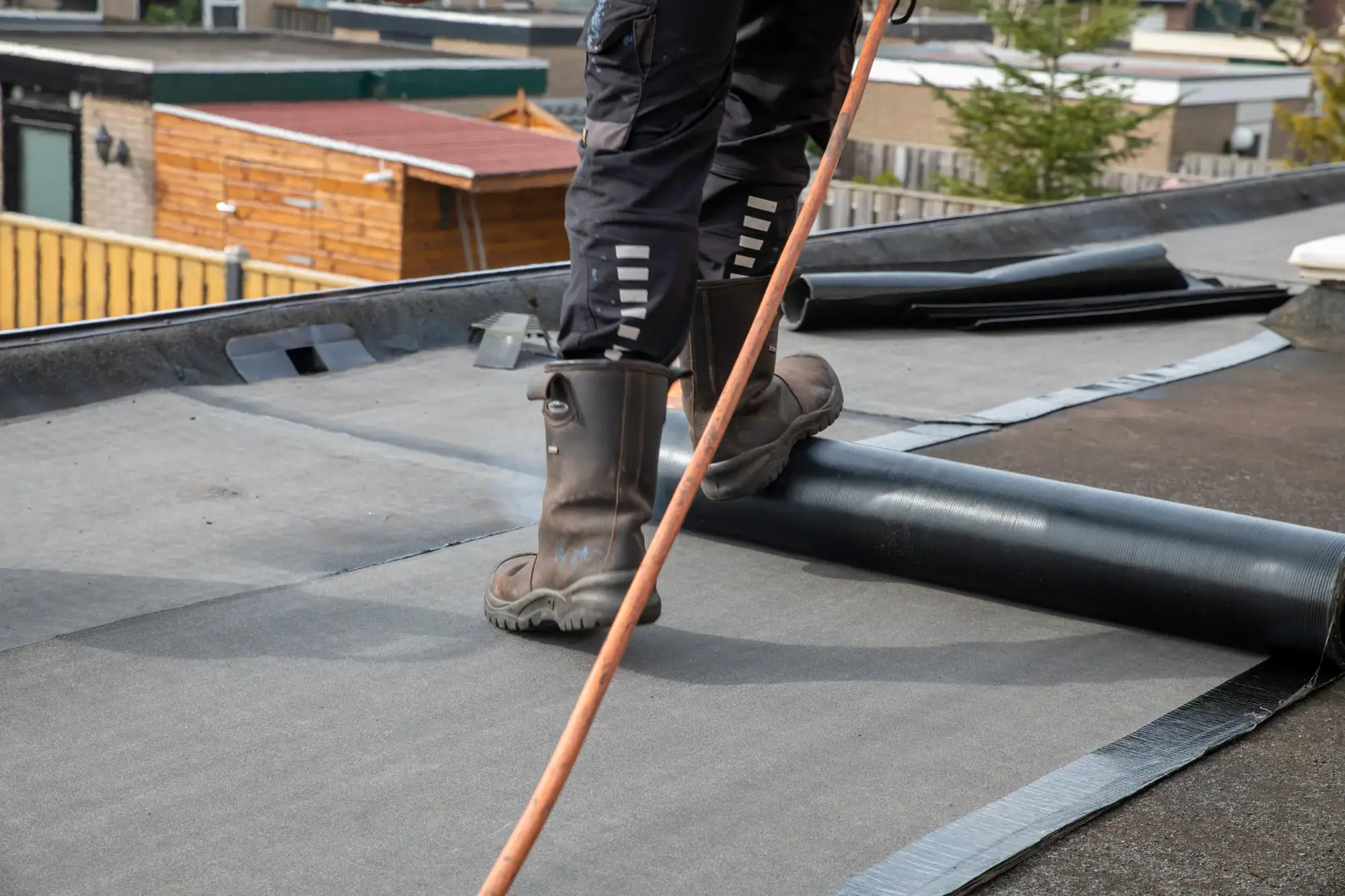
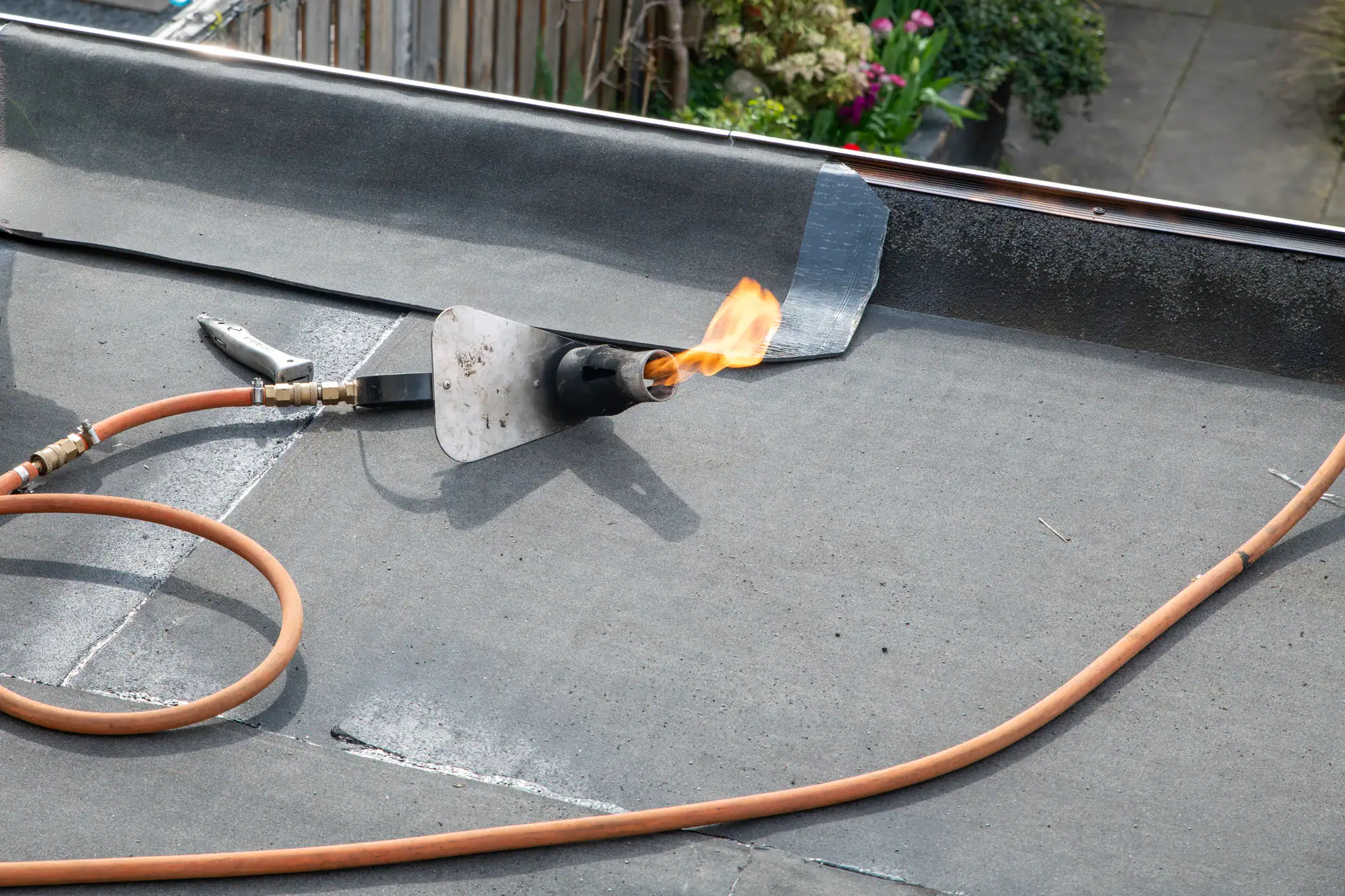
Once the job begins, the existing membrane comes off. The deck gets a full inspection — any soft spots, rot, or structural issues get addressed before anything new goes down. Insulation is installed, the new membrane system goes in with properly heat-welded or fully adhered seams, and every penetration and parapet edge gets correctly flashed. Drainage is confirmed functioning before our crew leaves. The worksite gets cleaned up — debris removed, no nails left in driveways or walkways. What you’re left with is a roof that’s built to handle Delaware’s 45 inches of annual rainfall and the specific moisture environment that comes with living next to Silver Lake.

Ready to get started?
We install and repair the full range of flat and low-slope roofing systems — TPO roofing membrane, EPDM rubber roofing, modified bitumen (torch-down), and PVC roofing membrane. Each one has a different performance profile, and the right choice matters more in East Lake Gardens than it might in a drier, less weather-exposed location.
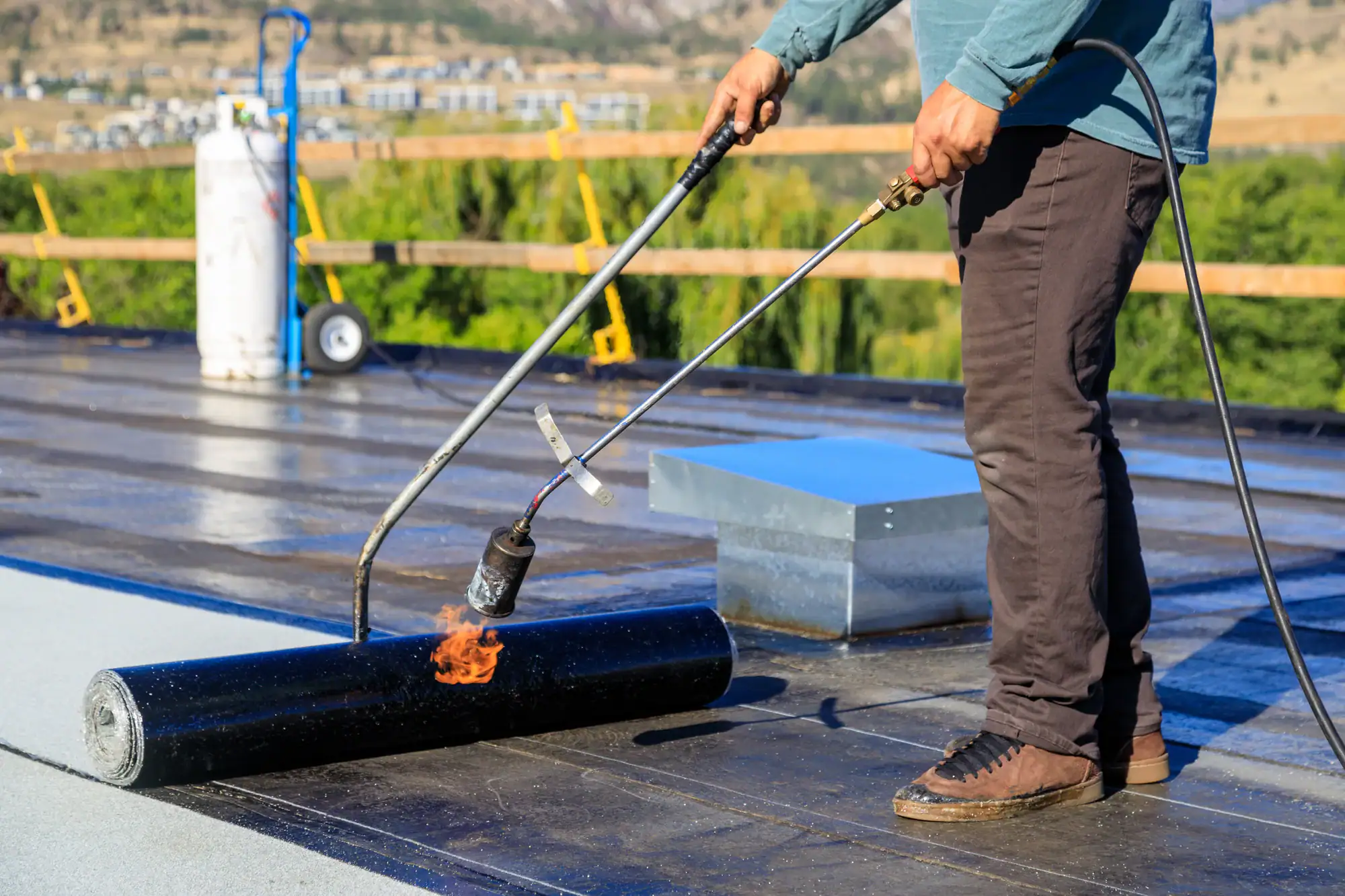
TPO is the fastest-growing membrane in commercial roofing for a reason. It reflects up to 84% of solar load, which translates to real HVAC savings during Dover’s humid summers — a meaningful consideration for property managers overseeing multi-unit buildings where operating costs add up fast. EPDM rubber roofing has more than 20 billion square feet installed worldwide, and its flexibility makes it particularly well-suited to Delaware’s freeze-thaw cycling through winter months. Modified bitumen torch-down systems work well on lower-slope applications and are a common choice on older residential buildings throughout the Dover area. PVC roofing membrane offers strong chemical resistance and durability for commercial applications.
Beyond new installation and full roof replacement, we handle flat roof repair, emergency roof repair when a storm forces the issue, roof waterproofing, and insurance claims assistance for storm damage. If a nor’easter or coastal weather event has compromised your membrane and you’re facing an adjuster conversation, we can help you document the damage and navigate the claim — so you’re not left with a lowballed patch estimate that leaves the real problem unresolved. Financing is available for projects where budget timing is a factor, and every job starts with a free estimate.

Yes — because East Lake Gardens, DE falls within the City of Dover’s municipal limits, roofing replacement and significant repair work is subject to the City of Dover’s building permit requirements through their Planning and Inspections department. This is a layer of oversight that doesn’t apply to unincorporated communities in Kent County, and it’s one reason why hiring a contractor who’s familiar with Dover’s permitting process matters.
A contractor who skips the permit isn’t saving you time — they’re creating a compliance problem that can surface during a home sale, an insurance claim, or a city inspection. We’ve worked in Dover for over two decades and handle permit compliance as a standard part of the job. You don’t have to chase paperwork or figure out the process yourself. It’s built into how we work.
The short answer is that it adds stress to the system that you won’t find in most other parts of Kent County. Silver Lake spans 182 acres, and the moisture environment it creates — persistent ambient humidity, morning fog, condensation cycling against membrane surfaces — keeps flat roofs in East Lake Gardens wetter for longer between rain events than inland neighborhoods experience.
That sustained moisture accelerates seam degradation over time, particularly on older EPDM systems where the adhesive bond has already seen years of thermal cycling. It also promotes algae and moss growth on membrane surfaces, which traps additional moisture and speeds up surface deterioration. None of this means a flat roof in East Lake Gardens can’t last 20 to 25 years or longer — it means the installation quality, seam integrity, and drainage design matter more here than they would somewhere drier. Getting those details right from the start is what separates a roof that performs well from one that’s back in trouble within a few years.
These are the three most common flat roofing systems you’ll encounter, and they each have a different performance profile. TPO is a single-ply membrane that reflects solar heat effectively — up to 84% of solar load — which makes it a strong choice for commercial and multi-family buildings where summer cooling costs are a real line item. It’s also heat-welded at the seams, which creates a strong, watertight bond when installed correctly.
EPDM is a rubber roofing membrane with an exceptional track record for longevity — it can last 20 to 30 years with proper maintenance. Its flexibility makes it well-suited to the freeze-thaw cycling Delaware experiences from November through March, where temperatures regularly oscillate around the freezing point and put stress on less flexible materials. Modified bitumen, often called torch-down roofing, is an asphalt-based system reinforced with polyester or fiberglass. It’s a reliable choice for lower-slope applications and is commonly found on older residential buildings and additions throughout the Dover area. The right system depends on your building type, slope, budget, and how the roof is used.
The honest answer is that you often can’t tell from the ground — or even from a basic visual inspection of the surface. A membrane that looks intact from above can have compromised seams, failed flashing at penetrations, or underlying deck damage that only becomes visible once you pull back the material. This is especially relevant for buildings in East Lake Gardens with construction dates in the 1990s, where original membrane systems are now 25 to 30 years old and approaching or past the end of their expected service life.
The factors that typically push a roof toward full replacement rather than repair are age, the extent of seam failure, deck condition, and whether the drainage system is functioning correctly. A roof with isolated membrane damage and a sound deck might be a strong repair candidate. A roof with widespread seam failure, soft spots in the deck, or chronic ponding water — water that sits for more than 48 hours after rain — is almost always better served by full replacement. We provide free estimates that include an honest assessment of where your system stands, so you’re not guessing.
Filing a storm damage claim on a flat roof is more complicated than most people expect. The damage isn’t always visible from the surface, adjusters sometimes scope the repair narrowly, and the difference between a properly documented claim and an underpaid one can be significant. East Lake Gardens sits about five miles from Delaware Bay, which means nor’easters and coastal storm systems hit this neighborhood with real force — wind-lifted membrane edges, forced water intrusion at flashing details, and overwhelmed drainage systems are all common post-storm scenarios.
We offer insurance claims assistance as part of our service. That means we help you document the damage correctly, communicate the full scope of what needs to be addressed to your adjuster, and make sure the repair or replacement is scoped to fix the actual problem — not just the most visible symptom of it. If you’ve already received a claim estimate that seems low or doesn’t account for deck damage or flashing repair, it’s worth having an experienced contractor review it before you accept.
Flat and low-slope roofs are more common in East Lake Gardens and the broader Dover area than people sometimes realize — particularly on multi-family buildings, additions, garages, and commercial structures throughout the neighborhood. The question of whether they’re practical for a residential property usually comes down to installation quality and maintenance, not the roof type itself.
A properly installed flat roof with the right membrane system, functioning drainage, and correctly detailed flashing performs reliably in Delaware’s climate. The reputation flat roofs have for leaking is almost always tied to poor installation, deferred maintenance, or drainage problems — not an inherent flaw in the roof type. EPDM systems can last 20 to 30 years. TPO systems can last 15 to 25 years. Those are competitive lifespans by any measure. What matters is that the contractor installing the system understands the specific demands of this environment — the moisture from Silver Lake, the coastal storm exposure, the freeze-thaw cycling in winter — and builds the roof to handle all of it from day one.
Other Services we provide in East Lake Gardens