
Hear from Our Customers
Flat roofs along the U.S. Route 13 corridor take a beating that most property owners underestimate. Delaware gets around 45 inches of rain per year, and in the Dupont area — where properties sit on relatively open, flat terrain with little natural shelter — that moisture has nowhere to go except into every seam, flashing, and drain that isn’t functioning the way it should.
When the roof is working right, you don’t think about any of this. That’s the goal. After a proper installation or repair, the difference is immediate: no more water stains spreading across your ceiling after a hard rain, no more anxiety every time a nor’easter rolls through. For commercial property owners on the highway strip near Dupont, it also means your tenants, inventory, and operations aren’t at risk every time the weather turns.
What a lot of people in this area don’t account for is winter. Central Delaware doesn’t get buried in snow, but it does cycle through freeze and thaw repeatedly throughout the season. If water is sitting on your flat roof — even a small amount — and temperatures drop overnight, that water expands, works its way under membrane edges, and creates damage that shows up weeks later as a leak you can’t trace.
Getting the drainage right from the start is what prevents that cycle from repeating year after year. We design every installation with Dupont’s seasonal patterns in mind.
We’re based in Smyrna — a few miles north of Dupont on the same U.S. Route 13 corridor that runs through this entire area. That proximity isn’t just convenient for scheduling. It means we know the building stock along this stretch of DuPont Highway, understand how Kent County’s permit process works for unincorporated properties like those in Dupont, and can get to you fast when something urgent comes up.
With over 22 years of experience in Delaware, we’ve built our reputation on one thing: doing the job correctly the first time. We’re BBB Accredited, consistently rated 5 stars across 63-plus verified reviews, and fully licensed and insured. What customers actually talk about in their reviews is the communication, the clean worksites, and the fact that the team they met at the estimate is the team that showed up to do the work. No subcontracting, no handoffs, no surprises.
It starts with a free estimate. Someone from our team comes out, gets on the roof, and gives you an honest assessment — not a sales pitch. We’ll look at the membrane condition, check the drainage, inspect the flashings at every penetration and perimeter edge, and examine the deck underneath if there’s any reason to suspect damage has reached that layer. You get a written scope of work so you know exactly what you’re being quoted for, not a vague verbal number you have to take on faith.
Because Dupont is an unincorporated community, roofing work falls under Kent County jurisdiction rather than a local municipal building department. For full roof replacements or significant structural repairs, a permit is typically required through the county. We handle that process — you don’t need to figure out which county office to call or what forms to file.
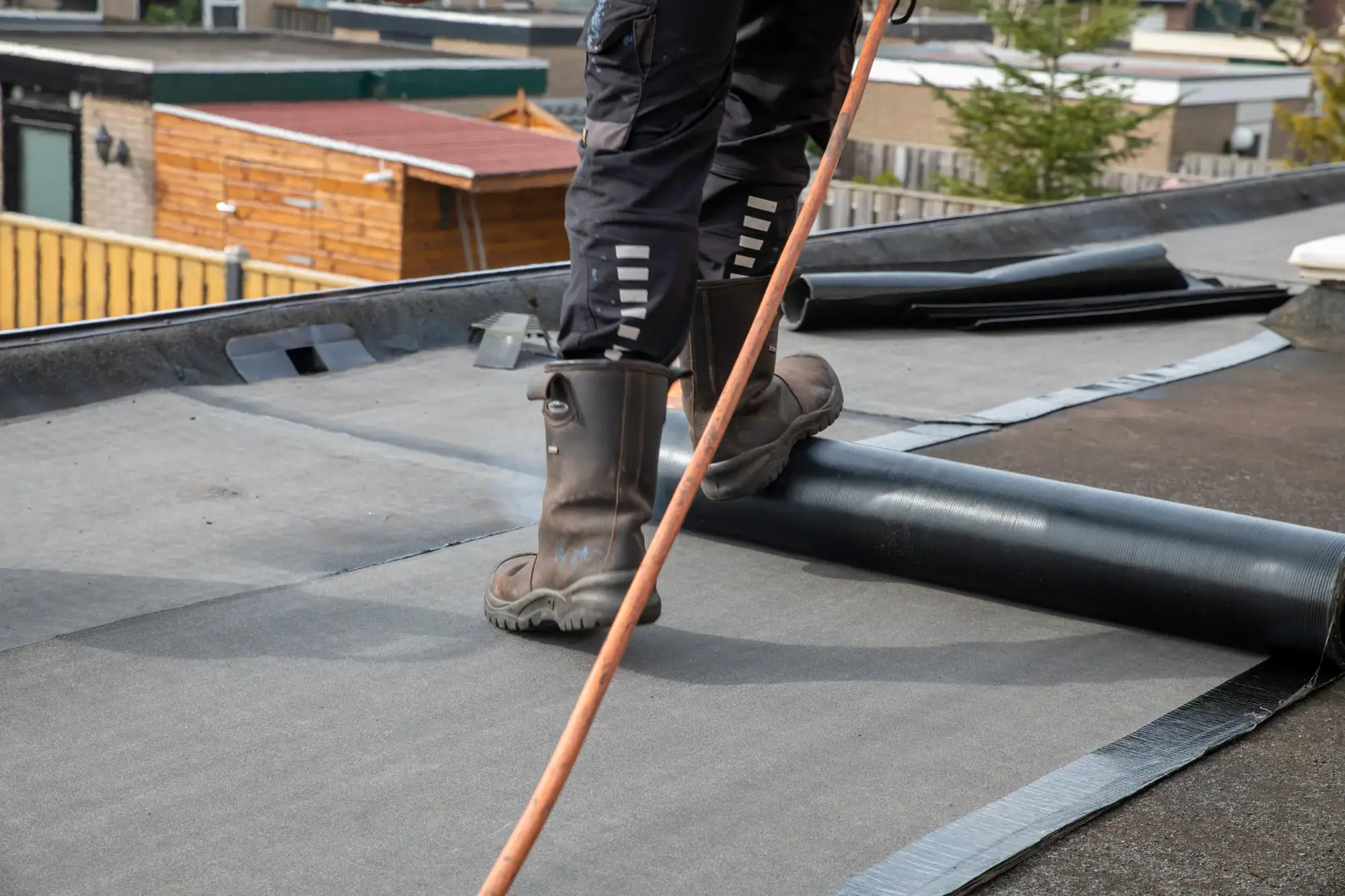
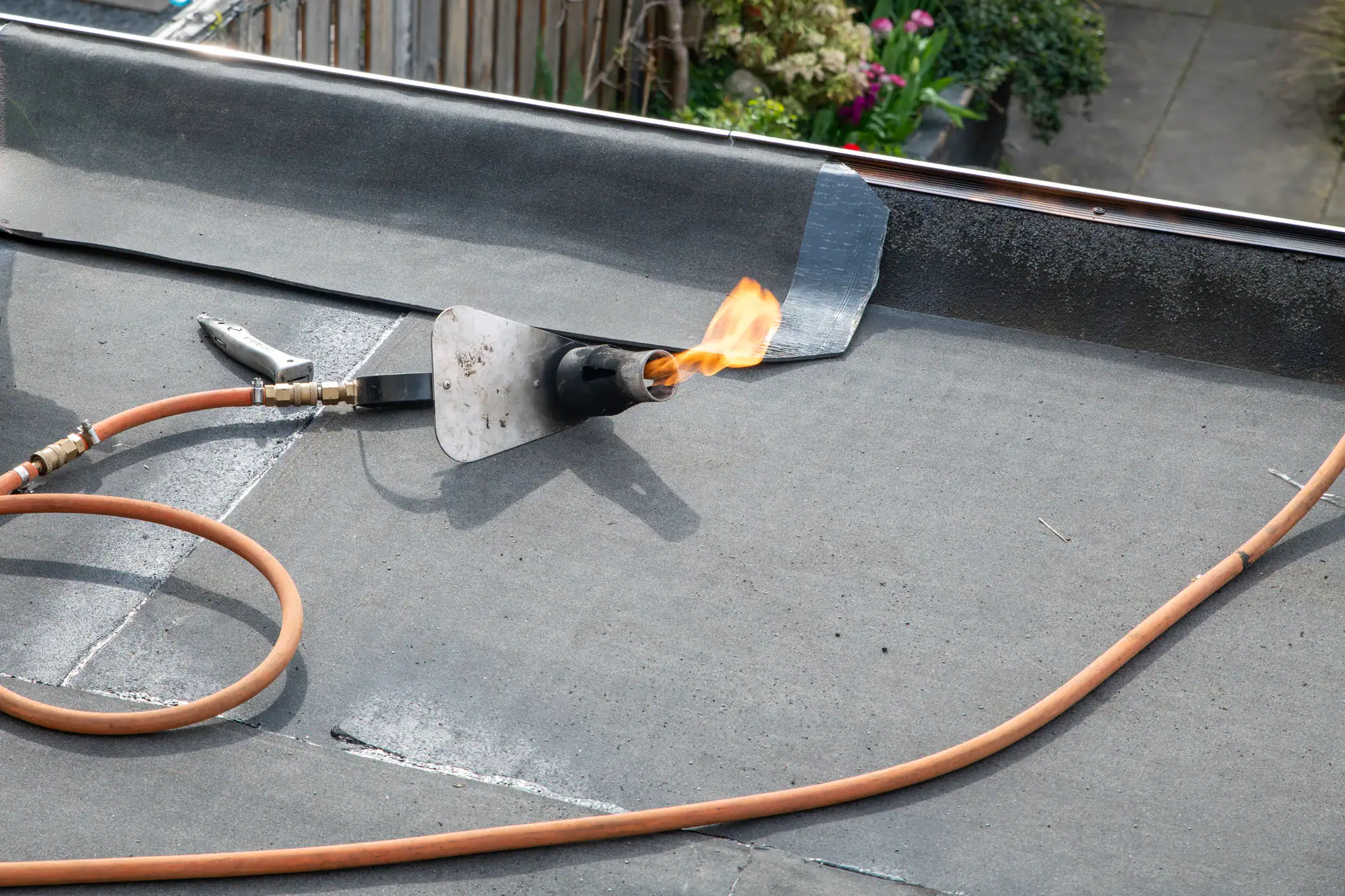
Once the job is approved and scheduled, our crew handles the full tear-off of the existing membrane, inspects and repairs the deck as needed, installs the appropriate insulation layer, and applies the new membrane system — whether that’s TPO, EPDM, modified bitumen, or PVC. Seams are heat-welded or properly adhered, flashings are installed at every penetration and edge, and the site is cleaned up before we leave. Fall is generally the best window for proactive replacements in this area, before freeze-thaw cycling puts new stress on any existing vulnerabilities — but if you’re dealing with an active problem, waiting for the right season isn’t an option, and we offer emergency repairs.

Ready to get started?
Not every flat roof is the same, and not every membrane system is right for every situation. The Dupont area’s building stock includes a mix of older residential properties with flat-roofed additions or detached garages, and commercial or light-industrial buildings along the U.S. Route 13 strip — some of which were built in the mid-to-late 20th century and are now on their second or third roofing cycle. The material that made sense 25 years ago may not be the best choice for a replacement today.
TPO is currently the most widely used flat roofing membrane for commercial applications, and for good reason in Delaware’s climate. It reflects up to 84% of solar load, which matters during hot, humid summers when a dark-colored roof is quietly driving up your cooling costs. It’s also installed with heat-welded seams, which create a stronger bond than adhesive-only systems — important in an area with consistent wind exposure along the open highway corridor.
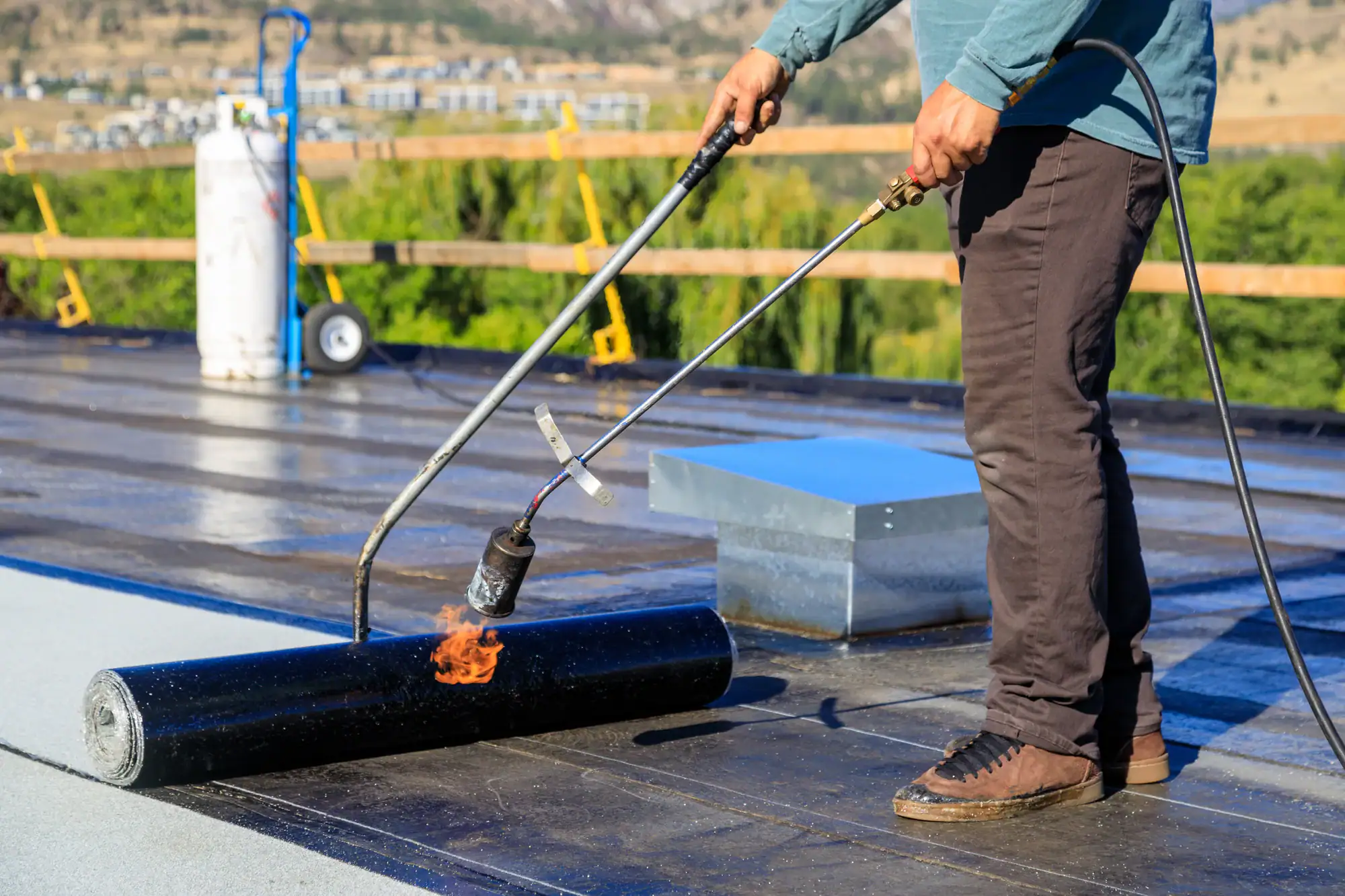
EPDM rubber roofing is another strong option, particularly for residential applications and smaller flat-roofed sections. It’s flexible enough to handle Delaware’s freeze-thaw cycling without cracking, and with proper installation and maintenance, it can last 20 to 30 years. Modified bitumen — sometimes called torch-down roofing — is common on older buildings in the Dupont area and remains a reliable option for the right application, typically lasting 15 to 20 years. PVC membranes are available for situations where chemical resistance or specific performance requirements make them the right fit.
We work across all of these systems and will recommend the one that fits your building, your budget, and your specific exposure — not the one with the highest margin. Financing is available if the upfront cost is a concern, and insurance claims assistance is part of our service for storm-damaged roofs.

Because Dupont is an unincorporated community in Kent County, there’s no local municipal building department to deal with — but that doesn’t mean permits aren’t required. For a full roof replacement or significant structural repairs, you’ll typically need to pull a permit through Kent County, which administers building inspections for unincorporated areas under Delaware’s adopted International Building Code. Routine maintenance and minor repairs may not require a permit, but anything involving a full membrane tear-off and replacement on a commercial structure generally does.
This is one of the things that trips up property owners in unincorporated communities like Dupont — they’re not sure who to call or what the county requires, and some contractors don’t bother to clarify it. We handle the permit process as part of the job. You won’t need to figure out which county office to contact or what documentation is required. That’s included in how we manage every project from start to finish.
This is one of the most common questions, and the honest answer is that it depends on what’s actually going on with the membrane and the deck underneath. A repair makes sense when the damage is localized — a specific seam failure, a cracked flashing at a pipe penetration, or a small section of membrane that has lifted. If the problem is isolated and the rest of the roof is in reasonable condition, a targeted repair can extend the life of the system significantly.
Replacement becomes the right call when the membrane is near the end of its expected lifespan, when damage is widespread, or when the deck underneath has been compromised by water infiltration. For the older building stock along the DuPont Highway corridor in the Dupont area, many roofs are now 20-plus years old — which puts them at or past the expected service life of the original membrane. A proper inspection will tell you which situation you’re actually in. We provide free estimates that include an honest assessment of whether repair or replacement is the more cost-effective path, not just the more expensive one.
Yes — and the sooner it’s addressed, the better. The industry standard definition of a ponding problem is water that remains standing on a flat roof for more than 48 hours after rain has stopped. In central Delaware, where the area receives around 45 inches of rainfall annually and winter temperatures regularly cross the freezing threshold, ponding water creates two distinct problems depending on the season.
In warmer months, standing water accelerates membrane degradation, promotes algae and mold growth, and adds structural weight the roof deck wasn’t designed to carry indefinitely. In winter, the risk shifts — water that’s sitting on the roof when temperatures drop freezes, expands, and forces its way under membrane edges and around flashings. By the time you notice the interior damage, the membrane failure has already happened. Ponding is almost always a drainage issue, which means it’s fixable — but it needs to be addressed at the installation or repair stage, not patched over. A flat roof with properly designed drainage simply doesn’t pond. That’s the standard to hold any contractor to.
Both are single-ply membrane systems and both are widely used in Delaware, but they have meaningfully different performance profiles that make each one better suited to certain situations. TPO is a white or light-colored membrane that reflects a significant portion of solar load — up to 84% — which makes it a strong choice for commercial buildings along the U.S. Route 13 corridor near Dupont, where summer heat gain is a real operating cost. It’s installed with heat-welded seams, which create a very strong, waterproof bond at the joints. Most commercial flat roof installations today use TPO, and it carries an expected lifespan of roughly 15 to 25 years.
EPDM is a black rubber membrane that’s been in use for decades — there’s more than 20 billion square feet of it installed worldwide, which tells you something about its track record. It’s highly flexible, which makes it particularly well-suited to Delaware’s freeze-thaw cycling in winter. It’s also a common choice for residential flat roofs, additions, and garages. With proper installation and maintenance, EPDM can last 20 to 30 years. The right choice between the two depends on your building type, your budget, and what performance characteristics matter most for your specific situation.
Navigating a storm damage claim on a flat roof is more complicated than most property owners expect. The core challenge is that adjusters and property owners often disagree on what counts as storm damage versus normal wear and tear — and on a flat roof, that distinction isn’t always obvious without knowing what to look for. Membrane punctures, seam failures caused by wind uplift, and flashing displacement are all common storm-related damage patterns that can be missed or undervalued in an initial adjuster assessment.
We help by documenting the damage thoroughly before any work begins — photos, written scope, and a clear explanation of what caused what. That documentation gives you a much stronger position when the adjuster reviews the claim. The goal is to make sure the scope of repair is correctly identified so you receive fair compensation, not a lowballed patch estimate that leaves you covering the difference out of pocket. This is especially relevant after the nor’easters and severe thunderstorm events that periodically move through the Kent County area. If you’re unsure whether your damage qualifies as a claim, the free estimate is a good starting point.
A lot of the commercial buildings along the DuPont Highway corridor in central Kent County near Dupont were built in the 1970s through the 1990s, and many of them have original modified bitumen — torch-down — roofing systems that are now well past their expected 15 to 20 year service life. When those roofs come up for replacement, the most common upgrade path is to TPO, which offers better energy efficiency, stronger seam integrity, and longer lifespan than a like-for-like modified bitumen replacement.
That said, the right answer depends on the specific building. Some older commercial structures have drainage configurations or deck conditions that affect which membrane system installs correctly. A building with a compromised deck needs that addressed before any new membrane goes down — otherwise you’re putting a new roof over an existing problem. For properties that have had multiple patch repairs over the years, a full tear-off and inspection is almost always the right call before committing to a material choice. We’ll assess the deck condition, review the drainage layout, and recommend the membrane system that makes the most sense for the building as it actually exists — not just the one that’s easiest to install.
Other Services we provide in Dupont