
Hear from Our Customers
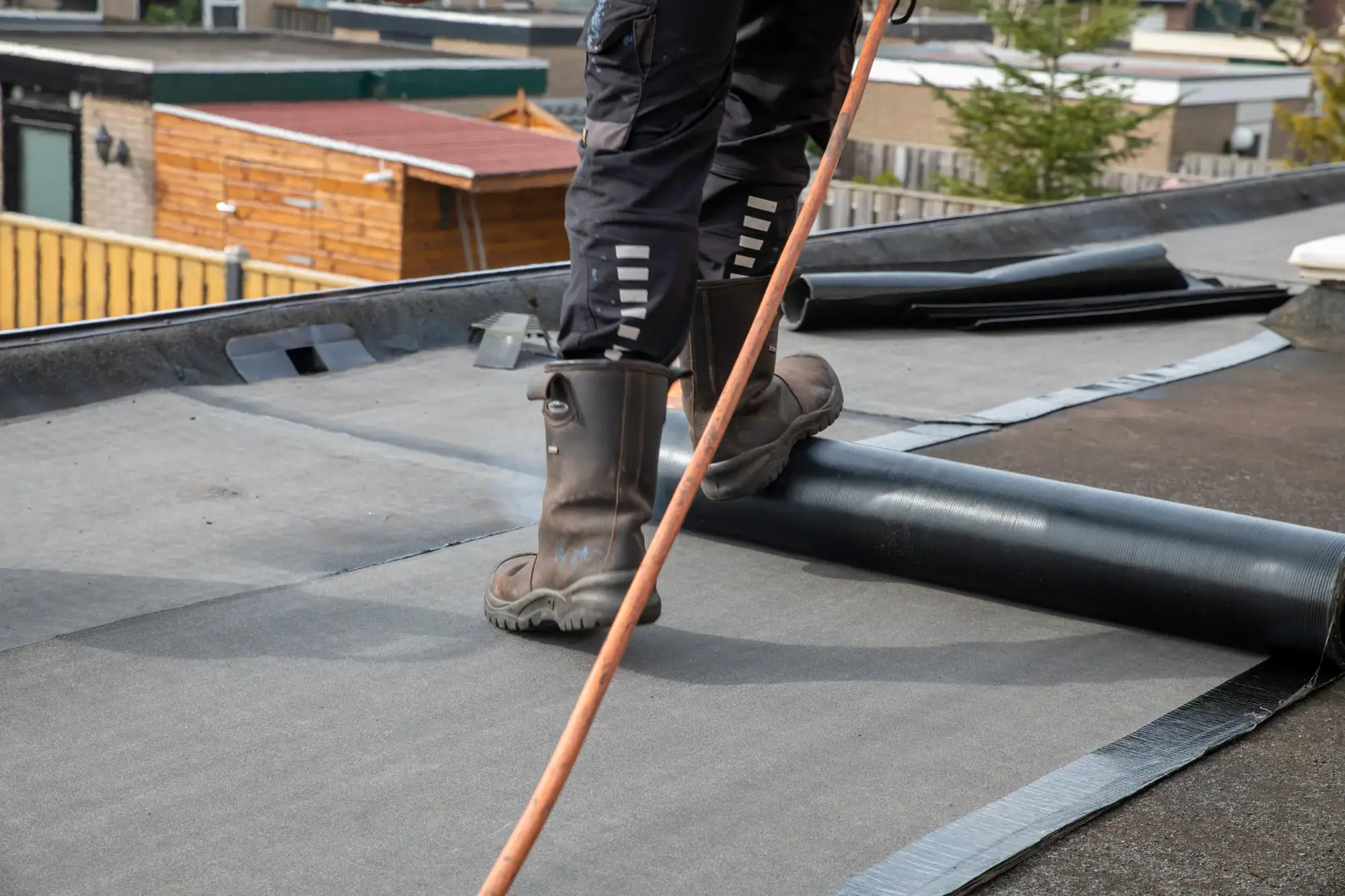
Delaware has the lowest average land elevation of any state in the country. In the flat agricultural landscape of Kenton Hundred — where Downs Chapel sits along Route 300 — that matters more than most people realize. When 45 inches of rain falls annually on terrain that drains slowly, a flat roof without properly designed drainage doesn’t just develop problems. It develops them fast and quietly, until the damage shows up somewhere you didn’t expect.
When your flat roof is installed correctly — right slope, right membrane, right drainage outlets — you stop chasing leaks and start trusting your building again. That means no more water stains creeping across a ceiling, no standing water sitting on the membrane after every storm, and no guessing whether the roof over your storage shed is going to hold through another Delaware winter.
For rural property owners in the Downs Chapel area, that peace of mind extends beyond the house. Farm outbuildings, equipment storage, attached garages — these structures carry real financial risk when a flat roof fails. A properly installed membrane roof on any of those buildings means your machinery, your inventory, and your investment are covered.
We’re based in Smyrna — less than 15 miles from Downs Chapel via Route 300 east through Kenton. That’s not a regional operator driving down from Wilmington or a national franchise routing your call through a call center. We’re a local team that has worked in Kent County’s rural communities for over two decades, through every storm season, every freeze-thaw winter, and every insurance claim cycle Delaware throws at property owners.
We’re BBB accredited, fully licensed and insured, and hold a 5.0 out of 5 rating across 63-plus verified reviews. Customers consistently mention the same things: fast communication, clean worksites, honest assessments, and work that gets done on schedule. Because Downs Chapel is unincorporated, all permitting flows through the Kent County Levy Court — and that’s a process we know well. You won’t be left figuring out county paperwork on your own.
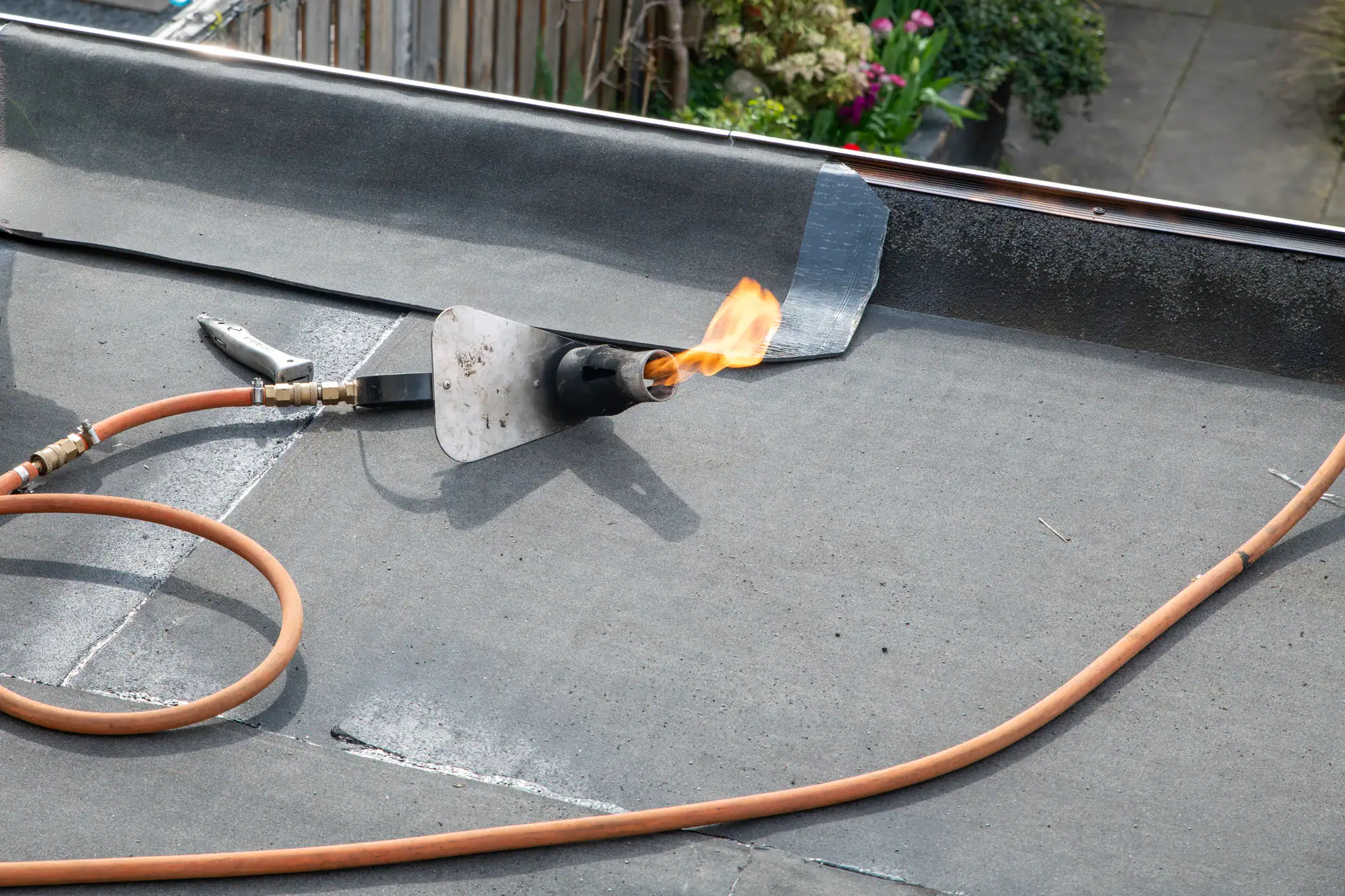
It starts with a free estimate. We come out to your property and look at the actual condition of the roof — not just the surface, but the deck underneath, the drainage outlets, the flashing at every penetration — and give you a clear picture of what you’re dealing with. If you’ve had water showing up inside, we’ll trace it back to the source, because flat roof leaks rarely appear directly above where they enter.
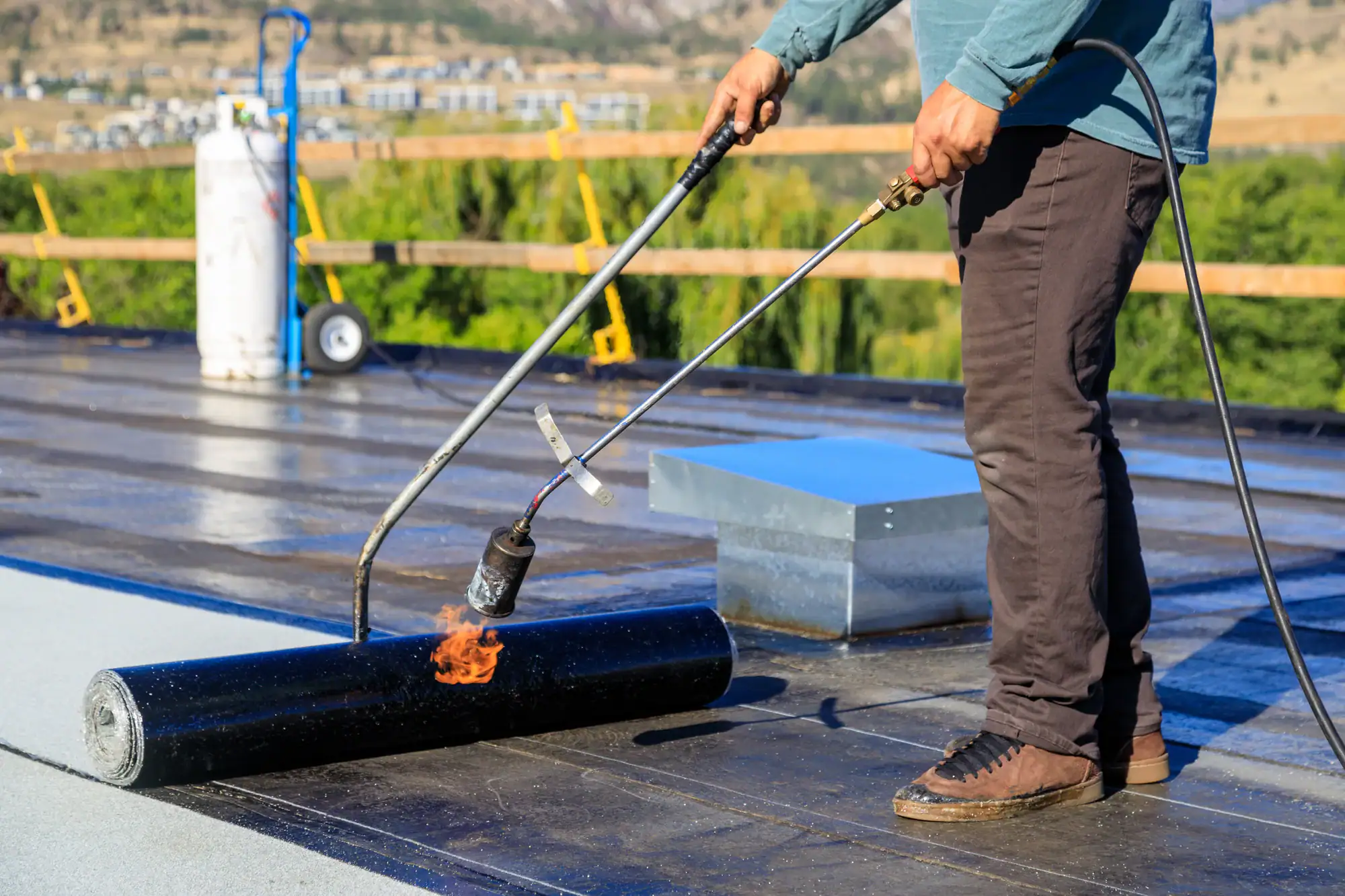
From there, we match the right membrane to your structure. A large agricultural storage building baking in Delaware’s summer heat may benefit from a TPO roofing membrane, which reflects a significant portion of solar load and keeps interior temperatures down. An older residential flat section or a smaller outbuilding might be better served by EPDM rubber roofing, which handles freeze-thaw cycling well and has a proven track record for longevity. Modified bitumen — sometimes called torch down roofing — is often the right call when replacing an existing system of the same type on an older rural structure.
Because Downs Chapel falls under Kent County jurisdiction, any job that requires a permit gets handled through the county’s process. We manage that end-to-end. The crew that shows up is ours — no subcontractors, no third parties you’ve never met. When the job is done, the worksite is clean and the roof is ready for whatever Kent County’s weather brings next.

Ready to get started?
Not every flat roof in the Downs Chapel area is the same structure with the same problem. We install and repair the full range of flat roofing systems — TPO roofing membrane, EPDM rubber roof membrane, modified bitumen, and PVC roofing membrane — and the recommendation you get is based on your building, your budget, and the conditions your roof actually faces.
For property owners along the Route 300 corridor and throughout Kenton Hundred, roof waterproofing and drainage design are as important as the membrane itself. A flat roof that pools water for more than 48 hours after a rain event is a roof that’s degrading ahead of schedule. In a low-elevation area like Downs Chapel, that threshold gets crossed more often than it does in higher-terrain markets. Getting the slope and drainage right from the start is what separates a 20-year roof from one that’s failing in 10.
Beyond new installation and full replacement, we handle flat roof repair for membranes that still have serviceable life left. Emergency roof repair is also available when a storm creates an urgent situation and waiting isn’t an option. If the damage is storm-related and you’re navigating an insurance claim, we provide claims assistance to help you document the damage and work with your adjuster — so the scope of the repair reflects what actually needs to be done, not a lowball patch estimate. Financing is available for larger projects, and every job starts with a free estimate.

Yes, in most cases you will. Because Downs Chapel is an unincorporated community, there’s no local municipal building department — all permitting flows through the Kent County Levy Court. Kent County requires a building permit when you’re replacing more than 25% of the roof sheathing or when you’re changing the roof material type, such as switching from a modified bitumen system to a TPO or EPDM membrane.
The permit process through the county can feel unfamiliar if you haven’t dealt with it before, especially for rural property owners in Downs Chapel who are used to handling things locally. We manage the permit process end-to-end, including making sure all contractor registration requirements under Delaware Title 30 are satisfied before the county will issue the permit. You don’t have to figure that out on your own — it’s part of how the job gets done.
It depends on the structure, the size of the roof, and what the building is used for. For larger agricultural storage buildings and equipment sheds — the kind that are common throughout the Kenton Hundred area near Downs Chapel — TPO roofing membrane is often a strong choice. It reflects a significant portion of solar load, which helps keep interior temperatures down during Delaware’s hot, humid summers. That matters when you’re storing equipment or materials that are sensitive to heat.
For smaller flat roof sections on residential additions, attached garages, or older outbuildings, EPDM rubber roofing is frequently the better fit. It handles freeze-thaw cycling well — important in a climate where temperatures cross the freezing threshold repeatedly through winter — and it has a long track record of durability when properly installed. Modified bitumen, sometimes called torch down roofing, is often the right replacement choice when an existing mod-bit system has reached the end of its life and the structure itself is sound. The right material depends on your specific building, and a free estimate is the right place to start that conversation.
You need someone to look at the deck — not just the membrane surface. A flat roof can look worn on top but still have years of serviceable life left if the deck underneath is solid and the drainage is functioning. On the other hand, a roof that looks okay from the outside can be hiding deck rot or structural damage that makes a patch job a waste of money.
The signs that typically point toward full replacement rather than repair include: membrane that’s cracked, blistered, or shrinking at the edges; ponding water that sits for more than 48 hours after rain; flashing that’s separating at walls or penetrations; and interior water damage that keeps reappearing in the same spot despite previous repairs. In the low-elevation terrain around Downs Chapel, chronic ponding is a particularly common driver of premature membrane failure — the landscape doesn’t shed water quickly, and a flat roof with even a slightly undersized drain outlet can sit wet after every significant storm. A proper inspection will tell you where you actually stand.
Yes — and it’s worth understanding why, because a lot of property owners assume some standing water is normal and harmless. The industry standard is that water sitting on a flat roof for more than 48 hours after rain is a problem. Beyond that threshold, it starts accelerating membrane degradation, promotes algae and biological growth, adds structural load to the roof deck, and can void manufacturer warranties on the membrane itself.
In the Downs Chapel area specifically, this concern is amplified by geography. Delaware has the lowest average land elevation of any state, and the flat agricultural landscape of Kenton Hundred drains slowly. A flat roof that might shed water adequately in a higher-elevation market can develop chronic ponding here simply because there’s nowhere for the water to go quickly. Proper drainage design — getting the slope right, sizing the outlets correctly, and making sure nothing is obstructing flow — is as important as the membrane you choose. That’s something we account for on every job in this area.
Yes, and it’s one of the more valuable things we can do for you after a storm. Insurance adjusters don’t always assess flat roof damage the same way a roofing contractor does. An adjuster might approve a patch when the actual condition of the membrane warrants full replacement, or they might miss damage to the flashing or deck that isn’t obvious from a surface inspection. If the claim is scoped too narrowly, you end up covering the difference out of pocket.
We provide insurance claims assistance — meaning we’ll document the damage thoroughly, work with your adjuster, and make sure the scope of the claim reflects what the roof actually needs. For rural property owners in Downs Chapel who may not have navigated a storm damage claim before, having a contractor handle that process is a significant advantage. Kent County’s spring and summer storm seasons can be hard on flat roofs, particularly on larger agricultural structures with wide membrane footprints and limited drainage infrastructure.
With proper installation and maintenance, the lifespan depends on the material. EPDM rubber roofing typically lasts 20 to 30 years. TPO roofing membrane generally runs 15 to 25 years. Modified bitumen systems are typically rated at 15 to 20 years, though well-installed two-ply systems can push toward the higher end of that range. These are real-world figures, not best-case scenarios — but they assume the roof was installed correctly, the drainage works, and the membrane gets inspected periodically.
In the Downs Chapel area, the conditions that shorten flat roof lifespans faster than average are chronic ponding from the slow-draining landscape, freeze-thaw cycling that stresses membrane seams through winter, and deferred maintenance on older agricultural structures where the roof hasn’t been looked at in years. The single biggest factor in whether a flat roof reaches its expected lifespan is the quality of the original installation — specifically the drainage design, the deck preparation, and the flashing at every wall and penetration. That’s where cutting corners costs the most in the long run.
Other Services we provide in Downs Chapel