
Hear from Our Customers
When a flat roof is done right, you stop thinking about it. No water stains creeping across the ceiling after a heavy rain. No standing water sitting on the membrane three days after a storm. No emergency calls in the middle of January because a seam gave out during a freeze.
Dover Base Housing sits on Delaware’s Atlantic coastal plain, where the weather doesn’t pick a lane. Summers are muggy and relentless, which accelerates mold and algae growth on any flat surface that isn’t draining correctly. Winters bring genuine freeze-thaw cycling, with temperatures regularly dropping into the upper 20s, which stresses membrane seams and flashings in ways that a contractor without local experience won’t anticipate until it’s already a problem.
Delaware pulls in around 45 inches of rainfall annually. On a flat or low-slope roof, every inch of that tests your drainage design. Water standing on a roof for more than 48 hours after rainfall accelerates membrane degradation, promotes mold growth, and can void manufacturer warranties. In Dover Base Housing, where many properties feature duplexes, triplexes, and fourplexes with flat roof sections on garages, covered entries, and connecting roof planes, drainage failures aren’t theoretical — they’re a regular problem we see and solve.
These aren’t shingle jobs. They need membrane systems installed by someone who knows the difference between doing it right and just getting it done.
We’re headquartered in Smyrna — about 15 to 20 minutes north of Dover Air Force Base up US-13. That’s not a technicality. It means when you call, the crew that shows up actually knows Kent County, knows the coastal plain climate, and isn’t learning your area on your dime.
For over 22 years, we’ve been working on residential and commercial roofing across Kent and Sussex counties. We handle every project with our own certified crew — no subcontracting, no handoffs to someone you’ve never met. The person who assesses your roof is part of the same team that does the work. That kind of accountability matters anywhere, but especially in a community where trust isn’t optional.
We’re BBB accredited, fully licensed and insured, and carry a 5.0 out of 5 rating from over 63 verified reviews. Customers consistently mention the same things: fast response, clean worksites, honest communication, and work that holds up. That’s what 22 years of doing this in one state actually looks like.
It starts with a free estimate. Someone from our team comes out, takes a real look at the roof, checks the membrane condition, inspects the drainage, and looks at the deck underneath if there’s any reason to think water has been sitting where it shouldn’t. You get a clear, written assessment — not a verbal ballpark that changes when the crew shows up.
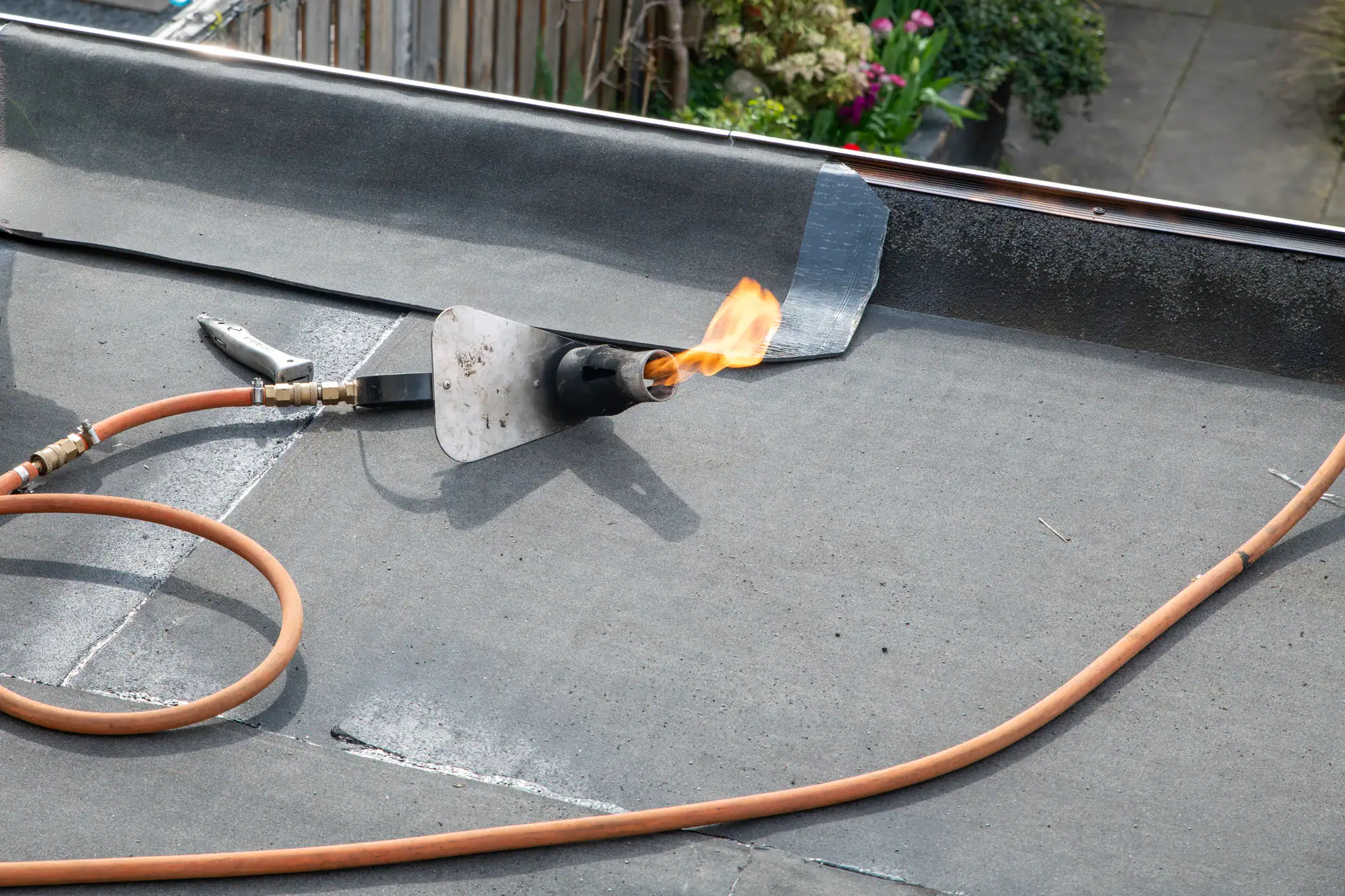
From there, if a repair is the right call, we isolate the problem area, remove the compromised section of membrane, check the substrate for any damage that water may have caused underneath, and install the correct material for the system already in place. If a full replacement makes more sense — because the membrane has aged past the point where patching is honest advice — the process involves a complete tear-off, deck inspection and any necessary repairs, proper insulation, and a new membrane installed with heat-welded or fully adhered seams depending on the system.
In the Dover Base Housing area, timing matters. Fall is the best window for proactive replacement work before winter freeze-thaw cycles begin stressing whatever’s already up there. If you’re dealing with storm damage — and Dover AFB’s own newcomer materials specifically warn about hurricane season running June through November — we offer emergency repair availability to stop the damage from spreading while a full scope gets worked out. If insurance is involved, we can help you navigate the claims process so you’re not getting shortchanged on what the damage actually warrants.

Ready to get started?
Not every flat roof is the same, and not every material is right for every structure. We work with the full range of flat and low-slope membrane systems — TPO, EPDM rubber roofing, modified bitumen, and PVC — and the recommendation you get is based on your building, your budget, and what actually performs in this climate.
TPO is the most commonly specified membrane for commercial and low-slope applications right now, and for good reason. It reflects up to 84% of solar load, which is a real number when you’re managing cooling costs through a Delaware summer. It’s installed with heat-welded seams, which creates a watertight bond that holds up well against the kind of wind-driven rain that nor’easters push under every weak point.
For residential flat sections — garages, additions, covered entries on the multi-unit homes common throughout Dover Base Housing — EPDM rubber roofing is often the right fit. It’s flexible enough to handle freeze-thaw cycling without cracking, and it’s been proven over decades of use in Mid-Atlantic climates exactly like this one.
Modified bitumen, sometimes called torch-down roofing, is still widely used on older structures in the Dover area and holds up well when installed correctly with proper drainage. PVC is a strong option for commercial applications where chemical exposure or ponding water is a particular concern. Whatever system is in place — or whatever system makes sense as a replacement — we have the experience to install it right the first time and back it up with a workmanship warranty.

The honest answer depends on the structure and what’s already up there, but for Dover Base Housing, a few systems consistently perform well. EPDM rubber roofing handles the freeze-thaw cycling that Delaware winters bring — temperatures regularly drop into the upper 20s around here, and EPDM’s flexibility means the membrane doesn’t crack or separate at the seams the way stiffer materials can. It’s also highly resistant to the UV exposure that comes with Delaware’s humid summers.
For low-slope sections on garages, covered entries, or the connecting roof planes on duplexes and fourplexes — which are common throughout the Eagle Heights community in Dover Base Housing — EPDM is often the most practical and cost-effective choice. TPO is worth considering if energy efficiency is a priority, since it reflects a significant portion of solar heat and can reduce cooling costs during summer months. Modified bitumen is still a solid option for certain applications, particularly on older structures where it’s already the existing system and the deck is in good shape. A proper inspection will tell you which direction makes the most sense for your specific roof before any material decisions get made.
The right answer starts with an honest inspection — not a contractor who shows up and immediately recommends the most expensive option. The general rule is that if the membrane is still in reasonable condition and the damage is localized, a repair is the right call. If the membrane is aging out, if there are multiple problem areas, or if water has been sitting on the roof long enough to compromise the deck underneath, replacement usually makes more financial sense than patching.
In Dover Base Housing specifically, ponding water is a major factor to watch. Water standing on a flat roof for more than 48 hours after rainfall is the industry threshold for concern — it accelerates membrane degradation, promotes mold and algae growth, adds structural load, and can void manufacturer warranties. Delaware’s 45 inches of annual rainfall means drainage failures aren’t a hypothetical. If you’ve noticed water pooling on your roof after rain and it’s not clearing within two days, that’s worth getting looked at before the next season of freeze-thaw cycles turns a manageable issue into a deck replacement.
Yes, and it’s worth understanding why. Pitched roofs shed water by gravity — the slope does most of the work. Flat and low-slope roofs rely entirely on their drainage design to move water off the surface. When a nor’easter or a hurricane-season storm dumps heavy rain in a short window, any drainage weakness on a flat roof gets exposed fast.
Dover AFB’s own newcomer orientation specifically flags hurricane risk for incoming personnel, and the August 2020 storm that produced an EF2 tornado in Dover is a reminder that this area sees real severe weather, not just theoretical risk. Wind-driven rain is also a specific concern for flat roofs because it gets pushed horizontally rather than falling vertically. That means it finds every weak seam, every improperly flashed penetration, and every membrane edge that wasn’t sealed correctly.
A properly installed TPO or EPDM system with heat-welded seams and correctly detailed flashings handles this well. A roof that was installed by someone who doesn’t regularly work in this climate may not. If your flat roof took any hits during a recent storm, getting it inspected before the next season is worth the time — and if there’s an insurance claim involved, we can help you navigate that process.
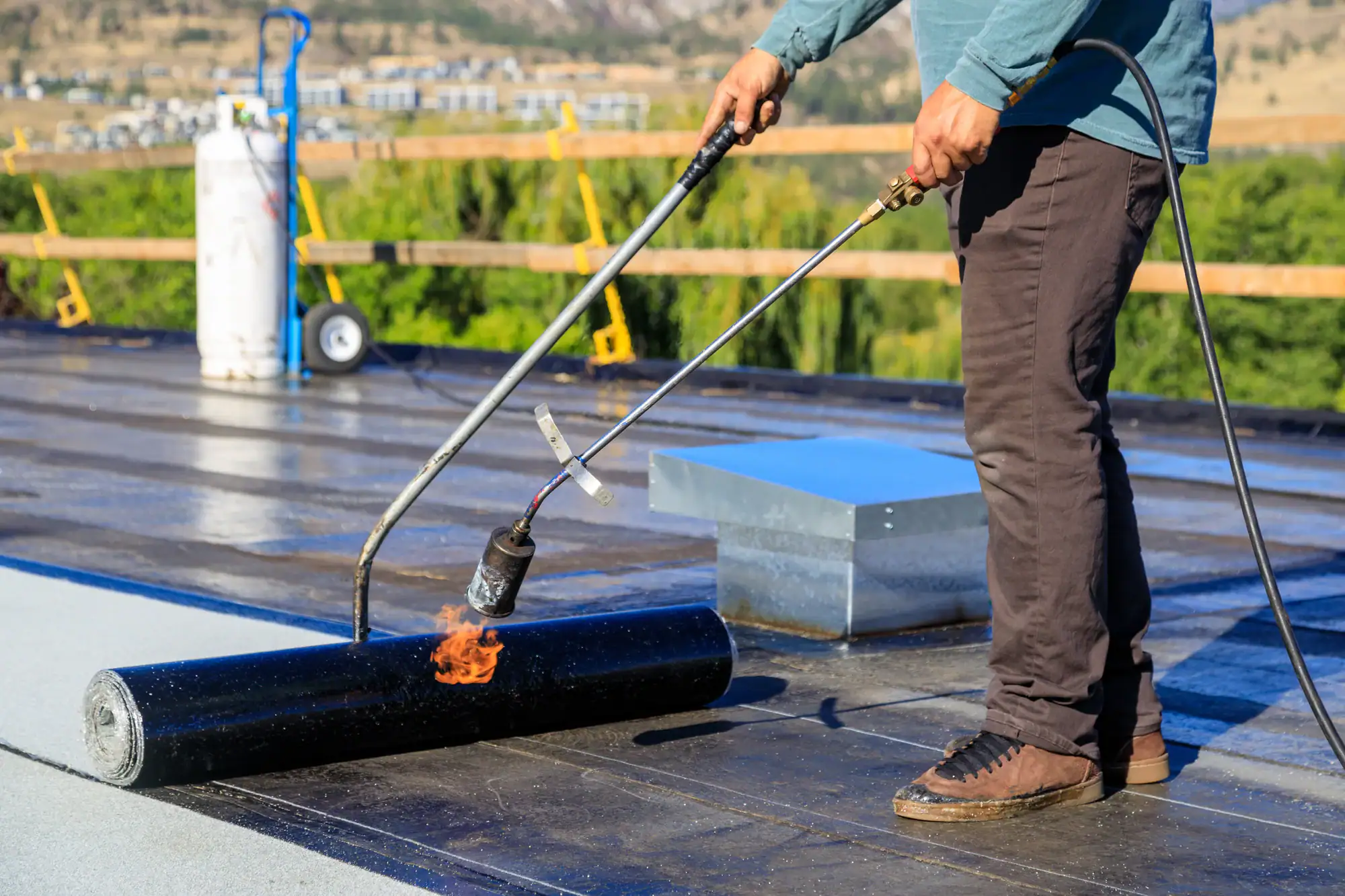
Torch down roofing is a common name for modified bitumen roofing, a flat roof membrane system that’s been around for decades and is still widely used across the Dover area and throughout Kent County. The name comes from the installation method — a torch is used to heat and bond the membrane to the roof surface, creating a waterproof seal. There’s also a peel-and-stick version that uses a self-adhering backing instead of heat, which is used in certain applications.
Modified bitumen performs well in a range of conditions and is a durable choice when installed correctly with proper drainage. In the Mid-Atlantic climate around Dover, the main thing to watch with older modified bitumen systems is the mineral surface on the top layer — freeze-thaw cycling over time erodes it, which can reduce the membrane’s UV resistance and eventually lead to cracking. If you have an existing torch down roof that’s been in place for 15 years or more, it’s worth having it inspected to see whether it’s still performing well or approaching the end of its useful life. Modified bitumen systems typically last 15 to 20 years, sometimes longer with a quality two-ply installation and consistent maintenance.
Emergency roof repair availability is part of what we offer, and it matters in this area for a straightforward reason — flat roof failures during active storms don’t wait for a convenient scheduling window. When a membrane tears, a seam separates, or a drainage blockage causes water to back up onto the roof surface during a nor’easter, the damage that happens in the hours before a contractor arrives can be significantly worse than the original failure.
For military families living off-base in Dover Base Housing, Camden, or Magnolia who are managing a home while also managing mission schedules, the ability to get a fast response from a contractor who’s already 15 to 20 minutes away via US-13 is a practical advantage. We’re based in Smyrna, which puts us close enough to respond quickly to the Dover Base Housing area without the delays that come with out-of-area contractors. Emergency repair work focuses on stopping active water intrusion and protecting the interior — a full repair or replacement scope gets assessed once the immediate situation is stabilized.
Yes, and this is an area where having the right contractor involved early makes a real difference. Insurance adjusters work from their own damage assessments, and those assessments don’t always capture the full scope of what a storm did to a flat roof — particularly when water has traveled along the deck before showing up as a stain inside, or when membrane damage is subtle but significant. We know how to document damage correctly, communicate with adjusters, and scope the repair or replacement accurately so you’re not walking away with a settlement that only covers a patch when the roof actually needs more.
This is especially relevant for military families in Dover Base Housing who may be navigating an insurance claim for the first time or who are new enough to the area that they don’t have an established contractor relationship. Dover Base Housing’s newcomer materials explicitly flag hurricane season as a risk, and Kent County sees its share of severe thunderstorms and nor’easters that can cause real damage to flat and low-slope roof systems. We provide insurance claims assistance as part of our service — not as an add-on, but as a standard part of how we handle storm damage work in this market.
Other Services we provide in Dover Base Housing