
Hear from Our Customers
Flat roofs don’t fail loudly. They fail quietly — a small seam gap, a slow drain, a membrane that’s been taking on UV and moisture for fifteen years without anyone looking at it. By the time you notice a water stain on the ceiling, the damage has usually been building for a while. Getting ahead of it is almost always cheaper than waiting.
For townhome owners in Cedarbrook Acres, this matters more than most people realize. Townhome construction regularly incorporates flat or low-slope sections — on garage roofs, rear additions, and bay extensions — even when the main roofline is pitched. A lot of homeowners don’t know that those sections operate completely differently from the rest of the roof and need their own maintenance attention.
Delaware’s freeze-thaw cycle between January and March is the most punishing period for flat roof membranes in this area. Water that sits in a low spot freezes, expands, and works its way under membrane edges and seam gaps. By spring, what was a minor issue in October can be an active leak. Getting a proper inspection in the fall — before that cycle starts — is one of the most practical things a Cedarbrook Acres homeowner can do to protect their property.
We’ve been working on Delaware roofs for over 22 years. That’s not a number for a brochure — it means we’ve seen every way a flat roof can fail in this climate, and we know what actually works versus what just looks good on paper.
We’re headquartered in Smyrna, which means Cedarbrook Acres isn’t a service area on a map — it’s the neighborhood next door. When something goes wrong with your roof during a spring thunderstorm or a February cold snap, you’re not waiting for someone to drive in from Milford or Wilmington. Our crew is local, the response is faster, and the accountability is real.
Every project is handled by our own licensed, insured team. No subcontractors, no third parties you’ve never met. The same crew that shows up for your estimate is the crew that does the work — and that matters in a close-knit subdivision like Cedarbrook Acres, where word travels fast.
It starts with a free estimate. Someone from our team comes out, gets on the roof, and looks at what’s actually happening — not just the symptom you called about, but the whole picture. We assess membrane condition, seam integrity, drainage function, and flashing at penetrations and perimeters. If there’s deck damage underneath, that gets identified too. You get a clear, written scope of what needs to happen and why.
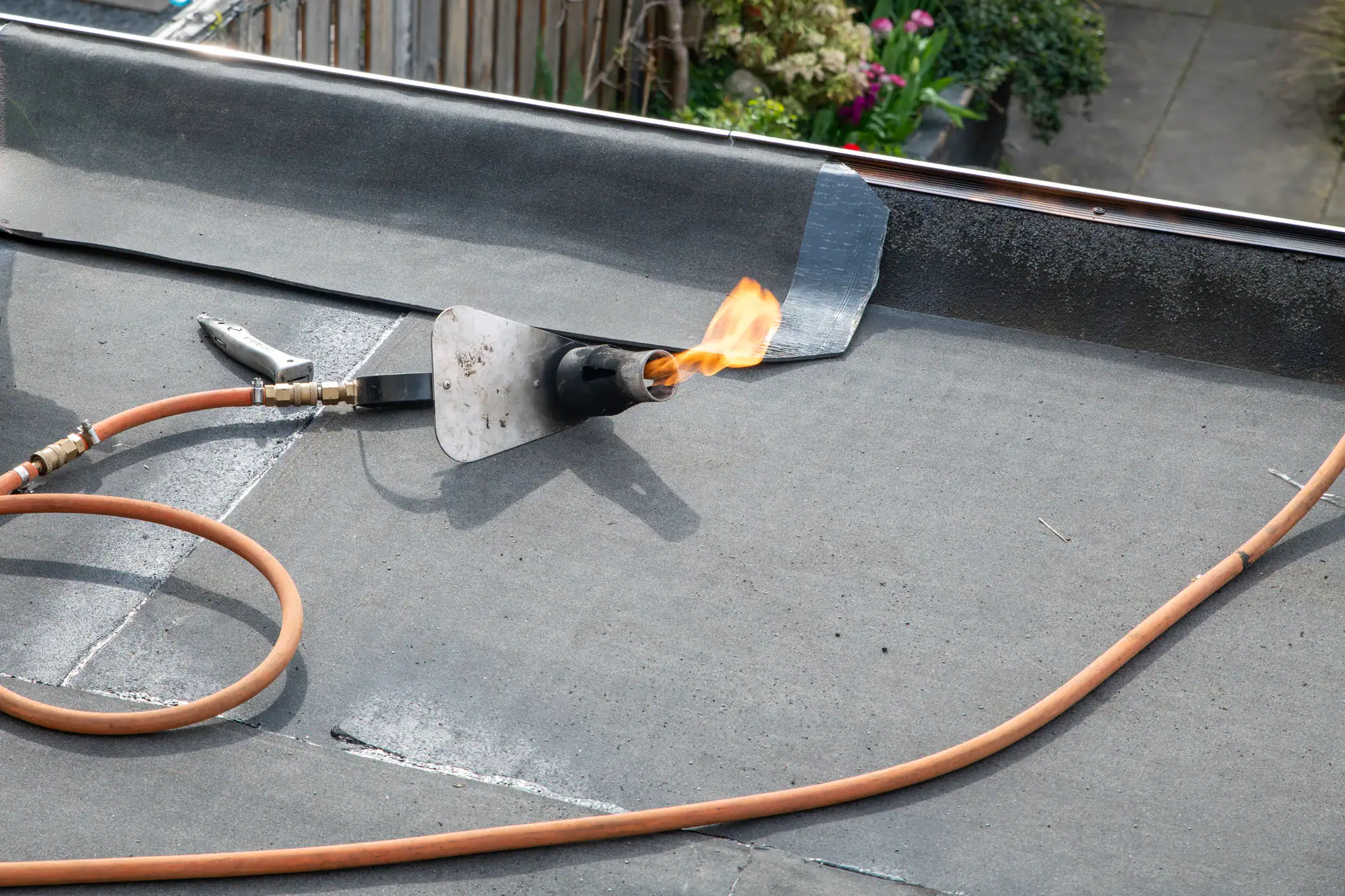
From there, the work follows a defined sequence. Existing membrane comes off. The deck gets inspected and any damaged sections are repaired before anything new goes down. Insulation is installed where needed. Then the new membrane — whether that’s TPO, EPDM rubber roofing, modified bitumen, or PVC — gets installed with properly heat-welded or adhered seams and flashing at every edge and penetration point. Drainage is confirmed functional before the job is called complete.
In Smyrna, roofing work within town limits falls under the Town of Smyrna’s building permit process, and we handle that correctly. If your flat roof damage is storm-related, we can also help you document it and work through the insurance claim process — something most contractors in this area simply don’t offer. Once the job is done, the site is cleaned up and you’re left with a roof that’s actually built to handle what Delaware weather throws at it.

Ready to get started?
Not every flat roof membrane is the right fit for every building or every climate. In Cedarbrook Acres, you’re dealing with hot, humid summers, a real freeze-thaw cycle through the winter months, and Delaware’s approximately 45 inches of annual rainfall putting consistent pressure on drainage systems and membrane seams year-round. The material choice matters.
TPO roofing membrane is the most popular option right now for good reason. It reflects a significant portion of solar load, which helps keep energy costs down during Smyrna’s humid summers, and heat-welded seams make it one of the more durable choices for long-term performance. EPDM rubber roofing has been around longer and has an exceptional track record — its flexibility holds up well through Delaware’s freeze-thaw cycles, and with proper installation it can last 20 to 30 years. Modified bitumen, sometimes called torch-down roofing, is a practical and cost-effective option for smaller flat sections like garage roofs or rear additions — the kind of flat sections that show up frequently in townhome construction. PVC roofing membrane rounds out the options, particularly for commercial applications or situations where chemical resistance is a factor.
We work with all of these systems on both residential and commercial properties across Kent County. The recommendation you get will be based on your specific building, your budget, and what’s going to perform best given the conditions your roof actually faces — not just whatever’s easiest to install.

A lot of townhome owners in Cedarbrook Acres are surprised to find out they have a flat or low-slope roof section somewhere on their property. The main roofline might be pitched, but attached garages, rear additions, bay window extensions, and covered entries are frequently built with flat or low-slope roofs — and those sections operate completely differently from the pitched portion of the roof.
The easiest way to check is to walk around the exterior of your home and look for any section of roofline that appears flat or nearly flat rather than angled. If you’re not sure, a free inspection from us will tell you exactly what you’re working with. It’s worth knowing before something goes wrong, because flat roof sections don’t shed water the way a pitched roof does — they rely entirely on proper drainage and membrane integrity to stay watertight. If either of those is compromised, you’ll find out the hard way.
Ponding water is the industry term for water that sits on a flat roof for more than 48 hours after a rain event. A little water moving toward a drain is normal. Water that’s still sitting there two days later is a problem.
The issue is what that standing water does over time. It adds weight to the roof structure, accelerates membrane degradation, promotes mold and algae growth, and in Delaware’s winter months, it freezes and expands — forcing its way into any seam gap or membrane edge it can find. That freeze-thaw cycle between January and March is particularly damaging in the Smyrna area, and ponding water going into winter is one of the most reliable ways to end up with an active leak by spring. If you’re seeing water sitting on your flat roof after rain, it’s worth having the drainage assessed before the cold months hit.
TPO and EPDM are both single-ply membrane systems, but they perform differently and suit different situations. TPO is a thermoplastic membrane with heat-welded seams — those seams are fused together rather than glued, which makes them highly resistant to water infiltration. TPO also reflects a significant portion of solar load, which is genuinely useful during Smyrna’s hot, humid summers when roof surface temperatures can drive up HVAC costs.
EPDM is a rubber membrane — the black material you’ve probably seen on commercial buildings and older flat roofs. It has a longer track record than TPO and is known for its flexibility, which holds up well through Delaware’s freeze-thaw cycles. A properly installed EPDM roof can last 20 to 30 years. The honest answer is that both are solid choices for this climate — the right pick depends on your building type, the size of the flat section, your budget, and whether energy efficiency or longevity is the bigger priority. A proper assessment will point you toward the right one for your specific situation.
Storm damage to flat roofs is genuinely tricky from an insurance standpoint because membrane damage isn’t always visible from the ground. Wind can lift seams, debris can puncture the membrane, and flashing can separate at penetration points — none of which you’d necessarily see without getting on the roof. Adjusters working from a quick visual inspection sometimes underestimate the scope, which can result in a settlement that covers a patch when what’s actually needed is a full membrane replacement.
We help Cedarbrook Acres homeowners through this process. That means documenting the damage properly, communicating with the adjuster about what the inspection found, and making sure the claim scope reflects the actual repair or replacement needed. Delaware’s spring and summer thunderstorm season regularly produces the kind of wind and debris events that damage flat roof membranes — if your roof took a hit, getting a professional assessment before you file (or while the claim is open) can make a significant difference in the outcome.
For a typical residential flat roof section — a garage roof, a rear addition, or a flat section on a townhome — the installation itself usually takes one to two days once the project is scheduled and materials are on site. Larger commercial jobs take longer, but for the kind of flat sections common in Cedarbrook Acres townhomes, it’s not a multi-week ordeal.
The more relevant question is usually about disruption. Flat roof work is done from the exterior, so you won’t have workers moving through your living space. The noise is real — tear-off and installation aren’t quiet — but the footprint of the job stays on the roof. We clean up the site before leaving, which means no roofing debris, no nails in the driveway, and no mess left for you to deal with. In a small, close-knit subdivision like Cedarbrook Acres, that attention to how the job affects your property and your neighbors matters.
Yes, roofing work in Smyrna typically requires a building permit through the Town of Smyrna’s building department. Because Cedarbrook Acres sits within Smyrna’s municipal boundaries — it’s Subdivision #11 on the town’s official subdivision map — any roofing project on a property there falls under Smyrna’s permit process rather than a county-level process.
The permit requirement exists to make sure the work meets Delaware’s adopted building codes, which follow the International Residential Code with state-level amendments. For homeowners, the practical implication is straightforward: make sure your contractor pulls the permit. We handle the permit process as part of the project — you don’t need to navigate the town’s building department yourself. A contractor who skips the permit is cutting a corner that can create real problems when you go to sell the property or file an insurance claim. It’s not a bureaucratic formality; it’s part of doing the job correctly.
Other Services we provide in Cedarbrook Acres