
Hear from Our Customers
Most Brenford homeowners don’t think about their flat roof until there’s a water stain on the ceiling. By that point, what started as a minor membrane issue has usually been working against you for months — quietly letting moisture into the structure beneath. Getting ahead of it is almost always cheaper, faster, and less disruptive than waiting.
Brenford Woods and Brenford Station were built primarily between 2006 and 2013. That puts most original flat and low-slope sections — garage roofs, rear additions, covered porches — somewhere between 12 and 20 years old. Modified bitumen membranes typically last 15 to 20 years. TPO runs 15 to 25. A lot of homes in Brenford are either approaching or already past the point where the original membrane needs attention.
The other factor specific to Brenford is the setting itself. The open farmland and fields surrounding these neighborhoods offer very little wind buffering. That means flat roof edges and membrane seams take more wind stress here than they would in a more sheltered suburban area. Add Kent County’s roughly 45 inches of annual rainfall and the freeze-thaw cycling that hits every winter, and you have a combination that shortens the life of any membrane that wasn’t installed correctly or hasn’t been maintained.
A proper inspection tells you exactly where things stand — no guessing, no pressure.
We’re headquartered in Smyrna — the same town Brenford calls home. This isn’t a Pennsylvania contractor with a Delaware landing page. When you call, you’re talking to a team that works on Brenford Station Road and Century Drive, knows the neighborhoods off Route 147, and has been operating in this area since before Brenford Woods was built.
Over 22 years in Delaware roofing means something specific here. We’ve watched Kent County grow, worked through its weather patterns, and built a reputation on showing up, doing the work right, and leaving a clean site behind. That consistency shows up in our reviews — a 5.0 out of 5 rating from more than 63 verified customers, with recurring feedback about professionalism, communication, and workmanship you can actually see.
We’re BBB Accredited, fully licensed and insured, and we handle every project with our own certified crew. No subcontracting, no unknown third parties on your roof. The people you meet at the estimate are the people doing the work.
It starts with a free estimate. Someone from our team comes out, gets on the roof, and actually looks at the membrane — checking for cracking, bubbling, seam separation, and any signs of ponding damage. For homes in Brenford’s 2006–2013 building stock, this inspection often reveals wear that isn’t visible from the ground but is well underway. You’ll get a clear picture of what’s there and what it needs, whether that’s a targeted repair or a full membrane replacement.
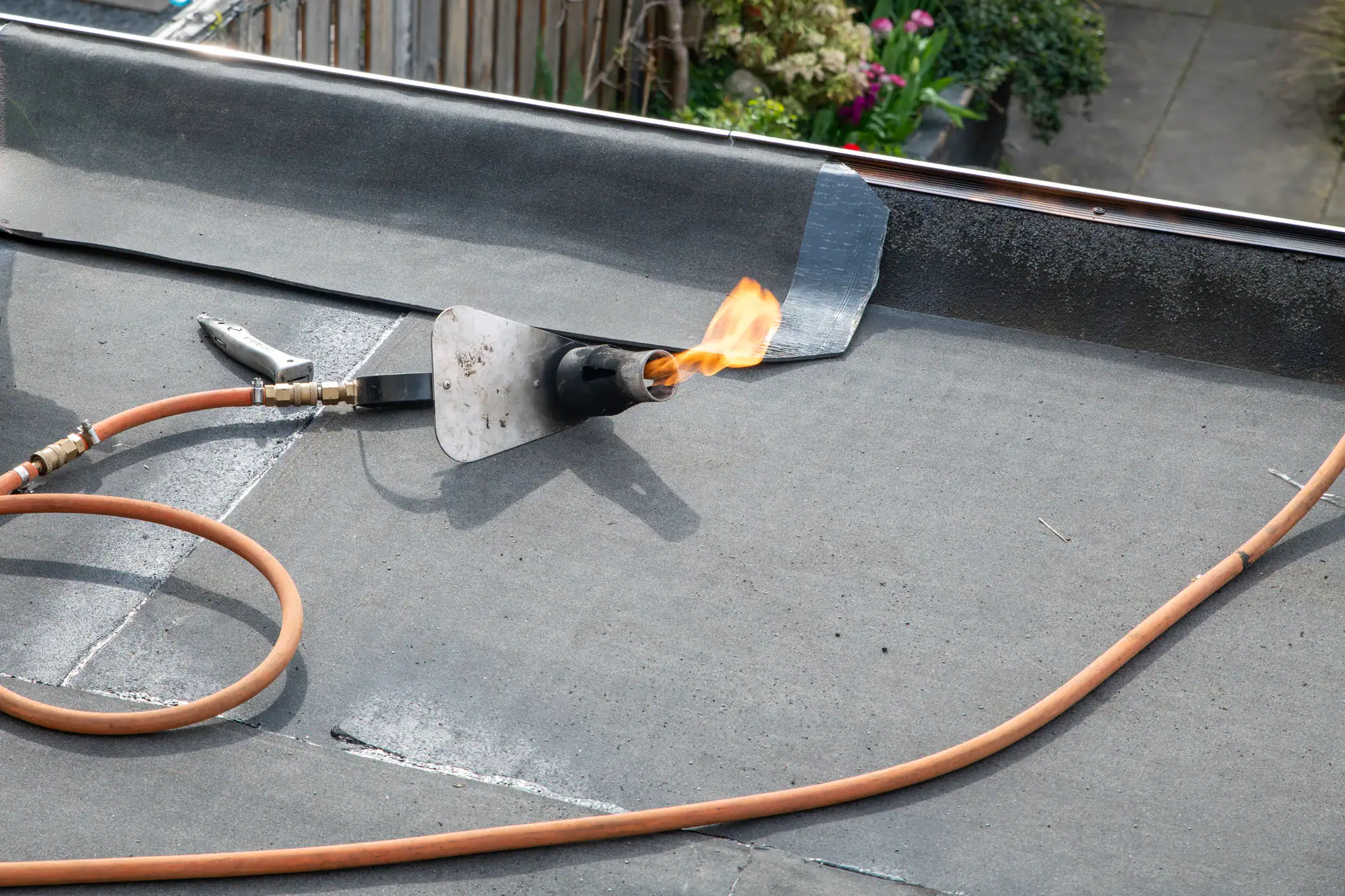
If replacement is the right call, the process begins with a full tear-off of the existing membrane so the deck can be properly inspected. Any damaged sheathing gets addressed before anything new goes down — skipping this step is one of the most common shortcuts that leads to early failure. From there, the appropriate membrane system is installed based on your roof’s slope, drainage profile, and the specific exposure conditions of your property. For homes in Brenford’s open-field setting, that includes paying close attention to perimeter fastening and flashing details that handle wind uplift.
Kent County requires permits when more than 25 percent of roof sheathing is being replaced or when the material type is changing. We handle permit coordination as part of the project — you don’t need to figure out the county process on your own. Once the job is done, the site gets cleaned up completely. No nails in the driveway, no debris left behind.

Ready to get started?
Not every flat roof membrane performs the same way in Kent County’s climate, and not every contractor knows the difference well enough to make a real recommendation. We install and repair the full range of flat roofing systems — TPO, EPDM rubber roofing, modified bitumen (torch-down), and PVC — and we’ll walk you through which one makes sense for your specific roof based on slope, drainage, sun exposure, and how the building is used.
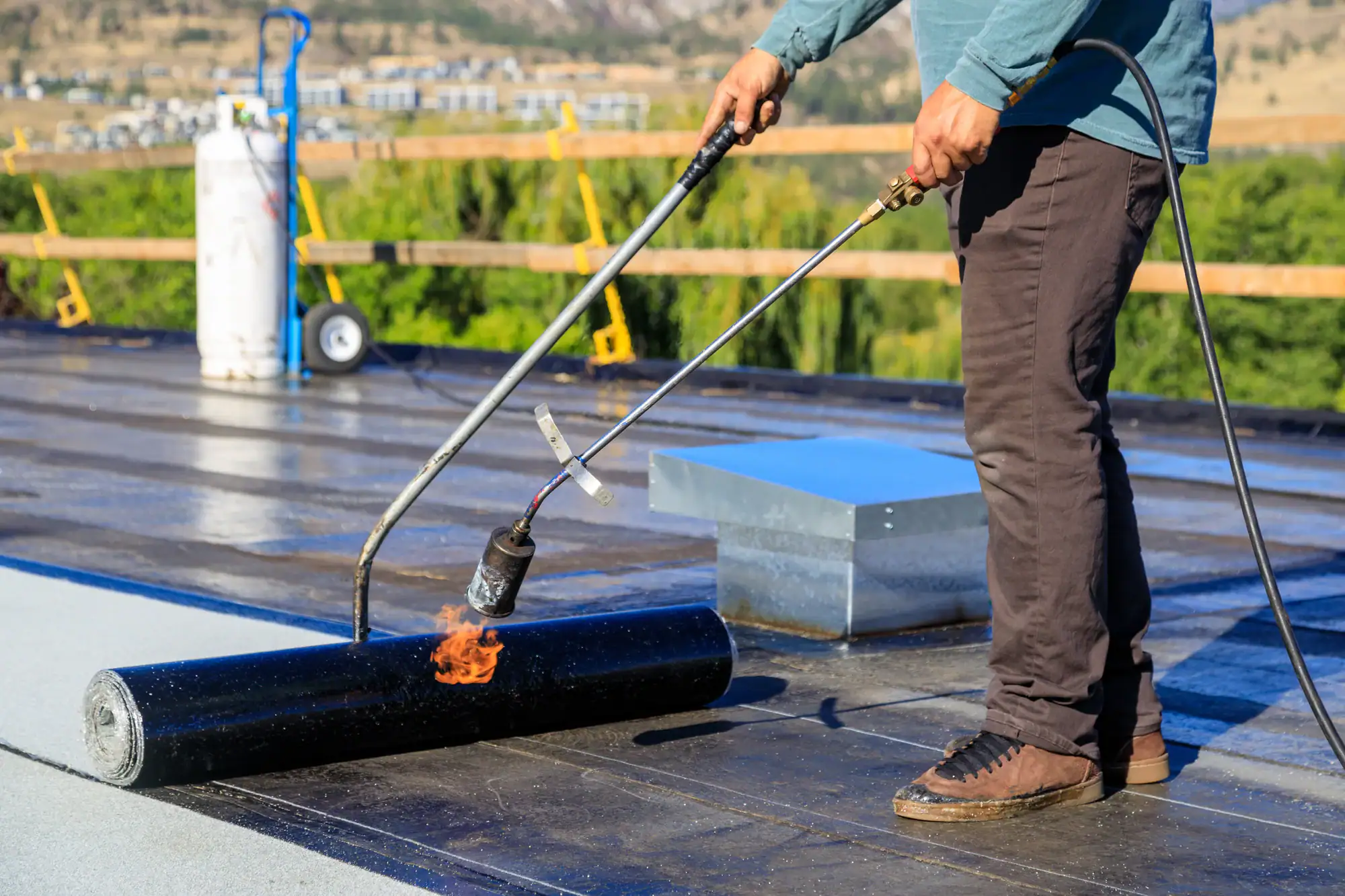
TPO is currently the most widely used membrane in commercial and residential flat roofing, and for good reason. Its heat-welded seams are highly durable, and its reflective surface — which can deflect up to 84 percent of solar load — matters during Delaware’s humid summers, especially on garages and additions that aren’t air-conditioned. EPDM rubber roofing has one of the longest track records in the industry, with a lifespan of 20 to 30 years and excellent flexibility through freeze-thaw cycling, which makes it well-suited for Brenford’s winters. Modified bitumen (torch-down) is a common original material on homes built in the 2000s and remains a solid option for repairs and replacements when installed correctly with proper flashing.
Beyond material selection, our work includes proper drainage design, full flashing at all penetrations and edges, and a final inspection before the job is called complete. For Brenford homeowners dealing with storm damage, we also provide insurance claims assistance — helping you document the damage and work through the adjuster process so the scope of the claim reflects what actually happened to your roof.

The honest answer is that you usually can’t tell from the ground, and the age of your roof is the most useful starting point. For homes in Brenford Woods and Brenford Station — most of which were built between 2006 and 2013 — the flat sections are now 12 to 20 years old. Modified bitumen membranes, which were commonly used by builders during that era, typically last 15 to 20 years. If yours is at or past that range, a full replacement is often the more cost-effective call even if it isn’t actively leaking yet, because the membrane’s ability to shed water and resist further damage is already compromised.
That said, age alone doesn’t automatically mean replacement. A membrane that’s 15 years old but was installed correctly, has functioning drainage, and shows no significant cracking or seam separation may still have years of life left. The only way to know for certain is a hands-on inspection by someone who can assess the actual condition of the membrane, the flashing, and the deck beneath it. We offer free estimates that include exactly that assessment — no pressure, just a clear answer.
Delaware’s climate puts a few specific demands on flat roofing membranes that you don’t always see discussed in generic material comparisons. The state averages around 45 inches of rainfall per year, which means drainage performance is critical — a membrane that allows ponding accelerates its own degradation. Kent County also experiences genuine freeze-thaw cycling through the winter months, which stresses seams and surface materials on modified bitumen roofs and can cause EPDM seams to fatigue over time if they weren’t properly installed.
TPO is currently the most widely used flat roofing membrane for good reason — its heat-welded seams hold up well under thermal movement, and its reflective surface helps manage heat load during humid Delaware summers. EPDM rubber roofing is an excellent choice where longevity and flexibility are the priority, with a lifespan of 20 to 30 years and strong performance through temperature swings. Modified bitumen (torch-down) remains a reliable option for repairs and replacements, particularly on lower-slope residential sections. The right call depends on your specific roof geometry, drainage setup, and how the space beneath is used — which is why a site-specific recommendation from an experienced local contractor is worth more than a general answer.
Ponding water is the industry’s defined threshold for concern: if water is still standing on your flat roof more than 48 hours after rain stops, that qualifies as ponding and it needs to be addressed. Standing water adds weight to the roof structure, accelerates membrane breakdown, promotes mold and algae growth, and in winter, it freezes — putting additional stress on the membrane and any penetrations or flashings nearby. Over time, it can cause structural deflection in the decking beneath, which makes the drainage problem worse and the repair more expensive.
For homes in Brenford’s open-field setting, heavy spring and summer thunderstorms can dump significant rainfall in a short period. If your roof’s drainage outlets are partially clogged with debris — leaves from nearby trees, dirt buildup, or granules from a deteriorating membrane — that water has nowhere to go quickly. The fix is sometimes as simple as clearing drains and adjusting the drainage slope. In other cases, ponding is a sign of a more significant installation issue that needs to be properly corrected rather than patched around. Either way, it’s worth having someone take a look before it quietly becomes a structural problem.
Brenford is an unincorporated area, which means it falls under Kent County jurisdiction rather than the Town of Smyrna’s building department. Kent County has adopted the International Building Code and International Residential Code as its framework, and under those standards, a permit is required when you’re replacing more than 25 percent of the roof sheathing or when you’re changing the material type — for example, switching from modified bitumen to TPO. Routine like-for-like repairs in smaller areas may not trigger a permit requirement, but any work that involves deck replacement or a material change does.
If your property happens to fall within Smyrna’s town limits rather than unincorporated Kent County, the Town of Smyrna has its own building and inspections department with its own permit requirements. The simplest approach is to confirm which jurisdiction applies to your specific address before work begins. We handle permit coordination as part of the project — you don’t need to navigate the county or town process on your own. This is one of the practical advantages of working with a contractor who’s been operating in this area for over 22 years and knows how the local permitting process works.
Yes, and this is an area where having a local contractor in your corner makes a real difference. Kent County’s spring and summer storm season brings heavy rain, wind, and occasional hail that can damage flat roof membranes through uplift at the edges, impact punctures, and debris. The insurance claims process that follows a storm event is often just as stressful as the physical damage — especially if you’re not sure how to document what happened or whether the adjuster’s scope of work actually covers everything that needs to be done.
We provide insurance claims assistance as part of our service. That means helping you document the damage properly, communicating with your adjuster, and making sure the scope of the claim reflects the actual condition of the roof — not just what’s visible from the ground. A common problem after storm events is that lowballed estimates miss underlying damage to the deck or flashing that only becomes apparent once the membrane is opened up. Having a contractor who advocates for the full scope of the work protects you from agreeing to a patch when what’s actually needed is a proper repair or replacement. Emergency repair services are also available to stop active damage from spreading while the full scope is being assessed.
Lifespan varies by material, but the ranges are fairly consistent across the industry. EPDM rubber roofing typically lasts 20 to 30 years with proper maintenance. TPO membranes run 15 to 25 years. Modified bitumen (torch-down), which was widely used on residential construction in the 2000s, generally lasts 15 to 20 years. These figures assume correct installation, functioning drainage, and periodic inspection — all three of which affect the outcome significantly.
In the Brenford area specifically, a few local factors influence where a roof lands within those ranges. The open agricultural setting means higher wind exposure than more sheltered neighborhoods, which puts more stress on membrane edges and seams over time. Kent County’s freeze-thaw winters add thermal stress to modified bitumen surfaces and EPDM seams. And with 45 inches of annual rainfall, any drainage issue that goes unaddressed — clogged outlets, low spots, inadequate slope — shortens the membrane’s effective life considerably. A roof that was installed correctly and has been inspected periodically will typically reach the upper end of its expected lifespan. One that was installed quickly by a builder using the cheapest available material and hasn’t been looked at since may already be showing signs of failure at 12 to 15 years. An inspection is the only way to know which situation you’re actually dealing with.
Other Services we provide in Brenford