
Hear from Our Customers
Living on the Delaware Bay means your property faces conditions that most roofing contractors have never had to think about. Salt air works on flashing and fasteners quietly, season after season, until a small problem becomes a big one. A flat roof installed with the right membrane system and properly detailed seams doesn’t just look good on day one — it stays watertight through the kind of weather Bowers Beach has been dealing with for generations.
For vacation rental owners managing properties remotely, that reliability isn’t just comfort — it’s income protection. A roof failure mid-season means lost bookings, unhappy guests, and a repair call from two states away. Getting the installation right the first time, with materials matched to a bayfront environment, is the difference between a property that runs smoothly and one that constantly demands your attention.
When a storm does cause damage, having a contractor who can help you navigate the insurance claims process — not just patch the roof and move on — matters more in a community like Bowers than it does almost anywhere else in Kent County.
We’ve been working across Kent County for over 22 years. That includes the bayshore communities along Route 9 — places like Bowers, DE, where the roofing environment is genuinely different from what you find inland near Dover or Smyrna. We understand how coastal conditions change the math on material selection, maintenance intervals, and what “properly installed” actually means for a structure sitting between the St. Jones and Murderkill Rivers.
Every project is handled by our own certified crew, start to finish. No subcontractors, no unfamiliar faces showing up to do work you weren’t told about. The same people who assess your roof are the ones doing the work — and that accountability shows up in the reviews. A consistent 5.0 out of 5 across 63-plus verified reviews, BBB accreditation, and over two decades of local presence aren’t things you build by cutting corners.
It starts with a free estimate and a real look at what’s happening on your roof. For properties in Bowers, that means checking not just the membrane surface but the flashing at every penetration, the drainage design, and the condition of the deck underneath. Ponding water — any standing water that sits for more than 48 hours after rain — is one of the most common warning signs, and it’s easy to miss if you’re not on-site regularly.
That’s especially relevant for seasonal and vacation rental properties where the owner may not see the roof between visits.
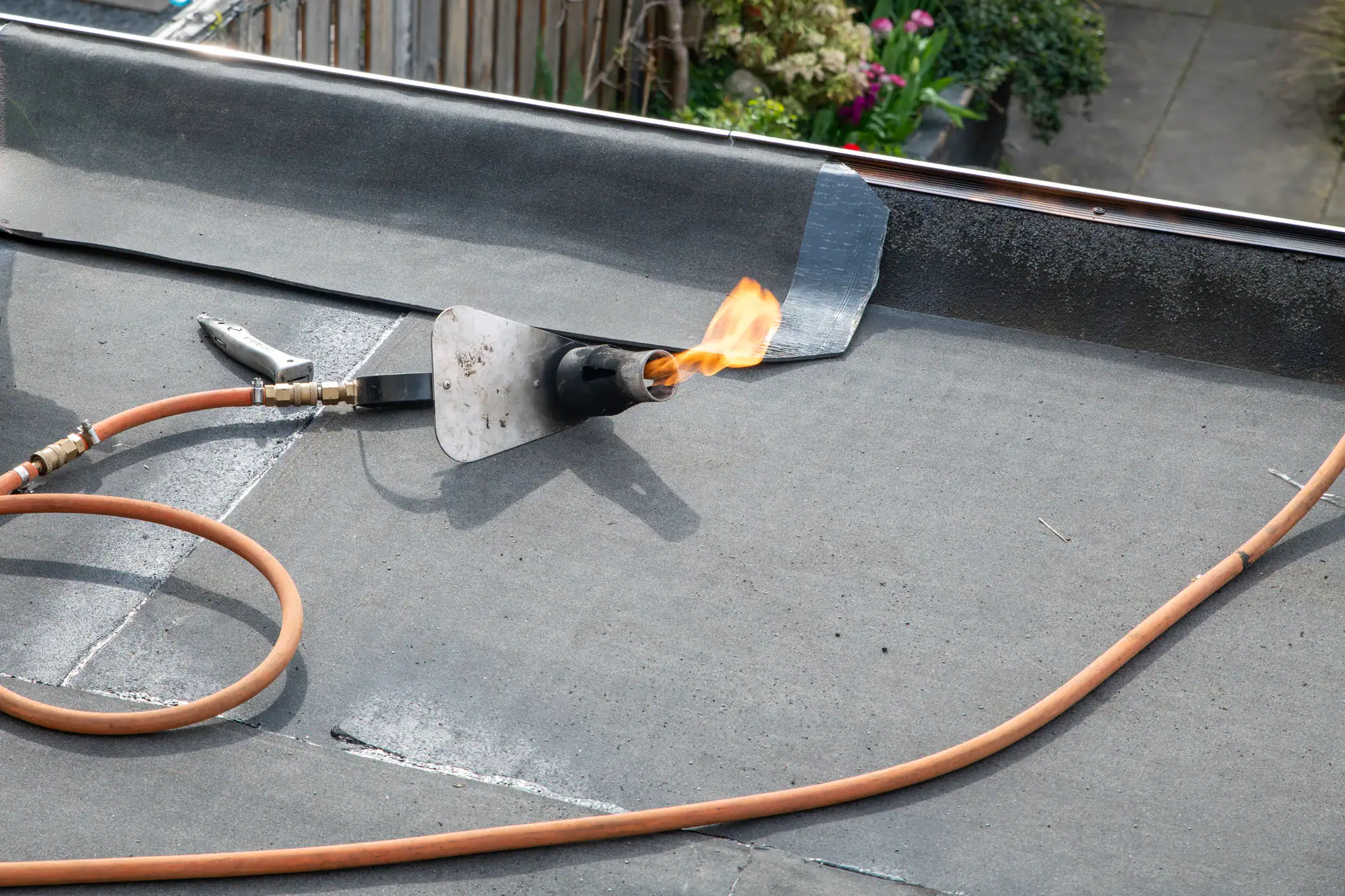
If the deck is sound, the next step is removing the existing membrane and preparing the surface correctly before anything new goes down. For bayfront properties in Bowers, material selection matters more than it does inland. TPO membranes with heat-welded seams hold up better against wind uplift and water infiltration during storm events — which is a real consideration in a community that has documented flooding during nor’easters. EPDM rubber roofing handles the freeze-thaw cycling of Kent County winters well and has a proven track record in coastal environments.
Because Bowers properties near the bay may fall within DNREC’s coastal construction regulations, the process also accounts for any permit requirements before work begins. Once installation is complete, you get a clean worksite — no nails in the driveway, no debris left behind — and clear documentation of the work done, which matters for insurance records and property management.

Ready to get started?
Not every flat roof membrane performs the same way in a coastal environment, and the older cottage housing stock in Bowers makes material selection even more important. We work with TPO roofing membrane, EPDM rubber roofing, modified bitumen (torch down roofing), and PVC roofing membrane — and the recommendation depends on your specific property, its exposure, and your budget, not on whatever is easiest to install.
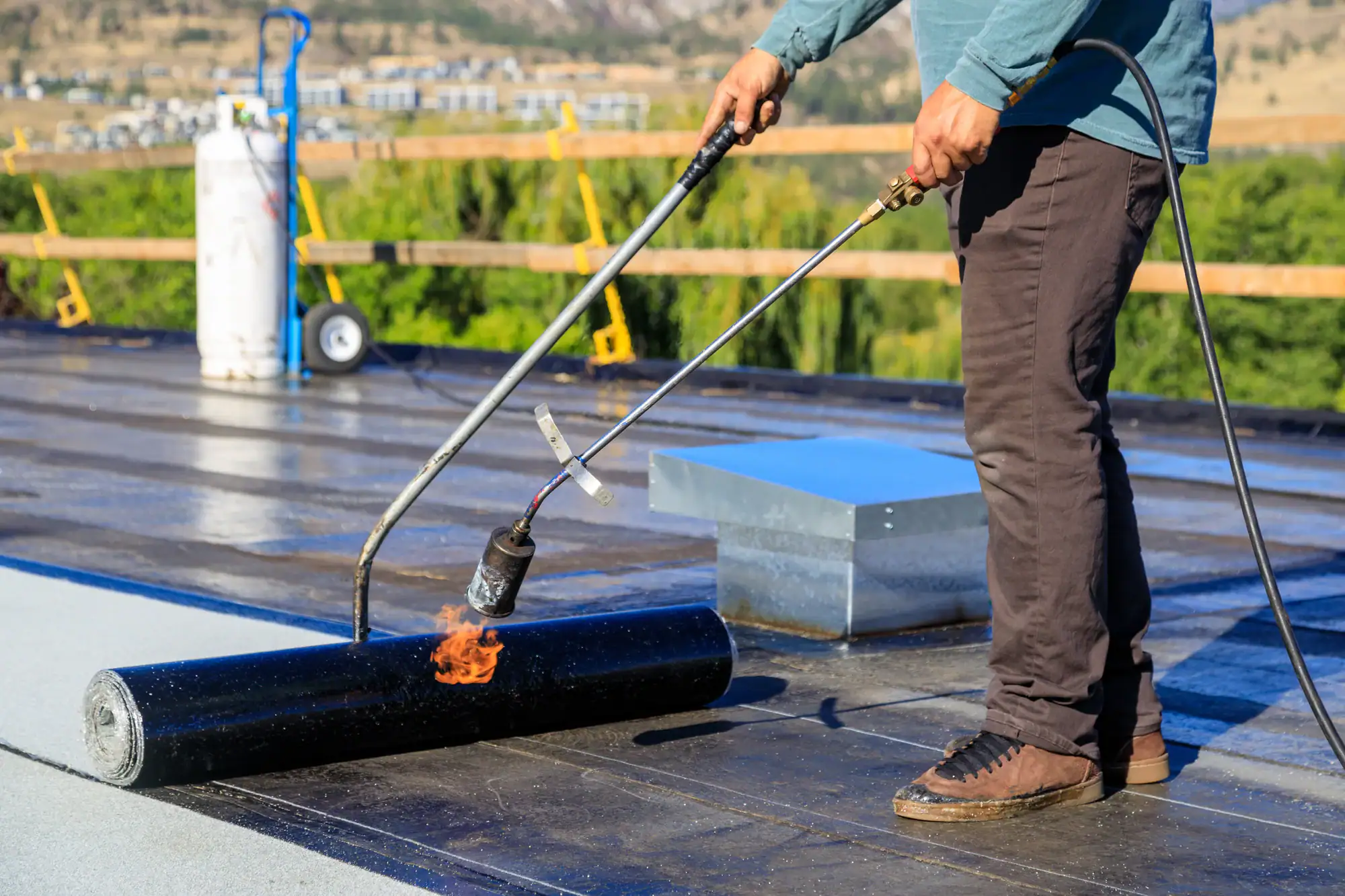
TPO is the most popular choice for flat roofs right now, and for good reason. Its heat-welded seams create a continuous watertight bond that holds up well against the wind-driven rain that comes off the Delaware Bay during storm season. It also reflects a significant portion of solar load, which helps keep cooling costs down in humid Bowers summers. EPDM rubber roofing has one of the longest track records in the industry and handles the flexibility demands of freeze-thaw cycling well — a real factor in Kent County winters. Modified bitumen remains a solid option for certain applications, particularly on older structures where a torch down system is already in place and conditions are right for a like-for-like replacement.
Beyond material selection, our service includes a full assessment of your drainage system, flashing at all penetrations and perimeters, deck condition evaluation, and emergency repair availability if you’re dealing with an active leak. Insurance claims assistance is also part of what we offer — because in Bowers, storm damage isn’t a hypothetical.

It affects it more than most people expect. Salt air is corrosive — it works on metal flashing, fasteners, and certain adhesives over time in ways that don’t show up immediately but accumulate season after season. Mineral-surfaced modified bitumen membranes can degrade faster in a salt-air coastal environment than the published lifespan figures suggest, because those numbers are typically based on average inland conditions.
For a property in Bowers sitting between the St. Jones and Murderkill Rivers, the maintenance math is different. The practical takeaway is that inspection intervals should be shorter for bayfront properties than for inland ones, and material selection should account for the environment. TPO and EPDM both perform well in coastal conditions — TPO for its welded seams and UV reflectance, EPDM for its flexibility and chemical resistance. A contractor who understands this distinction will give you a more accurate picture of what your roof actually needs, and what it will cost you if that maintenance gets deferred.
For a property with direct bay exposure in Bowers, TPO roofing membrane is generally the strongest performer during storm events. The reason comes down to the seams. TPO is heat-welded, which creates a continuous bond across the entire membrane surface rather than relying on adhesives or laps that can separate under wind pressure. When a nor’easter pushes wind-driven rain horizontally across a flat roof, welded seams are significantly more resistant to water infiltration than mechanically fastened or adhered alternatives.
EPDM rubber roofing is the other strong option, particularly for Bowers properties where freeze-thaw cycling is a bigger concern than summer storm exposure. EPDM has been installed on roofs worldwide for decades and has a well-documented track record in coastal environments. Modified bitumen (torch down roofing) can work well in the right application, but the mineral granule surface is more vulnerable to salt-air degradation over time. The best choice depends on your specific structure, its slope, and how the drainage is designed — which is why a proper assessment matters before any material decision is made.
The honest answer is that you usually can’t tell from the inside. A water stain on a ceiling tells you water got in, but flat roof leaks are notoriously difficult to trace — water enters at one point, travels along the deck, and shows up somewhere else entirely. The entry point and the visible damage are often in completely different locations.
That’s why a proper roof inspection, not just a visual check from the ground, is the only reliable way to assess what’s actually happening. In general, if the membrane is less than halfway through its expected lifespan and the damage is isolated — a failed seam, a cracked flashing detail, a puncture — repair is usually the right call. If the membrane is older, if there are multiple problem areas, or if there’s evidence of moisture in the insulation layer underneath, replacement is typically more cost-effective in the long run. For older cottages in Bowers that may have had the same membrane since before a previous storm event, the answer is often replacement — but that determination should come from an inspection, not a guess.
Yes, and it’s one of the more valuable parts of our service for property owners in a community like Bowers. The insurance claims process after storm damage can be confusing — adjusters are assessing dozens of properties, documentation requirements vary by policy, and a lowballed estimate that only covers a surface patch rather than the underlying damage can leave you paying out of pocket for the rest. Having a contractor who understands how to document damage correctly and scope the repair accurately makes a real difference in what you actually receive.
We work with homeowners and property managers through the claims process — helping document the damage, communicate with adjusters, and ensure the scope of work reflects what actually needs to be done. For Bowers Beach, where nor’easters have caused documented, recurring damage to structures, this isn’t a niche service. It’s something property owners here are likely to need at some point, and being prepared for it is part of protecting the investment.
For most inland properties in Delaware, once a year is a reasonable baseline. For a bayfront property in Bowers, twice a year is a smarter schedule — once in the fall before nor’easter season, and once in the spring after it. The combination of salt air, wind-driven rain, and freeze-thaw cycling that Bowers properties experience puts more cumulative stress on flat roof membranes than the same roof would face in Dover or Smyrna. Catching a failing seam or a clogged drain before the next storm is far less expensive than dealing with the water damage after.
For vacation rental owners who aren’t on-site year-round, this is especially important. A roof that develops a slow leak between fall and spring visits can cause significant interior damage before anyone notices. Scheduling inspections around the transition into and out of storm season gives you the best chance of catching problems while they’re still small — and before they become an emergency call in the middle of a rental booking.
We don’t publish set pricing because flat roof replacement costs vary significantly based on the size of the roof, the membrane system selected, the condition of the deck underneath, drainage requirements, and whether any coastal permitting applies to the property. For Bowers properties near the bay, DNREC’s coastal construction regulations can add a permitting step that doesn’t apply to inland jobs — and that’s worth accounting for in the estimate rather than discovering mid-project.
What you can expect is a free, written estimate that breaks down exactly what’s included — material costs, labor, tear-off of the existing membrane, deck inspection, flashing, and cleanup. No verbal quotes, no vague ranges that shift once work starts. If the upfront cost is a concern, financing is available, which makes it possible to address the roof correctly rather than patching a system that’s past its useful life. The free estimate is the right starting point — it gives you real numbers for your specific property without any pressure to commit.
Other Services we provide in Bowers