
Hear from Our Customers
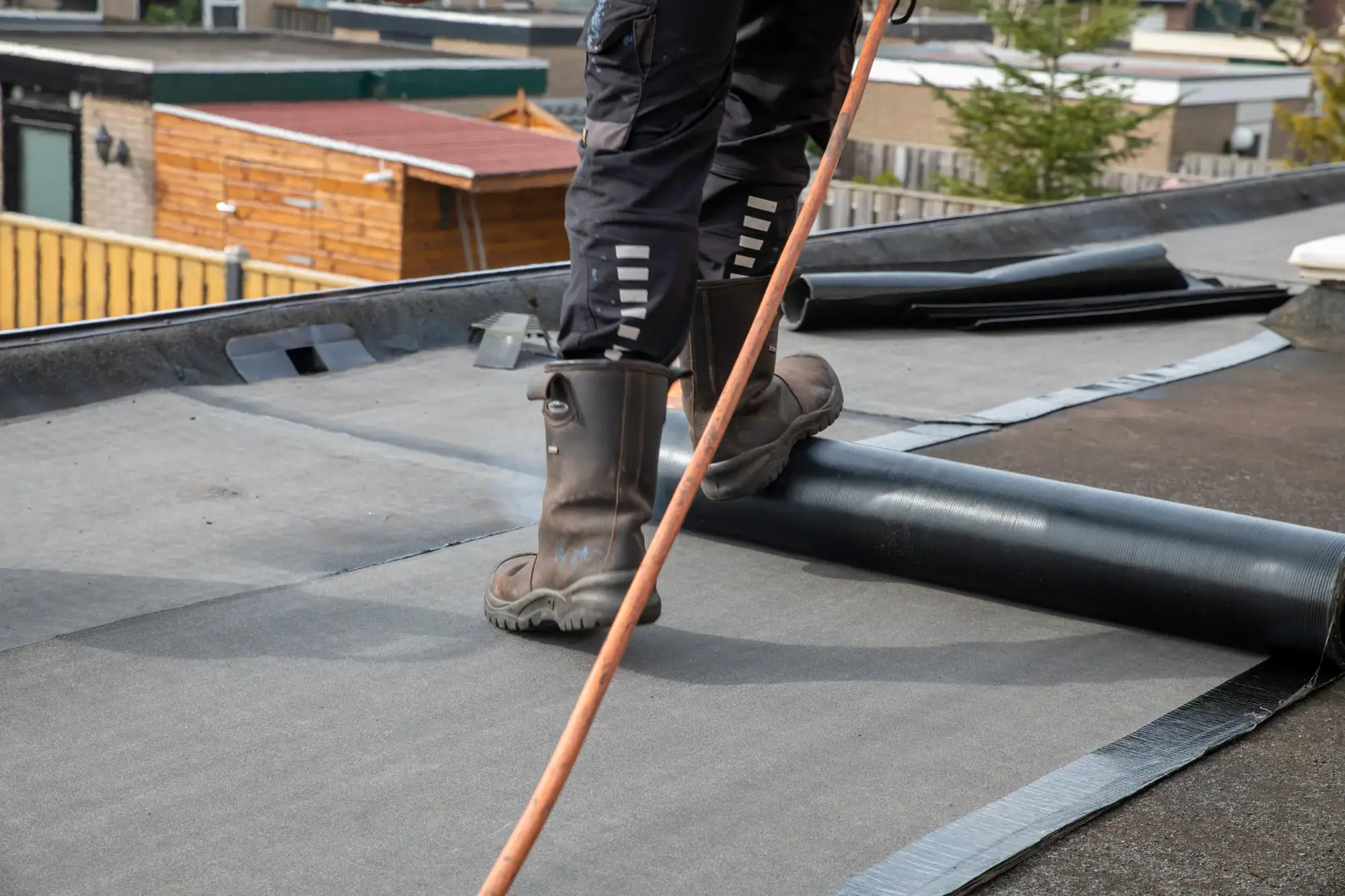
Most homes in Bicentennial Village were built between 1970 and 1999. That era of construction almost always included flat or low-slope sections — over attached garages, rear additions, enclosed porches. The original membrane systems on those sections are now anywhere from 25 to 50 years old. Modified bitumen and early EPDM rubber roofing material weren’t designed to last that long without attention, and by the time you see a water stain on your ceiling, the damage has usually been building for a while.
Getting ahead of it means you’re dealing with a membrane replacement, not a structural repair. A properly installed flat roof — whether that’s TPO, EPDM, or modified bitumen — can give you another 20 to 30 years depending on the system and how well it drains. That’s a meaningful return on a home that’s already gaining value. Bicentennial Village’s average sale price is up 7% year over year, and buyers notice deferred maintenance on flat sections during inspections.
Delaware gets around 45 inches of rain a year, and Bicentennial Village’s mature tree canopy — one of the things that makes the neighborhood genuinely attractive — also means leaves, seed pods, and debris collecting on flat surfaces all fall. When that material clogs a drain or scupper, water sits. Water that sits for more than 48 hours starts breaking down the membrane from the outside in. It’s one of the most common flat roof failure modes, and it’s almost entirely preventable with the right installation and basic annual attention.
We’re based in Smyrna and have been working across Kent County for over 22 years. Bicentennial Village sits right along Route 15 — the same Saulsbury Road corridor that connects Smyrna directly into west Dover. When you call, you’re not getting a crew dispatched from two counties away. You’re getting a local team that knows Dover’s permit process, works under the City of Dover’s Department of Planning and Inspections, and has been doing this long enough to have replaced roofs on homes that were brand new when we started.
Every project is managed by our own certified crew — no subcontracting, no handoffs to someone you’ve never met. We’re BBB accredited, carry a 5.0 out of 5 rating across 63-plus verified reviews, and the feedback you’ll consistently see is about communication, clean worksites, and showing up when we say we will. That matters in a neighborhood where people talk to their neighbors.
It starts with a free estimate. We come out, get on the roof, and give you an honest read on what’s actually going on — whether that’s a membrane that’s cracking at the seams, a drain that’s been backing up for years, or a section that’s holding water it shouldn’t be. You get a written scope and a clear explanation of your options before anything else happens.
If you move forward, we pull the required building permit through the City of Dover. Flat roof replacement in Bicentennial Village falls under the city’s permitting authority, not Kent County’s, so the paperwork goes through Dover’s Planning and Inspections office. This isn’t optional and it isn’t a formality — it protects you during the work and when you eventually sell. We handle all of it.
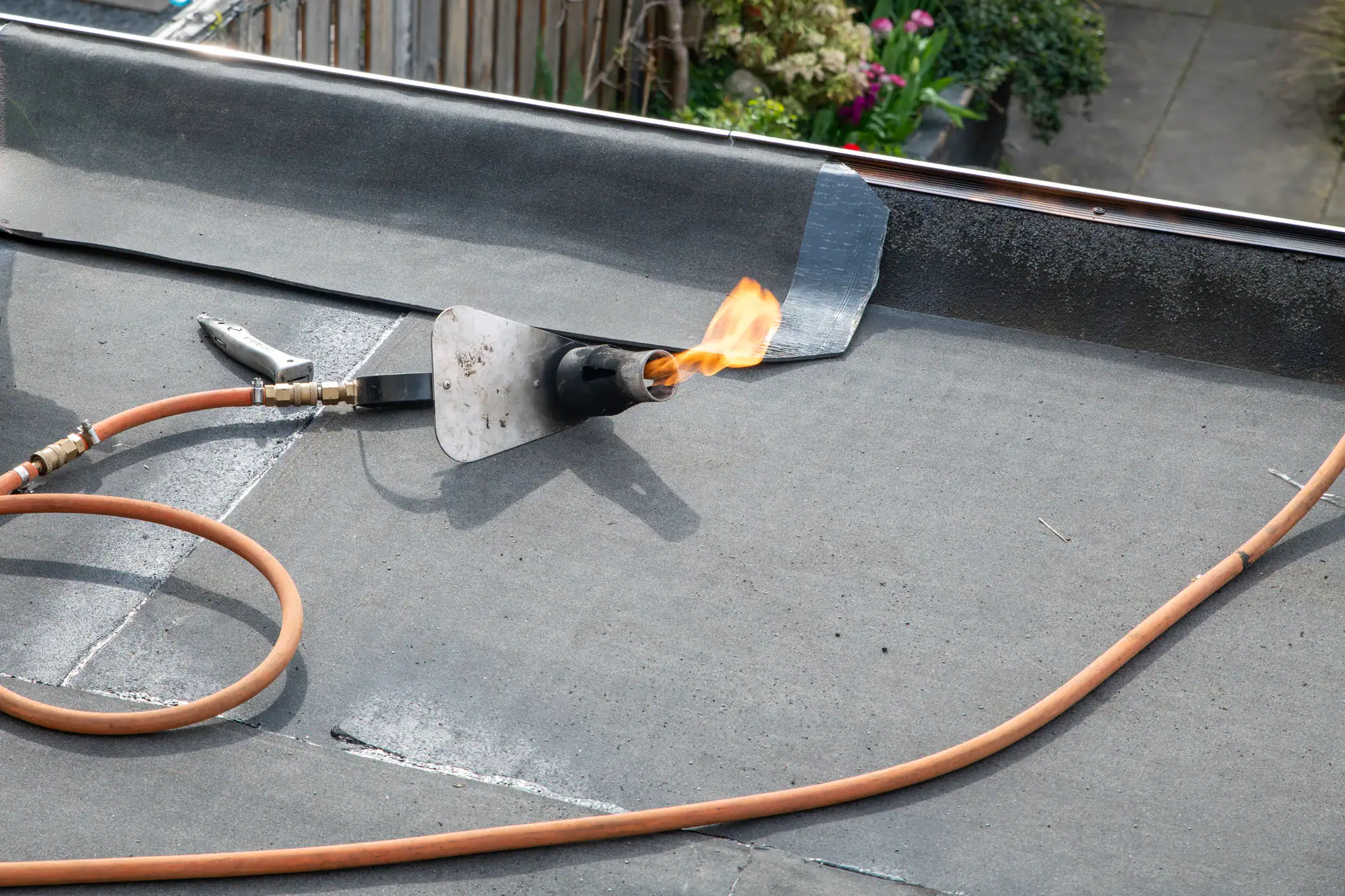
The installation itself starts with a full tear-off of the existing membrane so we can inspect the deck underneath. In homes from the 1970s and 80s, it’s not unusual to find soft spots or areas where moisture has been sitting in the substrate for years. We address those before anything goes back on. From there, insulation, membrane, flashing at every penetration and perimeter edge — done in sequence, done correctly. Fall is typically the best window for this work in Dover, before freeze-thaw cycles stress the new system, but we work year-round and handle emergency repairs when the timing isn’t yours to choose.

Ready to get started?
Not every flat roof material is the right fit for every building, and the choice matters more in central Delaware than it might in a drier climate. TPO roofing membrane reflects up to 84% of solar load, which translates to real cooling savings during Dover’s hot, humid summers — a legitimate benefit for a flat garage roof that absorbs heat all day. TPO is also heat-welded at the seams, which creates a stronger bond than adhesive-only systems and holds up better under the kind of rainfall Delaware sees regularly.
EPDM rubber roofing material has been the industry standard for decades for good reason. It’s flexible enough to handle freeze-thaw cycling without cracking, which matters during Dover winters, and it carries a proven track record of 20 to 30 years when installed correctly. For smaller residential flat sections — a garage addition, a rear porch roof — EPDM is often the right call based on cost, performance, and longevity.
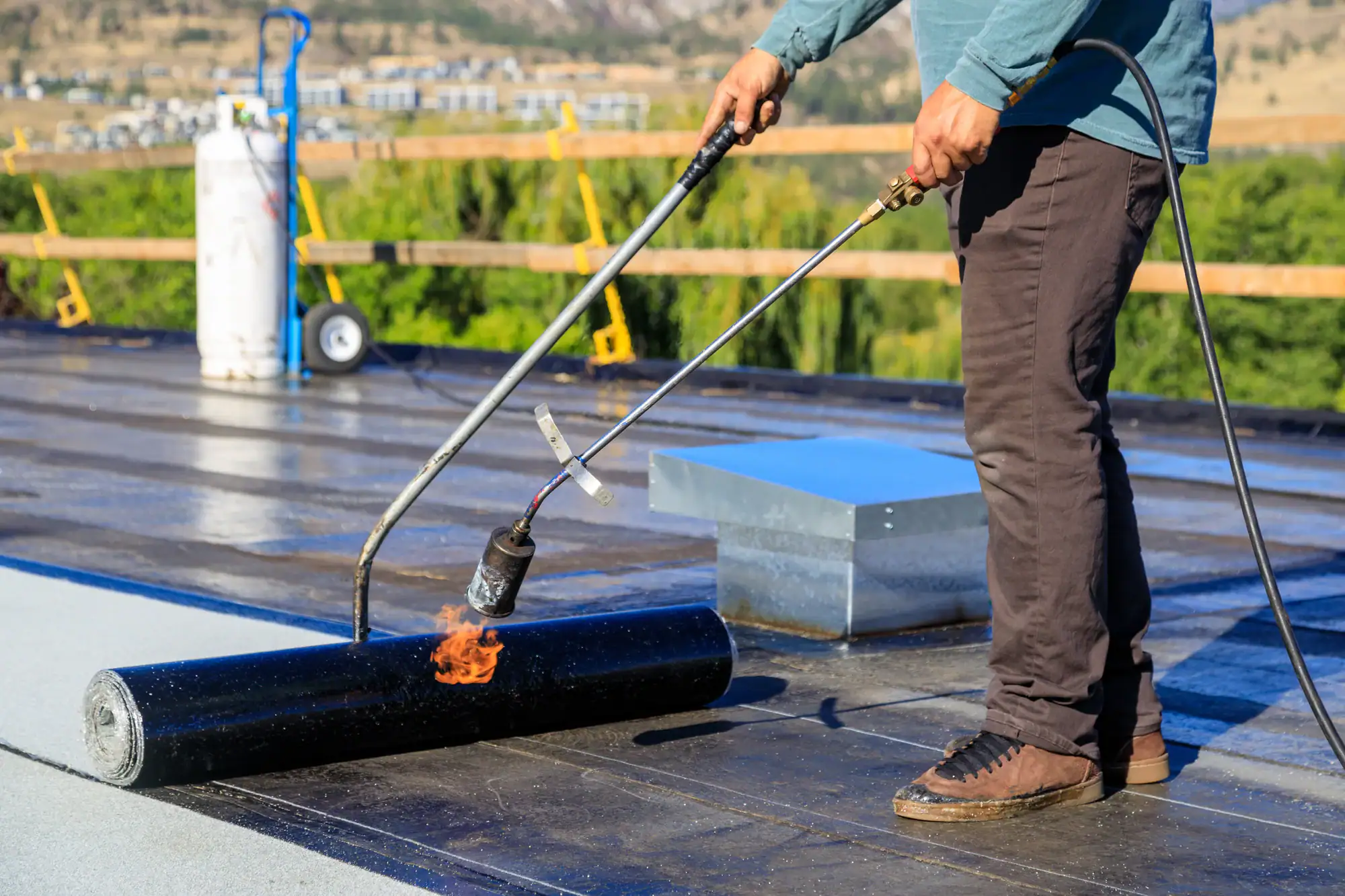
Modified bitumen, sometimes called torch down roofing, is what a lot of Bicentennial Village’s older flat sections were originally built with. It’s still a solid option for certain applications, particularly two-ply systems that give you a reinforced surface layer. PVC roofing membrane rounds out the options for situations where chemical resistance or specific drainage conditions are a factor. We walk you through what makes sense for your specific roof — its size, pitch, drainage setup, and what’s underneath — so you’re not guessing.
If your damage is storm-related, we also assist with insurance claims. We help you document what happened, work through the adjuster process, and make sure the scope reflects the actual condition of the roof rather than a lowballed patch estimate.

Yes, and the permit comes from the City of Dover — not Kent County. Because Bicentennial Village is within Dover’s incorporated city limits, roofing work falls under the jurisdiction of the City of Dover’s Department of Planning and Inspections rather than the county’s building office. This is a distinction that catches some homeowners off guard, especially if they’ve had work done in unincorporated parts of Kent County before.
The permit requirement exists to make sure the work is inspected and meets Delaware’s adopted building codes. For you as a homeowner, that inspection is actually a protection — it means the installation has been reviewed by a third party, and you have a record of permitted work on file. If you ever sell your home, buyers and their agents will ask about permits, and unpermitted roofing work can complicate or delay a closing. We handle the permit application as part of every replacement project in Bicentennial Village.
The honest answer is that you usually can’t tell from the ground, and even a ceiling water stain doesn’t tell you the full story. Flat roof leaks are tricky because water enters the membrane at one point and travels along the deck before showing up inside — sometimes several feet from where the actual breach is. A repair might fix the visible symptom without addressing the source.
The factors that typically push a flat roof toward replacement rather than repair are age, the extent of membrane degradation, and the condition of the deck underneath. For Bicentennial Village homes built in the 1970s through 1990s, a flat section that’s never been replaced is almost certainly past its designed service life. Modified bitumen systems from that era were built for 15 to 20 years. If the membrane is cracking, blistering, or pulling away from the flashing at the edges, patching it buys time but not much of it. A free estimate gives you a clear picture of what’s actually there so you can make the call based on real information rather than guesswork.
Yes, and the threshold the industry uses is 48 hours. If water is still sitting on your flat roof more than two days after a rain event, that’s ponding — and it’s a problem worth addressing. In Dover’s climate, where rainfall averages around 45 inches a year and heavy storms are common from spring through late summer, a flat roof that doesn’t drain properly is under stress almost constantly during wet seasons.
Ponding water accelerates membrane breakdown, adds structural load to the deck, promotes mold and algae growth, and can void manufacturer warranties on newer membrane systems. For homes in Bicentennial Village with mature trees overhead, the risk compounds because leaf debris clogs drains and scuppers, turning what should be a minor drainage delay into standing water after every significant rain. The fix isn’t always a full replacement — sometimes it’s a drain cleaning, a minor slope correction, or a scupper repair. But it needs to be looked at, because ignoring it shortens whatever life is left in the membrane significantly.
These are the three most common flat roof membrane systems for residential and light commercial applications, and they each have a different performance profile. TPO is a single-ply membrane that’s heat-welded at the seams, which makes it very watertight and resistant to puncture. It reflects a high percentage of solar heat, which is a practical benefit for flat roofs in Dover’s humid summers. It typically lasts 15 to 25 years.
EPDM is a rubber roofing material that’s been widely used for decades — there’s more than 20 billion square feet of it installed worldwide, which tells you something about how proven it is. It handles temperature swings and freeze-thaw cycling well, which is relevant in a Mid-Atlantic climate like Delaware’s. Lifespan runs 20 to 30 years with proper maintenance. Modified bitumen, often called torch down roofing, is an asphalt-based system that’s applied in layers and is common on older homes — including many of the flat sections on Bicentennial Village’s 1970s and 80s housing stock. It’s durable and cost-effective, particularly in two-ply applications, and typically lasts 15 to 20 years. The right choice depends on your specific roof, your budget, and what’s already there.
Yes, and it’s one of the more valuable parts of what we do for homeowners dealing with storm damage. The insurance claims process for roofing is genuinely confusing — adjusters are working from a scope that may not reflect the full extent of what happened, and without someone who knows what to look for, homeowners often end up with a settlement that covers a patch when they actually need a replacement.
We assist with documentation, help you understand what your policy covers, and work through the adjuster process alongside you. For Bicentennial Village homeowners, this is particularly relevant after the kind of severe thunderstorm and hail events that move through Kent County in spring and summer. If your flat roof took a hit during a storm and you’re not sure whether to file a claim or handle it out of pocket, the first step is getting a proper inspection so you know what you’re actually dealing with. We offer free estimates and can give you an honest read on the damage before you make any decisions about the claims process.
Proximity to Dover Air Force Base means Bicentennial Village has a higher-than-average rate of homeowner turnover compared to neighborhoods without a military presence. Families on PCS cycles often sell quickly, and buyers moving into the area are sometimes inheriting homes where maintenance on less visible systems — like a flat section over a garage — was deferred during the previous owner’s final year or two. If you’ve recently bought in Bicentennial Village and your home inspection flagged the flat roof as “aging but functional,” that’s worth following up on sooner rather than later.
For military families new to the Dover area, finding a contractor you can actually trust is harder when you don’t have years of local word-of-mouth to draw from. We’re BBB accredited, carry a 5.0 rating from 63-plus verified reviews, and have been operating in Kent County for over 22 years. We don’t subcontract — the crew you meet is the crew that does the work. Free estimates mean there’s no cost to getting a straight answer about what your roof actually needs before you commit to anything.
Other Services we provide in Bicentennial Village