
Hear from Our Customers
The most immediate thing a properly installed flat roof gives you is simple: it stops being something you worry about. No water stains showing up on your ceiling after a spring storm. No standing puddles sitting on the membrane for days after a nor’easter rolls through Kent County. You stop watching the weather forecast and wondering whether tonight is the night something gives.
For Anneville homeowners, that peace of mind matters more than most people realize. A lot of properties out here have older flat-roofed structures — detached garages, rear additions, covered storage — that were built with modified bitumen or built-up systems that are quietly running out of time. Delaware gets around 45 inches of rain per year, and the Duck Creek drainage basin that runs through this part of northern Kent County manages a significant volume of that water every season. A flat roof that isn’t draining properly isn’t just inconvenient — it’s accelerating its own failure with every rain event.
When the membrane is right, the drainage is designed correctly, and the flashings are sealed the way they should be, you get a roof that handles freeze-thaw winters and humid summers without drama. That’s the outcome. Not a sales pitch — just a roof that does its job for the next 20-plus years.
We’re headquartered in Smyrna — the nearest town to Anneville and the community that most Anneville residents rely on for services, schools, and everything in between. When you call for a flat roof inspection or repair, you’re not getting a contractor who needs to look up where Duck Creek Hundred is. You’re getting a team that has worked on properties throughout northern Kent County for over two decades.
That local history matters in a real way. The rural residential and agricultural property stock around Anneville — older homes, detached garages, workshop buildings, residential additions — is exactly what we’ve been working on since before most of the new subdivisions going up around Smyrna existed. We know what modified bitumen looks like when it’s been sitting on a garage roof for 18 years in a Delaware winter. We know what poor drainage does to a flat roof over time in this specific landscape.
We’re BBB Accredited, carry a 5.0 out of 5 rating across 63-plus verified reviews, and have never outsourced a job to a subcontractor. The crew you speak with is the crew that shows up.
It starts with a free estimate. Someone from our team comes out to your property in Anneville, takes a real look at the flat or low-slope surface in question — whether that’s the main house, a garage, an addition, or an outbuilding — and gives you an honest assessment of what’s going on and what your options are. No pressure, no vague verbal quotes. You get a clear, written scope of work so you understand exactly what’s being done and why.
If you decide to move forward, the process begins with a full tear-off of the existing membrane down to the deck. This step matters more than most homeowners realize. In a place like Anneville, where some of these structures have been sitting through decades of Kent County winters and wet springs, deck inspection is non-negotiable. If there’s rot, deflection, or water damage in the substrate, we address it before a single inch of new membrane goes down. Skipping that step is how a new roof fails in year three.
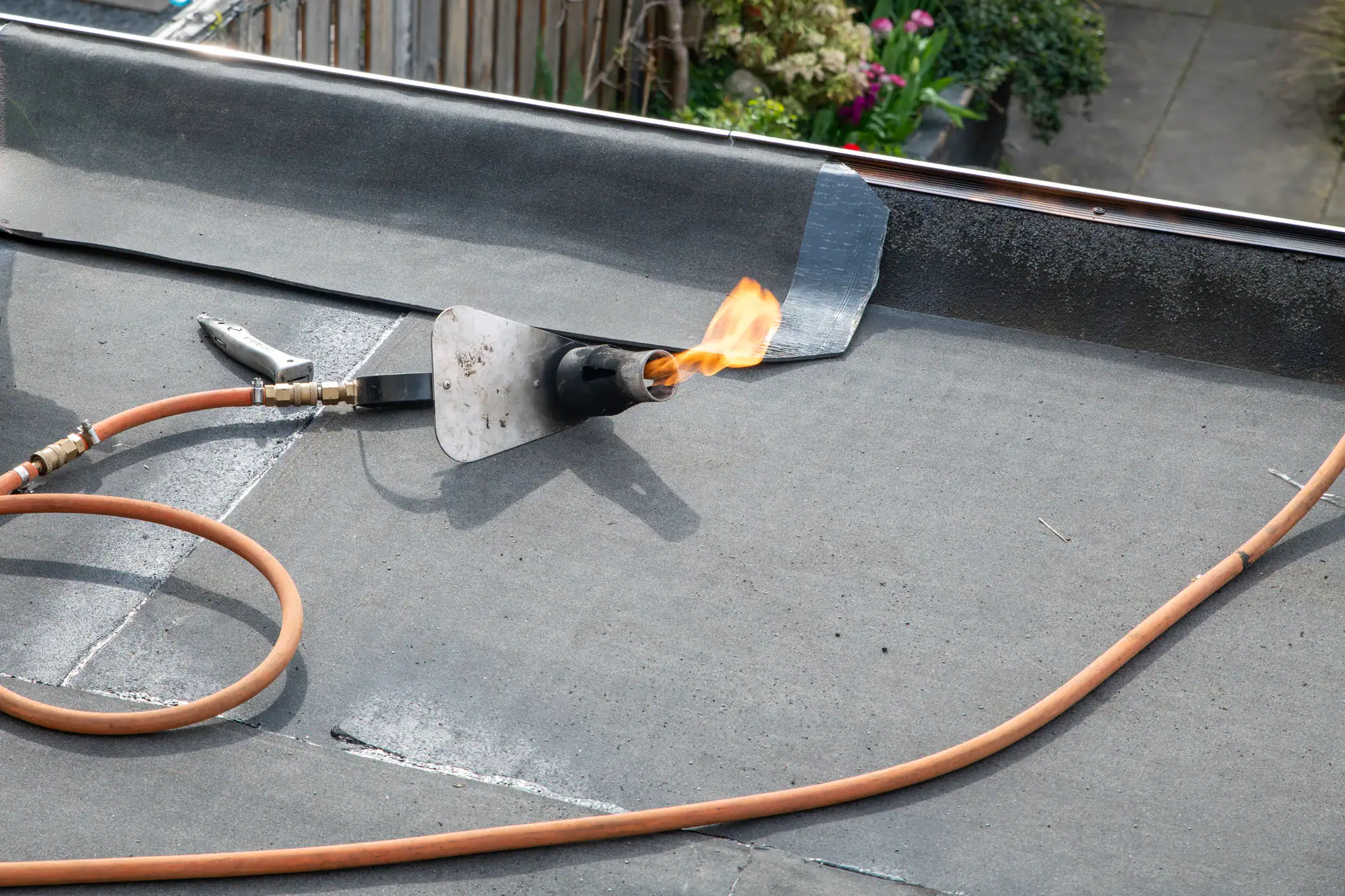
Once the deck is confirmed solid, the right insulation layer goes in, the membrane is installed — TPO, EPDM, modified bitumen, or PVC depending on what fits the structure and the budget — and every penetration, edge, and flashing point gets sealed correctly. Because Anneville falls under Kent County jurisdiction rather than a municipal building department, permit requirements are handled through the county. We manage that process so you’re not navigating county paperwork on your own.

Ready to get started?
Not every flat roof is the same, and not every property in Anneville needs the same solution. A detached garage that’s been covered in torch-down modified bitumen for 20 years has different needs than a low-slope residential addition or a commercial-adjacent outbuilding near the US Route 13 corridor. We work with the full range of flat roof systems — TPO membrane, EPDM rubber roofing, modified bitumen, and PVC — and the recommendation you get is based on your specific structure, not on what’s fastest to install.
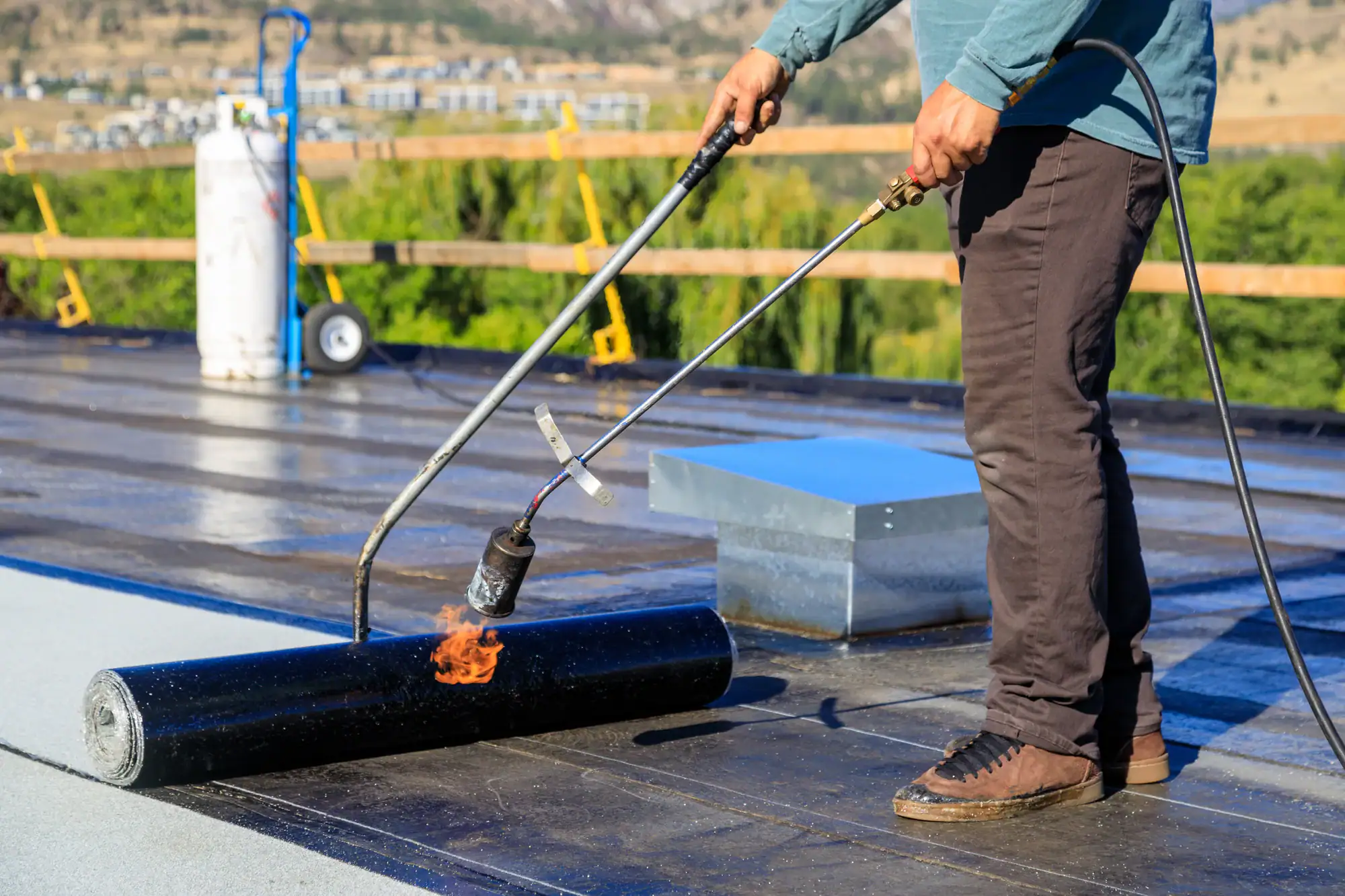
TPO is worth a closer look for any property owner thinking about long-term energy costs. It reflects up to 84 percent of solar load, which translates to real HVAC savings during Delaware’s humid summers. For commercial structures or larger residential flat surfaces, that reflectivity adds up over time. EPDM rubber roofing, on the other hand, brings exceptional flexibility through freeze-thaw cycling — which matters significantly in a northern Kent County winter when temperatures swing repeatedly across the freezing point from November through March. For older structures with modified bitumen already in place, a torch-down replacement or upgrade is often the most practical path forward.
Beyond material selection, every job includes drainage assessment. Ponding water — water that sits on a flat roof for more than 48 hours — is one of the most common and most underestimated problems in this area. In the Duck Creek drainage basin, where the landscape itself is managing high water volume through spring and fall, a flat roof that holds water instead of shedding it is a roof that’s aging faster than it should. We design drainage into every installation, not as an afterthought.

The honest answer is that you usually can’t tell just by looking at it from the ground — and even a close visual inspection from the roof surface doesn’t always reveal what’s happening underneath. The membrane might look intact while water has been working its way into the deck for months. This is especially common on older properties in the Anneville area, where detached garages and residential additions were built with modified bitumen or built-up roofing systems that are now 15 to 25 years old.
A proper inspection looks at the membrane surface for cracking, blistering, and seam separation, but it also checks for soft spots in the deck that indicate water infiltration, drainage performance, and the condition of flashings at every edge and penetration. If the membrane has localized damage and the deck underneath is structurally sound, repair is often the right call. If there’s widespread surface deterioration, multiple leak points, or deck damage, replacement is the more cost-effective path — because patching a failing system just delays the inevitable and often costs more in the end. A free estimate from us gives you a clear picture of which situation you’re actually in.
Delaware’s climate puts specific demands on flat roof membranes that generic material comparisons don’t always capture. You’re dealing with roughly 45 inches of annual rainfall, high summer humidity, and a freeze-thaw cycle that runs from late fall through early spring — all of which stress membrane seams, flashings, and drainage systems in different ways.
EPDM rubber roofing performs exceptionally well in Kent County’s freeze-thaw winters because of its inherent flexibility. When temperatures swing back and forth across the freezing point, rigid materials crack and seam adhesion fails — EPDM handles that movement better than most alternatives. TPO membrane is the stronger choice for energy efficiency, particularly on larger flat surfaces where solar heat gain during Delaware’s humid summers drives up cooling costs. Modified bitumen is a proven system for residential applications, especially on existing structures where a torch-down replacement matches what’s already there. The right choice depends on your specific structure, its age, its drainage situation, and your budget — which is exactly what a proper inspection and estimate is designed to figure out.
This is one of the most common questions flat roof owners ask, and the answer matters. Some water on a flat roof immediately after a rain event is normal — flat roofs aren’t truly flat, they’re designed with a slight slope to direct water toward drains or scuppers. What’s not normal is water that’s still sitting there 48 hours later. That’s the industry-standard threshold for ponding water, and it’s a problem worth taking seriously.
In the Anneville area, this issue is compounded by the drainage landscape of the Duck Creek basin. When the ground is already saturated from a nor’easter or a prolonged spring rain, a flat roof that isn’t draining efficiently has nowhere to push water quickly. Ponding water accelerates membrane degradation, promotes algae and mold growth on the surface, adds structural load to the deck over time, and in some cases voids manufacturer material warranties. If you’re seeing water sit on your roof for more than two days after a rain, the issue is almost always either inadequate slope, a clogged drain or scupper, or a section of the deck that has deflected over time. All three are fixable — but they need to be addressed, not ignored.
Yes, roofing replacement work in Anneville typically requires a building permit. Because Anneville is an unincorporated community, there’s no municipal building department — permit applications go through Kent County rather than a town or city office. This is different from what you’d deal with in an incorporated municipality like Smyrna or Cheswold, where local town government handles permitting.
The practical implication is that the permit process runs through Kent County’s building and code enforcement office, and the requirements and inspection steps reflect county-level standards rather than any local overlay. We handle permit coordination as part of the job — you don’t need to navigate county paperwork on your own. It’s worth noting that Delaware does not have a statewide roofing-specific contractor license, but contractors working on larger projects are required to be registered with the Delaware Division of Revenue and carry appropriate business licensing. We’re fully licensed and insured, which matters both for your protection and for the permit process itself.
The honest range depends heavily on the material, the quality of the original installation, and how well drainage has been maintained over the years. As a general benchmark, EPDM rubber roofing lasts 20 to 30 years with proper maintenance. TPO membrane typically runs 15 to 25 years. Modified bitumen systems, which are common on older garages and additions throughout northern Kent County, generally have a service life of 15 to 20 years — though poorly installed or poorly drained systems can fail significantly earlier.
For properties in the Anneville area, the bigger variable is often how the roof has handled Delaware’s wet seasons over time. A flat-roofed detached garage that has had a clogged drain or inadequate slope for several years has likely experienced accelerated membrane degradation regardless of what material it’s made from. If you’re not sure how old your flat roof is or what material is on it, that’s exactly the kind of thing a free inspection clarifies. We can tell you what you have, how much useful life is left, and whether repair or replacement makes more financial sense at this point.
Yes, and this is an area where having the right contractor makes a significant difference. Kent County sees its share of significant weather events — spring thunderstorms, nor’easters, and the occasional tropical storm remnant that brings sustained heavy rainfall. When a storm damages a flat roof, the insurance claim process can be confusing, especially if the damage isn’t immediately obvious from the surface.
We help Anneville homeowners and property owners document storm damage properly, communicate with adjusters, and scope the repair or replacement correctly so the claim reflects the actual scope of work needed — not a lowballed patch estimate that leaves underlying damage unaddressed. This matters because flat roof storm damage often involves more than the membrane surface. Wind-driven rain can compromise flashings, penetrations, and edge details in ways that a quick visual inspection misses. Having a contractor who understands how to document and communicate that damage to an insurance adjuster means you’re more likely to receive fair compensation for the full scope of what needs to be repaired. The process starts with a free estimate and a thorough inspection — from there, we walk you through what we found and what the claim should cover.
Other Services we provide in Anneville