Why Finding the Right Felt Roofer Near Me Matters
When searching for a felt roofer near me, homeowners need a clear, trustworthy guide to steer their options and select a true professional. This handbook delivers everything you need to know about felt roofing—from materials and installation to maintenance and warranties—so you can hire with confidence. As Delaware’s trusted roofing experts, First State Roofing & Exteriors is dedicated to helping you protect your home with a durable, expertly installed roof. For more information on our full range of solutions, visit our roofing services page.
Quick Answer: How to Find a Qualified Felt Roofer
- Verify licensing and insurance – Confirm your contractor is licensed to work in Delaware and carries current liability coverage.
- Check local references and reviews – Look for a track record of successful felt roofing projects in your area.
- Ask about experience with felt systems – Not all roofers specialize in torch-on, modified bitumen, or built-up roofing (BUR).
- Request a detailed written estimate – A transparent quote should break down materials, labor, timeline, and warranty terms.
- Confirm warranty coverage – Understand both manufacturer material warranties and the contractor’s workmanship guarantee.
For homeowners across Delaware, choosing the right roofing partner is critical—especially when dealing with aging structures, storm damage, or the need for long-term energy efficiency. At First State Roofing & Exteriors, we specialize in durable, code-compliant roofing solutions custom to Delaware’s unique climate.
I’m Richard McCain, owner of First State Roofing & Exteriors with over 20 years of hands-on experience in residential and commercial roofing across Delaware. Throughout my career, I’ve helped countless homeowners find the right felt roofer near me by providing transparent guidance, quality craftsmanship, and personalized service from initial inspection through final installation.
Ready to protect your home with a professionally installed felt roof? Call us today at (302) 222-4065 to schedule your free inspection and estimate.
Understanding Felt Roofing: Materials, Pros, and Cons
This section defines felt roofing, explores the different materials available, and compares it to modern alternatives to help you make an informed decision for your home.
What Exactly is Felt Roofing?
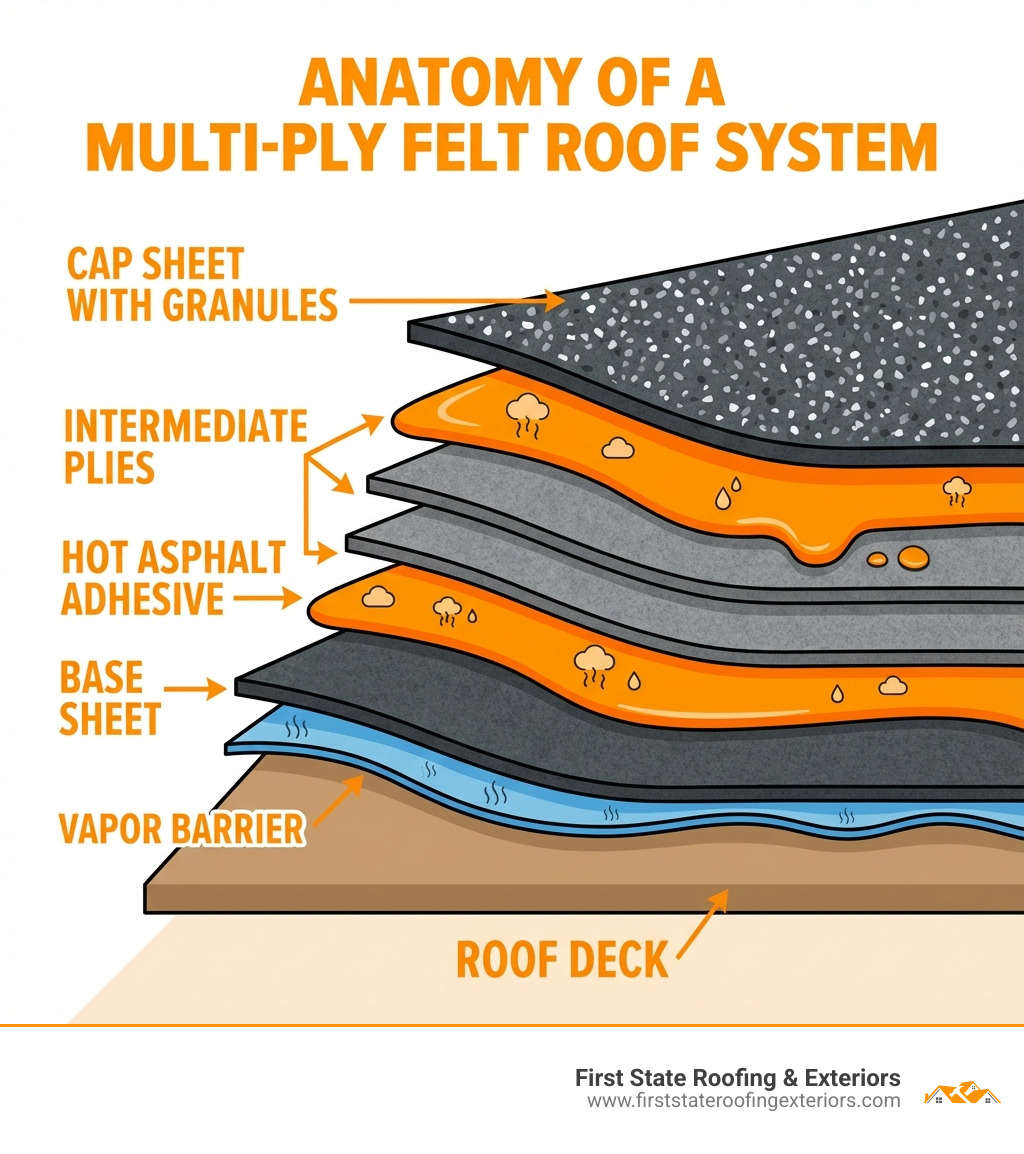
Felt roofing is an asphalt-based material commonly used for roll roofing and built-up roofing (BUR) systems. It is ideal for low-slope applications such as garages, porches, and residential flat roofs. These systems are designed to create a continuous, waterproof barrier over your roof deck. While often associated with older, “tar and gravel” roofs, modern felt roofing has evolved considerably, offering improved durability and performance. It’s a testament to its foundational strength that felt remains a component in many contemporary flat roofing solutions. Learn more about membrane roofing systems.
Types of Felt Roofing Materials
When we talk about felt roofing, we’re often referring to a category of asphalt-based flat roofing systems. Here are the primary types you’ll encounter:
- Traditional Tar & Gravel (Built-Up Roofing – BUR): This is one of the oldest and most rugged flat roofing systems. A BUR system typically consists of multiple layers of #15 asphalt felt paper adhered with hot bitumen (asphalt), topped with a final layer of hot asphalt and embedded crushed stone (gravel) for UV protection. Older versions, made with coal tar, were known to last up to 30 years and even had some self-healing properties. Modern BUR, using asphalt from crude oil, typically lasts about 12-15 years.
- Modified Bitumen Membrane (MBM): Developed in 1908, MBM is a common type of flat roofing application. It’s made from asphalt modified with synthetic rubber (like SBS – Styrene-Butadiene-Styrene) or plastic (like APP – Atactic Polypropylene). This modification makes the membrane very flexible, even in cold temperatures, and highly resistant to cracking. MBM is often available with a granular surface to protect against UV degradation. It offers excellent reliability and longevity, often having double the life expectancy and higher manufacturer warranties than many other flat roofing products. MBM can be applied using hot asphalt, torch-on methods (SBS), or self-adhesive systems.
- Roll Roofing: This is an asphalt-based material available in large rolls, making it a cost-effective option for low-slope roofs on structures like garages and sheds. Its quick installation process makes it practical for budget-conscious projects. Roll roofing typically lasts 10 to 20 years, depending on material quality, installation, and maintenance.
For a deeper dive into available roofing types, see our roofing types overview.
Felt Roofing vs. Modern Alternatives (EPDM, TPO, PVC)
While felt roofing (especially modified bitumen) offers proven performance, understand how it compares to newer single-ply membrane systems like EPDM, TPO, and PVC, which are also popular in Dover and Smyrna, DE.
| Feature | Felt Roofing (Modified Bitumen/BUR) | EPDM (Rubber) | TPO (Thermoplastic Polyolefin) | PVC (Polyvinyl Chloride) |
|---|---|---|---|---|
| Average Lifespan | 12-30 years (BUR 12-15, MBM 20-30+) | 10-20 years | 15-20 years | 15-30 years |
| Durability | Very rugged, resistant to punctures (especially BUR with gravel) | Durable, good hail resistance, but can be susceptible to punctures | Good puncture and tear resistance, flexible | Excellent puncture, tear, and chemical resistance |
| Installation | Multi-layer, hot asphalt/torch-on (MBM), labor-intensive (BUR) | Single-ply, adhered, mechanically fastened, or ballasted | Single-ply, heat-welded seams | Single-ply, heat-welded seams |
| Cost | Moderate to High (depending on layers and type) | Moderate | Moderate to High | High |
| Maintenance | Requires regular inspection, can be repaired | Low maintenance, easy to repair | Low maintenance, easy to repair | Low maintenance, easy to repair |
| Energy Efficiency | Dark surfaces absorb heat; lighter granules/coatings improve efficiency | Dark surfaces absorb heat; white EPDM available | Often white, highly reflective, reduces cooling costs | Often white, highly reflective, reduces cooling costs (up to 80%) |
EPDM is a synthetic rubber roofing membrane (ethylene propylene diene terpolymer) widely used for low-slope buildings. It’s known for its durability and relatively simple installation. TPO is a single-ply roofing material that is a popular choice for “Green” roofs as it does not degrade under UV radiation and is often white and highly reflective. PVC single-ply roofing membranes are also popular commercial roofing products, offering excellent solar reflectivity to help regulate building temperature and energy use. While PVC and EPDM are often preferred for very large roofs due to their ease and speed of installation in large sheets, they can be easily damaged or cut by workers on the roof. In our opinion, if choosing PVC or EPDM on flat roofs, we prefer it be in a protected (inverted) system as the PVC and the EPDM are not very rugged membranes.
How to Find a Qualified Felt Roofer Near Me
Finding the right contractor is the most critical step. This section outlines how to locate and vet a trustworthy local expert for your project.
Steps to Finding a Reliable Local Roofer
Finding a qualified felt roofer near me in Dover or Smyrna, DE, doesn’t have to be a guessing game. We recommend a systematic approach to ensure you’re hiring the best for your home:
- Start with Online Search Strategies: A simple search for “felt roofer Dover DE” or “flat roof repair Smyrna DE” will generate a list of local companies. Pay attention to those with strong local presence and positive reviews.
- Check Local Directories and Review Sites: Websites like HomeStars, N49, and Roofing.ca (though these are Canadian-focused, the principle applies to local Delaware directories like the BBB, Google Reviews, and Yelp) are excellent resources. Look for contractors with a high average rating and a good number of detailed reviews. We’re a BBB accredited business with an A+ rating since 2000, and our work often comes from referrals from satisfied customers.
- Seek Word-of-Mouth Referrals: Ask neighbors, friends, and family in Dover and Smyrna who have recently had felt roofing work done. Personal recommendations are invaluable.
- Verify Licenses and Insurance: This is non-negotiable. Any reputable roofing contractor in Delaware must be licensed, bonded, and insured. This protects you from liability in case of accidents or property damage during the project.
- Review Portfolios and Case Studies: Ask to see examples of their felt roofing work, especially on properties similar to yours in the local area. This demonstrates their experience and quality of craftsmanship.
Vetting Your Potential Felt Roofer: Key Questions to Ask
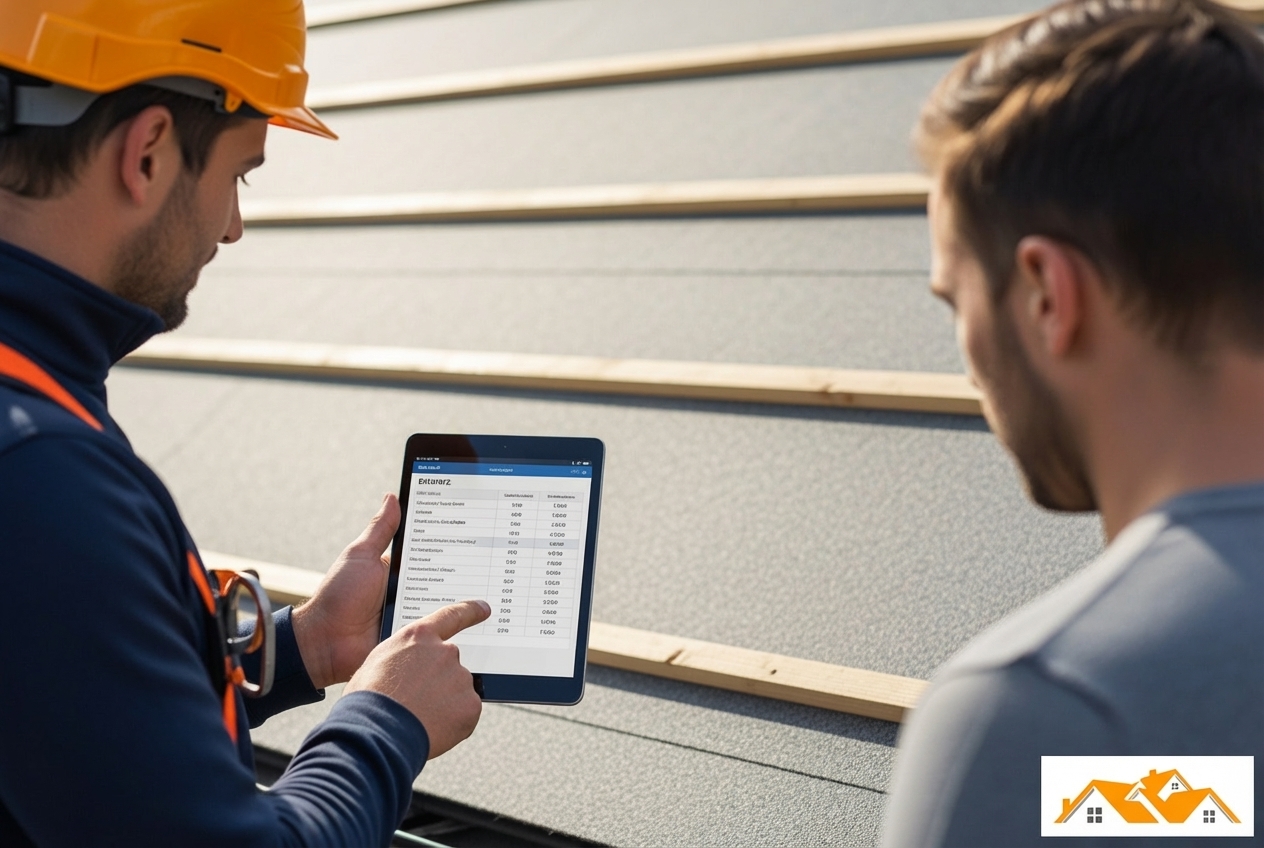
Once you have a shortlist of potential roofers, it’s time to ask the right questions. This helps us ensure you hire a contractor who is transparent, experienced, and a good fit for your project:
- Are you licensed and insured in Delaware? We are fully licensed, bonded, and insured, providing peace of mind for our clients.
- Do you have experience with my specific type of felt roof (e.g., Modified Bitumen, BUR)? Specialized flat roofing requires specific expertise. We have over 20 years of experience installing all different roof structures, including flat roofs, across Delaware.
- Can you provide a portfolio of local work in Dover or Smyrna? Seeing local projects helps us gauge their quality and relevance to our climate.
- Who will be on-site during the project? Will it be a dedicated crew, and will a project manager be present? We ensure dedicated, professional crews for every job.
- What is your process for site protection and cleanup? We believe in meticulous site management, ensuring your property is protected and left spotless.
- What is your safety plan for the job site? Safety is paramount, especially on flat roofs. We adhere to all OSHA safety regulations, and our roofers always use proper safety harnesses.
- What is your estimated timeline for the project? This helps us plan and minimize disruption.
- How do you handle unexpected issues or changes during the project? Transparency in communication is key.
- Can you provide references from recent clients? A good roofer will happily connect you with satisfied customers.
For more tips, see our guide on hiring a roofer.
Red Flags to Watch Out For When Hiring a Felt Roofer Near Me
While we always hope for the best, it’s wise to be aware of potential pitfalls when searching for a felt roofer near me. Here are some red flags that should make you pause:
- High-Pressure Sales Tactics: If a roofer pushes you to sign a contract immediately or offers steep “today-only” discounts, it’s a sign to step back. Quality work doesn’t require high-pressure sales.
- Vague Contracts or Estimates: A reputable contractor will provide a detailed, written estimate outlining all costs, materials, timelines, and warranty information. Avoid anyone who provides only a verbal quote or a handwritten scribble.
- Unusually Low Bids: While everyone loves a deal, a bid significantly lower than others often indicates cut corners, substandard materials, or a lack of proper insurance. Typical roofing repairs cost between $380 and $1,800 on average, with most homeowners spending approximately $1,100. Be wary if a quote is drastically below this range for a significant job.
- Demands for Large Cash Deposits Upfront: While a deposit is standard, be cautious if a contractor demands a very large percentage (e.g., more than 50%) of the total cost upfront, especially in cash.
- Lack of a Physical Business Address or Local Presence: A legitimate local business will have a verifiable address and a strong presence in the community. Be wary of transient contractors, especially after storms.
- No Proof of Insurance or Licensing: As mentioned, this is critical. If a roofer can’t or won’t provide current documentation for liability insurance and worker’s compensation, look elsewhere.
- Offers to Use Your Insurance Deductible as Payment: This is illegal and unethical. A reputable contractor will work with your insurance company but will not engage in fraudulent practices.
Decoding the Costs and Warranties of Felt Roofing
Understanding the financial aspects of your roofing project, from initial cost factors to long-term warranty protection, is essential for a successful outcome.
Factors Influencing Felt Roof Installation and Repair Costs
The cost of installing or repairing a felt roof in Delaware can vary significantly. Several factors play a role in determining the final price:
- Roof Size and Complexity: Larger roofs naturally require more materials and labor. Complex roof designs with multiple protrusions (skylights, vents, HVAC units) or unusual shapes will increase installation time and cost.
- Material Type and Quality: As we’ve discussed, there are different types of felt roofing materials, from traditional BUR to modified bitumen. Higher quality membranes with longer lifespans and better performance will typically cost more. Roll roofing is generally more affordable than asphalt shingles or metal roofing.
- Extent of Existing Damage: If your old roof has extensive water damage, rot in the decking, or structural issues, these will need to be addressed before a new roof can be installed, adding to the overall cost. For example, repairing a sagging roof can range from $1,500 to $7,000.
- Labor Rates in Your Area: Labor costs can fluctuate based on local demand and the specialized skills required for flat roofing.
- Roof Accessibility: If the roof is difficult to access (e.g., very high, limited space for equipment), it can increase labor hours and specialized equipment needs.
- Tear-Off vs. Overlay: A complete tear-off of the old roof, while more expensive initially, is often the best practice. It allows for a thorough inspection of the roof deck and avoids adding excessive weight. However, in some cases, an overlay (installing a new roof over the existing one) might be possible, potentially saving money on disposal costs. If the existing roof is saturated, a tear-off is essential.
- Repairs vs. Full Replacement: Typical roofing repairs cost between $380 and $1,800 on average, with most homeowners spending approximately $1,100. Repairing damaged gutters, which often go hand-in-hand with roof issues, costs around $180 to $560. A full roof replacement will be a much larger investment.
Roof installations can start at $15.00/sqft for flat roofs. For more details, see our roof installation cost guide.
Understanding Felt Roofing Warranties
A good warranty is your peace of mind. When investing in a felt roof, you’ll typically encounter two main types of warranties:
- Manufacturer Warranties: These cover the materials themselves. For modified bitumen membranes, manufacturer warranties can be quite comprehensive, often ranging from 15 to 30 years. Roll roofing products may have warranties from 10 to 20 years. Traditional BUR systems, however, often have no manufacturer warranty on the system as a whole, only on individual component products. It’s crucial to understand what defects are covered (e.g., material failure, manufacturing flaws) and what is excluded (e.g., acts of nature, improper installation).
- Workmanship Warranties: Provided by your roofing contractor, this warranty covers the quality of the installation. A reputable felt roofer near me like First State Roofing & Exteriors will stand behind our work, offering a warranty that typically ranges from 5 to 10 years or more. This ensures that if any issues arise due to faulty installation, the contractor will rectify them.

Key things to clarify regarding warranties:
- Duration: How long does each warranty last?
- Coverage: What specific issues are covered by each?
- Exclusions: What actions or events could void your warranty (e.g., unauthorized repairs, lack of maintenance)?
- Transferability: Is the warranty transferable to a new homeowner if you sell your property?
- Who to Contact: In case of a problem, do you contact the manufacturer or the contractor first?
We provide full warranties and manufacturer guarantees, including lifetime labor and material warranties on many of the systems we install, thanks to our factory certifications with leading manufacturers. This commitment reflects our dedication to quality craftsmanship that stands the test of time.
Felt Roof Lifespan, Maintenance, and Common Issues
A felt roof’s longevity depends heavily on proper installation and regular care. Learn how to identify problems early and what maintenance is required.
The Typical Lifespan of a Felt Roof
The lifespan of a felt roof can vary significantly based on the type of material, the quality of installation, and how well it’s maintained.
- Asphalt-based Modified Bitumen roofs: Typically last 12-15 years, though some high-quality systems can extend to 20-30 years.
- Older coal tar versions of BUR: Could last up to 30 years due to their self-healing properties.
- Roll roofing: Generally lasts between 10 to 20 years.
In Delaware, our climate—with its hot, humid summers and freezing winter temperatures—can be particularly challenging for roofing materials. UV radiation from the summer sun can degrade asphalt-based materials, while the freeze-thaw cycles of winter can cause expansion and contraction, leading to cracks and splits. Proper installation by an experienced felt roofer near me is crucial to maximize lifespan in these conditions.
Regular maintenance, including periodic inspections to identify and repair any damage, and keeping the roof clean and free of debris, is essential. These practices help maintain the roof’s integrity and prolong its lifespan, often making the difference between a 12-year roof and a 20-year roof.
Telltale Signs Your Felt Roof Needs Attention
Your felt roof is constantly exposed to the elements, and over time, even the most robust systems will show signs of wear. Catching these signs early can save you significant repair costs down the line. Here’s what to look for:
- Ponding or Standing Water: This is one of the most common issues with flat roofs. Water that remains on the roof for more than 48 hours indicates poor drainage and can lead to accelerated degradation of the membrane, de-granulation, and eventually leaks. Ponding can also attract dirt, leaves, and even become a breeding ground for mosquitoes.
- Cracks, Blisters, or Splits in the Felt: These are direct indicators of material fatigue, often caused by UV exposure, temperature fluctuations, or aging. Cracks and splits compromise the waterproof barrier, while blisters (bubbles) can lead to splits if left unaddressed.
- Torn or Loose Seams: The seams where rolls of felt or modified bitumen are joined are critical points. If they become torn or loose, water can easily penetrate.
- Water Stains on Interior Ceilings or Walls: This is the most obvious sign of a leak. Don’t ignore even small stains, as they often indicate a larger problem on the roof.
- Sagging Roof Deck: A sagging roof indicates structural issues, often due to water infiltration or inadequate support. Repairing a sagging roof is a significant expense, ranging from $1,500 to $7,000.
- Granule Loss from the Surface: For modified bitumen or traditional BUR systems with a granular top coat, excessive granule loss means the protective layer against UV rays is diminishing, exposing the asphalt to premature breakdown.
- Visible Damage after Storms: High winds or hail can cause immediate damage to felt roofs, including punctures, tears, or dislodged gravel.
If you observe any of these warning signs on your felt roof in Dover or Smyrna, DE, it’s time to call in the professionals. Ignoring these issues will almost certainly lead to more extensive and expensive repairs. For any of these issues, professional roofing services are recommended.
Frequently Asked Questions about Felt Roofing
Can I install a new felt roof over an old one?
While it might seem like a cost-saving option, installing a new felt roof directly over an old one is generally not recommended, and we often advise against it unless specific conditions are met. A complete tear-off is almost always the superior approach. Installing over an old roof can hide underlying structural damage, trap moisture, and may void the new material’s warranty if the manufacturer’s installation guidelines aren’t followed. Furthermore, adding a new layer increases the weight on your roof structure, which could cause issues. A professional inspection is necessary to determine the best approach, assessing the integrity of the existing deck and the condition of the old membrane. If the existing roof is saturated, a tear-off is absolutely essential.
Is felt roofing a good DIY project?
For small, simple structures like a backyard shed or a doghouse, applying roll roofing might be a feasible DIY project for a handy homeowner. However, for a home’s primary roof, especially with complex flat roof systems like modified bitumen or BUR, professional installation is crucial. Felt roofing requires specialized tools, techniques, and safety precautions. Torch-on application methods, for instance, are incredibly hazardous without proper training and equipment. Improper installation can lead to immediate leaks, voided warranties, and costly damage to your home’s interior. We always recommend entrusting your home’s roof to experienced professionals to ensure safety, durability, and a proper warranty.
How does weather in Delaware affect a felt roof?
Delaware’s climate, with its diverse weather patterns, can be particularly demanding on felt roofing systems. We experience hot, humid summers with intense UV radiation, followed by cold winters that bring freezing temperatures and freeze-thaw cycles.
- UV Degradation: The sun’s ultraviolet rays are a primary enemy of asphalt-based felt. Over time, UV exposure causes the asphalt to dry out, become brittle, and lose its flexibility. This leads to cracking and shrinking, especially in areas where granular surfacing has worn away.
- Temperature Fluctuations: The constant expansion and contraction of roofing materials as temperatures swing from hot to cold can stress seams and membranes. This thermal movement can eventually lead to splits, cracks, and delamination, particularly at vulnerable points like flashing and penetrations.
- Ponding Water: While not directly caused by weather, ponding water is exacerbated by heavy rains common in Delaware. If a roof has minor dips, water will collect, accelerating degradation, especially in areas where the protective granules have worn off. This standing water also freezes in winter, creating ice dams and adding stress to the roof.
Choosing quality materials designed for climate resilience and ensuring expert installation by a skilled Dover, DE roofer is essential for a felt roof’s long-term durability in our region. We prioritize using materials and techniques proven to withstand Delaware’s specific weather challenges.
Conclusion: Partner with a Local Expert for Your Felt Roofing Needs
Felt roofing remains a cost-effective and reliable choice for many homes, but its performance hinges on expert installation and maintenance. By understanding the materials, asking the right questions, and recognizing warning signs, you can protect your investment. In Delaware, where weather can be unforgiving, choosing a local, experienced felt roofer near me isn’t just a convenience—it’s a necessity.
As a local, family-owned business, First State Roofing & Exteriors is committed to providing Delaware homeowners with transparent, high-quality roofing solutions. We understand the nuances of felt roofing and the unique demands of our local climate. We provide free estimates, so call us at (302) 222-4065 for your free inspection. Let us help you ensure your roof provides lasting protection for your home.