Why Finding a Trustworthy Roofer in Delaware Is Critical for Your Home
A delaware roof is your home’s first defense against humid summers, coastal nor’easters, and winter snow. The fastest way to protect that roof is to combine durable, code-compliant materials with a licensed, insured local pro who understands our coastal microclimate and building codes. If you’re comparing options, start with a trusted Delaware roofing company for unbiased guidance and transparent pricing.
Quick Guide to Delaware Roof Services:
- Roof Repair – Fixes leaks, missing shingles, and minor damage (typically $300–$1,500)
- Roof Replacement – Full tear-off and new installation (typically $5,000–$15,000+)
- Emergency Services – 24/7 response for storm damage and urgent leaks
- Inspections – Professional assessment to identify hidden problems early
- Materials – Asphalt shingles, metal roofing, rubber membranes, and more
Many reputable Delaware roofing companies have decades of experience, with some serving the state since the early 1980s. Longevity and local roots are strong indicators that a contractor understands regional weather patterns and code requirements.
The challenge for homeowners is that not all contractors are created equal. Some send high-pressure salespeople instead of trained inspectors. Others provide low estimates only to inflate costs once the work begins. And many lack the proper licensing, insurance, or certifications needed to deliver durable, code-compliant results.
Delaware’s coastal climate makes roofing especially demanding. High humidity accelerates shingle deterioration, while storms and thermo-cycling (repeated expansion and contraction) can compromise structural integrity. A trustworthy Delaware roofer understands these local conditions and uses the right materials and techniques to ensure your roof lasts.
I’m Richard McCain, owner of First State Roofing & Exteriors, and I’ve spent over 20 years helping Delaware homeowners protect their properties with quality delaware roof repair and replacement. My team and I are committed to transparent pricing, personalized service, and craftsmanship you can trust—because your home deserves nothing less.
In this guide, we’ll walk you through the warning signs of roof damage, how to vet contractors, what services and materials to consider, and how to avoid common scams. By the end, you’ll have the knowledge and confidence to make the right choice for your home.
For a comprehensive inspection and a free, no-obligation estimate, call us today at (302) 222-4065 to schedule your free inspection.
Delaware roof terms to remember:
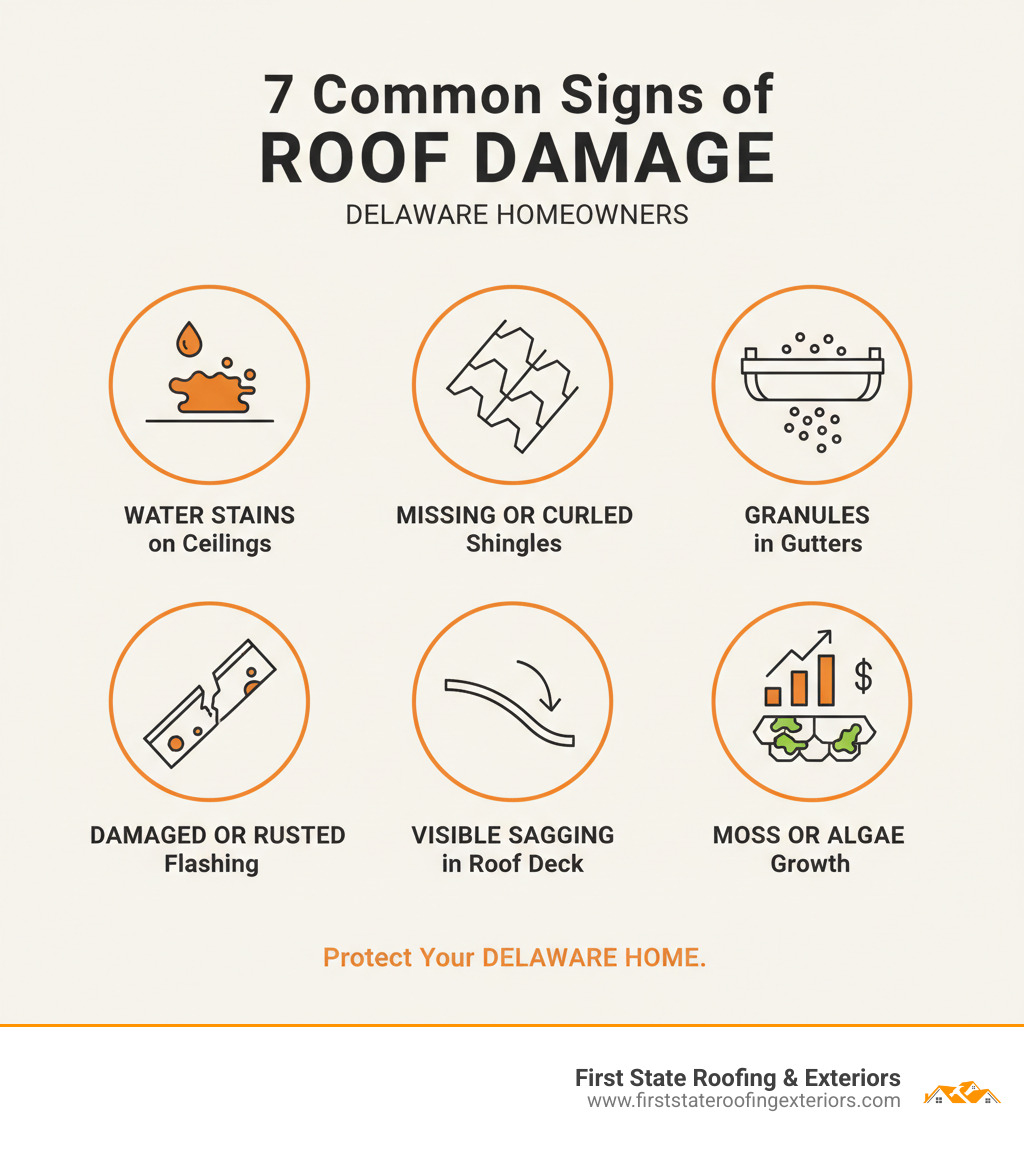
7 Telltale Signs Your Delaware Roof Needs Professional Attention
Your Delaware roof works hard every single day, shielding your home from everything our unpredictable weather throws at it. But here’s the thing—most roof problems start small. A tiny crack here, a loose shingle there. These minor issues are easy to miss until they become major headaches that cost thousands to fix.
The good news? Catching these warning signs early can save you a fortune and spare you the stress of emergency repairs. A professional roof inspection can identify problems you’d never spot from the ground, giving you peace of mind and protecting your investment.
Let’s walk through seven critical signs that your roof is crying out for help.
Water stains on your ceilings or walls are like your roof waving a red flag. Those brown or yellow patches mean water has already breached your roofing system, traveled through the decking and insulation, and made its way inside your home. This isn’t just ugly—it’s dangerous. Left unchecked, that moisture creates the perfect breeding ground for mold and can compromise your home’s structural integrity. If you see water stains, don’t wait. The damage is already happening.
Missing or curled shingles tell you that your roof’s armor is failing. Shingles are designed to overlap and create a waterproof barrier, but when they curl, crack, buckle, or disappear entirely, they leave your underlayment exposed to Delaware’s harsh weather. Sometimes this happens due to age, but it can also signal improper installation or heat damage. Either way, those compromised shingles dramatically reduce your roof’s ability to keep water out where it belongs.
Granules accumulating in your gutters might seem harmless, but they’re actually one of the most reliable indicators of an aging roof. Those ceramic granules coating asphalt shingles aren’t just decorative—they protect your shingles from UV damage and weathering. When you start finding significant amounts of granules washing into your gutters (they look like coarse sand), it means your shingles are losing their protective layer and nearing the end of their lifespan.
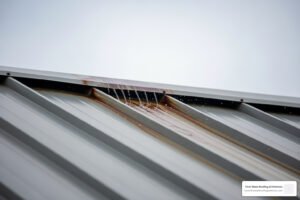
Damaged or missing roof flashing creates direct pathways for water to invade your home. Flashing consists of thin metal pieces installed around chimneys, skylights, vents, and roof valleys—basically anywhere two surfaces meet. These areas are especially vulnerable to leaks. If your flashing is bent, rusted, cracked, or missing, water will find its way in. Roof flashing repair isn’t glamorous work, but it’s absolutely critical for keeping your home dry.
A sagging roof deck is a serious structural emergency that demands immediate professional attention. If you notice a visible dip, sag, or curve in your roofline, something has gone very wrong. This could be caused by prolonged moisture damage rotting the decking, inadequate framing during construction, or excessive weight from snow and ice. A sagging roof isn’t just an eyesore—it’s a collapse waiting to happen.
Unexpectedly higher energy bills might not seem related to your roof, but they often are. Your roof plays a huge role in your home’s energy efficiency. When it’s compromised—whether through poor insulation, inadequate ventilation, or damage that lets conditioned air escape—your HVAC system has to work overtime. If your heating or cooling costs have jumped without an obvious reason, your roof might be the culprit.
Moss or algae growth looks almost charming in photos, but in real life, it’s trouble. While a little algae might seem harmless, extensive growth traps moisture against your shingles, accelerating deterioration and potentially causing rot—especially in shaded, damp areas. Some algae can be cleaned off, but widespread growth usually indicates persistent moisture problems that need professional intervention.
Common Causes of Roof Damage in Delaware
Living in Delaware means your roof faces a unique combination of weather challenges that you won’t find in many other states. Understanding these factors helps explain why that seemingly minor issue can escalate quickly if ignored.
Delaware’s coastal weather is beautiful but brutal on roofs. The salty air corrodes metal components faster than you’d expect. Nor’easters and tropical storms bring powerful winds that can lift or tear off shingles, while driving rain finds every tiny vulnerability in your roofing system. If you live near the coast, your roof is fighting a constant battle against these elements.
High humidity during our long summer months creates an environment where mold, mildew, and algae thrive on roofing materials. This persistent moisture doesn’t just discolor your shingles—it can work its way into the underlying structure, causing wood rot that weakens your entire roof system from the inside out.
Storm damage comes in many forms here. Thunderstorms bring hail that bruises or cracks shingles. High winds can strip entire sections of roofing. Heavy snowfall creates ice dams that force water under your shingles, while the sheer weight of accumulated snow stresses your roof’s structure. When severe weather hits, you need help fast. That’s why we created our emergency roof repair guide to help homeowners respond quickly to urgent situations.
Thermo-cycling sounds technical, but the concept is simple: your roof expands when it’s hot and contracts when it’s cold. This daily expansion and contraction—repeated thousands of times over the years—gradually weakens materials, loosens fasteners, and creates cracks. It’s like bending a paperclip back and forth until it snaps.
Aging materials are simply a fact of life. Even the best roof won’t last forever. As roofing materials age, they become brittle, lose their protective qualities, and grow more vulnerable to damage. If your asphalt shingle roof is approaching 20 to 25 years old, it’s probably showing its age, even if you’ve maintained it well. At that point, repairs become less cost-effective than replacement.
The key to protecting your home is catching problems early. If you’ve noticed any of these warning signs, don’t put it off. Call us at (302) 222-4065 to schedule your free inspection and get a free estimate. We’ll give you an honest assessment and help you understand exactly what your Delaware roof needs.
Vetting Your Contractor: How to Choose a Trustworthy Delaware Roofer
Choosing the right contractor is the most critical step in ensuring a quality, long-lasting delaware roof repair or replacement. A trustworthy contractor will be transparent, licensed, insured, and have a proven track record within the local community, serving areas like Dover, DE, Smyrna, Lewes, and Milford.
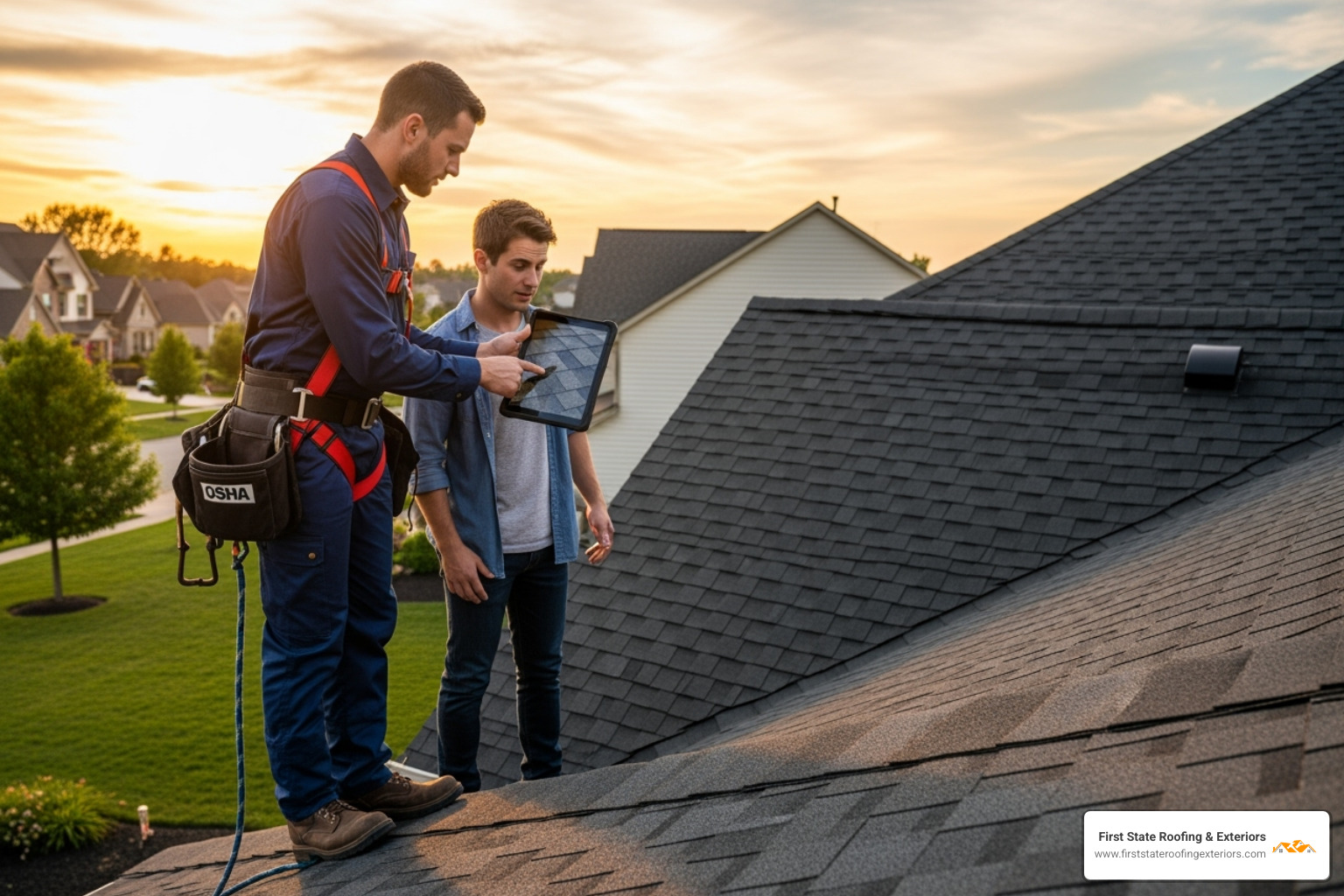
The roofing industry, unfortunately, has its share of fly-by-night operators and high-pressure salespeople who prioritize profit over craftsmanship. That’s why knowing what to look for can save you thousands of dollars and years of headaches.
Start by verifying that any contractor you consider is fully licensed and insured. A valid license ensures they meet state-mandated qualifications and understand Delaware building codes. Comprehensive insurance—both liability and workers’ compensation—protects you from financial responsibility if someone gets injured on your property or if accidental damage occurs during the project. Never hire an uninsured contractor, no matter how good their price sounds.
Local reputation matters more than you might think. A contractor with deep roots in Delaware understands our unique climate challenges, from coastal humidity to nor’easter damage. They’re also more accountable for their work because their business depends on maintaining a good standing in the community. Many reputable Delaware roofing companies have been serving homeowners for decades, and that longevity speaks volumes about their reliability and quality.
Online reviews are your best friend when researching contractors. Platforms like Google provide real feedback from actual customers about professionalism, quality of work, communication, and whether the project stayed on budget. Look for consistent positive feedback, not just one or two glowing reviews. Don’t hesitate to ask for local references either—a confident contractor will gladly provide contact information for past clients so you can see completed projects and hear about their experience.
Up-front pricing and transparency should be non-negotiable. A reliable contractor provides a detailed, written estimate that clearly outlines all costs, materials, labor, and scope of work before any hammers start swinging. There should be no vague “we’ll figure it out as we go” language. Be extremely wary of contractors who demand full payment upfront or who can’t provide a clear breakdown of charges. Legitimate companies understand that trust is earned through transparency.
Beyond material warranties from manufacturers, a trustworthy contractor stands behind their labor with a workmanship warranty. This guarantees that if issues arise due to installation errors—like improperly sealed flashing or misaligned shingles—they’ll correct them at no additional cost to you. Look for companies that offer strong guarantees, such as a lifetime labor warranty. That level of confidence in their craftsmanship should give you peace of mind.
GAF certification is another powerful indicator of contractor quality. When a roofing company is GAF-certified, it means they’ve met stringent standards set by North America’s largest roofing manufacturer. They’re properly licensed, adequately insured, and have a proven reputation for quality work. More importantly, certification allows them to offer improved warranties that non-certified roofers simply cannot provide. This manufacturer backing adds an extra layer of protection for your investment.
Why GAF Certification Matters for Your Delaware Roof
Choosing a GAF-certified roofing contractor means you’re partnering with a company that has undergone rigorous training and met high standards set by the industry leader. This certification isn’t just a marketing badge—it’s a commitment to quality and customer protection that directly benefits you as a homeowner.
The GAF Master Elite designation is GAF’s highest certification, achieved by only about 3% of roofing contractors nationwide. It signifies a contractor’s dedication to ongoing training, superior workmanship, and exceptional customer service. Master Elite contractors are factory-trained on the latest installation techniques and materials, ensuring your delaware roof is installed to manufacturer specifications for maximum performance and longevity.
One of the most significant advantages of hiring a GAF Master Elite contractor is access to the GAF Golden Pledge Warranty. This is GAF’s strongest warranty offering, providing extensive coverage for both manufacturing defects and the contractor’s workmanship for up to 25 years. This comprehensive protection means you’re covered from every angle—materials and installation—giving you unparalleled peace of mind that your investment is protected.
GAF certification also acts as a layer of consumer protection. GAF regularly audits certified contractors to ensure they maintain proper licensing, insurance, and ethical business practices. This ongoing oversight reduces your risk of encountering unscrupulous or unqualified roofers who might cut corners or disappear after collecting payment.
Perhaps most importantly, GAF warranties are manufacturer-backed, not just contractor-backed. This means that if your contractor goes out of business or relocates, your warranty coverage for materials and workmanship may still be honored directly by GAF. This is a crucial safety net that standard contractor warranties can’t provide.
For additional information on quality roofing materials and industry certifications, you can explore resources from other reputable manufacturers like CertainTeed, which offers credentials such as Master Shingle Applicator and Select ShingleMaster. Another well-regarded manufacturer is IKO. However, GAF’s comprehensive certification program remains the gold standard in the roofing industry for contractor vetting and warranty protection.
When you’re ready to work with a local, GAF-certified team that puts your home’s protection first, call us at (302) 222-4065 to schedule your free inspection and receive a free, transparent, detailed estimate.
Understanding Common Delaware Roof Services and Costs
From minor fixes to a full replacement, understanding the services available and what influences their cost is essential for budgeting and making informed decisions for your delaware roof. The final price depends on factors like roof size, pitch, material choice, and the extent of any underlying damage. When you call a reputable Delaware roofer, you want to know exactly what you’re paying for and why.
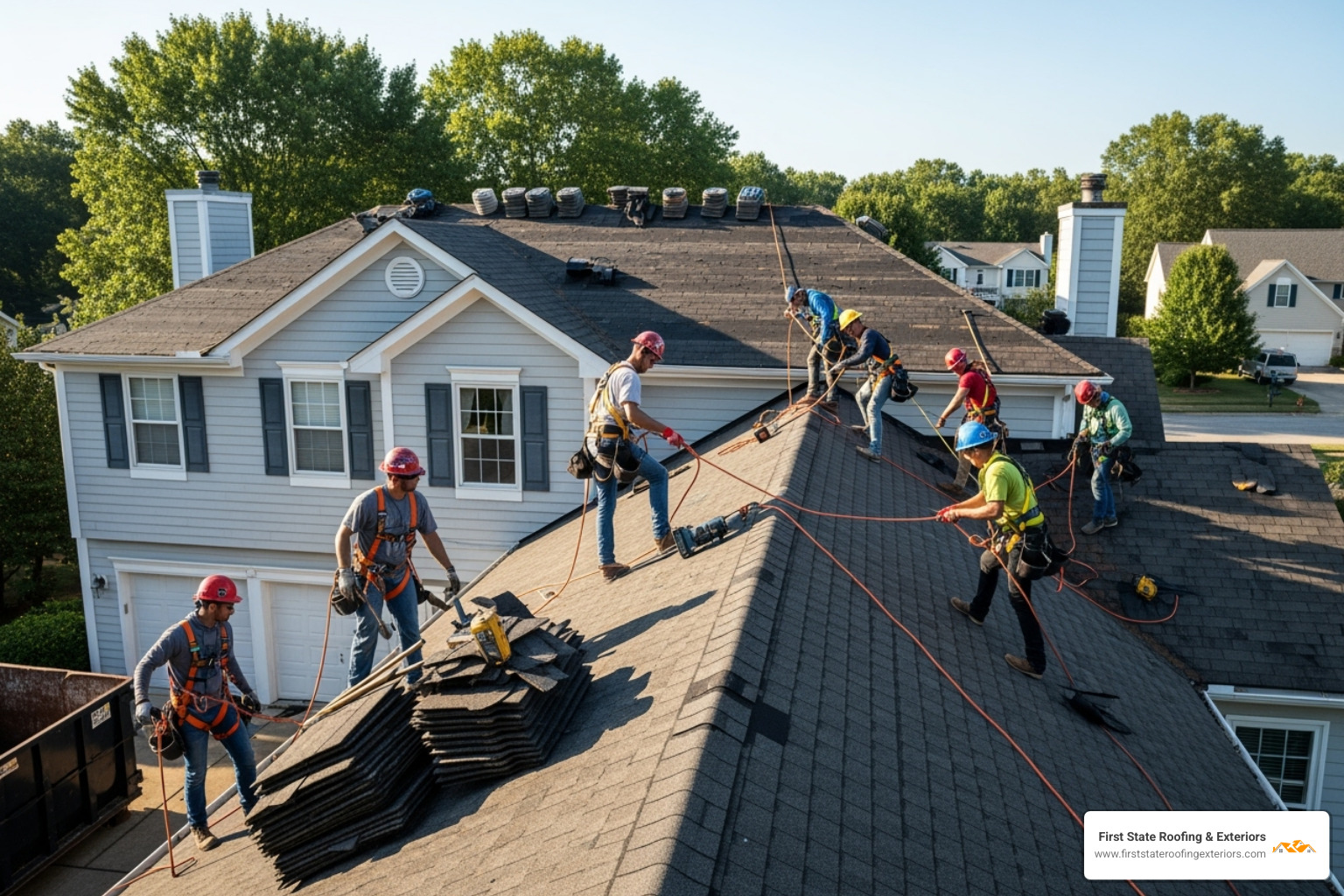
Roof repair is often the first service homeowners need when they find a problem. This addresses specific issues like leaks, missing shingles, damaged flashing, or minor storm damage. Prompt repairs are essential for maintaining structural integrity and preventing minor problems from escalating into costly major ones. Costs typically range from a few hundred dollars for simple fixes to a couple of thousand for more extensive damage. The key is catching issues early—a small leak today can become a collapsed ceiling tomorrow.
When repairs are no longer sufficient, or your roof has reached the end of its lifespan, roof replacement becomes necessary. This involves tearing off the old roofing materials down to the decking and installing a completely new system. A replacement can improve your home’s value, curb appeal, and energy efficiency. For scope, timelines, and options, see our Roof Replacement page and our in-depth Roof Replacement Cost Guide, which explains each stage and budgeting considerations.
Delaware’s unpredictable weather, including severe storms and nor’easters, can cause sudden and significant roof damage. That’s where emergency services become critical. Emergency roofing provides rapid response to mitigate further damage, often involving temporary tarping or urgent repairs to prevent water intrusion. Many reliable companies, including First State Roofing & Exteriors, offer 24-hour emergency services because storms don’t wait for business hours.
Skylight repair and replacement is another common service. Skylights are wonderful for natural light, but they’re also common points of leakage if not properly installed or maintained. Roofing companies offer services to repair leaks around existing skylights or replace old, inefficient, or damaged units. You can learn more about Skylight Leak Repair and how to address these tricky problem areas.
Regular roof inspections are a proactive measure to identify potential problems before they become major issues. Professionals assess the condition of your shingles, flashing, gutters, and overall roof structure. This service is crucial for maintenance, especially after severe weather, or when buying or selling a home. Think of it like a health checkup for your roof—catching problems early saves money and stress.
While not strictly roofing, gutter services are an integral part of your roof’s drainage system. Many roofing companies also offer Gutter Installation and Gutter Repair to ensure proper water diversion, protecting your foundation and landscaping from water damage.
What Drives the Cost of Your Roofing Project?
Several key factors will determine the overall cost of your roofing project, and understanding these helps you budget realistically.
Roof size and pitch are the most obvious factors. Larger roofs naturally require more materials and labor. Steeper roof pitches are more challenging and dangerous to work on, increasing labor costs. A two-story colonial with a steep pitch will cost significantly more than a single-story ranch with a gentle slope.
Material choice significantly impacts the price. Asphalt shingles are generally the most affordable option, while metal, tile, or slate roofs come at a higher price point due to their durability and aesthetic appeal. The difference can be thousands of dollars, but premium materials often last two to three times longer.
The scope of work matters tremendously. A simple repair will be less expensive than a full replacement. If the project involves removing multiple layers of old roofing or repairing underlying structural damage to the decking, costs will increase. Sometimes what looks like a simple shingle replacement reveals rotted decking underneath—this is why honest contractors perform thorough inspections before quoting.
Accessibility and complexity add to labor costs. Roofs with complex designs, multiple valleys, chimneys, or skylights require more intricate work and specialized techniques. A simple rectangular roof is straightforward; a Victorian with multiple dormers and decorative features takes considerably more time and skill.
Adding additional features like new skylights, improved ventilation, or upgraded insulation during a roof replacement will increase the overall project cost. However, these improvements often pay for themselves through energy savings and increased home value.
Finally, permits and codes may add a small administrative cost depending on the scope of work. Reputable contractors ensure all work complies with local building codes and handle the permitting process for you—this protects you from future issues when selling your home.
For a comprehensive inspection and a free, no-obligation estimate on your delaware roof project, call us today at (302) 222-4065 to schedule your free inspection. We’ll assess your specific situation and provide transparent, up-front pricing with no hidden fees or surprises.
The Best Roofing Materials for Delaware’s Climate
Selecting the right material is crucial for longevity and performance in Delaware’s variable weather. Your delaware roof faces unique challenges—from humid summers that promote algae growth to coastal storms that test every shingle’s grip. While asphalt shingles remain the most popular choice due to their affordability and proven performance, other materials offer superior durability and energy efficiency that might better suit your home’s specific needs and your long-term goals.
Let’s break down the most common roofing materials and how they perform in Delaware’s demanding climate:
Asphalt Shingles are the go-to choice for most Delaware homeowners, and for good reason. They’re affordable, widely available, and come in a variety of colors and styles to match any home’s aesthetic. Modern architectural shingles can last 20 to 25 years with proper maintenance, and they perform well in Delaware’s mix of rain, snow, and humidity. The ceramic granules on quality asphalt shingles protect against UV damage and help shed water effectively. However, they’re more susceptible to wind damage during coastal storms and can deteriorate faster in areas with intense sun exposure. Asphalt Shingle Roofs remain the most cost-effective option for budget-conscious homeowners, with replacement costs typically ranging from $5,000 to $12,000 for an average-sized home.
Metal Roofing is gaining popularity in Delaware, particularly in coastal areas where durability is paramount. A quality metal roof can last 50 years or more—potentially the last roof you’ll ever need to install. Metal roofs excel at shedding snow and rain, resist algae and moss growth, and can withstand hurricane-force winds when properly installed. They’re also highly energy-efficient, reflecting solar heat rather than absorbing it, which can significantly reduce cooling costs during Delaware’s hot, humid summers. The initial investment is higher—typically two to three times the cost of asphalt shingles—but the longevity and low maintenance requirements often make metal roofing more economical over the roof’s lifetime. Our Metal Roofing Delaware page provides more detailed information on styles, colors, and benefits specific to our region.
Cedar Shake Roofing offers a distinctive, natural appearance that many homeowners love. Cedar shakes provide excellent insulation properties and can last 30 to 40 years when properly maintained. However, they require more maintenance than other materials, need periodic treatments to resist moisture and insects, and are more expensive than asphalt shingles. In Delaware’s humid climate, cedar shakes need regular inspection to prevent moss growth and ensure proper ventilation. They’re a beautiful choice for the right home and homeowner, but they demand a commitment to ongoing care.
Energy Efficiency Considerations should factor into your material selection. Delaware’s climate means your roof is working hard year-round—protecting against winter snow and ice, then reflecting summer heat. Cool Roofs, which are designed to reflect more sunlight and absorb less heat, can make a measurable difference in your energy bills. Many modern roofing materials now come in “cool roof” formulations, including specially designed asphalt shingles with reflective granules and metal roofing with reflective coatings. These energy-efficient options can reduce your cooling costs by up to 15% while extending the life of your roof by reducing thermal stress.
The right choice depends on your budget, your home’s architectural style, your long-term plans, and your location within Delaware. Coastal homes face different challenges than inland properties, and a two-story colonial has different needs than a ranch-style home. A trustworthy contractor will assess your specific situation and recommend materials that balance performance, aesthetics, and cost for your unique needs.
For expert guidance on selecting the best roofing material for your Delaware home and a free, no-obligation estimate, call us today at (302) 222-4065 to schedule your free inspection. We’ll help you make an informed decision that protects your home for decades to come.