You searched “cost to reshingle a roof” because you need a real number, not a range so wide it’s useless. You might have already gotten a quote that surprised you, or you’re trying to figure out if the price you were given is fair. Either way, you’re in the right place.
Reshingling a roof in Kent County isn’t the same as doing it in Pennsylvania or Maryland — the climate here is harder on roofs, the labor market is different, and Delaware’s tax structure actually works in your favor. We’ll cover all of that. But first, the decision that affects your cost more than anything else: overlay or full tear-off.
Average Cost to Reshingle a Roof in Kent County, DE
The average cost to replace a roof in Dover runs around $15,057, based on a typical home size of roughly 2,170 square feet at approximately $6.94 per square foot for asphalt shingles. Statewide, the average sits closer to $13,720.
For context, that’s meaningfully lower than what homeowners in coastal Sussex County towns like Lewes or Rehoboth Beach are paying — where labor alone runs about $900 more on a comparable job. Kent County sits in a favorable spot within Delaware’s pricing landscape.
Labor on a 2,000-square-foot roof in Dover averages around $3,900. And because Delaware has no sales tax on building materials, you’re saving $400–$500 compared to an identical project across the border in Pennsylvania, Maryland, or New Jersey. That’s a genuine financial advantage most homeowners don’t know about.
What Size Roof Do You Have — and What Will It Cost?
Roofing is priced by the square — one square equals 100 square feet of roof surface. So a 2,000-square-foot home doesn’t have a 2,000-square-foot roof. The actual roof surface depends on pitch, complexity, and how many planes and valleys the design includes. That’s why we measure the roof itself, not the footprint of the house.
In Kent County, a smaller home in the 1,200–1,500 square foot range typically runs $6,500–$10,000 for a full asphalt shingle replacement. A mid-size home — the 1,800–2,200 square foot range that covers most of the housing stock in Dover, Smyrna, and Milford — generally falls between $8,500 and $13,000. Larger homes over 2,500 square feet typically start at $12,000 and can reach $17,000 or more depending on roof complexity.
These figures assume a full tear-off, new underlayment, proper flashing, and a quality architectural shingle. They also assume one existing layer of shingles being removed. If your roof has two layers already — which is common in older homes throughout Kent County — tear-off costs increase.
Removing a single layer adds roughly $1.00–$1.50 per square foot. Two layers can add $1.50–$2.50 per square foot, which on a 2,000-square-foot roof translates to $2,000–$5,000 in additional removal and disposal costs.
Materials typically account for about 55% of the total cost on a full tear-off job. Labor and disposal make up the rest. That ratio shifts when you go with an overlay — but as we’ll explain, the savings aren’t as clean as they look on paper.
Why Kent County’s Climate Makes the Cost Conversation Different
Kent County averages about 47.6 inches of rainfall per year. That’s nearly 10 inches more than the national average, and it matters more than most homeowners realize when deciding how to approach a reshingle.
Moisture is the primary enemy of a roof’s structural layer — the decking underneath the shingles. When shingles age, granules wash off, underlayment degrades, and small gaps open up at flashings and seams. In a drier climate, those gaps might go years before causing real damage. In a county that sees close to four feet of rain annually, plus summer humidity, freeze-thaw cycles in winter, and the occasional tropical storm remnant blowing up the coast, that timeline compresses significantly.
Kent County has recorded 16 major natural disaster declarations, including 6 hurricane-related events. Tropical Storm Isaias in 2020 and Hurricane Sandy in 2012 both caused substantial roofing damage across the region. That storm exposure isn’t just a historical footnote — it’s a reason why the condition of your roof deck matters enormously here, and why any approach that skips a thorough deck inspection carries real risk.
We’ve been doing roof replacements across Kent County for over 22 years. The homes in Harrington, Felton, and the older neighborhoods in Dover that are approaching or past the 25-year mark on their original shingles aren’t just cosmetically worn — they’ve been through a lot of weather. That history shows up in the decking when we pull the shingles off, and it’s something you can only see with a full tear-off.
Roof Repair Guide: Overlay vs. Full Tear-Off — Which One Do You Actually Need?
This is the question that drives more confusion — and more cost surprises — than anything else in the reshingle process. An overlay means new shingles go directly on top of the existing ones. A full tear-off means the old shingles come off first, the deck gets inspected and repaired as needed, and then the new system goes down on clean, verified structure.
The overlay option is cheaper upfront. It eliminates tear-off labor and disposal costs, which can save $2,000–$3,000 on a mid-size home. But that savings comes with conditions, and in most cases involving Kent County homes, those conditions are hard to meet.
When Is a Roof Overlay Actually Acceptable?
An overlay is only a reasonable option under a fairly narrow set of circumstances. The existing roof can have just one layer of shingles — most building codes cap total layers at two, and many manufacturers won’t warranty their products installed over existing shingles at all. The existing layer needs to be lying flat, with no curling, cupping, or significant granule loss.
The roof deck underneath must be structurally sound, with no soft spots, rot, or moisture damage. And the roof’s ventilation system needs to be adequate — adding a second layer of shingles increases heat retention in the attic, which accelerates shingle aging from the underside.
If all of those conditions are met, and you understand that an overlay typically shortens the lifespan of the new shingles by a decade or more compared to a full tear-off, then the overlay conversation is worth having. If any of those conditions aren’t met, an overlay isn’t a shortcut — it’s a delayed problem.
Here’s the part that catches homeowners off guard: you won’t know the condition of your deck until the old shingles are off. A roof that looks worn but serviceable from the ground can have significant moisture damage underneath, especially in a climate like Kent County’s where water infiltration has had years of rainfall to work with. An overlay buries that damage under new shingles. It doesn’t fix it.
Most manufacturer warranties — including those from GAF, Owens Corning, and CertainTeed — are voided or severely limited when shingles are installed over an existing layer. That means the 30-year warranty on your new architectural shingles may not be worth the paper it’s printed on if the installation method doesn’t meet the manufacturer’s specifications. As authorized installers of all three of those brands, we see this come up more than it should.
Roof Replacement Steps: What Actually Happens During a Full Tear-Off
A lot of homeowners feel better about the process once they understand what’s actually happening. A full tear-off and reshingle isn’t complicated, but there are specific steps that separate a quality installation from one that causes problems five years down the road.
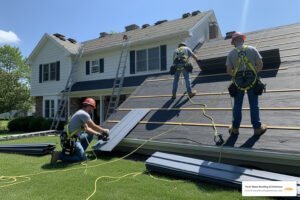
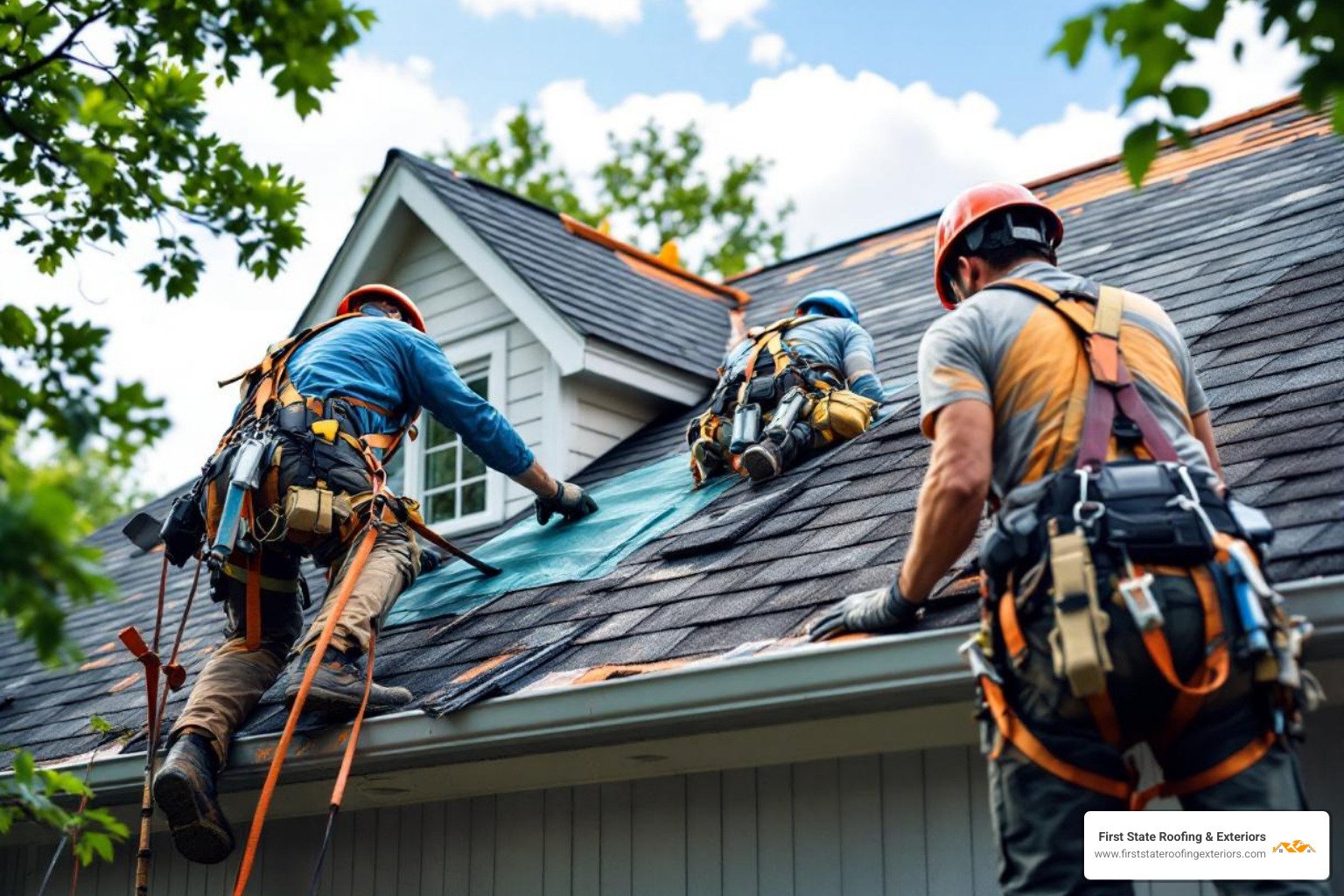
It starts with removing the existing shingles down to the deck — every layer, every piece of flashing, every old nail. Once the deck is exposed, it gets a thorough inspection. Any sections showing rot, soft spots, moisture damage, or structural compromise get replaced before anything new goes on. This is the step that an overlay skips entirely, and it’s the step that matters most in a county where roofs have been absorbing 47-plus inches of rain a year.
After the deck is confirmed solid, a new underlayment layer goes down. This is the waterproof barrier between the deck and the shingles — it’s your backup protection if water ever gets past the shingles themselves. Then comes the starter strip along the eaves and rakes, which provides the critical first layer of wind resistance.
Shingles are installed in overlapping courses from the bottom up, following the manufacturer’s specified nailing pattern. Flashing gets installed or replaced around every penetration — chimneys, skylights, vents, and valleys. Ridge vents and soffit ventilation get verified or updated to ensure the attic breathes properly, which directly affects how long the new shingles last.
When the work is done, the site gets cleaned up completely — including a magnetic sweep of the driveway and lawn for nails. That last step sounds minor until you find a roofing nail in your tire.
Every project we do comes with a written, itemized estimate before work begins — materials, labor, permit fees, and timeline. No surprises mid-project.
Getting a Reshingle Estimate in Kent County, DE: What to Do Next
If your roof is showing its age — curling shingles, granules in the gutters, a leak that appeared after the last storm, or a home inspection that flagged it — the smartest next step is a professional inspection. Not a ballpark from a neighbor, and not a quote from a contractor who’s only seen it from the driveway.
One more thing worth knowing before you call anyone: if your roof damage was triggered or accelerated by a storm, your homeowners insurance may cover part or all of the cost. Kent County’s storm history means this comes up more often than people expect. We work directly with insurance providers to help homeowners understand what’s covered and navigate the claims process — which can turn a $15,000 out-of-pocket project into something far more manageable.
We also offer flexible financing for homeowners who need the work done now but want to spread the cost out. Between the no-sales-tax advantage on materials, Kent County’s favorable labor rates, and the financing and insurance options available, the actual out-of-pocket number is often lower than the sticker price suggests. First State Roofing & Exteriors Co. offers free roof estimates with no obligation — reach out and we’ll take a look.