
Hear from Our Customers
A properly installed flat roof in Bethesda and the surrounding Kenton Hundred area isn’t just about keeping rain out. It’s about keeping water moving. Delaware’s coastal plain has almost no natural drainage relief, which means flat roofs here face a specific challenge: standing water.
Bethesda sits on terrain where water doesn’t run off naturally. When a flat roof has a poorly designed drainage system, water pools. With close to 45 inches of rainfall distributed across the entire year in Kent County, that’s not a seasonal problem — it’s constant. When your membrane roof is installed correctly, with the right slope, the right drainage outlets, and the right material for this climate, you stop chasing leaks.
For property owners in Bethesda, where many flat-roofed structures are agricultural buildings, garages, and outbuildings rather than commercial storefronts, the stakes are real. A slow leak in a farm shed or workshop doesn’t announce itself. It works quietly — softening decking, promoting mold, building up into a much bigger repair bill than it needed to be. Getting the roof right the first time is what prevents that.
We’re based in Smyrna, roughly 10 to 15 miles north of Bethesda along the Route 300 corridor. That proximity isn’t accidental — the Kenton Hundred area has been part of our service territory for years, and we understand what flat-roofed structures in Bethesda actually look like: older agricultural buildings, rural garages, low-slope additions on farmstead properties.
These aren’t suburban tract homes. They require a contractor who’s worked on this kind of building stock before. Every project is handled by our own certified crew — no subcontractors, no third-party crews, no surprises when someone shows up at your property. That accountability is backed by over 22 years of Delaware roofing experience, BBB accreditation, and a 5.0 out of 5 rating from more than 63 verified reviews.
Customers consistently describe the same experience: clear communication, clean worksites, and work that holds up. That track record doesn’t happen by accident.
It starts with a free estimate. Someone from our team comes out to your property in Bethesda, looks at the existing roof, and gives you a clear picture of what you’re dealing with — whether that’s a repair on an aging modified bitumen system on an outbuilding, or a full membrane replacement on a flat-roofed garage addition. There’s no pressure to commit. The estimate is written, specific, and gives you something real to evaluate.
If you move forward, the process begins with a full assessment of the existing roof deck. In rural northern Kent County, older flat-roofed structures sometimes have deck damage that isn’t visible until the existing membrane is pulled back — soft spots, moisture intrusion, areas where the decking has started to deteriorate. We address that before anything else goes down. Skipping that step is how a new membrane ends up failing in three years instead of lasting twenty.
From there, we install the right membrane system — TPO, EPDM rubber roofing, modified bitumen, or PVC, depending on the structure, the budget, and what performs best given Delaware’s humidity, freeze-thaw cycling, and sustained rainfall. Because Bethesda is unincorporated in Kent County, permits are handled through Kent County directly, and we manage that process. When the job is done, the worksite gets cleaned up completely. No debris left behind, no nails in the driveway.

Ready to get started?
Not every flat roof is the same, and the right material depends on more than just price. TPO roofing membrane reflects a significant portion of solar load, which matters during Kent County’s hot, humid summers when HVAC costs climb. It’s also installed with heat-welded seams, which hold up well against the kind of sustained moisture exposure this area sees year-round. For newer installations on residential additions or light commercial structures, TPO is often the modern, practical choice.
EPDM rubber roofing has been around long enough to prove itself — there’s more than 20 billion square feet of it installed worldwide, and its flexibility makes it well-suited to the freeze-thaw cycling that Delaware winters bring. Many of the older flat-roofed outbuildings and agricultural structures in the Kenton Hundred area already have EPDM systems that are approaching the end of their service life. Whether it needs repair or a full replacement depends on the condition of the seams, the deck underneath, and how long the membrane has been in place.
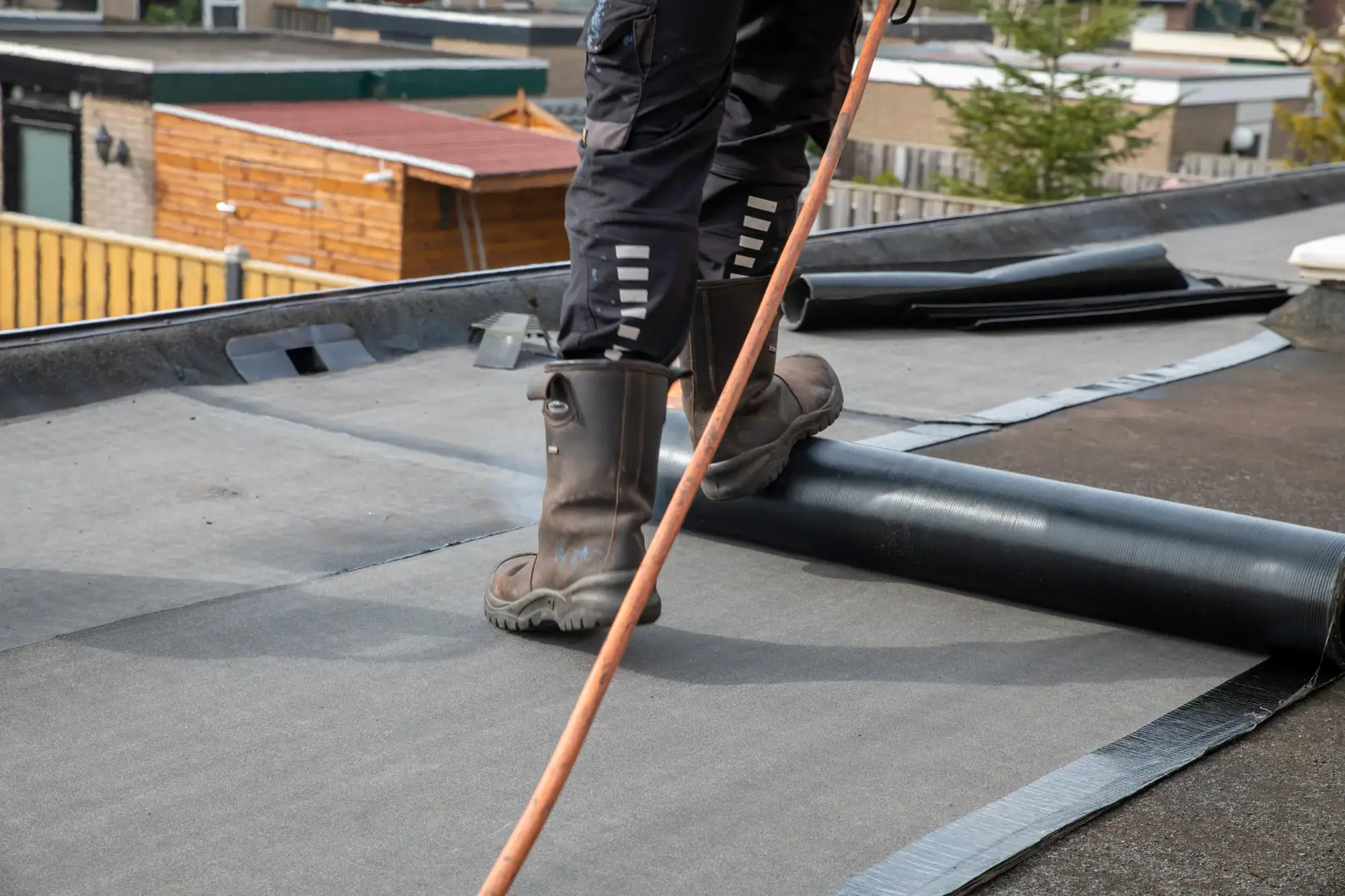
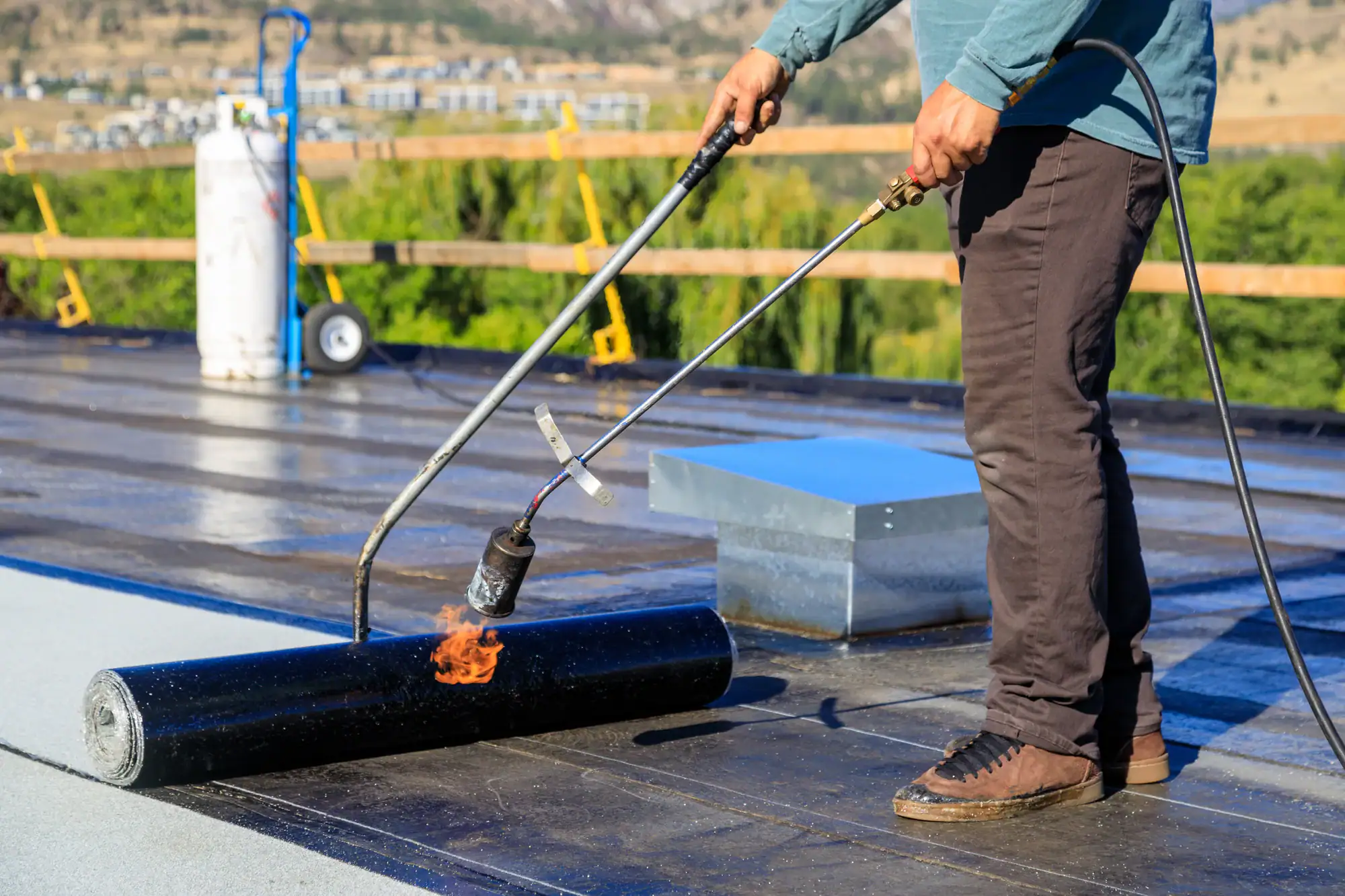
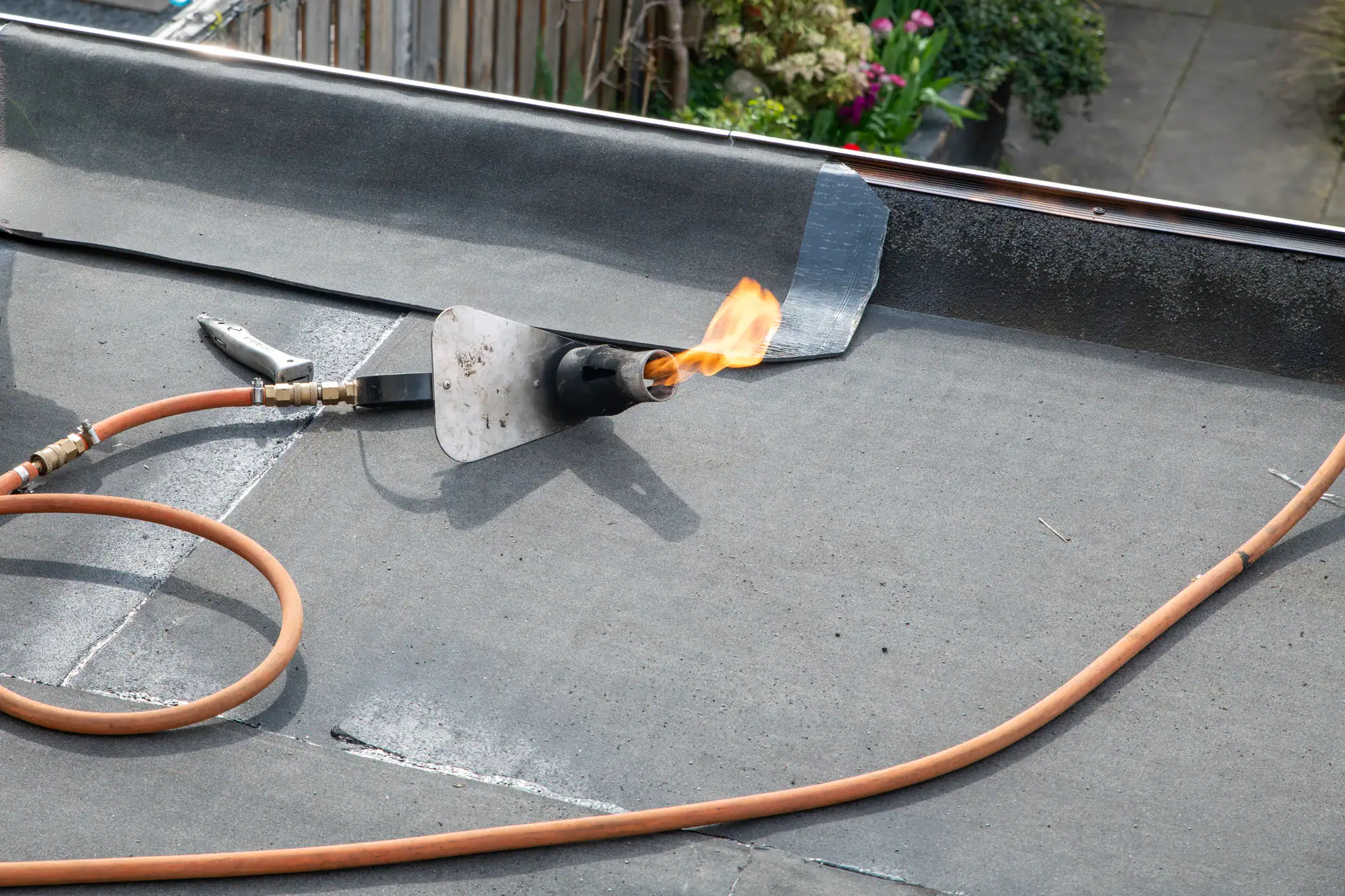
Modified bitumen, sometimes called torch-down roofing, is another system common on older rural structures in Bethesda and the surrounding area. It’s durable and cost-effective, but the mineral surface does degrade over time — especially with freeze-thaw stress — and it needs to be inspected regularly. PVC roofing membrane is also available for applications where chemical resistance or specific performance requirements make it the right fit. We work across all of these systems, which means the recommendation you get is based on what actually makes sense for your structure — not just what’s easiest to install.

Yes — and the geography around Bethesda makes this worth taking seriously. Delaware’s coastal plain has very little natural drainage relief, which means flat roofs in Bethesda are more prone to standing water than roofs in hillier parts of the country. The industry threshold for concern is water that’s still sitting on the roof more than 48 hours after it rains. If that’s happening, it’s not just cosmetic.
Standing water accelerates membrane degradation, adds structural load to the roof deck, and creates conditions where mold and algae can take hold. In winter, that same pooled water freezes and expands in seams and low spots, which is a particular concern for modified bitumen and EPDM systems common on older rural structures in Kent County. A proper flat roof installation addresses this with adequate drainage design from the start — the right number and placement of drains or scuppers, and enough slope built into the system to move water off the surface. If your current roof is pooling, it’s worth having someone look at the drainage before it becomes a deck replacement problem.
These are the three most common flat roofing systems you’ll encounter on residential and agricultural structures in northern Kent County, and they each have a different performance profile. TPO is a single-ply membrane that reflects solar heat well — useful in Delaware’s humid summers — and uses heat-welded seams that create a strong, continuous bond. It typically lasts 15 to 25 years with proper maintenance and is a popular choice for newer installations.
EPDM is a rubber membrane that’s been in use for decades. It’s flexible, which helps it handle temperature swings and freeze-thaw cycling without cracking, and it has a long track record on low-slope roofs across a wide range of building types. Modified bitumen, or torch-down roofing, is an asphalt-based system that’s been common on older rural and agricultural structures in Bethesda and the surrounding area for years. It’s durable and relatively straightforward to repair, but the mineral surface does wear over time. The right choice depends on your specific structure, how it’s used, and your budget — which is exactly why a free estimate and inspection is the right first step before committing to any material.
This is one of the most common questions, and the honest answer is that it depends on what’s happening underneath the membrane — not just on top of it. Surface cracks, blistering, or worn mineral coating on a modified bitumen roof might be repairable if the deck underneath is solid. But if water has been getting in for a while, the decking can soften and lose its structural integrity, and at that point a patch on top doesn’t solve the underlying problem.
For older flat-roofed outbuildings and agricultural structures in the Kenton Hundred area around Bethesda, deferred maintenance is common. These structures don’t get the same attention as a home’s main roof, and by the time a leak becomes obvious, there’s often more going on than a surface repair can address. A proper inspection — one that includes lifting sections of the membrane to check the deck — gives you a real answer. We provide free estimates that include that kind of honest assessment, so you’re not guessing about what the job actually involves.
Yes. Kent County sees its share of severe weather — thunderstorms, high winds, and hail events that can damage flat roof membranes on both residential and agricultural structures. If you have storm damage and need to file an insurance claim, navigating the process on your own can be frustrating, especially when adjusters are assessing damage they may not fully understand on a flat membrane system.
We help property owners document damage properly, communicate with adjusters, and scope the repair or replacement so the claim reflects what the job actually requires — not a lowball estimate that leaves you covering the gap. For rural property owners in Bethesda who may have multiple structures covered under a single policy, getting the scope right from the start matters. Storm damage to a flat-roofed equipment shed or workshop can be significant, and the claims process works better when you have a contractor who knows how to present the damage accurately.
Lifespan varies by material and how well the roof is maintained, but here are the realistic ranges: EPDM rubber roofing typically lasts 20 to 30 years. TPO membrane runs 15 to 25 years. Modified bitumen systems generally fall in the 15 to 20 year range, sometimes longer with high-quality two-ply installations. These figures assume the roof was installed correctly to begin with and has been inspected and maintained periodically.
Delaware’s climate does put flat roofs under more stress than drier or more temperate regions. The combination of nearly 45 inches of annual rainfall, high summer humidity, and winter freeze-thaw cycling takes a toll on seams, flashing, and membrane surfaces over time. In the Kenton Hundred area, where a lot of flat-roofed structures are agricultural buildings that may have been in place for decades, it’s worth knowing where your roof falls in its expected lifespan — especially before a harsh winter or a wet spring. An annual inspection is the most cost-effective way to catch small problems before they shorten that lifespan significantly.
Because Bethesda is an unincorporated community in Kent County — it has no municipal government of its own — building permits are issued through Kent County’s Department of Planning Services rather than a local town office. This actually simplifies the process compared to incorporated towns, where you’d have to navigate both a municipal permitting layer and county requirements. For flat roof work in Bethesda, you’re dealing with one authority.
Whether a permit is required depends on the scope of the work. Full roof replacements and new construction generally require a permit in Kent County. Repair work may fall under different thresholds. We handle the permitting process as part of the project — you don’t need to figure out Kent County’s requirements on your own or make separate trips to a permit office. That’s part of what it means to have a contractor who manages the job from start to finish rather than handing off pieces of it to someone else.
Other Services we provide in Bethesda