
Siding Contractor Hoars Addition, DE
Siding Contractor in Hoars Addition, DE
When Your Siding Has Outlasted Its Welcome in Hoars Addition
Hear from Our Customers
Vinyl Siding Contractors Near Hoars Addition, DE
When siding fails, it rarely fails loudly. It cracks a little here, pulls away from a corner there, and quietly lets moisture into your wall system before you ever notice anything wrong. By the time there’s visible evidence inside — staining, mold, soft drywall — the damage behind the panels has usually been building for a couple of seasons.
For homeowners in Hoars Addition and the surrounding North Dover corridor, this isn’t theoretical. The housing stock here runs heavily from the 1970s through the 1990s, and vinyl siding from that era has a lifespan of 20 to 40 years. A lot of it is already there. Kent County’s humid climate — over 44 inches of rainfall annually — means that any gap, crack, or compromised seam is an open invitation for moisture intrusion.
New siding, properly installed with a full moisture barrier, closes that door entirely. Your walls are sealed. Your home holds its temperature better. You stop worrying about what’s happening behind the panels every time it rains. And if you’re thinking about the Cheswold area’s real estate market — which has been growing fast — a clean exterior with new siding is one of the most visible signals of a well-maintained home when it comes time to sell.
Siding Companies Near Hoars Addition, DE
First State Roofing & Exteriors Co. is based in Smyrna, about 12 miles up Route 13 from Hoars Addition and the Cheswold area. That’s not a coincidence — this corridor is part of the Kent County market we’ve been working in for over two decades. We know the housing stock here, we know what Delaware’s winters and summers do to exterior materials, and we’ve seen firsthand what happens when siding work is done right versus when it’s rushed.
We’re licensed, insured, and BBB accredited with an A+ rating. Every project is handled by our own crew — no subcontractors, no day labor, no strangers showing up at your door. That’s not a policy we invented for marketing purposes; it’s how we’ve operated since day one because it’s the only way to stand behind the work we do.
If you’ve got questions about whether your siding is actually failing, whether a storm event may have caused damage your insurance could cover, or just what a realistic replacement looks like for a home in Hoars Addition — that’s exactly what our free consultations are for.
Siding Installation Process Near Hoars Addition, DE
It starts with a free consultation and a detailed inspection of your current siding. We’re not just looking at the surface — we’re checking seams, corners, trim lines, and any areas where moisture may have already found its way in. For homes in Hoars Addition, this inspection step matters more than most contractors acknowledge, because older siding in this housing stock often conceals early-stage moisture damage that needs to be addressed before new panels go on.
Once we know what we’re working with, we walk you through the scope in plain language. What needs to come off, what we find underneath, what material makes the most sense for your home and your budget — vinyl or fiber cement — and what the full project looks like from start to finish. Because Hoars Addition is an unincorporated community in Kent County rather than an incorporated town, the permit pathway is less obvious than it would be in Dover or Cheswold. We handle all of that. You don’t have to figure out which county office to call or what forms to file.
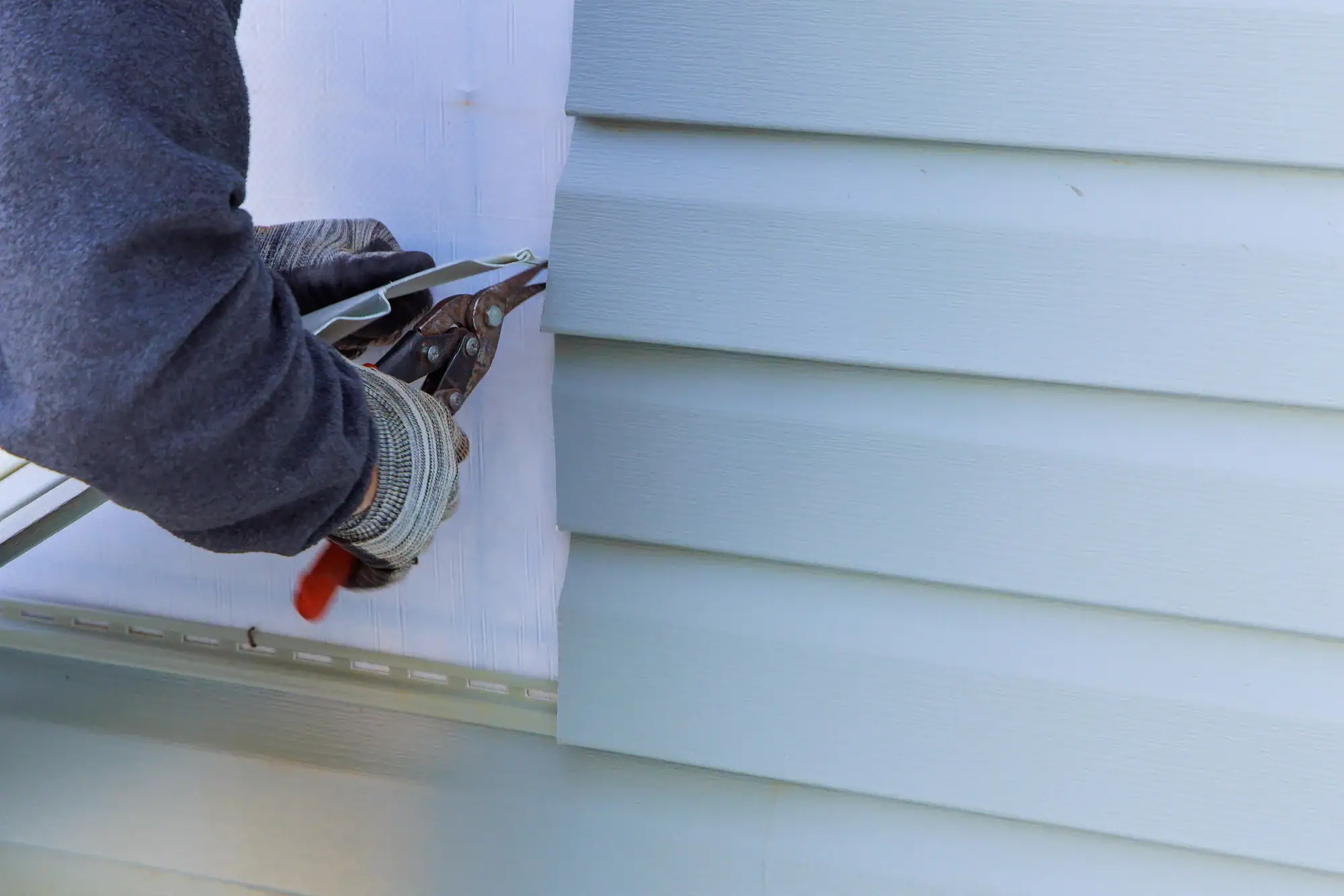
From there, most siding projects run two to five days. Our crew handles full removal of the old siding, moisture barrier installation, new panel installation, trim work, and sealing — then cleans up completely before we leave. You’ll know the job is done not because we tell you, but because you can see it.
Ready to get started?
Exterior Remodelers Serving Hoars Addition, Delaware
When we take on a siding project in Hoars Addition, the scope covers everything that goes into doing it right. That means full removal of your existing siding so we can inspect the wall sheathing underneath — something that matters especially in this housing stock, where original installation from the 1980s or earlier may have never included a proper moisture barrier. We install a new moisture barrier as a standard part of every project, not an upsell.
We offer both vinyl and fiber cement siding. For most homes in this corridor, vinyl is the practical choice — it’s moisture-resistant, holds up well through Kent County’s freeze-thaw cycles, and doesn’t require the maintenance that wood does. Fiber cement is available for homeowners who want maximum longevity and are planning to stay in the home long-term. According to the 2024 Cost vs. Value Report, fiber cement siding recoups an average of 88% of project cost at resale, and vinyl comes in around 80% — both strong returns in a market where Cheswold-area home values have been rising steadily.
We also assist with insurance claims for storm-damaged siding. If your home sustained wind or impact damage from a severe weather event — and the Dover area gets its share of summer storms and nor’easters — there’s a real possibility your homeowners insurance covers part or all of the replacement. We can help you understand whether that’s worth pursuing before you commit to paying out of pocket. Financing is available for those who need it.

Does siding work in Hoars Addition require a permit, and who handles it?
Because Hoars Addition is an unincorporated community in Kent County — not an incorporated town like Cheswold or Dover — there’s no local town hall or city building department to walk into. That makes the permit question less obvious for homeowners here than it would be in a municipality with its own building office. Exterior siding work in unincorporated Kent County may still require county-level building permits, and all contractors performing the work must be registered with the Delaware Department of Labor’s Office of Contractor Registration before any work begins.
We handle all of that as a standard part of every project. You don’t have to research which county office is responsible, fill out forms, or track down the right contact. We know the process, we handle the filings, and we make sure every project meets Delaware’s contractor registration requirements and applicable building codes before we start. It’s one less thing on your plate — and it protects you legally if you ever sell the home.
How do I know if my siding actually needs to be replaced or just repaired?
This is one of the most common questions we hear, and the honest answer is that it depends on what’s happening underneath the surface — not just what you can see from the driveway. Visible cracking, fading, warping, or panels pulling away from the wall are all signs that your siding is past its useful life. But the more important question is whether moisture has already gotten behind the panels, because that changes the scope of the project significantly.
For homes in Hoars Addition with original siding from the 1980s or 1990s, we frequently find that what looks like a repair situation on the surface is actually a full replacement once we get into the inspection. Older vinyl formulations were less UV-stable and more brittle in cold temperatures than modern products, and after 30 or 40 years of Kent County’s humidity and freeze-thaw cycling, the material has often degraded past the point where patching makes economic sense. Our free consultation includes a detailed inspection that tells you exactly what you’re dealing with — so you make the call with real information, not a guess.
Could my storm-damaged siding be covered by homeowners insurance in Delaware?
Possibly, yes — and it’s worth finding out before you assume you’re paying out of pocket. The Dover and Kent County area gets hit by summer severe weather regularly, including high winds, occasional hail, and nor’easters that drive sustained wind and rain into exterior surfaces. If your siding sustained impact damage, structural displacement, or wind-driven water intrusion from a qualifying storm event, your homeowners insurance policy may cover the replacement cost.
The catch is that insurance adjusters don’t always volunteer this information, and some damage that qualifies as a covered loss gets characterized as “cosmetic” and denied on the first pass. We provide insurance claims assistance as part of our service — we can help you assess whether the damage on your home looks like a legitimate claim, walk you through what documentation is typically needed, and work with your adjuster on your behalf. There’s no obligation to proceed with us if the claim doesn’t go anywhere, but a lot of homeowners in this area have been surprised to find out their replacement was partially or fully covered.
What siding material holds up best in central Delaware's climate?
For most homes in Hoars Addition and the Cheswold corridor, vinyl is the most practical choice. It’s moisture-resistant by nature — it won’t rot, it doesn’t absorb water, and it holds up well through the freeze-thaw cycling that Kent County experiences from November through March. Modern vinyl is also significantly more durable than the products installed on homes in this area 30 or 40 years ago — thicker, better UV-stabilized, and rated for higher wind loads.
Fiber cement is the other strong option, and it’s worth considering if you’re planning to stay in the home long-term or want maximum durability. It’s essentially immune to moisture problems, holds paint better than wood, and can last up to 50 years with minimal maintenance. The tradeoff is a higher upfront cost. Both materials perform well in central Delaware’s humid subtropical climate — the right choice depends on your budget, your timeline, and how long you plan to be in the home. We help you work through that during the free consultation, without pushing you toward whichever material is easier for us.
How long does a siding installation take for a typical home near Hoars Addition?
Most siding projects in this area run two to five days from start to finish, depending on the size of the home and the material being installed. That estimate assumes full removal of the existing siding, moisture barrier installation, new panel installation, trim work, and final sealing — the complete scope, not a surface-level overlay.
A few things can extend that timeline. If the inspection reveals moisture damage or rot in the wall sheathing underneath the old siding — which is not uncommon in homes from the 1980s and earlier in this corridor — we’ll walk you through what we found and what it takes to address it before the new siding goes on. We don’t start work and then surprise you with a scope change mid-project. Any adjustments to the original estimate get communicated clearly and require your approval before we proceed. The goal is a clean, complete job with no loose ends — and a property that looks exactly as it should when we’re done.
Is financing available for siding replacement near Hoars Addition, and how does it work?
Yes, financing is available. A full siding replacement is a meaningful investment — depending on the size of the home and the material chosen, projects in this market can range from roughly $10,000 on the lower end to $25,000 or more for larger homes or fiber cement installations. For homeowners in Hoars Addition and the Cheswold area, where median household incomes reflect a working- and middle-class community, that’s a number that sometimes causes people to defer a replacement they actually need right now.
The problem with deferring is that siding failure doesn’t pause while you save up. Moisture that’s already getting behind your panels continues working on your wall sheathing every season, and what costs $15,000 to fix today can cost significantly more once structural damage is involved. Financing lets you address the problem on the right timeline — your home’s timeline, not just your savings account’s timeline. We can walk you through what’s available during your free consultation so you have a clear picture of your options before you make any decisions.
Other Services we provide in Hoars Addition