Why Choosing the Right Fibreglass Roofer Matters for Your Delaware Home
When searching for fibreglass roofers near me, you are looking for specialists who install one of the most durable, seamless roofing systems available. This is an ideal solution for flat and low-slope roofs that demand long-term waterproofing. For homeowners in Delaware, finding a contractor with specific experience in GRP (Glass Reinforced Plastic) application is the first step toward a lasting investment. These experts at First State Roofing & Exteriors provide durable roofing solutions across Delaware, ensuring every project meets the highest standards of craftsmanship and code compliance.
Fibreglass roofing, also called GRP roofing, creates a single, seamless, watertight layer that can last 30 years or more with minimal maintenance. Unlike felt roofs that may last only 6–8 years, or EPDM systems with vulnerable seams, fibreglass offers a smooth, joint-free surface that eliminates common leak points.
What to Look for When Searching “Fibreglass Roofers Near Me”:
- Specialization in GRP/Fibreglass Systems – Not all roofers work with fibreglass; find one who focuses on it.
- Industry Certifications – Look for contractors certified by manufacturers or holding BBA certifications.
- Proven Local Experience – Delaware’s climate requires installers who understand regional challenges.
- Transparent Warranties – Top roofers offer 15- to 25-year transferable guarantees.
- Portfolio and Reviews – Ask to see completed projects and read local testimonials.
I’m Richard McCain, Owner and President of First State Roofing & Exteriors. With over 20 years in the industry, I’ve seen how critical it is to match homeowners with qualified installers who understand both the material and the local climate. If you’re ready to explore fibreglass roofing, call (302) 222-4065 to schedule a free inspection and receive a no-obligation estimate.
What is GRP Fibreglass Roofing and How Is It Installed?
GRP (Glass Reinforced Plastic) roofing is a composite material combining liquid polyester resin with chopped strand mat glass fibers. The result is a strong, lightweight, and completely waterproof surface that forms a single, seamless barrier across your roof. Unlike traditional materials that rely on overlapping sheets with vulnerable seams, GRP creates one monolithic surface with no joints. It’s the same technology used for boat hulls, proving its exceptional waterproofing credentials.
A key benefit is that GRP is a cold-applied system, meaning no torches or open flames are used during installation, making it safer for your property. Once cured, the surface is tough enough to walk on, perfect for maintenance access. A properly installed GRP roof is designed to last 30 years or more, withstanding Delaware’s freeze-thaw cycles and coastal storms. For homeowners considering a roof replacement, fibreglass is a long-term investment in performance and peace of mind.
The Installation Process Step-by-Step
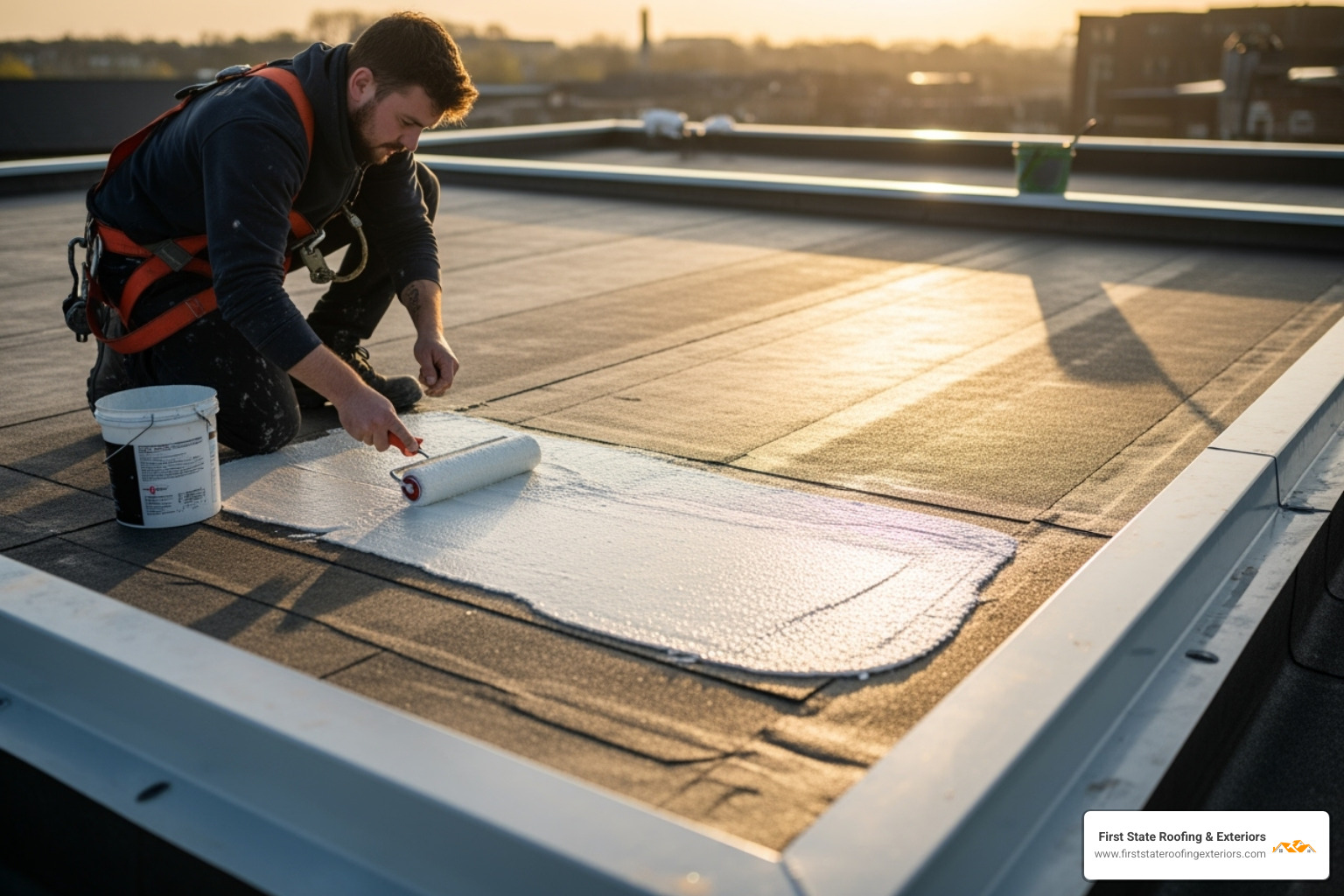
Installing a GRP fibreglass roof requires precision and experience. Professional fibreglass roofers near me follow a strict protocol because every step is critical.
- Deck Preparation: The process begins with a clean, dry, and structurally sound roof deck, typically OSB3 tongue and groove boards. Any compromised sections are replaced to ensure a smooth, stable base.
- Trims and Details: Pre-formed GRP edge trims are installed around the perimeter and any penetrations (vents, skylights). These direct water flow and create clean, professional transitions, forming the framework for the seamless surface.
- Laminating Process: Chopped strand mat is laid across the deck and saturated with catalysed polyester resin. This creates the impermeable composite layer. Specialized rollers are used to remove air bubbles and ensure complete saturation, with no weak points.
- Topcoat Application: A protective topcoat is applied once the laminate has set. This essential layer provides UV resistance, adds waterproofing, and gives the roof its final color and finish.
- Curing Time: The roof must fully harden before it’s ready for traffic or weather exposure. Temperature and humidity affect curing time, but patience ensures a rock-hard, seamless surface that will protect your property for decades.
This detailed process is why choosing a qualified installer is so important. For a no-obligation estimate from installers who know this system inside and out, call (302) 222-4065 to schedule a free inspection.
The Unbeatable Advantages of a Fibreglass Roof
Fibreglass roofing delivers a comprehensive solution that addresses the most common pain points homeowners face with flat roofs. Here are the primary advantages you’ll discuss with fibreglass roofers near me.
- Exceptional Longevity: A professionally installed GRP roof can last 30 years or more. This is a significant upgrade compared to traditional felt roofs, which often need replacement every 6-8 years. Its inherent toughness resists punctures, tears, and impacts.
- Seamless Protection: A GRP roof forms one continuous, monolithic layer across your entire roof. Unlike systems that rely on seams (the starting point for most leaks), fibreglass eliminates this vulnerability entirely.
- Minimal Maintenance: Fibreglass roofing requires no regular recoating or special sealants. A simple cleaning and visual inspection once or twice a year is typically all that’s needed, saving you time and money over the roof’s long lifespan.
- Superior Weather Resistance: Fibreglass excels in Delaware’s challenging climate. It handles standing water without degradation, remains stable through extreme temperature swings, and is corrosion-free. It will not warp, split, or deteriorate from UV exposure.
- Aesthetic Customization: The topcoat can be applied in virtually any RAL color, allowing you to match your home’s exterior or create a striking architectural statement. This provides a clean, modern look that complements any style.
Residential vs. Commercial Applications
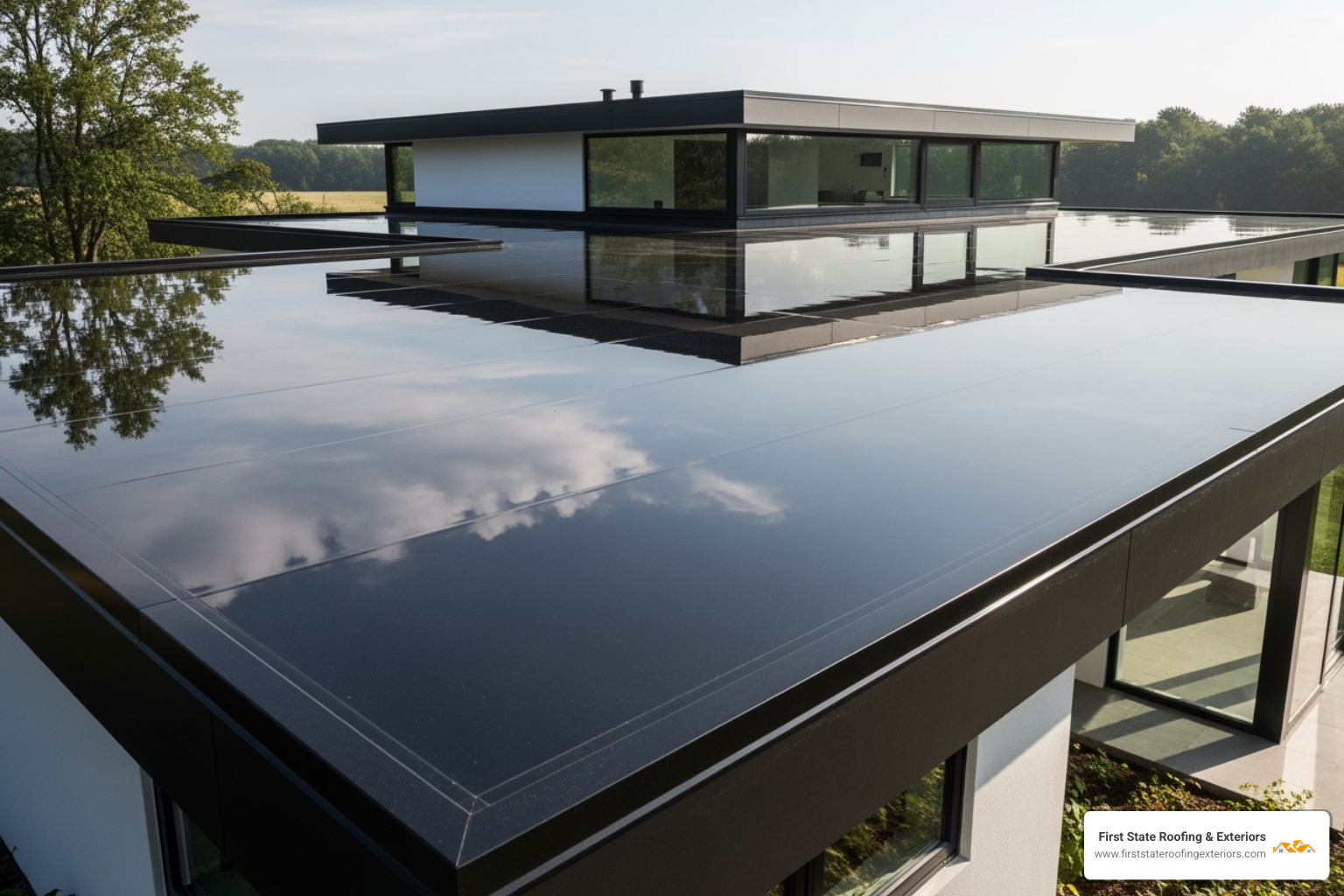
For residential properties, fibreglass is perfect for flat roof extensions, garages, and balconies, eliminating persistent leak worries. Its strength supports rooftop patios or gardens, handling regular foot traffic without damage.
In commercial settings, durability is paramount. Fibreglass handles maintenance crews, HVAC units, and solar panel installations. The 30+ year lifespan means minimal disruption to operations and protects valuable inventory and equipment from water damage.
Is Fibreglass an Eco-Friendly Option?
Fibreglass roofing offers several sustainability advantages. When paired with high-performance insulation and a light-colored, reflective topcoat, it creates an energy-efficient system that can lower cooling costs. Its most significant environmental benefit is its extended lifespan. A roof that lasts 30+ years dramatically reduces landfill waste and conserves the resources required for multiple replacements. While recycling composite materials is challenging, the industry is developing solutions, and the material’s longevity means this is a concern for decades in the future.
Cost, Lifespan, and Maintenance: The Long-Term Value
When evaluating roofing options, the initial price is only part of the story. While the upfront cost for fibreglass may be higher than for traditional felt, its long-term value is exceptional. Understanding the complete financial picture helps you make a confident decision.
The initial cost of a fibreglass roof depends on size, complexity, and the specific GRP system used. However, the key is its proven lifespan of 30 years or more with no measurable deterioration. Over that same period, a felt roof might need to be replaced four or five times, with each replacement incurring costs for materials, labor, and disruption.
Repair costs for fibreglass are also remarkably low. The seamless, robust nature of GRP means major repairs are rare. Most minor issues can be addressed quickly and affordably by experienced professionals. The primary factor affecting lifespan is the quality of the initial installation, which is why choosing certified, experienced fibreglass roofers near me is so critical.
Fibreglass Roof Maintenance 101
One of the best features of a GRP roof is how little effort it requires to maintain. Follow these simple steps to ensure peak performance for decades:
- Perform Annual Inspections: Check your roof each spring and fall, and after severe storms. Look for any cracks, blistering, or signs of damage. Catching small issues early prevents them from becoming expensive problems.
- Keep the Surface Clear: Use a broom or leaf blower to remove leaves, branches, and other debris a few times a year. This prevents moisture from being trapped against the surface and keeps drains clear.
- Clean as Needed: For most dirt, a gentle wash with water and a soft brush is sufficient. A mild detergent can be used for tougher spots. Avoid harsh chemicals or abrasive tools that could damage the topcoat.
- Check Seals: Periodically inspect the seals around penetrations like vents, skylights, and chimneys to ensure they remain watertight.
This hands-off approach is a significant advantage for busy Delaware homeowners, freeing up time and money for more enjoyable pursuits.
Fibreglass vs. Other Flat Roofing Materials
When you explore flat roofing, you’ll find that fibreglass roofers near me are one of several specialists. Understanding how GRP fibreglass compares to alternatives like EPDM, TPO, and modified bitumen is key to making an informed decision.
- EPDM Rubber: A flexible, low-cost membrane that can last 20-30 years. However, it is installed with seams that create potential weak points and is susceptible to punctures.
- TPO (Thermoplastic Polyolefin): An energy-efficient white membrane with heat-welded seams. It typically lasts 15-25 years, but the seams can still fail over time.
- PVC Roofing: Similar to TPO but with superior chemical resistance, making it ideal for certain commercial uses. It is durable but comes at a higher price point and relies on seams.
- Modified Bitumen: An asphalt-based material installed in layers. It is durable but requires more maintenance and has a shorter lifespan of 10-20 years.
Here’s how these materials compare at a glance:
| Material | Lifespan (Years) | Initial Cost | Durability | Maintenance Level | Key Feature |
|---|---|---|---|---|---|
| GRP Fibreglass | 30+ | Medium-High | Excellent (Seamless) | Very Low | Seamless, watertight, walkable, customizable |
| EPDM Rubber | 20-30 | Low-Medium | Good (Puncture risk) | Low | Flexible, lightweight, often recycled |
| TPO | 15-25 | Medium | Good (Seam strength) | Low | Energy-efficient (reflective), heat-welded |
| PVC | 20-30 | High | Excellent (Chemical) | Low | Chemical/grease resistant, heat-welded |
| Modified Bitumen | 10-20 | Medium | Good (Layered) | Medium | Granular surface, multi-layer |
Why Fibreglass Often Comes Out on Top
While each system has its place, fibreglass consistently delivers advantages that matter most to homeowners seeking long-term value.
- The Seamless Advantage: Fibreglass cures into a single, monolithic membrane with zero seams, eliminating the most common failure point found in all other flat roofing systems.
- Superior Durability: The composite structure of GRP is far more resistant to punctures and foot traffic than softer membranes like EPDM, making it ideal for usable roof spaces.
- Best Aesthetics: Fibreglass offers a smooth, clean finish that can be customized in virtually any color, providing a modern look that other materials can’t match.
- Long-Term Value: Although the initial investment may be higher, the 30+ year lifespan and minimal maintenance make fibreglass the most cost-effective solution over time. The team at First State Roofing & Exteriors can help you understand the long-term value for your property. Call (302) 222-4065 to schedule a free inspection and get a no-obligation estimate.
How to Find the Best Fibreglass Roofers Near Me
Finding the right contractor is the most important decision you’ll make for your fibreglass roof. The skill of the installer directly determines whether your roof lasts for 30+ years or fails prematurely. The search for qualified fibreglass roofers near me requires finding specialists who understand GRP and have proven hands-on experience, especially in Delaware’s unique climate.
At First State Roofing & Exteriors, we’ve seen how the right contractor makes all the difference. Over two decades of serving Delaware homeowners has taught us what separates exceptional fibreglass roofers from the rest.
Key Qualities of Top-Tier Fibreglass Roofers
- Specialization in GRP Systems: Look for companies that focus on fibreglass roofing, as they have the specialized training and equipment necessary for a flawless installation.
- Industry Certifications: Certifications from the British Board of Agrément (BBA) or manufacturers like Scott Bader prove a contractor’s expertise and adherence to industry standards. You can learn more at bbacerts.co.uk.
- Marine Industry Experience: A background in marine fibreglass is a valuable qualification, as it demonstrates a deep understanding of creating truly impenetrable waterproof barriers.
- Comprehensive, Transferable Warranties: Reputable roofers offer 15- to 25-year guarantees covering both materials and labor. A transferable warranty also increases your property’s resale value.
- Full Insurance and Licensing: Verify that your contractor is fully insured and licensed in Delaware to protect yourself from liability.
- Local Portfolio and Testimonials: Ask to see completed local projects and read customer reviews. Our team is proud of our track record—you can find local experts in your specific area on our site.
- Transparent Quoting: A detailed, itemized quote that breaks down all costs demonstrates honesty and professionalism.
Questions to Ask Potential Fibreglass Roofers
Use these questions to assess a contractor’s expertise:
- How many years have you specialized in GRP fibreglass roofing?
- Are your installers certified by material manufacturers?
- Can you provide references and a portfolio of local projects?
- What is your step-by-step installation process, including deck preparation?
- What does your warranty cover, is it transferable, and what are the terms?
- What is the projected timeline and what safety measures do you follow?
- Can you provide a detailed, itemized quote?
If you’re ready to discuss your project with Delaware’s trusted local experts, call (302) 222-4065 to schedule a free inspection and receive a no-obligation estimate.
When to Repair or Replace Your Fibreglass Roof
Even a durable fibreglass roof can sustain damage from weather, impacts, or improper installation. Knowing the signs of trouble helps you decide whether a simple repair is sufficient or if a full replacement is necessary.
Signs That a Fibreglass Roof Needs Attention
During your regular inspections, watch for these common issues:
- Cracks or Crazing: Fine, spiderweb-like lines (crazing) can be a sign of age, but deeper cracks compromise the waterproof barrier and require immediate attention.
- Blistering: Bubbles on the surface indicate trapped moisture, often due to installation errors. If left alone, they can rupture and cause leaks.
- Leaks or Water Stains: Any sign of water intrusion on ceilings or walls below a flat roof means the membrane has been breached and needs prompt action.
- Ponding Water: Water that remains on the roof for more than 48 hours after rain suggests a drainage or structural issue that needs to be addressed.
- Lifting or Delamination: If the fibreglass appears to be separating from the deck, it’s a sign of adhesion failure that must be fixed.
- Age: A roof approaching or exceeding its 25-30 year expected lifespan should be professionally inspected, even without obvious damage.
Making the Call: Fibreglass Roof Repair vs. Replacement
Use these guidelines to determine the best course of action:
Consider repair when:
- Damage is localized to a small area (e.g., a single crack or puncture).
- The roof is relatively young (under 15-20 years old).
- The underlying roof deck is structurally sound.
- The issue is a minor, easily identifiable leak.
Consider replacement when:
- Damage is widespread, with multiple cracks, extensive blistering, or large areas of delamination.
- Prolonged leaks have caused rot or structural damage to the roof deck.
- The roof has reached or exceeded its 25-30 year expected lifespan.
- The cost of multiple, recurring repairs approaches the cost of a new installation.
Our team at First State Roofing & Exteriors provides honest assessments for every situation. We’ll never push for a replacement if a repair will suffice. Don’t let uncertainty about your roof’s condition linger. Call (302) 222-4065 to schedule a free inspection, and we’ll provide an honest evaluation and clear guidance.
Your Next Steps to a Flawless Fibreglass Roof
You’ve learned about the exceptional durability, seamless protection, and long-term value of GRP fibreglass roofing. Now, the most critical step is choosing the right fibreglass roofers near me to ensure your investment is protected for decades.
The quality of the installation determines the performance of the roof. A skilled, local contractor understands Delaware’s unique climate challenges and has the specialized knowledge to deliver a flawless result. They also provide comprehensive warranties that give you peace of mind.
As a family-owned Delaware company with over 20 years of experience, First State Roofing & Exteriors has built our reputation on integrity, transparency, and exceptional craftsmanship. We don’t just install roofs—we build lasting relationships with our clients.
Ready to invest in a roof that will protect your property for 30 years or more?
Get a free, no-obligation estimate for your fibreglass roofing project. Call (302) 222-4065 to schedule a free inspection today. Our local professionals will assess your property, answer your questions, and provide a transparent quote. Let us guide you every step of the way to a secure and beautiful fibreglass roof. Find your local roofer near me and experience the First State Roofing difference.