Why Roof Leak Detection Matters: Protecting Your Delaware Home
Proactive roof leak detection is the most effective way to prevent a minor water intrusion from becoming a major disaster. By the time you spot a telltale brown stain on your ceiling, water may have been seeping in for weeks, traveling along rafters and soaking insulation. Understanding the early warnings is a critical skill for any homeowner dedicated to protecting their Delaware home.
Quick Answer: Key Signs You Have a Roof Leak
- Interior signs: Water stains on ceilings or walls, peeling paint, musty odors, visible dripping
- Exterior signs: Missing or damaged shingles, cracked flashing, granules in gutters, sagging rooflines
- Hidden indicators: Damp insulation in the attic, dark wood stains on rafters, daylight through roof deck
- Action required: Call a professional if you can’t locate the source or if you see multiple leak points
The average roof leak repair costs between $379 and $1,755, but delaying repairs can significantly increase that figure. An unchecked leak can compromise your home’s structure, create hazardous mold, and pose fire risks from contact with electrical wiring. For Delaware homeowners, early detection is essential for protecting your investment.
I’m Richard McCain, owner of First State Roofing & Exteriors. With over 20 years of experience in Delaware, I’ve seen how early roof leak detection prevents catastrophic damage. My team specializes in comprehensive inspections to pinpoint leak sources with precision.
Whether you have a visible leak or want peace of mind, we offer free estimates. Call us today at (302) 222-4065 to schedule your free inspection and protect your home from water damage.
Telltale Signs: How to Know if Your Roof is Leaking
Detecting a roof leak starts with recognizing the signs inside and outside your home. These indicators are your early warning system, prompting you to investigate before a minor drip becomes a major problem. For a deeper dive into spotting these issues, consider this useful Homeowner’s Guide to spotting leaks.
Interior Warning Signs
The interior of your home often provides the first clues that your roof is compromised.
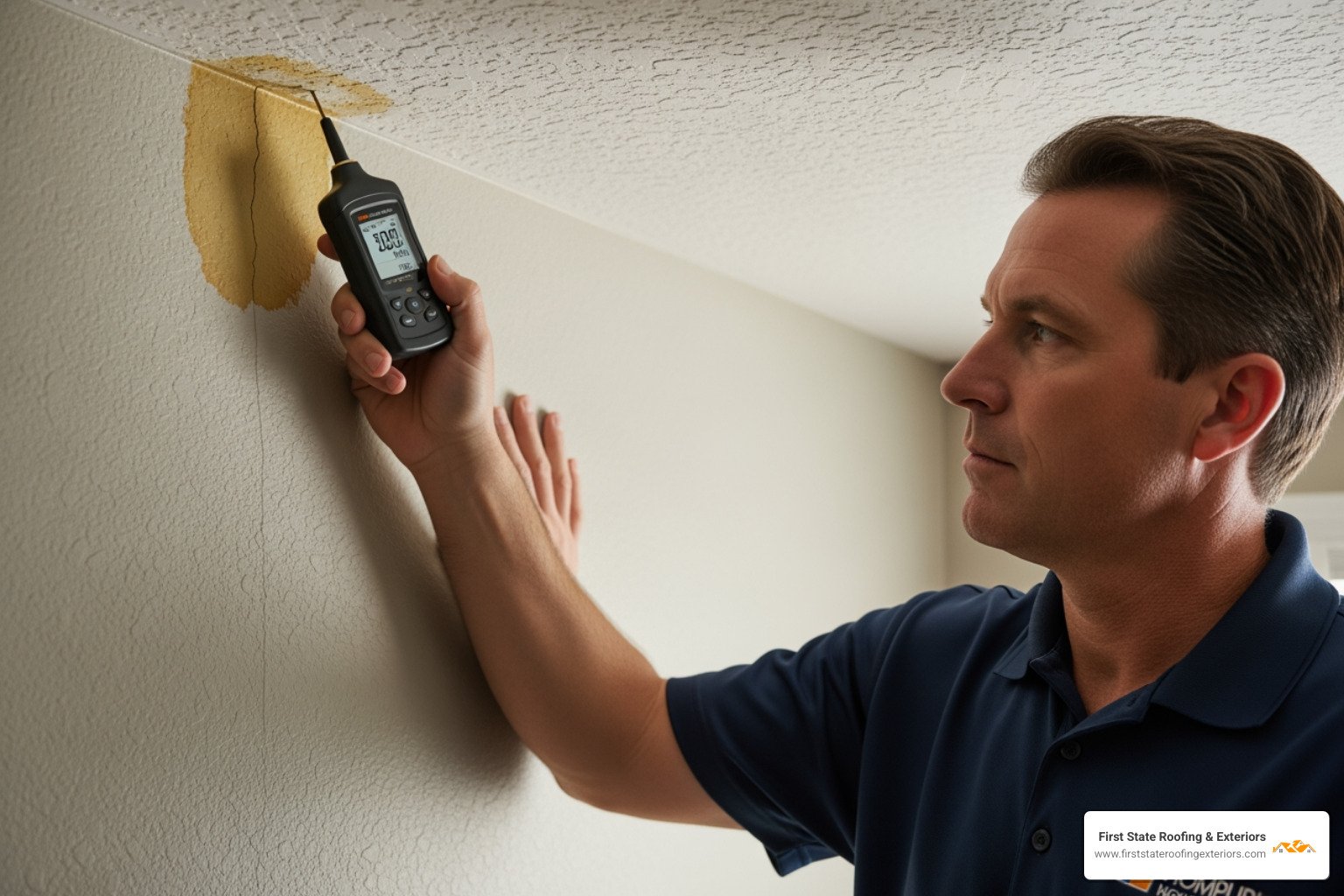
- Water Stains on Ceilings: Look for brown or yellow discoloration on ceilings or upper walls. These stains are the most common sign and typically appear after rain.
- Dripping Water: This is undeniable evidence. If you see or hear water actively dripping during or after rain, your roof is leaking and needs immediate attention.
- Mold or Mildew Odors: A persistent musty smell, especially in your attic, often indicates hidden moisture and mold growth from a long-standing leak.
- Peeling or Bubbling Paint: Moisture trapped beneath paint or wallpaper will cause it to bubble or peel, a clear sign of water infiltration.
- Sagging Ceiling: A bulging section of your ceiling indicates extensive water accumulation. This is a serious hazard that requires immediate professional assessment to prevent a collapse.
Exterior Warning Signs
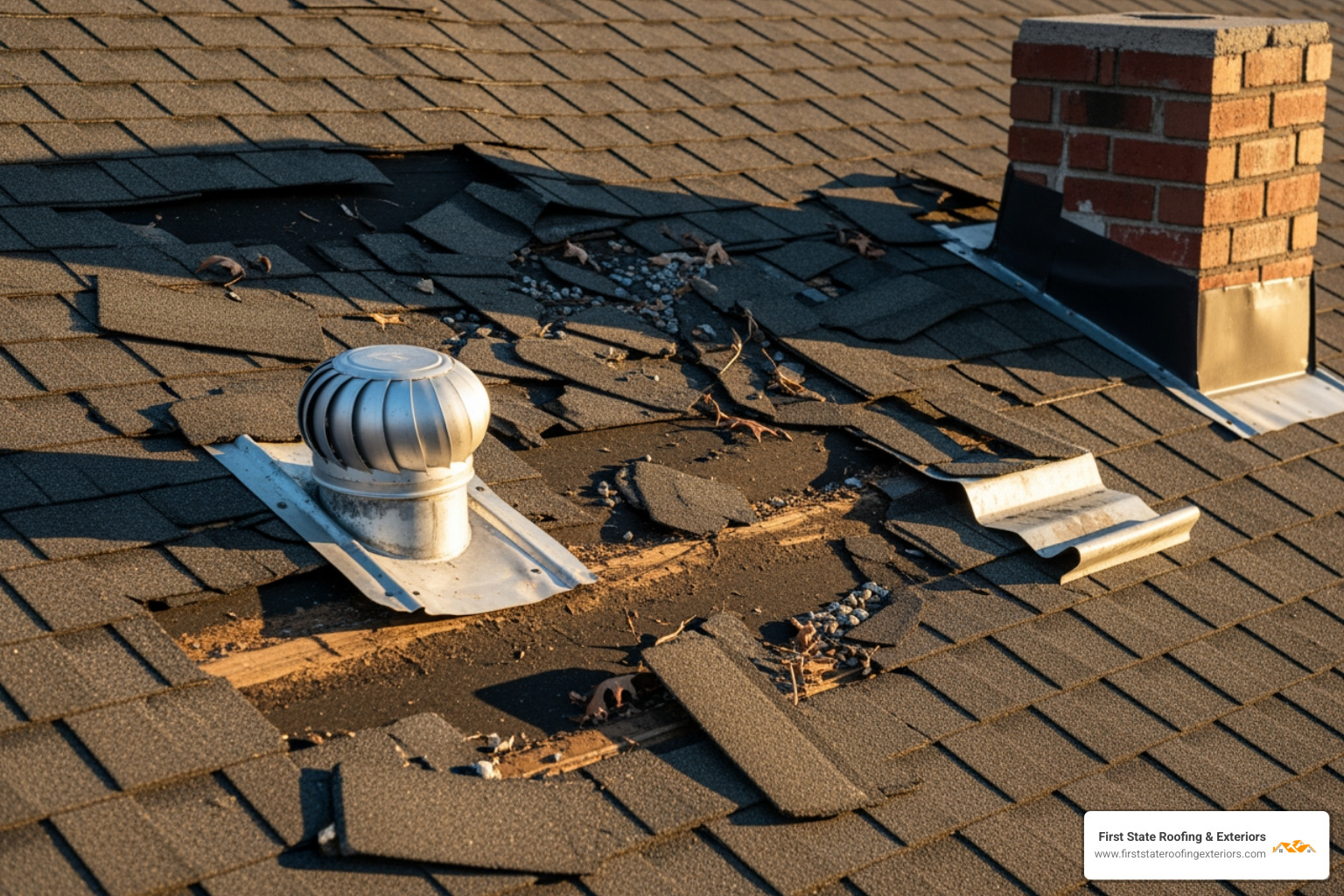
Examining your roof’s exterior, even from the ground with binoculars, can help pinpoint a leak’s origin.
- Missing or Cracked Shingles: Wind, hail, or age can damage shingles, creating direct entry points for water. Look for curled, buckled, or cracked shingles.
- Granules in Gutters: Finding excessive asphalt granules in your gutters means your shingles are deteriorating and losing their protective layer.
- Damaged Flashing: Flashing is the metal stripping around chimneys, vents, and skylights. If it is bent, rusted, or loose, it can allow water to penetrate.
- Exposed Nail Heads: Over time, sealant around roofing nails can wear away or nails can pop up, creating small holes for water to enter.
- Moss or Algae Growth: Significant moss or algae suggests moisture is being retained on your roof, which can degrade shingles over time.
Roof Leak vs. Other Water Issues
It’s crucial to differentiate a roof leak from other water issues for an accurate diagnosis.
| Issue Type | Common Signs | When It Appears |
|---|---|---|
| Roof Leak | Water stains on ceilings/walls, dripping water | During or immediately after rain/snow melt |
| Plumbing Leak | Water stains, dripping, mold (often near pipes) | Can occur at any time, regardless of weather |
| Attic Condensation | Damp insulation, frosted nails, widespread moisture | Often in cold weather, unrelated to rain |
| HVAC Leak | Water pooling, stains near AC unit or ducts | When AC or furnace is running |
- Condensation in Attic: Poor ventilation can cause moisture buildup, especially in cold weather. This condensation drips and creates stains, mimicking a roof leak.
- Plumbing Leaks: Leaks from pipes can cause water stains but can occur at any time, even when it hasn’t rained. If damage appears without recent precipitation, a plumbing issue is likely.
- HVAC Unit Leaks: Your air conditioning or furnace drainage lines can leak, usually localized around the unit or its ducts while the system is operating.
- Siding Leaks: Water can penetrate damaged siding or window seals, creating stains that appear lower on walls or around windows.
A Homeowner’s Guide to DIY Roof Leak Detection
While complex leaks require professional attention, you can safely take steps to locate the source. This initial detective work provides valuable information for a professional roofer. For a comprehensive guide, you might find this This Old House article helpful.
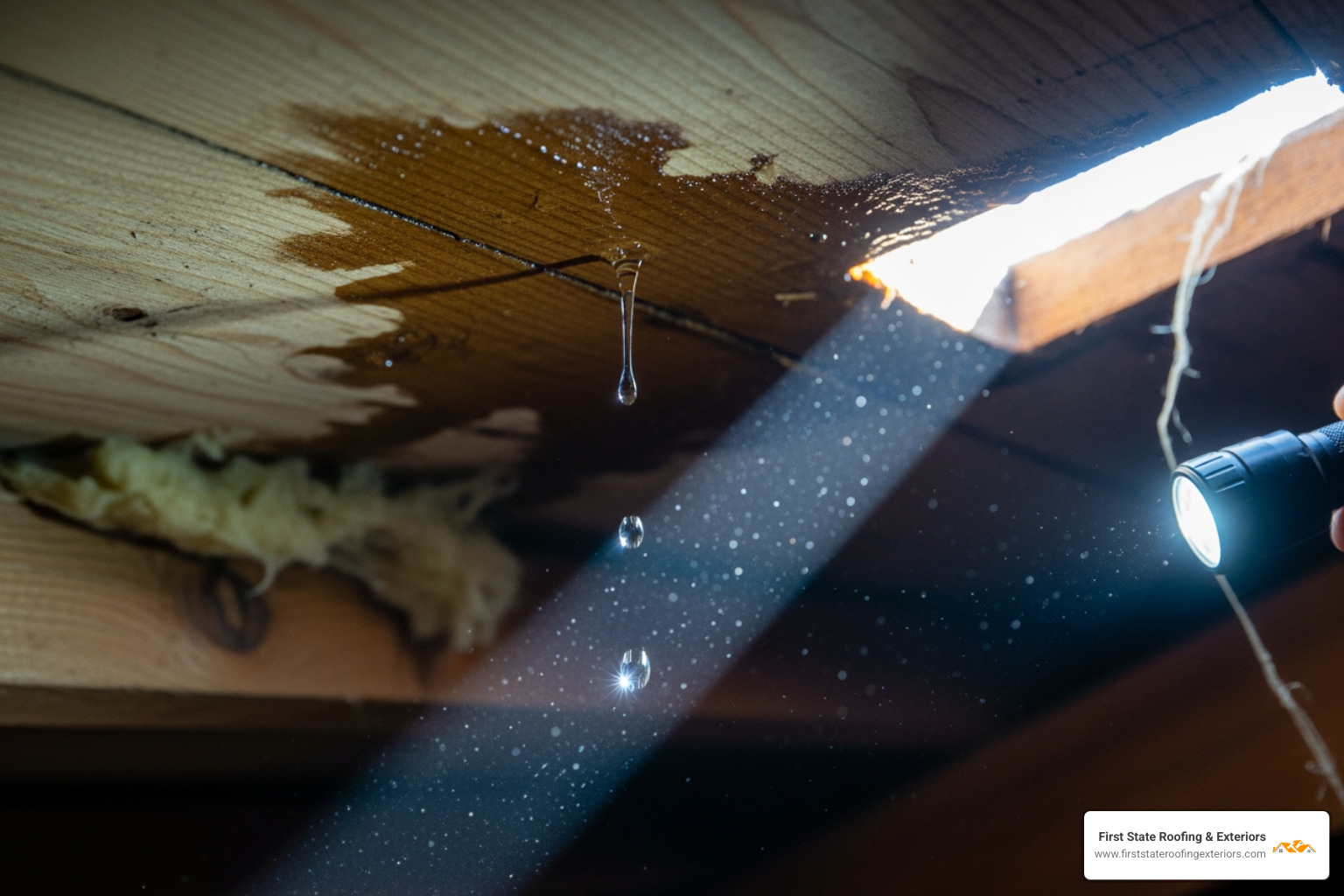
Step 1: The Attic Investigation
Your attic is the best starting point for roof leak detection.
- Wear Protective Gear: Prioritize safety by wearing gloves, goggles, and a face mask. Be cautious of older insulation in Delaware homes, as it could contain asbestos.
- Use a Powerful Flashlight: A bright flashlight or headlamp is essential for highlighting moisture in dark corners.
- Look for Dark Wood Stains: Scan the underside of the roof sheathing and rafters for dark brown or black streaks, which indicate water damage.
- Trace Water Trails Uphill: Water flows down, so the leak’s entry point will be uphill from the interior damage. Follow moisture trails upward to their highest point.
- Check for Damp Insulation: Wet, compressed, or discolored insulation is a strong sign of a leak and loses its insulating R-value.
- Look for Daylight: In a dark attic, turn off your light and look for pinpricks of daylight coming through the roof. Even a tiny hole can let in significant water.
- Measure the Location: If you find a potential source, measure its position from a fixed point like a chimney to help a professional locate it from the outside.
Step 2: Safe Exterior Inspection from the Ground
We recommend performing exterior inspections from the ground with binoculars for safety.
- Use Binoculars: Scan your roof’s surface for visible damage like missing, cracked, or curled shingles.
- Inspect Roof Penetrations: Pay close attention to areas where objects penetrate the roof, such as chimneys, vents, and skylights. Look for damaged or loose flashing.
- Look for Damaged Flashing: Check metal flashing in roof valleys and around dormers. Rust, bending, or separation are red flags.
- Examine Roof Valleys: Debris in roof valleys can cause water to back up under shingles. Clear them only if you can do so safely from a ladder.
- Check Gutters: Clogged gutters cause water to overflow and seep under the roof’s edge. Ensure they are clear.
Step 3: The Water Test Method (With a Helper)
If the leak source remains elusive, a controlled water test can help. This requires two people and should be done in dry weather.
- For Hard-to-Find Leaks: This test helps recreate the conditions that cause a leak.
- Work in Small Sections: One person on the roof with safety gear should use a garden hose to wet small sections, starting low and moving up.
- Helper Stays Inside: A second person stays inside the attic, watching for any drips or water intrusion.
- Communicate When Drip Appears: The inside helper should immediately signal the person on the roof when a drip appears to isolate the leak’s location.
- Important Note: This method can introduce more water into your home. If you are at all uncomfortable, it is always best to call a professional.
Common Culprits and High-Risk Areas
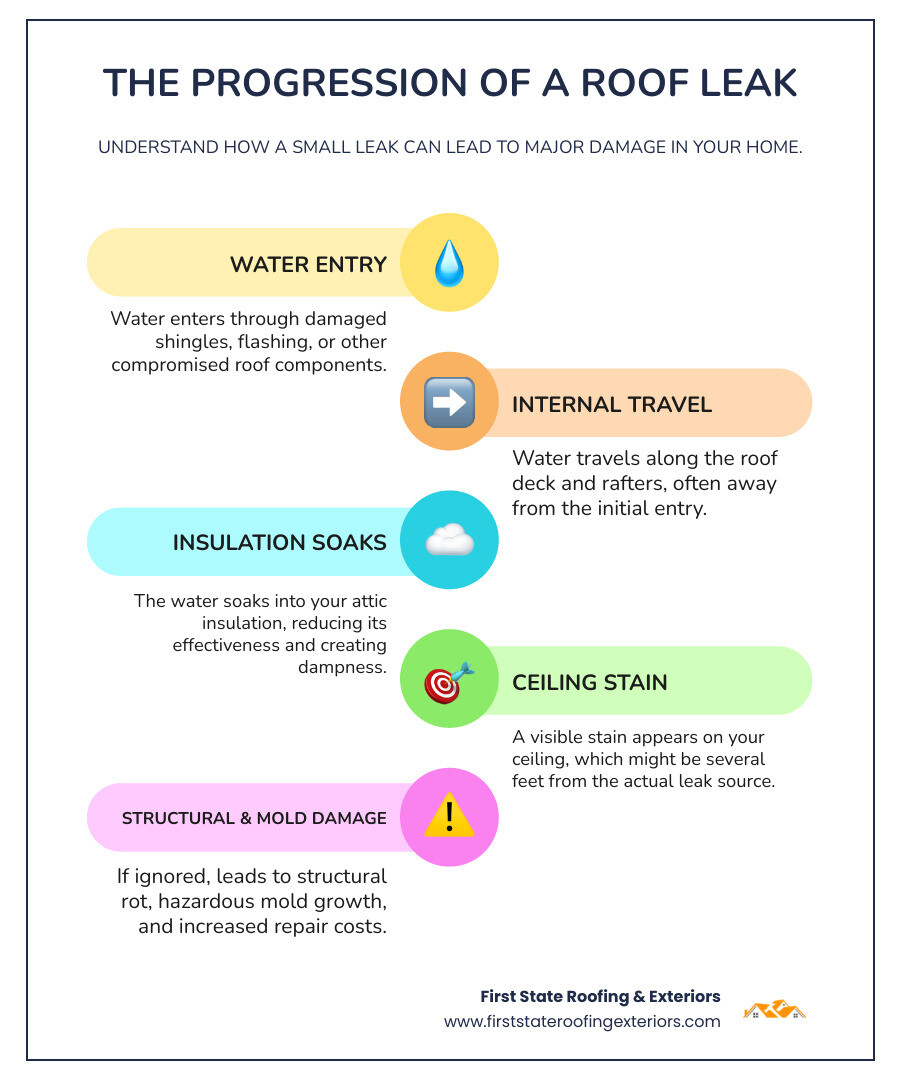
Understanding why roofs leak and where they are most vulnerable is key for effective roof leak detection and prevention. Leaks often result from a combination of environmental factors, material age, and installation quality.
Why Do Roofs Leak? The Primary Causes
Roof leaks usually stem from a few common issues.
- Severe Weather: Delaware’s harsh weather, including high winds, heavy rain, and hail, can lift shingles, create punctures, and overwhelm drainage. Winter freeze-thaw cycles and snow can cause ice dams, forcing water under roofing materials.
- Aged Roofing Materials: Most roofs last 20-30 years. Over time, UV rays and weather cause shingles to become brittle, crack, or lose their protective granules, making them vulnerable to leaks.
- Faulty Installation: A significant number of leaks, especially on newer roofs, trace back to improper installation, such as incorrect nailing, poor shingle alignment, or improperly installed flashing.
- Physical Damage: Overhanging tree branches can scrape away shingle granules, while falling limbs can cause direct punctures. Animals may also chew through roofing materials.
- Clogged Gutters: Gutters filled with debris cause water to overflow and pool against the roof’s edge, seeping under shingles. In winter, this contributes to ice dam formation.
Where Do Roofs Leak? The Most Prone Areas
Certain areas of a roof are inherently more vulnerable to leaks. These are the hot spots for roof leak detection.
- Roof Valleys: These V-shaped channels collect large amounts of water. If flashing is damaged or clogged with debris, leaks are highly likely.
- Flashing Around Chimneys: The seal around a chimney is a common failure point. Cracked, rusted, or separated flashing creates a prime entry point for water.
- Vents and Pipe Boots: Every pipe or vent penetrating the roof is sealed with a boot or flashing. These rubber boots can crack from UV exposure, allowing water to seep in.
- Skylight Seals: While beautiful, skylights are common leak sources. Their seals can degrade, or the surrounding flashing can fail over time.
- Areas with Missing or Damaged Shingles: Any spot with missing, cracked, or buckled shingles is an open invitation for water to enter.
- Roof Edges and Eaves: These areas are susceptible to wind-driven rain and ice dams, which can force water backward under the shingles.
The Hidden Dangers and Costs of a Leaky Roof
Ignoring a roof leak is like ignoring a crack in a dam—the consequences can become catastrophic, extending far beyond a simple drip.
The Risks of Delaying Repairs
A small roof leak can quickly snowball into serious problems for your Delaware home.
- Structural Rot: Persistent moisture rots wood components like rafters, trusses, and decking. This compromises your home’s structural integrity and leads to expensive repairs.
- Mold and Mildew: Damp, dark attics are ideal breeding grounds for mold. This poses significant health risks, especially for those with allergies or respiratory issues, and mold remediation is costly.
- Damaged Insulation: Water-saturated insulation loses its R-value, becoming ineffective. This leads to higher energy bills and the added cost of replacement.
- Electrical Hazards: If water contacts electrical wiring in your attic or walls, it can cause short circuits and create a serious fire risk.
- Ceiling Collapse: A ceiling saturated with water can become heavy, sag, and eventually collapse, causing extensive interior damage and creating a hazardous situation.
- Rapid Escalation of Damage: A leak can penetrate walls, damage flooring, and ruin furniture. What starts as a small fix can quickly become a multi-thousand-dollar project. Delaying repairs often leads to more costly emergency situations.
Understanding the Cost of Roof Leak Detection and Repair
The cost of addressing a roof leak depends on its severity, location, and how long it has gone undetected. Early roof leak detection is your best defense against budget-breaking repairs.
- Average Repair Cost: The average cost to repair a roof leak is approximately $1,100, with most repairs falling between $379 and $1,755.
- Minor vs. Major Repairs: Simple fixes like resealing flashing might only cost a few hundred dollars. However, if the leak has damaged the underlying roof deck or rafters, costs can quickly exceed $1,500.
- Full Roof Replacement: For widespread damage or an old roof, a full replacement may be the only option. This is a major investment, typically ranging from $5,800 to $13,100 or more. Immediate attention to a leaky roof is crucial to avoid this much higher expense.
The takeaway is clear: even a minor roof leak can create serious problems. Prompt action is paramount to protecting your home and your wallet.
When to Call the Pros: Professional Leak Detection and Prevention
While DIY inspections are useful, professional expertise is indispensable for complex leaks, safety concerns, or when you can’t find the source. At First State Roofing & Exteriors, we use advanced diagnostic tools to solve the toughest leak mysteries.
Advanced Professional Roof Leak Detection Methods
When a leak is elusive, professionals use advanced roof leak detection methods. These non-destructive techniques pinpoint the exact source of water entry without damaging your roof.
- Infrared Thermography: Infrared cameras reveal hidden moisture by detecting temperature differences on the roof surface. Wet areas retain heat differently, making them visible on the thermal scan.
- Electronic Leak Detection (ELD): This method uses a low-voltage electrical current to find breaches in a roof’s membrane. When water completes a circuit through a pinhole or failed seam, the system precisely locates the leak. It is far more accurate than traditional flood testing.
- Moisture Meters: These handheld devices confirm the presence of moisture and measure its concentration in materials like wood and drywall, helping to map the extent of the damage.
The reliability of ELD is recognized by industry bodies and is often used to meet requirements for programs like the RCABC RoofStar Guarantee. These advanced methods allow for precise diagnosis with minimal disruption, saving time and money.
The Importance of Preventative Maintenance
The best way to deal with a roof leak is to prevent it from happening in the first place. Diligent maintenance is key to minimizing future risks.
- Schedule Annual Inspections: A yearly professional inspection is the best form of prevention. Our expert roofing services can identify minor issues like loose shingles or failing flashing before they cause a leak.
- Clean Gutters Regularly: Keep gutters and downspouts clear of debris to ensure proper water drainage and prevent backups.
- Trim Overhanging Trees: Trim branches that hang over your roof to reduce the risk of scrapes, falling limbs, and debris buildup.
- Ensure Proper Attic Ventilation: Good ventilation regulates temperature and humidity in your attic, preventing condensation and mold growth.
- Address Minor Issues Promptly: Don’t put off small repairs. A few missing shingles today can become a major leak tomorrow.
- Clear Snow and Ice: In Delaware winters, safely remove heavy snow from your roof’s edge to prevent ice dams from forming.
For professional preventative maintenance or expert leak detection, First State Roofing & Exteriors provides free estimates. Call us today at (302) 222-4065 to schedule a free inspection and keep your roof in top condition.
Your First Line of Defense Against Water Damage
A well-maintained roof is your home’s primary defense against water damage. By spotting the early signs of a leak and knowing when to call for professional help, you protect your property and gain peace of mind. If you’ve noticed any of the warning signs discussed, don’t wait for the problem to escalate. The expert team at First State Roofing & Exteriors provides comprehensive inspections and durable repairs. We offer free estimates to assess the health of your roof. Protect your investment by calling us today at (302) 222-4065 to schedule your free, no-obligation inspection. Find your local roofer near you and keep your home safe and dry.