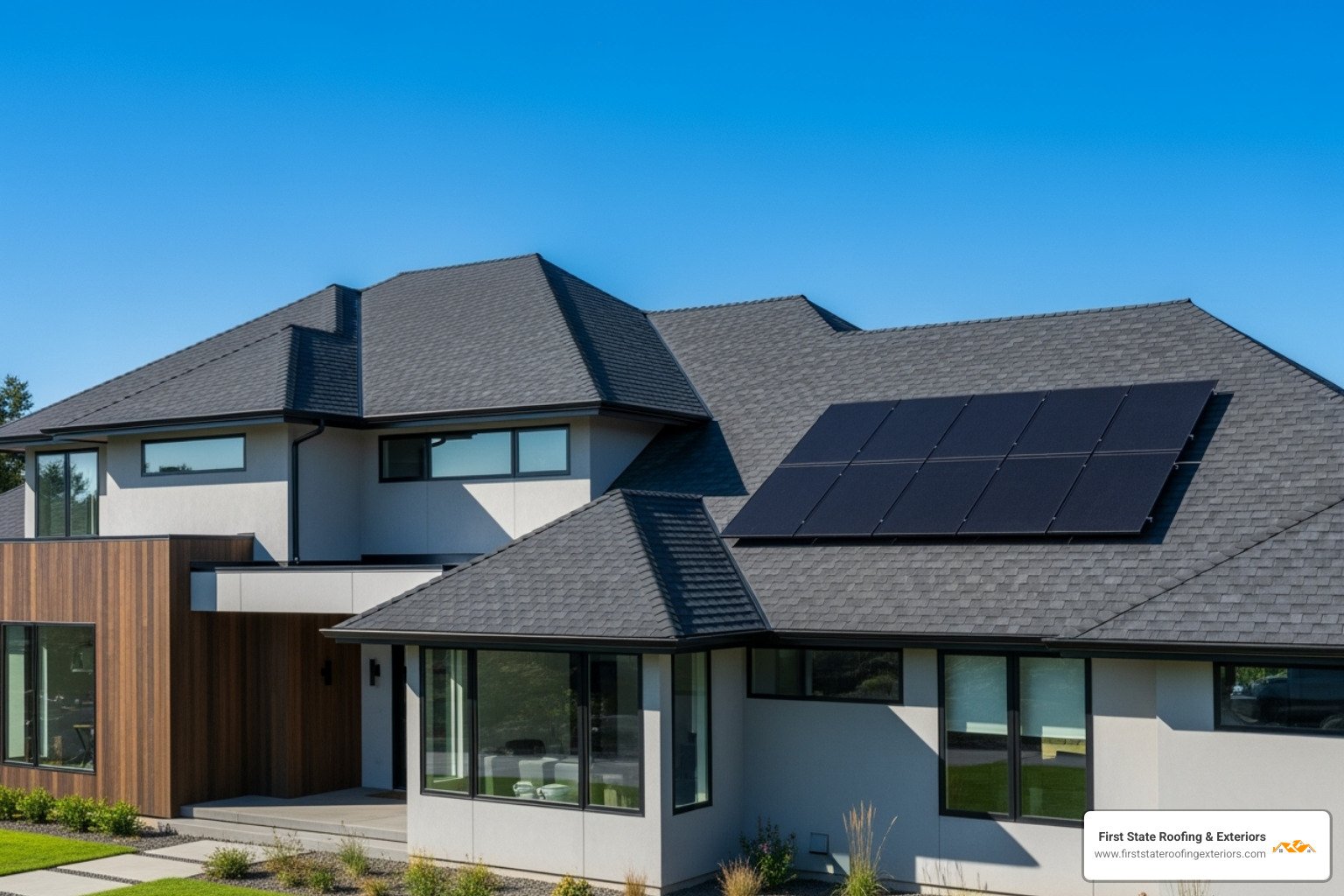
Why Understanding Solar Roof Replacement Costs Matters for Delaware Homeowners
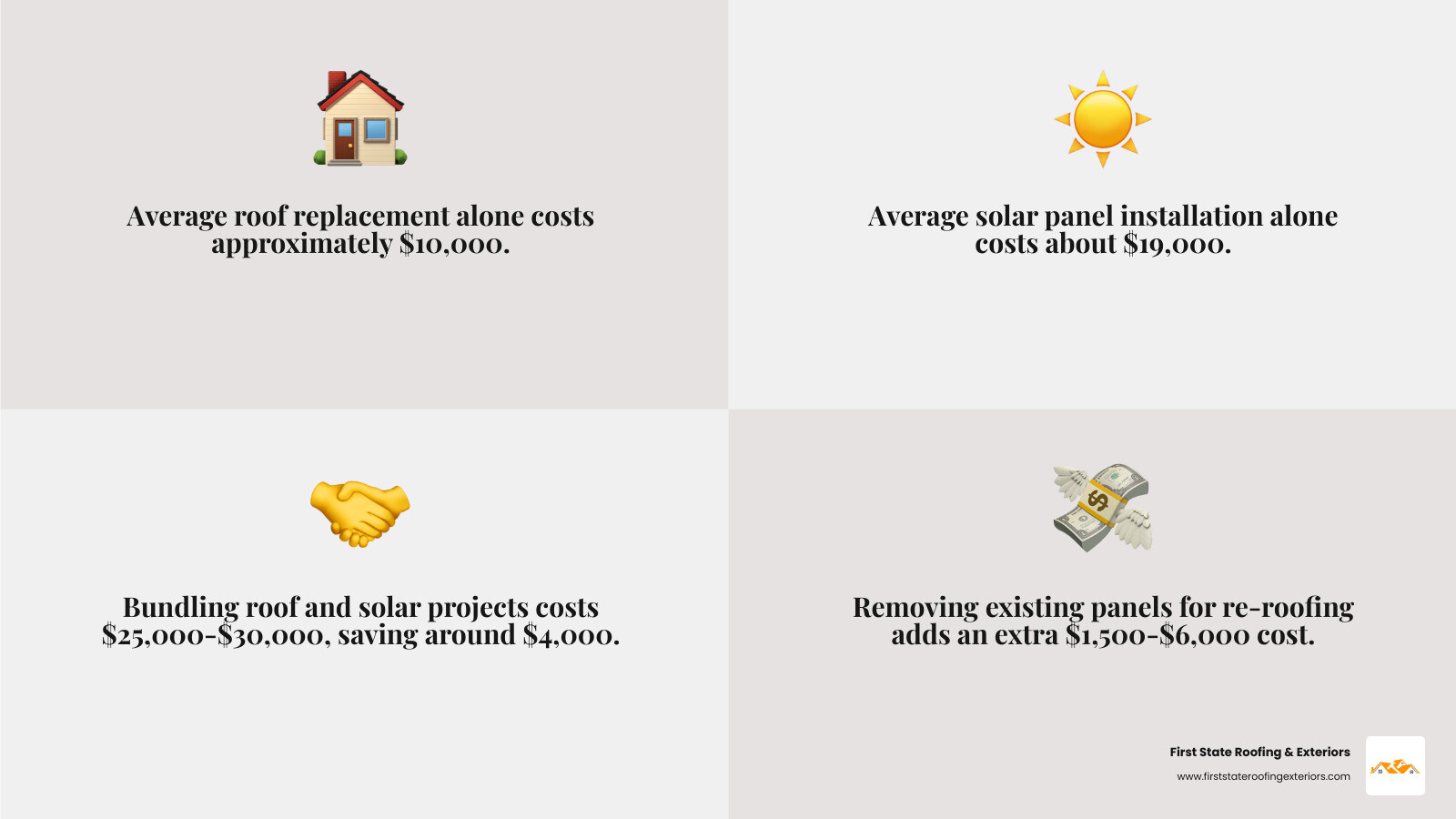
The cost to replace roof with solar panels typically ranges from $25,000 to $30,000 for an average home, but bundling these projects can save you approximately $4,000. As a Delaware contractor with over 20 years of experience, we’re a trusted Delaware roofing contractor that knows a solid roof is the foundation for a successful solar installation. This guide delivers clear, answer-first cost figures, savings, and decision criteria so you can plan a combined project with confidence.
Quick Cost Breakdown:
- Roof replacement alone: ~$10,000
- Solar installation alone: ~$19,000
- Combined project: $25,000-$30,000 (saves ~$4,000)
- Removing existing panels for roof work: $1,500-$6,000 extra
Key Benefits of Bundling:
- Single timeline and project management
- Shared labor and permit costs
- No future panel removal expenses
- Better warranty coordination
Facing an aging roof is the perfect opportunity to add solar panels and maximize your investment. Combining roof replacement and solar installation leads to significant cost savings by reducing installer acquisition costs and avoiding future re-installation expenses. This guide will help you steer the project with confidence.
Simple guide to cost to replace roof with solar panels terms:
Breaking Down the Individual Costs: Roof vs. Solar
Before bundling the cost to replace roof with solar panels, it’s helpful to understand what each component costs alone. Seeing the individual price tags makes the savings from bundling crystal clear.
Average Cost of a Roof Replacement
A new roof is an essential investment. The national average for roof replacement is around $10,000, with most Delaware homeowners paying between $5,378 and $10,991.
Key cost factors include:
- Roof size and complexity: A larger or more complex roof with a steep pitch, dormers, or tricky angles requires more materials and labor, increasing the cost.
- Material choice: Asphalt shingles are a budget-friendly option at $4.25 to $8.25 per square foot, lasting 20 to 30 years. Metal roofing costs more upfront ($10.38 to $18.28 per square foot) but lasts 50 to 70 years, making it a smart long-term investment for a solar-ready home.
- Tear-off vs. Overlay: A full tear-off of the old roof adds cost but is highly recommended. It allows your roofer to inspect and repair the roof deck, creating a solid foundation for solar panels. An overlay might save $1 to $2 per square foot but can hide underlying issues.
Delaware’s geographic location places it in a moderate cost zone. For a detailed local breakdown, see our Roof Replacement Cost Guide 2025.
Average Cost of a Residential Solar Panel Installation
Solar panel installation is a significant upfront investment with long-term dividends. The national average for residential solar installation is approximately $19,000 after the 30% federal tax credit. Before credits, an average system costs around $29,360.
In Delaware, homeowners typically invest around $21,347 for a complete system after incentives, reflecting our state’s solar-friendly policies.
Key cost drivers include:
- System size: The average Delaware home needs an 11 kW system. Larger homes require bigger, more expensive systems, though they often provide better value per watt.
- Panel quality: Higher-efficiency panels cost more but produce more electricity in the same space, which is crucial for roofs with limited unshaded areas.
- Installer choice: Costs vary based on the installer’s overhead, labor rates, and equipment. Getting multiple quotes is essential.
- Payment method: Cash purchases are cheapest. Solar loans can increase the total cost by up to 47% due to interest, but the monthly payment is often still lower than the previous electric bill.
Solar costs have dropped significantly, making now an excellent time to invest. For detailed local data, EnergySage offers valuable market insights. Learn more about the technology in our guide to Solar Roof Panels. Understanding these individual costs highlights the impressive savings of a combined project.
The Combined Project: Understanding the Cost to Replace Roof with Solar Panels
When you need a new roof and want solar energy, combining the projects is the smartest financial move. The cost to replace roof with solar panels as a bundled project creates significant savings.
What is the Total Upfront Cost?
While a roof replacement averages $10,000 and solar installation is about $19,000 (after incentives), bundling them brings the combined average cost to $25,000-$30,000. Most homeowners save around $4,000 compared to doing the projects separately. In Delaware, bundling roof replacement and solar typically reduces the total outlay by 12%–15% versus scheduling them as separate projects.
These savings come from operational efficiencies. A single project timeline means less disruption, while shared labor costs eliminate duplicate setup expenses. Streamlined permitting also plays a role, as a single coordinated effort saves time and administrative fees.
How Bundling Your Projects Leads to Big Savings
The $4,000 average savings results from smart project coordination that eliminates waste. When contractors handle both your roof and solar, they plan more efficiently.
- Reduced labor costs: A coordinated project eliminates the duplicate setup, travel, and administrative overhead associated with separate crews.
- Single point of contact: This transforms a potential logistical nightmare into a manageable process, preventing scheduling conflicts and finger-pointing if issues arise.
- No future removal costs: This is a huge long-term benefit. If you install solar on an aging roof, you’ll face $1,500-$6,000 in removal and reinstallation costs later. Replacing your roof first ensures it will last as long as your 25-30 year solar array.
- Efficient project management: Your new roof becomes the perfect foundation for solar, eliminating guesswork about structural integrity or warranty issues.
This approach represents the ideal time for a new roof replacement, as you can maximize the investment by adding solar energy generation.
Long-Term Financial Benefits and ROI
Beyond immediate savings, the financial benefits compound over time.
- Electricity bill savings: The average solar homeowner saves approximately $48,000 over 25 years. As utility rates climb, these savings become even more valuable.
- Solar payback period: The time for energy savings to offset the initial cost typically ranges from 3.7 to 19.1 years. Afterward, your panels generate free electricity for the rest of their lifespan.
- Increased home value: A report on solar homes premium from Lawrence Berkeley National Laboratory shows buyers pay about $15,000 more for homes with average-sized solar arrays. These homes also sell faster.
- Net metering benefits: In Delaware, you can send excess electricity to the grid for utility bill credits, maximizing your return on investment.
Combining a new roof with solar aligns your home with modern energy efficiency standards while creating multiple streams of financial return.
The Alternative Scenario: Re-Roofing with Existing Solar Panels
Projects don’t always follow the ideal timeline. Many homeowners need a new roof after solar panels are already in place. This scenario involves unique challenges and higher costs, underscoring why bundling is the ideal approach.
The High Cost to Remove and Reinstall Solar Panels
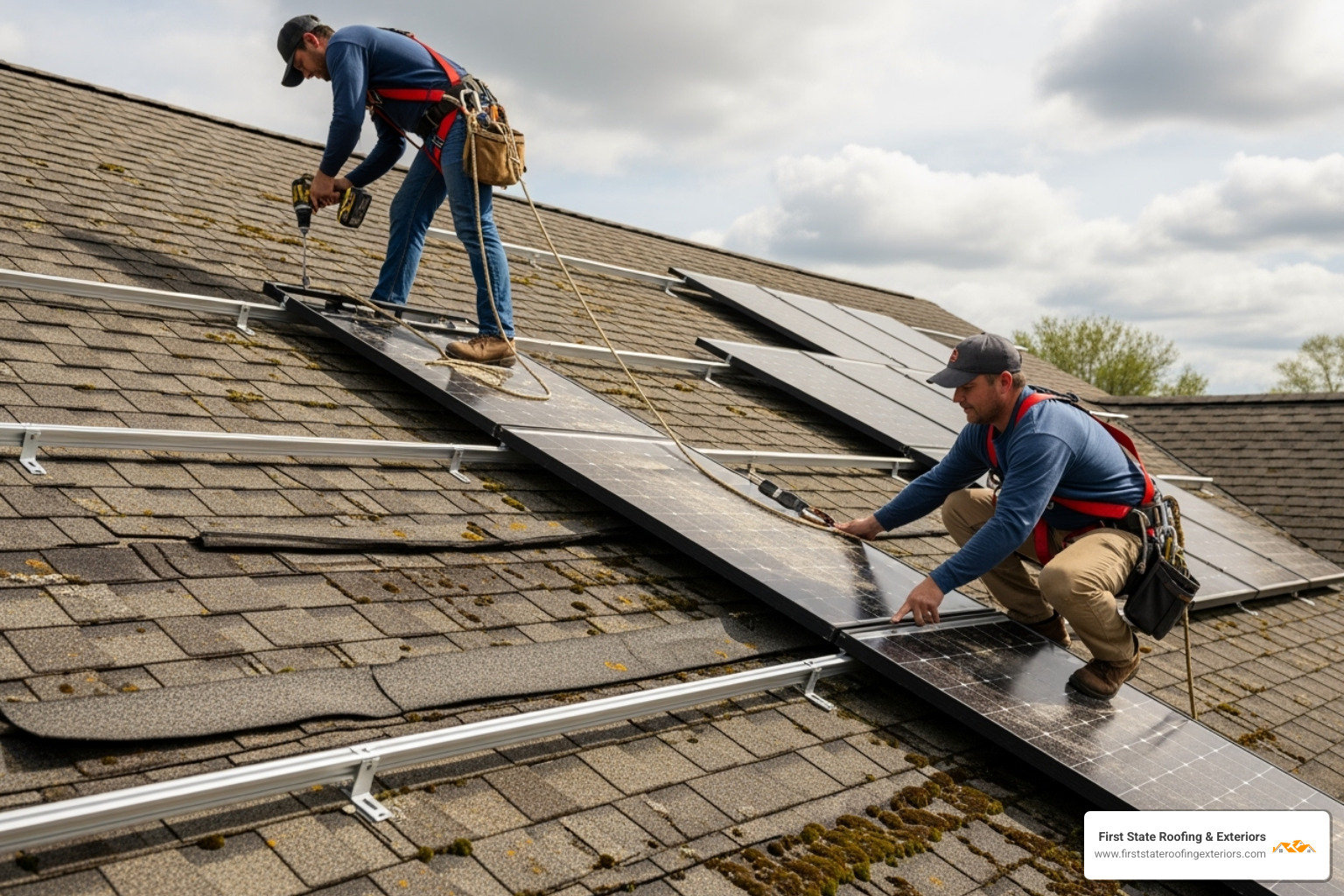
If you need a roof replacement with existing solar panels, every panel must be professionally disconnected, removed, stored, and reinstalled. This complex process requires specialized expertise to avoid damaging your investment.
The cost is significant: most homeowners pay $1,500 to $6,000, with a national average of $3,800. The cost per panel is $200 to $300, covering labor for disconnection, removal, and reinstallation.
- System size: Larger arrays mean more panels to handle, driving up costs. A 51-panel system could cost over $12,000 to remove and reinstall.
- Other factors: Steep or complex roofs increase labor time. Off-site panel storage can add around $250. Professional panel cleaning before reinstallation costs $15 to $35 per panel.
- Installer availability: Finding a qualified installer willing to work on another company’s system can be challenging and more expensive, as many won’t warranty such work.
- Damage risk: Moving panels creates opportunities for accidents. Damaged panels can cost $400 to $1,000 each to repair or replace.
The Risks of Not Replacing an Old Roof First
Installing solar panels on an aging roof is like building a deck on a shaky foundation. The core problem is mismatched lifespans, which creates a cascade of potential issues.
- Timing Mismatch: Traditional asphalt shingle roofs last about 20 years, while solar panels are warrantied for 25-30 years. Installing a new solar system on a 15-year-old roof guarantees you’ll face expensive removal and reinstallation costs down the line.
- Warranty Complications: Solar installation can void an old roof’s warranty. Conversely, removing panels for a later roof replacement can void your solar panel warranties.
- Leak Detection: Finding and fixing leaks on an older roof becomes much harder and more expensive once panels are installed, often requiring panel removal just to access the problem area.
- Paying for Labor Twice: You essentially pay for installation labor twice—once for the original install and again for the reinstallation after the new roof is on.
Will Insurance Cover Solar Panel Removal for a Roof Replacement?
Coverage depends on your policy and the reason for the roof replacement.
- Storm Damage vs. Wear and Tear: If your roof is replaced due to covered storm damage (wind, hail), insurance will likely cover the solar panel removal and reinstallation. If it’s due to normal aging, it typically won’t be covered.
- Policy Specifics: Homeowner’s policies vary. Some include solar equipment automatically, while others require a specific rider. Review your policy or speak with your agent to confirm coverage.
- Documentation: For a claim, proper documentation is crucial. Photos, professional assessments, and detailed estimates for both roofing and solar work are essential.
As experienced Delaware contractors, we help homeowners steer insurance claims involving solar panels. Contact Us for guidance on protecting your investment. Replacing your roof before installing solar panels eliminates these complications entirely.
Incentives, Financing, and Alternative Solar Options
The cost to replace roof with solar panels is manageable thanks to generous government incentives and flexible financing. Exploring alternative solar technologies can also open up new possibilities.
Maximizing Savings with Tax Credits and Incentives
Government incentives significantly reduce the financial barrier to going solar.
- The Federal Residential Clean Energy Credit: This is your biggest cost-reducer, offering a 30% tax credit for qualified residential solar systems. This credit applies only to the solar portion of your project, not the roof replacement itself (unless you opt for solar shingles). You can find details on the Residential Clean Energy Credit from the IRS.
- State and Local Programs: Delaware and its municipalities offer additional rebates, tax exemptions, and waived permit fees. These incentives bring the average local solar system cost down to around $21,347.
The Database of State Incentives for Renewables & Efficiency (DSIRE) is the best resource for finding all available incentives in your area.
Financing Options for Your Combined Project
Several financing paths can help you start saving on electricity bills immediately.
- Solar Loans: These often feature competitive rates and terms designed around the system’s lifespan.
- Home Equity Loans/HELOCs: Tapping into your home’s equity typically offers lower interest rates for large projects like a combined roof and solar installation.
- PPAs and Solar Leases: These options eliminate upfront costs. A third party installs and owns the system, and you buy the power at a fixed rate (PPA) or pay a monthly lease. However, you won’t own the system or qualify for tax credits.
While loans add interest costs, the monthly energy savings often offset the payments. Ownership provides the greatest long-term financial benefits through tax credits and increased home value.
What About Solar Shingles? A Cost and Function Comparison
Solar shingles are a premium, all-in-one solution that serves as both your roof and your power system.
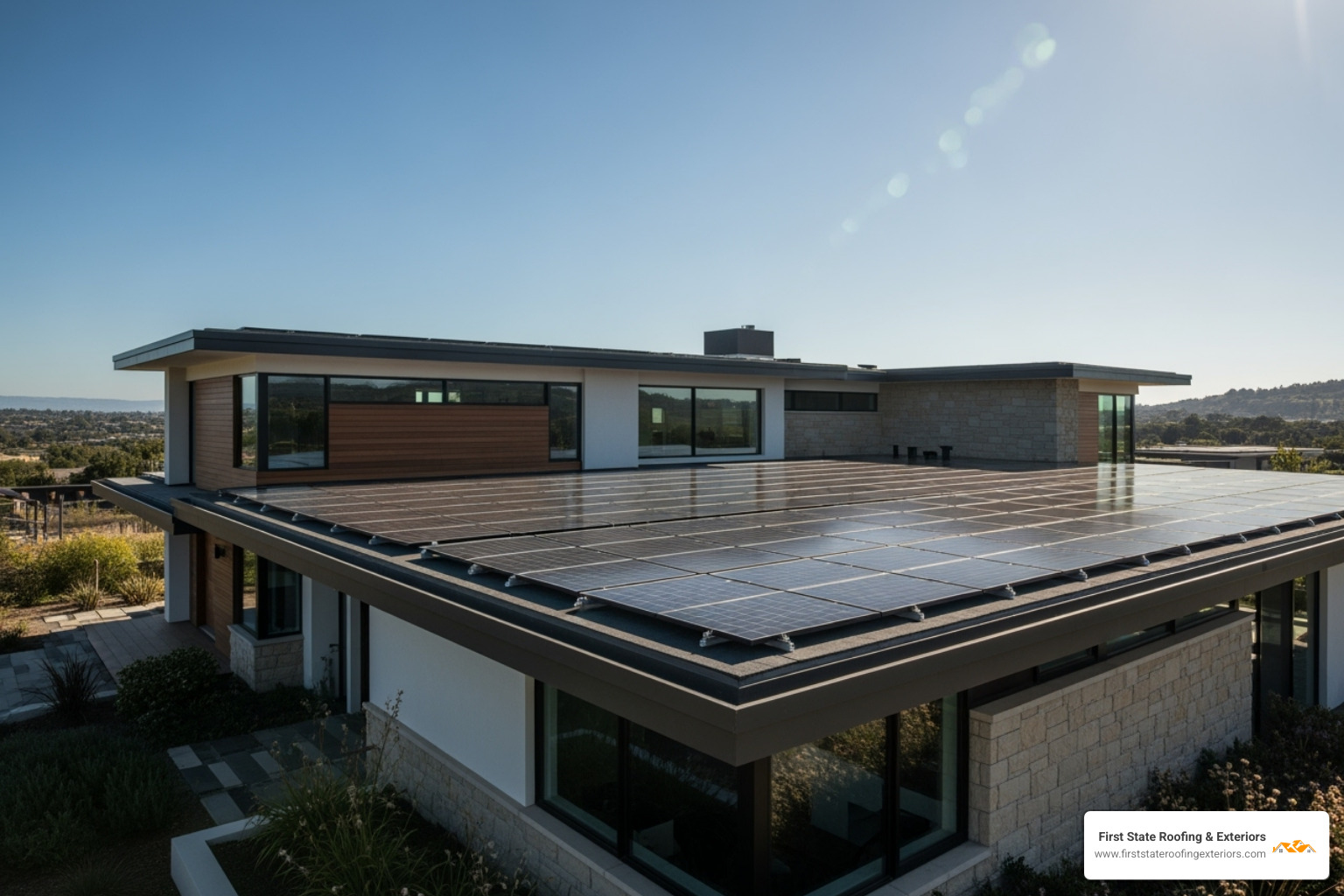
Also known as Building-Integrated Photovoltaics (BIPV), they look like conventional roofing materials but generate electricity. Their seamless aesthetic appeal comes at a premium, costing $21 to $25 per square foot, far more than asphalt shingles plus separate panels. A complete Tesla Solar Roof can exceed $180,000.
Historically, solar shingles have been less efficient than traditional panels, requiring more roof area for the same power output, though the technology is improving. Their main advantage is the simplified, all-in-one installation when you need both a new roof and solar power. For homeowners who prioritize curb appeal, solar shingles offer a sleek solution to the cost to replace roof with solar panels equation.
Frequently Asked Questions about the Cost to Replace Roof with Solar Panels
How do I know if my roof needs replacing before solar installation?
Determining if your roof is ready for solar is a critical first step. While a professional inspection provides the most accurate assessment, you can spot several warning signs yourself.
- Age: If your asphalt shingle roof is over 10-15 years old, it’s nearing the end of its lifespan. Installing a 25-year solar system on it means you’ll likely face expensive removal costs later.
- Visible Damage: Look for curled, cracked, or missing shingles. Bald spots where protective granules have worn away are another red flag.
- Granules in Gutters: Finding excessive shingle granules in your gutters is a telltale sign of a deteriorating roof.
- Interior Signs: Water stains on ceilings, attic leaks, or visible daylight filtering through the roof boards indicate serious problems that need immediate attention.
The best course of action is to get a Free Roof Estimate. A professional assessment of your roof’s condition and remaining lifespan can save you thousands in future costs.
Who handles the project—a roofer or a solar installer?
To best manage the cost to replace roof with solar panels, work with a single certified company offering both services or a roofer and solar installer with an established partnership. This coordination is crucial for quality and cost control.
- The Roofer: Handles the structural integrity and waterproofing, installing the new roof deck, underlayment, and roofing material to create a durable foundation.
- The Solar Installer: Manages the technology, including securely mounting panels, running conduits, and connecting the system to your home’s electrical panel.
When they work together, you get clear accountability, streamlined scheduling, and a cohesive warranty. As a provider of comprehensive roof replacement services, we either handle both aspects internally or coordinate with trusted solar partners to ensure a seamless project.
Can any type of roof have solar panels?
Most modern roofing materials are compatible with solar panels, but the roof’s structural condition and lifespan are more important than the material itself. It must support the added weight and last for the solar system’s 25-30 year lifespan.
- Asphalt shingles are the most common and straightforward choice for solar installation.
- Metal roofs are actually ideal, especially standing seam types that allow for clamp-on mounting systems that don’t penetrate the roof surface.
- Tile and slate roofs are workable but require specialized mounting techniques and higher labor costs to avoid breakage.
Your roof’s orientation, pitch, and any shading will also impact system performance. A professional evaluation can determine the best approach for your specific roof, ensuring your investment is built on a solid foundation.
Conclusion
Combining a roof replacement with solar panel installation is one of the smartest home improvement decisions a homeowner can make. While the initial cost to replace roof with solar panels of $25,000 to $30,000 may seem daunting, the investment delivers remarkable returns through bundling savings, energy independence, and tax incentives.
Bundling saves approximately $4,000 upfront and protects you from future removal and reinstallation costs, which can exceed $6,000. By replacing your roof first, you ensure it will last the entire 25-30 year lifespan of your solar panels. This strategic planning also open ups long-term benefits, including an average of $48,000 in energy savings over 25 years and an increase in home value of around $15,000.
The federal 30% tax credit and other local incentives make now an ideal time to act. These programs significantly lower the net cost of your solar investment.
As Delaware’s trusted local roofing experts, First State Roofing & Exteriors brings over 20 years of experience helping homeowners steer these important decisions. Our family-owned company has built its reputation on providing honest guidance and quality craftsmanship, ensuring your investment is protected.
We give free estimates—call (302) 222-4065 to schedule a free inspection and discuss the best plan for your roof and solar project. Our experts will assess your roof’s condition, review your energy goals, and provide clear, honest recommendations for your home’s energy-efficient future.