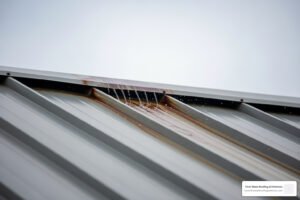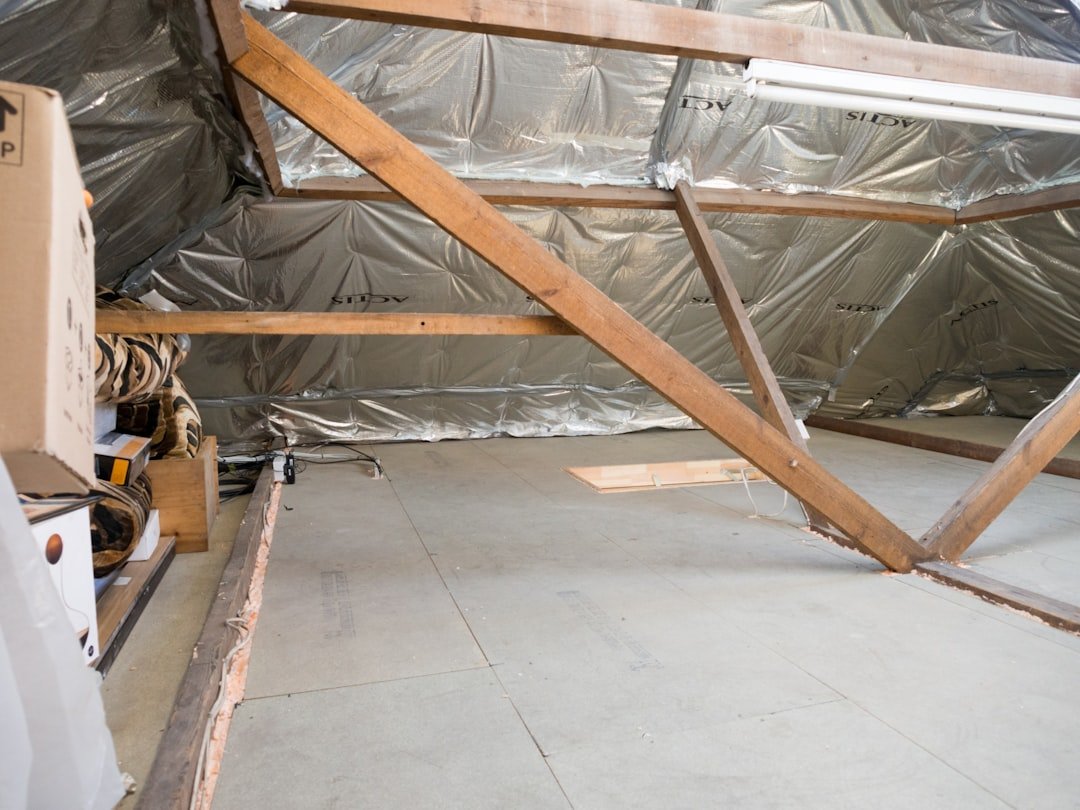
Why Your Attic’s Breathing System Matters More Than You Think
Attic ventilation repair is the process of fixing or restoring the airflow system in your attic so that fresh air can enter, hot air can escape, and moisture doesn’t build up. When this system fails, you’ll see signs like ice dams in winter, excessive heat in summer, mold growth, warped wood, or unusually high energy bills. As Delaware’s local experts, we at First State Roofing & Exteriors have seen how critical a healthy attic is to the overall well-being of a home.
If you suspect you need attic ventilation repair:
- Check for blocked soffit or ridge vents – Remove debris, leaves, or insulation that’s covering them.
- Look for moisture or mold – This means air isn’t moving properly.
- Call a licensed roofer – Complex repairs require professional diagnosis and code-compliant installation.
- Schedule annual inspections – Catch small issues before they become expensive.
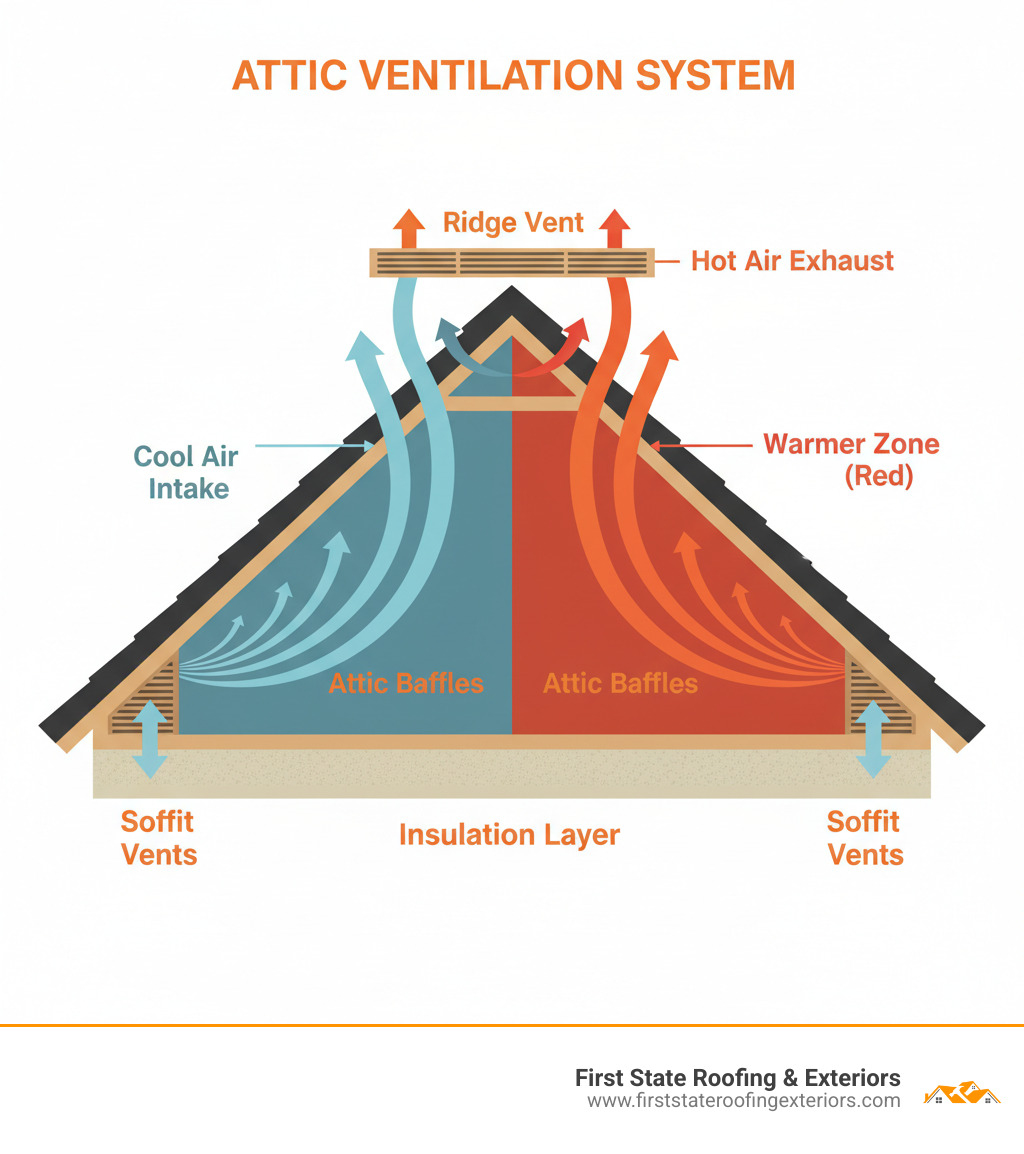
Your attic ventilation system is your home’s respiratory system. When it’s working properly, cool air enters through soffit vents at your eaves, moves up through the attic space, and hot, moist air exits through ridge vents or other exhaust points at the peak. This continuous cycle keeps your attic temperature close to the outside temperature, prevents moisture buildup, and protects your roof structure and shingles.
Without proper ventilation, your attic becomes a solar oven in summer and a condensation chamber in winter. Research shows that proper attic ventilation can reduce strain on your cooling system, prevent ice dams, extend shingle life, and improve indoor air quality by removing pollutants and excess humidity. It’s not just about comfort—it’s about protecting your investment.
Many Delaware homeowners overlook their attic ventilation until problems appear. By then, moisture may have already damaged insulation, rotted wood framing, or created conditions for mold growth. The good news is that most ventilation issues are fixable, and knowing what to look for can save you thousands in potential repair costs.
I’m Richard McCain, owner of First State Roofing & Exteriors, and over my 20+ years in the business, I’ve diagnosed and repaired countless attic ventilation systems across Delaware. Most attic ventilation repair projects I’ve overseen could have been prevented with earlier intervention—which is why I’m sharing this guide with you today.
If you’re experiencing any ventilation issues or simply want peace of mind, we offer free estimates and professional inspections. Our team is ready to help you find the right solution. To schedule a free inspection, call (302) 222-4065 or tap to call: tel:+13022224065.
The “Why”: Recognizing the Signs of a Failing Ventilation System
Your attic’s ventilation system acts like your home’s lungs, constantly breathing to keep everything healthy and happy. When it works well, it’s a silent hero, but when it starts to fail, your home will definitely let you know. Understanding these signals is the first step toward timely attic ventilation repair.
This critical system does a lot for your home. In the summer, it prevents your attic from turning into a scorching oven. This not only keeps your home cooler and reduces the stress on your air conditioning but also helps your roof shingles last longer by preventing them from baking in extreme heat. During the colder months, proper ventilation works hand-in-hand with your insulation to prevent moisture buildup. This is key to stopping destructive ice dams from forming and keeping internal damage at bay.
Ignoring poor ventilation comes with big risks. Without good airflow, your attic becomes a trap for hot, humid air. This creates a perfect breeding ground for mold and mildew. All that extra moisture can lead to structural rot in your home’s wooden framework, making your insulation less effective, and even causing paint to peel or wood to warp inside your living spaces. These problems don’t just make your home unhealthy; they can lead to really expensive structural repairs. Plus, your energy bills can skyrocket. An unvented attic forces your AC to work overtime, costing you more every month.
Catching these issues early can save you a lot of money and stress. Here are some clear signs to watch out for:
- Ice Dams: If you see thick ridges of ice forming along your roof’s eaves in winter, it’s a classic sign. This happens when heat escapes from your attic, melts snow, and then refreezes at the colder edges.
- Excessive Summer Heat: Do your upstairs rooms feel like a sauna, even with the AC blasting? Or does your attic itself feel stiflingly hot? Your ventilation might not be doing its job to expel that hot air.
- Moisture Signs: Keep an eye out for condensation on windows, damp spots on the underside of your roof, or even frost in the attic during winter. These are all clues that moisture isn’t escaping.
- Mold and Mildew: Any visible mold growing in your attic is a huge red flag. It means you have trapped moisture and not enough airflow.
- Warped Wood: If the wooden rafters or sheathing in your attic look warped or are starting to rot, it’s a clear indicator of long-term moisture exposure.
- Peeling Paint: Surprisingly, peeling paint or wallpaper in rooms directly below the attic can signal moisture migrating down from that space.
- Water Intrusion: If you’re seeing actual leaks or water stains, severe ventilation problems could be making existing roof issues much worse.
By tackling these signs promptly, you’re not just fixing a problem; you’re boosting your home’s energy efficiency and preventing more serious damage down the road.
Identifying Common Roof Ventilation Issues
Sometimes, the clues are more subtle than a full-blown ice dam. A musty odor in your attic, for instance, often points to mold or mildew happily growing in damp, still air. You might also notice excessive humidity, especially on warm days, which means moisture isn’t being properly vented out. Condensation on attic windows, surfaces, or even the underside of your roof deck is a direct result of warm, moist air meeting colder surfaces.
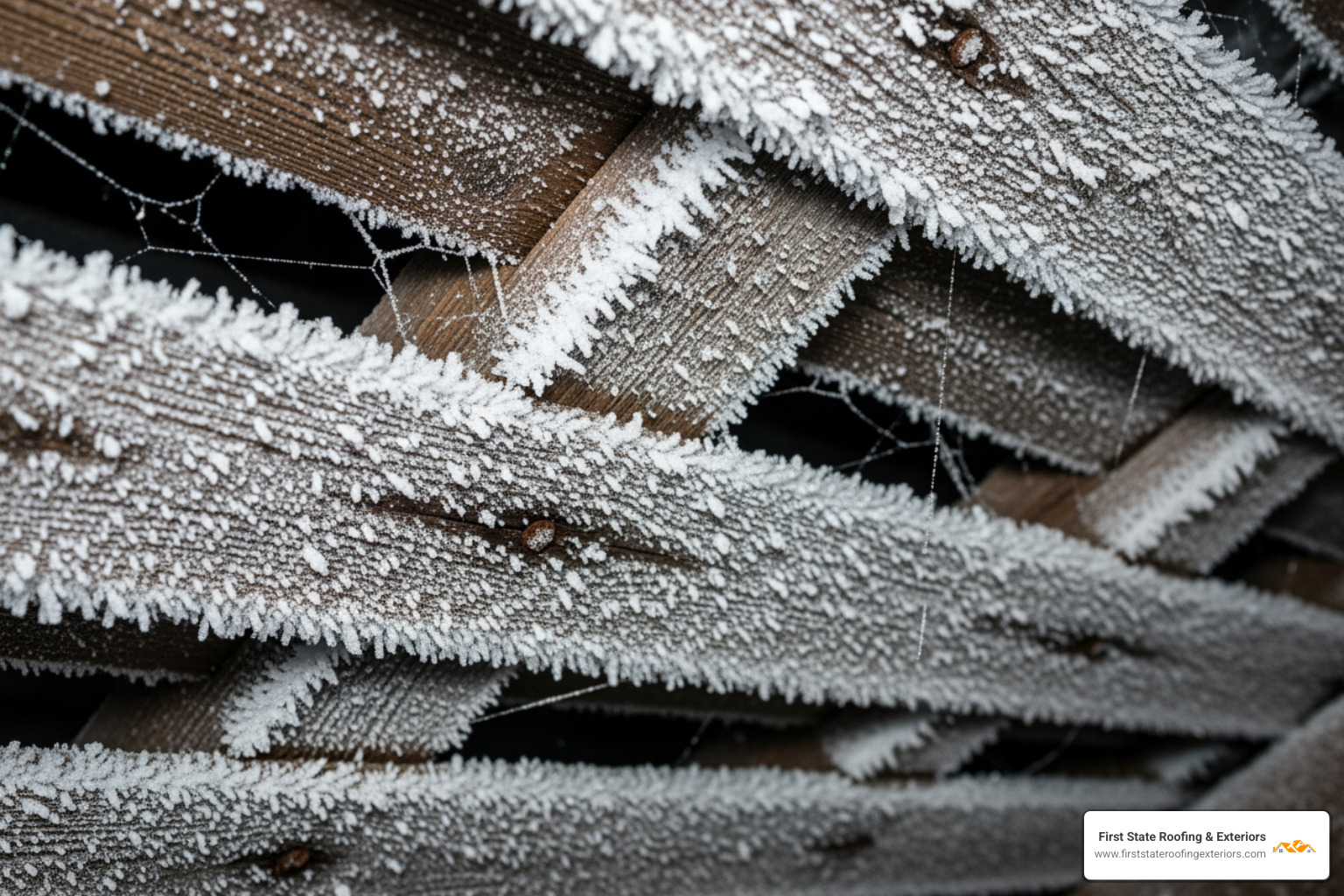
If your insulation looks damaged or compressed, especially near the eaves, it could be blocking those vital airflow pathways. And let’s not forget your energy bills; if they’re consistently higher than expected, inadequate ventilation might be forcing your HVAC system to work overtime. Similarly, noticeable temperature inconsistencies between different rooms or floors can often be traced back to a poorly regulated attic space. For a deeper dive into how these issues affect your home’s long-term health, check out this Consumer Guide to Durable Attics.
How Inadequate Ventilation Damages Your Home
The fallout from insufficient attic ventilation goes far beyond just comfort or high energy bills. It directly impacts your home’s structural integrity and your family’s well-being.
- Structural Rot: That persistent moisture buildup in the attic can cause wooden rafters, sheathing, and other structural parts to rot and deteriorate. This weakens your roof, potentially leading to costly and dangerous structural failures that require extensive attic ventilation repair and more.
- Shingle Lifespan Reduction: In summer, high attic temperatures essentially bake your roof shingles from below. This speeds up their aging process, causing them to crack, curl, and lose their protective granules. This drastically shortens your roof’s life, leading to premature roof replacement.
- Premature Roof Aging: It’s not just the shingles. The entire roofing system, including the underlayment and flashing, is under constant stress from wild temperature swings. This leads to materials failing much sooner than they should.
- Mold Health Risks: Mold and mildew, often a result of a damp attic, can release spores that circulate throughout your home. These airborne particles can worsen allergies, asthma, and other respiratory issues for everyone living there.
- Pest Infestations: Damaged or poorly maintained vents can become open doors for unwelcome guests like rodents, insects, and birds. Once inside, they can cause even more damage to your insulation and electrical wiring.
These problems tend to snowball, turning a small ventilation issue into a major home crisis. That’s why making sure your attic breathes properly is a crucial part of preventing larger problems that might otherwise require storm damage repair or other significant structural fixes.
The “What”: A Breakdown of Attic Ventilation Systems
Think of your attic ventilation system as your home’s lungs—it needs to breathe in fresh air and exhale stale, hot, moist air. Understanding how this system works is essential for identifying problems and knowing when you need attic ventilation repair. If you’re experiencing any ventilation issues, a professional roofer can help diagnose and fix the problem before it damages your home.
Your attic ventilation falls into two main categories: passive systems and active systems. Passive systems are the workhorses of attic ventilation—they rely entirely on natural convection, where hot air naturally rises and escapes while cooler air is drawn in from below. These include soffit vents, ridge vents, gable vents, and box vents. No electricity, no moving parts, just physics doing its job.
Active systems, on the other hand, use mechanical assistance to move air. Powered attic ventilators and solar attic fans fall into this category. They force air movement rather than waiting for natural convection to do the work. While they can provide extra airflow in extreme heat, they’re not always necessary if your passive system is properly designed and maintained.
The real secret to effective attic ventilation is balanced airflow. You need equal amounts of intake ventilation (where fresh air enters) and exhaust ventilation (where hot, moist air exits). The industry standard, known as the FHA 1/300 Rule, recommends 1 square foot of net free ventilating area for every 300 square feet of attic floor space, ideally split 50/50 between intake and exhaust. Without this balance, your ventilation system can’t work properly—exhaust vents may end up pulling air from other exhaust vents instead of from the intake, creating stagnant pockets of hot, humid air.
Here’s something many homeowners don’t realize: your roof insulation and ventilation work as partners, not competitors. Insulation slows heat transfer from your living space into the attic, while ventilation removes any heat and moisture that does accumulate. They need each other to function properly. The most common mistake I see is insulation blocking intake vents, which completely defeats the purpose of having them. That’s where components like attic baffles become critical—they keep that airflow path clear.
Intake Vents: Where Fresh Air Enters
Intake vents are positioned at the lowest points of your roof system, typically along the eaves. Their job is simple but crucial: let cooler, fresh air into the attic. This incoming air creates the foundation for the entire ventilation cycle, pushing warmer, moisture-laden air upward toward the exhaust vents.
Soffit vents are by far the most common and effective type of intake vent. These are installed in the soffit—that’s the underside of your roof’s overhang where the roof meets the exterior walls. You’ll see them as either continuous perforated strips running along the entire soffit or as individual circular or rectangular grilles spaced at regular intervals. When properly installed and unobstructed, soffit vents create the critical entry point for outside air to be drawn into your attic as warmer air leaves through higher vents.
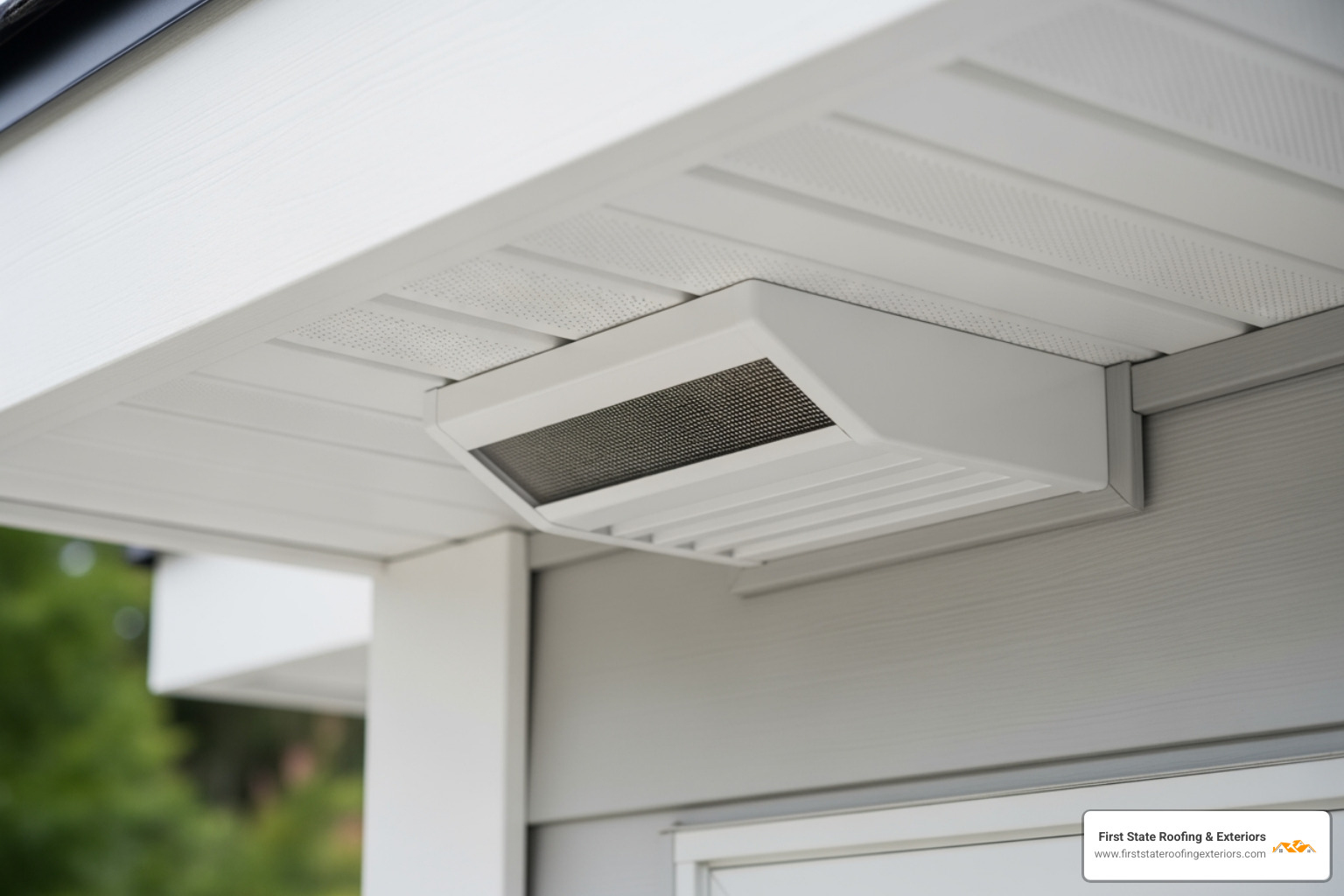
Gable vents are those louvered or decorative vents you see on the triangular walls at the ends of your attic. While they’re often used as exhaust vents, they can also function as intake vents depending on your roof design and wind direction. However, they’re less effective than soffit vents for creating consistent airflow across your entire attic space. They work best when paired with other ventilation types rather than as the sole ventilation source.
Drip edge vents are a less common solution, typically used when soffits are too narrow to accommodate traditional vents or when there are no soffits at all. These are installed along the drip edge of the roof, providing an alternative intake path for fresh air.
The importance of clear intake paths cannot be overstated—and this is where many ventilation systems fail. If your soffit vents are blocked by insulation, packed with debris, clogged with wasp nests, or painted over during exterior renovations, the entire ventilation system stops working. Fresh air can’t enter, hot air can’t escape efficiently, and moisture builds up. I’ve seen countless attics with perfectly good ridge vents that were useless because the soffit vents were completely blocked.
Exhaust Vents: How Hot, Moist Air Escapes
Exhaust vents are positioned at or near the peak of your roof, taking advantage of hot air’s natural tendency to rise. Once air has traveled through your attic and absorbed heat and moisture, these vents provide the exit route.
Ridge vents are widely considered the gold standard of passive exhaust ventilation when paired with adequate soffit vents. These vents run continuously along the entire peak of your roof, creating a consistent outlet for hot air along the roof’s highest point. They have no moving parts to wear out, they’re virtually invisible from the ground, and they provide even ventilation across the entire attic rather than concentrating airflow in one spot. Ridge vents work by creating a constant negative pressure zone—as hot air exits, it draws cooler air up from the intake vents below, maintaining continuous circulation.
Box vents, also called static vents or roof louvers, are individual non-mechanical vents installed directly on the roof surface, typically near the ridge. Each unit is essentially a covered opening that allows hot air to escape while keeping rain and snow out. They’re simple and reliable, but you’ll need multiple units for larger attics to achieve adequate ventilation. They’re often used on older homes or on roof designs where ridge vents aren’t practical.
Turbine vents are those spinning dome-shaped vents you sometimes see on roofs. They have moving parts—typically aluminum fins—that spin with the wind, actively drawing hot, humid air out of the attic. When they’re spinning, they can move a significant amount of air. The downside is that their mechanical nature means they can wear out, squeak, or stop spinning altogether, and they don’t work when there’s no wind. For more details on how these systems work together to protect your home, the Energy Star guide on attic ventilation provides excellent technical information.
Mechanical and Supporting Components
Beyond the basic intake and exhaust vents, several mechanical and supporting components can improve your attic ventilation system or make it work more effectively.
Powered Attic Ventilators (PAVs) are electric fans, usually thermostat-controlled, that actively pull air out of your attic. They can provide an extra boost during Delaware’s hot, humid summers when passive ventilation alone might not keep up. However, there’s an important caveat: if your attic isn’t properly air-sealed from the living space below, PAVs can actually work against you by pulling expensive conditioned air from inside your home into the attic. This increases your energy consumption rather than reducing it. PAVs are generally recommended only when natural ventilation is insufficient and when proper attic air sealing has been carefully performed.
Solar attic fans offer a similar function to PAVs but are powered by solar panels rather than your home’s electrical system. They’re more eco-friendly and eliminate the electricity cost, though they typically have lower CFM (cubic feet per minute) ratings than electric fans and can be more expensive upfront. They work best on sunny days—which is fortunately when you need them most.
Attic baffles, also called rafter vents or insulation baffles, are one of the most important yet overlooked components of a functional ventilation system. These are channels—usually made of rigid foam or cardboard—installed between rafters, running from the soffit opening up into the attic space. Their job is to prevent insulation, especially blown-in insulation, from blocking your soffit vents and to ensure a clear path for air to flow along the underside of the roof sheathing. Without baffles, insulation can easily slide down and cover soffit vents, or wind can blow insulation around, blocking critical airflow paths. Baffles also prevent what’s called “wind-washing” of insulation, where cold air flowing through the attic reduces insulation’s effectiveness.
Thermostats and humidistats are controls that can be integrated with powered attic fans to make them more efficient. A thermostat activates the fan when the attic temperature reaches a certain level (typically 100-110°F), while a humidistat turns it on when humidity gets too high. This ensures the fan only runs when needed, optimizing energy use and effectiveness.
When considering powered fans, remember this critical rule: you must have adequate intake ventilation. Without sufficient intake vents, the fan will struggle to move air effectively and may create negative pressure that pulls air from unintended places—like through ceiling penetrations from your living space. For more practical guidance on improving your attic’s airflow, Family Handyman’s guide to attic ventilation offers helpful insights.
If you’re unsure whether your attic ventilation system is properly balanced or if you need additional components, we can help. Our team offers free estimates and can assess your current setup to recommend the most cost-effective solutions for your specific situation. To schedule a free inspection, call (302) 222-4065 or tap to call: tel:+13022224065.
The “How”: A Guide to Attic Ventilation Repair and Solutions
Even the best attic ventilation systems can encounter problems over time, necessitating attic ventilation repair. Common issues include blocked vents, damaged components, animal intrusion, and improper installation. We often see these problems during our roof ventilation repair calls across Delaware.
Practical Tips for DIY Attic Ventilation Repair
While many attic ventilation repair tasks are best left to professionals, there are several practical steps homeowners can take to maintain their system and address minor issues. Always prioritize safety when working on or near your roof, considering the use of harnesses and proper ladder techniques.
- Clearing Debris: Inspect intake (soffit) and exhaust (ridge, box, turbine) vents from the exterior and attic. Remove leaves, nests, and dust to restore airflow.
- Cleaning Vent Screens: Brush or vacuum clogged vent screens to improve air movement and deter pests.
- Sealing Minor Gaps: Use exterior-grade sealant around vent perimeters to prevent wind-driven rain from entering.
- Verifying Baffles: Confirm rafter baffles are clear and not blocked by insulation, especially at the eaves.
- Ducting Exhausts Outdoors: Ensure bathroom fans, range hoods, and dryer vents discharge outside—never into the attic.
Solutions for Common Roof Vent Problems
Lead with the fix, then confirm the cause:
- Blocked soffit vents: Uncover soffits from inside by pulling back insulation; install or extend baffles to maintain a continuous air channel; clean exterior perforations. Target balanced intake to match exhaust.
- Insulation wind-washing at eaves: Add rigid or foam baffles and dense-pack the attic floor edge to stop cold air from degrading R-value while preserving airflow.
- Undersized ventilation (low NFA): Increase net free area by adding continuous soffit and ridge vents or supplemental box vents near the ridge. Aim for at least 1 sq ft of NFA per 300 sq ft of attic floor area, split roughly 50/50 intake-to-exhaust.
- Ridge vent present but poor airflow: Check for blocked soffits, underlayment or shingle overhangs covering the ridge cut, or clogged vent filters. Correct the ridge slot width per manufacturer specs and clear obstructions.
- Mixed or competing exhausts (ridge + gable + turbines): Standardize to one primary exhaust strategy (ideally ridge + soffit) to prevent short-circuiting between vents.
- Turbine vent noise or failure: Lubricate bearings, replace bent fins, or swap to static or ridge vents if wind exposure is low or maintenance is frequent.
- Powered attic fans pulling conditioned air: Air-seal ceiling penetrations (recessed lights, chases, hatches) and increase soffit intake; add thermostats/humidistats; or decommission fans if a properly balanced passive system suffices.
- Animal intrusion (birds, squirrels, insects): Install pest-proof vent screens and repair chewed edges; replace damaged louvers; remove nests and sanitize affected insulation.
- Moisture and mold on sheathing: Improve intake/exhaust balance, add continuous airflow at each rafter bay with baffles, and correct indoor moisture sources (bath fans, humidifiers). Remediate mold per EPA guidance and repair any leaks.
- Ice dams along eaves: Increase attic air sealing and insulation at the attic floor, verify continuous soffit-to-ridge ventilation, and eliminate warm-air bypasses to keep roof deck temperatures uniform.
When to Call a Professional
Answer first: Call a pro when the repair involves roofing penetrations, electrical components, structural rot, or moisture remediation. Pros diagnose root causes, perform code-compliant installations, and validate balanced NFA across complex rooflines.
We provide free estimates and comprehensive attic and roof evaluations across Delaware. To schedule a free inspection, call (302) 222-4065 or tap to call: tel:+13022224065.